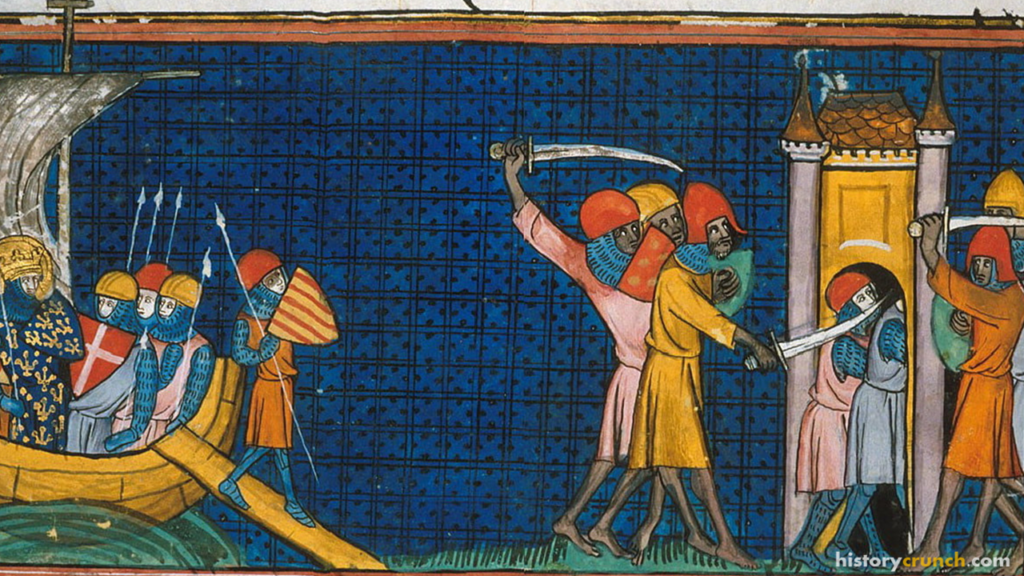
The Eighth Crusade was launched in 1270 by King Louis IX of France, targeting the Muslim-held city of Tunis in North Africa. The campaign was poorly planned and plagued by disease, resulting in the death of Louis IX shortly after landing.
WHAT WERE THE CRUSADES?
The Crusades are one of the most significant events in the history of Europe and the Middle East. They were a series of religious wars carried out by Christian crusaders from Europe during the timeframe of the Middle Ages. Beginning in 1095 CE, the Crusades saw European knights and noblemen travel to the Middle East in an attempt to capture the Holy Land away from Muslim people that had controlled the region for the previous centuries. The term crusade means ‘cross’. Therefore, the Europeans that became crusaders viewed themselves as ‘taking up the cross’. In fact, many of the crusaders wore crosses on their clothing and armor as they made their pilgrimage to the Holy Land. This article details the events of the Eighth Crusade. Click here to read more information about the other major Crusades.
EIGHTH CRUSADE – WHEN AND WHY DID IT OCCUR?
The Eighth Crusade took place in 1270 CE and was a major event in the history of the Crusades, which was a significant event in the Middle Ages. In general, the Eighth Crusade was a continuation of the Seventh Crusade, and some historians combine the two. This is due to the fact that both the Seventh and Eighth Crusades were undertaken by King Louis IX of France, in his attempt to recapture parts of the Holy Land from Muslim control.
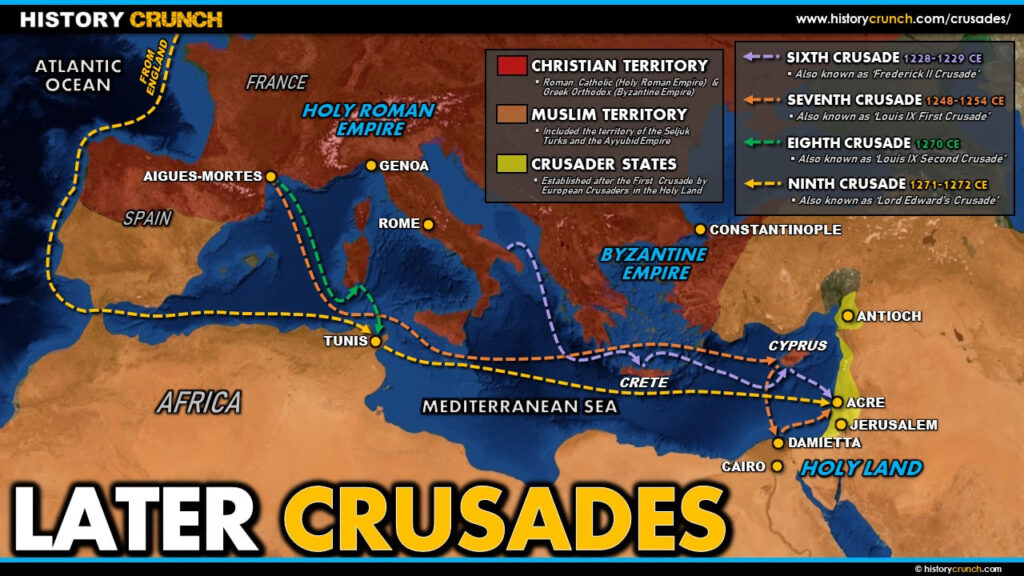
The Seventh Crusade saw Louis IX of France lead an army of crusaders from Europe to Egypt and attack Muslim strongholds. While the crusaders of the Seventh Crusade experienced some initial success and captured the Egyptian city of Damietta, the Seventh Crusade was ultimately a failure. This is because Louis IX was captured by the Muslims army and held captive while his remaining crusader army was destroyed. The Seventh Crusade eventually ended when Louis IX was returned back to the Christians as part of a ransom payment. Furthermore, the French were forced to give up Damietta back to the Muslims. The Seventh Crusade was a failure, as Louis IX and the French crusaders failed to capture any meaningful territory in the Holy Land, including the all-important city of Jerusalem. The next major event in the history of the Crusades was the Eighth Crusade in 1270, again led by King Louis IX of France.
In fact, Louis IX never gave up his ambition to crusade in the Holy Land, and continued to support Christian armies in the region throughout the time period between the Seventh and Eighth Crusades. However, the regained strength of Muslims in Egypt and the area of the Holy Land eventually caused him to want to return to carry out another crusade. Louis IX announced his intention to ‘take the cross’, which means to crusade to the Holy Land, on March 24th, 1267.
EIGHTH CRUSADE – MAJOR EVENTS
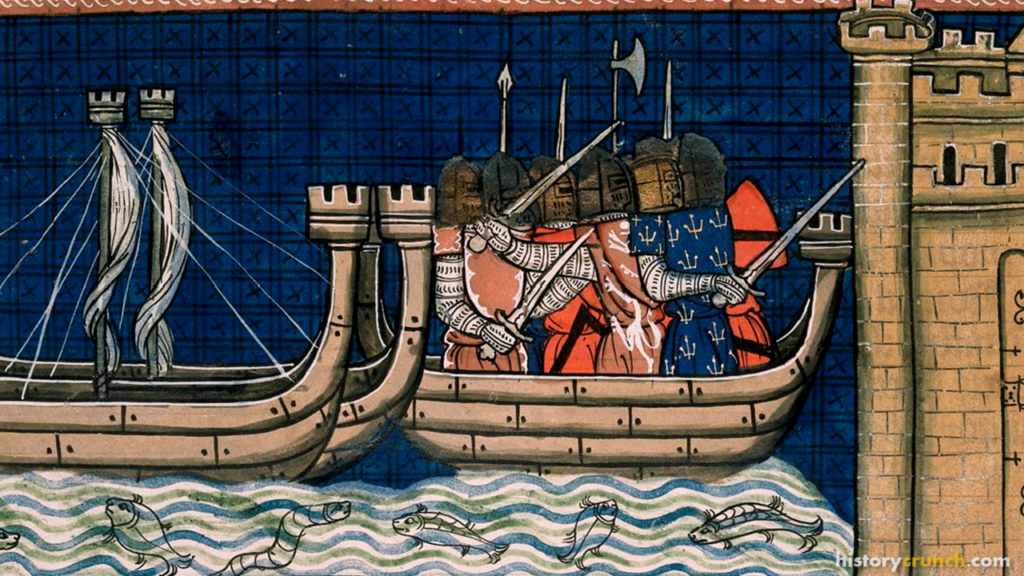
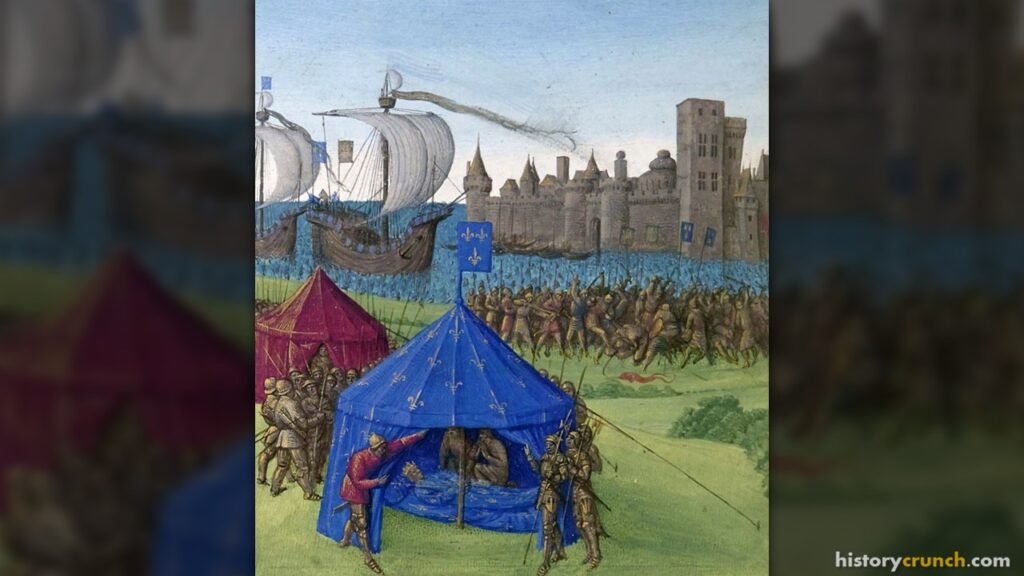
The goal of Louis IX in the Eighth Crusade was to attack the city of Tunis, which is located in Northern Africa and is the capital city of the modern country of Tunisia. The plan was for the French crusaders to sail from Southern France to the coastal city of Tunis. In fact, the French set sail for their journey on July 1st, 1270 and made landfall on the Tunisia coastline a few weeks later, on July 18th. The crusaders soon set up camp and made preparations to attack the city of Tunis, while they waited for other crusaders to arrive from France and England. However, during this period of waiting, the French crusaders experienced a wave of disease that destroyed their hopes of attacking Tunis. For instance, throughout the summer of 1270, many of the European crusaders became ill with dysentery, with a large portion of them dying. For example, Louis IX of France actually died from the disease on August 25th, 1270.
EIGHTH CRUSADE – SIGNIFICANCE
The death of Louis IX effectively ended the Eighth Crusade, and caused most of the remaining crusaders to return home to Europe. As such, the Eighth Crusade was a massive failure and did not result in any gains for the European crusaders. With that said, the Ninth Crusade occurred immediately after the events of the Eighth Crusade.