Operation Rolling Thunder was the sustained United States bombing campaign against North Vietnam and one of the major escalation points of the Vietnam War. Operation Rolling Thunder lasted from March 2nd, 1965, to November 2nd, 1968, and it was intended to pressure Hanoi, strengthen South Vietnam, and disrupt the flow of men and supplies into the south. Due to its timeframe and context, it is also associated with the overall Cold War.
OPERATION ROLLING THUNDER – BACKGROUND
Operation Rolling Thunder grew out of the worsening situation in Vietnam in the early 1960s. For instance, North Vietnam supported communist forces fighting in South Vietnam, while the United States backed the South Vietnamese government. By early 1965, American leaders feared that South Vietnam might collapse, and after attacks on American positions in South Vietnam, Lyndon B. Johnson’s administration moved toward a sustained bombing campaign against the north.
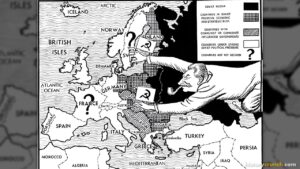
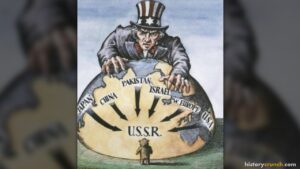
The campaign was also shaped by Cold War fears. American leaders wanted to hurt North Vietnam, but they did not want to trigger direct Soviet or Chinese intervention. Therefore, Operation Rolling Thunder was heavily controlled from Washington, with strict limits on what could be bombed and where. This made the campaign very different from the kind of unrestricted strategic bombing seen in World War II.
OPERATION ROLLING THUNDER – THE CAMPAIGN
Operation Rolling Thunder began as a gradual air campaign rather than one overwhelming strike. United States Air Force and United States Navy aircraft carried out repeated attacks against targets in North Vietnam, including transportation networks, supply routes, military sites, and other parts of the war-supporting system. At first, American leaders hoped the bombing would send a diplomatic signal, raise morale in South Vietnam, and convince North Vietnam to reduce its support for the war in the south.
As Operation Rolling Thunder continued, its purpose shifted. Since the bombing did not quickly change North Vietnamese policy, the campaign became more focused on slowing the movement of troops and supplies. However, North Vietnam adapted. Roads, bridges, and rail lines were repaired, traffic was dispersed, and the air-defense system became much stronger through anti-aircraft guns, surface-to-air missiles, and MiG fighters. This meant Operation Rolling Thunder became a long and costly struggle for the United States.
Operation Rolling Thunder also became closely tied to the wider American expansion of the war. A bombing campaign required air bases, protection, logistics, and increasing military commitment. As the air war grew, the United States also sent more ground troops into Vietnam. In that sense, Operation Rolling Thunder did not stay a limited pressure tactic. It became part of a much larger American war effort.
OPERATION ROLLING THUNDER – WHY IT FAILED
Historians generally agree that Operation Rolling Thunder failed to achieve its main political goals. It did not force North Vietnam to stop supporting the war in the south, and it did not bring Hanoi to accept American terms. One reason was that the campaign had too many limits. Important targets were sometimes protected from attack because American leaders feared widening the war. Another reason was that North Vietnam proved far more resilient than American planners expected.
Operation Rolling Thunder also showed the limits of air power in this kind of conflict. Bombing could damage infrastructure and make transport more difficult, but it could not by itself solve the political and military realities of the war in South Vietnam. The campaign hurt North Vietnam, but it did not break its will to continue fighting. Instead, Operation Rolling Thunder became a long war of pressure that consumed aircraft, pilots, money, and time without delivering decisive results.
By 1968, the campaign was winding down. On March 31st, 1968, Johnson restricted the bombing to the southern part of North Vietnam, which effectively ended most of Operation Rolling Thunder. Later that year, he halted the bombing of the north entirely, and the campaign came to its close on November 2nd, 1968.
OPERATION ROLLING THUNDER – SIGNIFICANCE
Operation Rolling Thunder was important because it marked a major turning point in the Vietnam War. It showed that the United States was no longer relying only on advisers and limited support. Instead, the war had become a much larger American military effort against North Vietnam itself. As such, Operation Rolling Thunder helped transform Vietnam into a deeper and more direct Cold War conflict.
Operation Rolling Thunder was also important because it became one of the clearest examples of the limits of strategic bombing in the Cold War era. The campaign caused major destruction and heavy pressure, but it did not win the war or force the political result that American leaders wanted. For that reason, Operation Rolling Thunder remains one of the most important air campaigns of the Vietnam War and one of the clearest examples of how military power can fail to achieve its larger political goals.