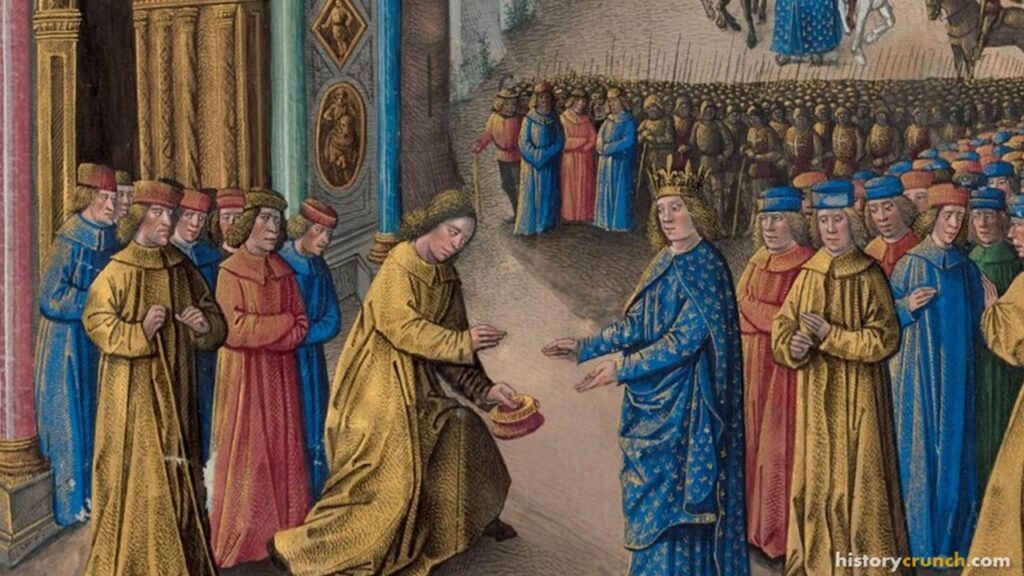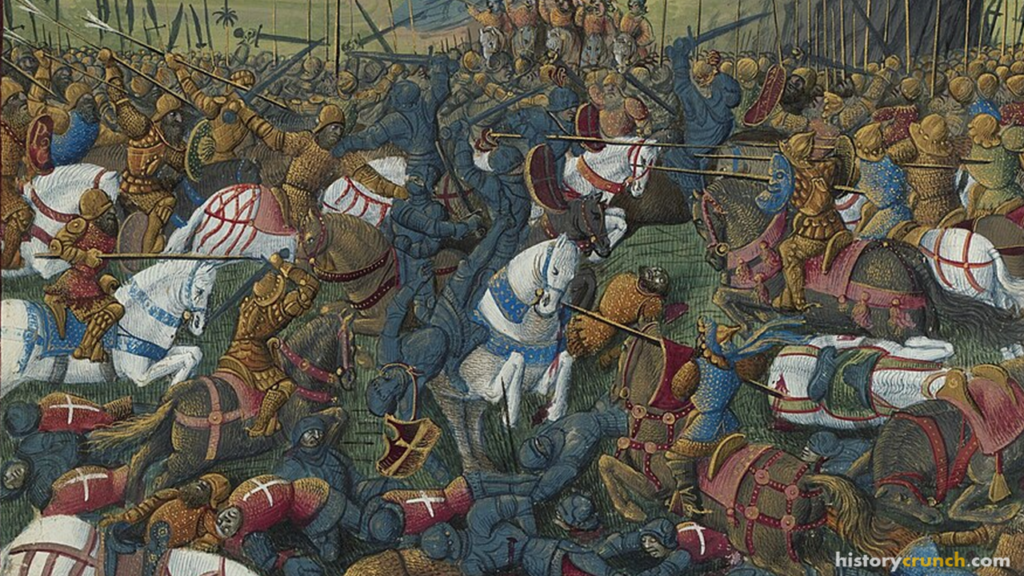
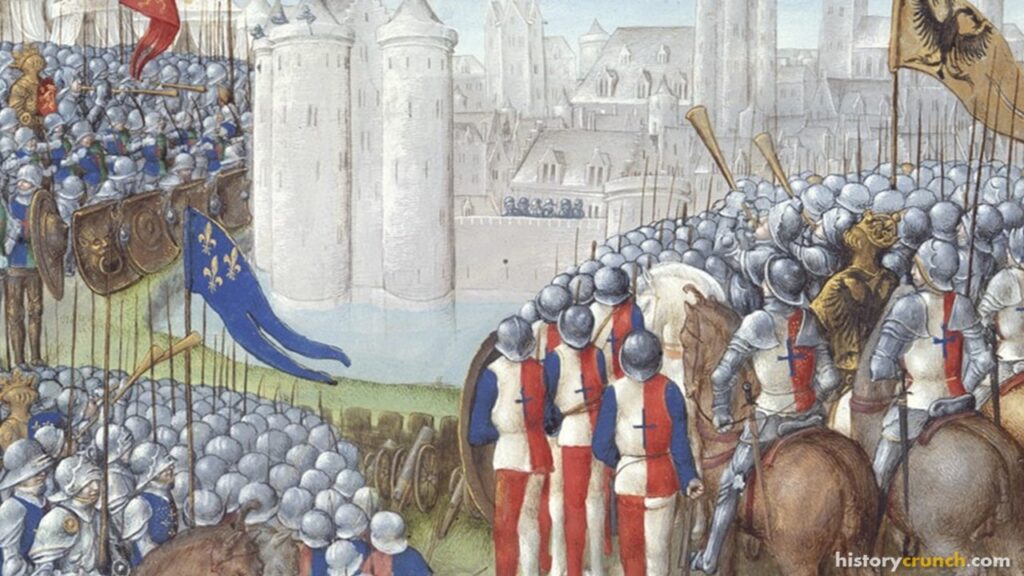
The Second Crusade was launched in 1147 after the fall of the Crusader state of Edessa to Muslim forces. Led by European kings (Louis VII of France and Conrad III of Germany), the campaign was poorly organized and ended in failure. Despite high hopes, the Crusaders failed to achieve significant victories, weakening support for future expeditions.
WHAT WERE THE CRUSADES?
The Crusades are one of the most significant events in the history of Europe and the Middle East. They were a series of religious wars carried out by Christian crusaders from Europe during the timeframe of the Middle Ages. Beginning in 1095 CE, the Crusades saw European knights and noblemen travel to the Middle East in an attempt to capture the Holy Land away from Muslim people that had controlled the region for the previous centuries. The term crusade means ‘cross’. Therefore, the Europeans that became crusaders viewed themselves as ‘taking up the cross’. In fact, many of the crusaders wore crosses on their clothing and armor as they made their pilgrimage to the Holy Land. This article details the events of the Second Crusade. Click here to read more information about the other major Crusades.
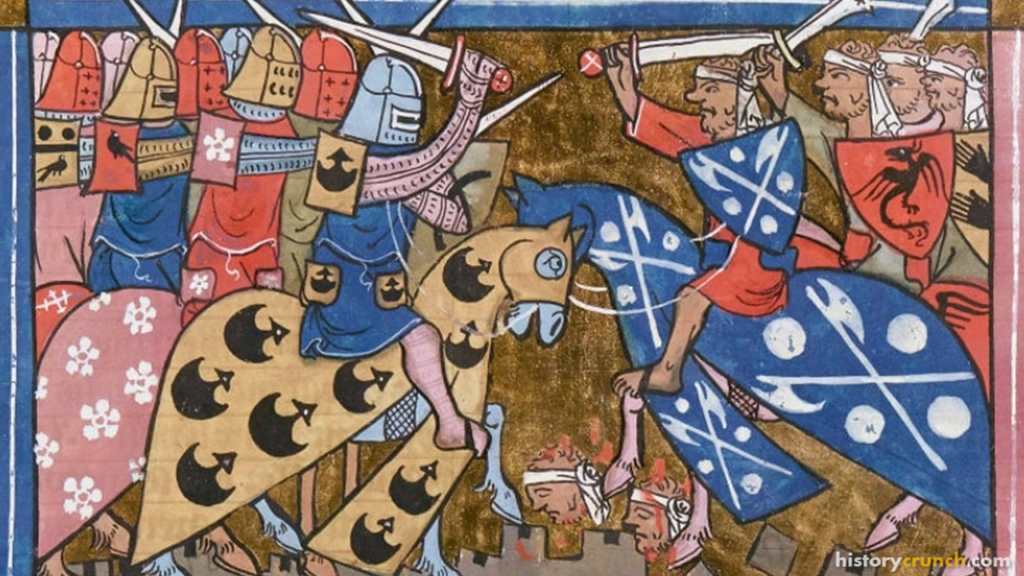
SECOND CRUSADE – WHY AND WHEN DID IT OCCUR?
The Second Crusade occurred from 1147 until 1149 CE and was carried out in response to the fall of the County of Edessa to Turkish forces. As stated above, the crusaders of the First Crusade had established several ‘Crusader States’ during the timeframe of the First Crusade, including the County of Edessa. The leaders of the First Crusade established these states as a means of controlling the territory and creating a base from which they could launch further attacks into the region of the Holy Land. However, in December of 1144, Turkish forces for Imad ad-Din Zengi, attacked and captured the County of Edessa. Edessa was at the northern end of the crusader states and often faced attacks from the Seljuk Turks, which were Muslims who lived to the east of the Holy Land.
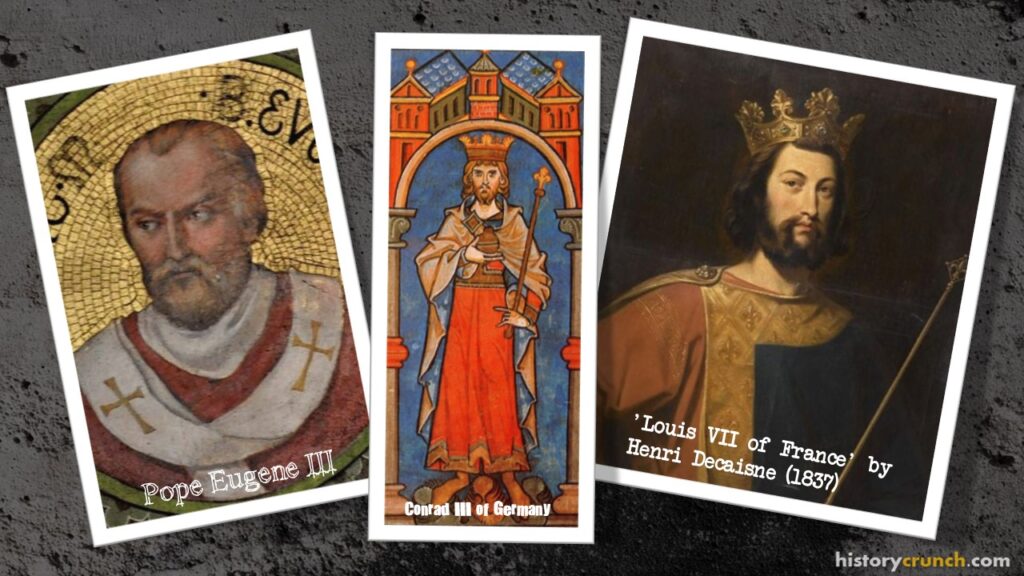
The fall of Edessa in 1144 caused Pope Eugene III to call for another crusade in order to recapture the territory, but also as a general call to protect Christian lands in the Middle East. Pope Eugene III called for the crusade on December 1st of 1145 and wanted it to be led by some of most power kings in Europe at the time. For example, Louis VII of France participated in the Second Crusade and announced his intention to do so in late December of 1145. Conrad III of Germany joined him, and both led approximately 35,000 crusaders (20,000 Germans and 15,000 French) during the Second Crusade. In fact, this was the first time that European kings had led the crusades. Support for the Second Crusade was strong for a variety of reasons. First and foremost was the religious faith of the participants. They were devout Catholics and wanted to be faithful to the church. The second reason for European participation in the crusades was that they believed that by participating in the fight they could be forgiven for their previous sins. Finally, many of the crusaders on the Second Crusade fought to support their king and their loyalty towards the monarch.
SECOND CRUSADE – MAJOR EVENTS
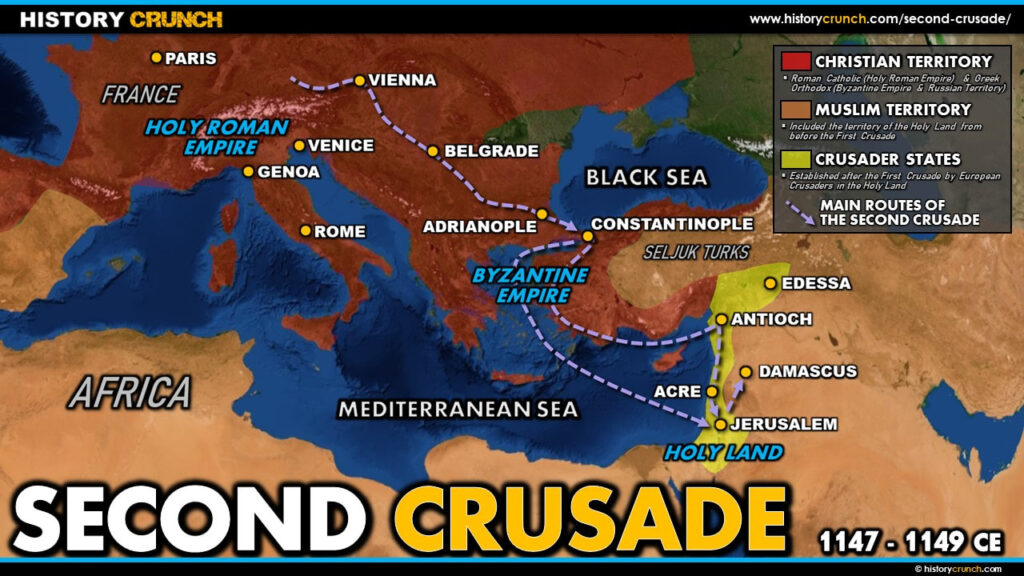
The European crusaders began their journey on June 15th, 1147. Conrad III of Germany led the way east with a land route. Louis VII and the French crusaders followed Conrad III through the Byzantine Empire, until the crusaders arrived in the city of Constantinople on September 10th of 1147. Constantinople (modern-day Istanbul) was the capital of the Byzantine Empire, and an important city throughout the period of the crusades because it was centrally located to the Holy Land. In reality, Conrad III had arrived in Constantinople just ahead of the French and decided to advance his troops into Asia Minor (modern-day Turkey) to avoid a conflict with local forces. However, this decision backfired as Conrad III and the German forces faced off against Seljuk Turk forces alone in the second battle of Dorylaeum. In fact, the Germans suffered a terrible defeat in the battle, which took place on October 25th, 1147 and were nearly totally defeated. Injured himself in the battle, Conrad III ordered his forces to retreat back to Constantinople, where they met up with Louis VII and the French. Together, they advanced south along the coast of the Mediterranean Sea and eventually used ships to cross over to the Crusader States of the Holy Land.
The French crusaders arrived in Antioch in March of 1148 while the German crusaders travelled further south to Acre. Louis VII and the French crusaders then marched south to Tripoli, as they made their way to Jerusalem. The city of Jerusalem was the heart of the fighting of the crusades. The city was centrally located in the Holy Land between the Mediterranean Sea and the Dead Sea. While the history of the city itself goes back much further, it was a significant site in the crusades because of the importance it holds in the three main religions of the region: Christianity, Islam and Judaism. For Christians, Jerusalem was the site of Jesus Christ’s crucifixion and resurrection. As such, the city was vitally important to their understanding of the teachings and history of Jesus.
In response to the arrival of the European crusaders in the Holy Land, the Turks amassed a large amount of forces at the city of Damascus. Damascus was a Turkish controlled city north of Jerusalem. Both the French and German crusaders headed north from Jerusalem and attacked the Turkish forces in the Siege of Damascus. The Siege of Damascus took place July 24th to July 29th in 1148. This battle was vitally important to the Second Crusade, as they crusaders were defeated in the battle and suffered heavy losses. As a result, the Second Crusade was over.
SECOND CRUSADE – SIGNIFICANCE
In all, the Second Crusade was a failure since the crusaders did not gain any new lands in the Holy Land and failed to push out the Muslims. The only source of pride at this time was when English crusaders attacked Muslim forces in Lisbon, Portugal. The Siege of Lisbon took place from July 1st to October 25th of 1147 and saw the Muslim Moors defeated and removed from the city of Lisbon. However, the failure in the Holy Land eventually led to the Third Crusade.