Edmund Cartwright: A Detailed Biography

Facebook
X
Reddit
Pinterest
LinkedIn
Edmund Cartwright
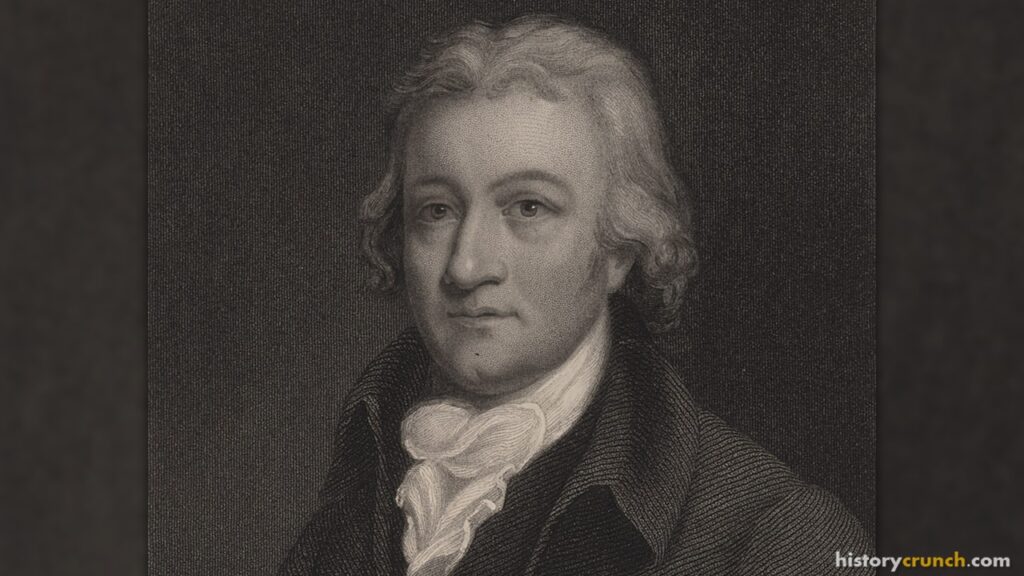
Edmund Cartwright was the inventor of the power loom weaving machine.

TABLE OF CONTENTS

Edmund Cartwright was an English inventor who revolutionized the weaving industry by inventing the power loom in 1784, significantly enhancing the efficiency and productivity of textile manufacturing in the Industrial Revolution.

Edmund Cartwright was a significant figure in the timeframe of the Industrial Revolution and is remembered as a talented inventor.  For example, he invented the power loom and other devices, which had a profound impact on production in England and around the world during the time of the Industrial Revolution.  For example, Edmund Cartwright’s power loom transformed the textile industry by speeding up production and automating the weaving process.

EDMUND CARTWRIGHT – EARLY LIFE

Edmund Cartwright was born in Marnham, England on April 24th, 1743. Cartwright was the son of a landowner and was well educated. He went to a Grammar school in Wakefield, and then went to Oxford University. After graduating he became a clergyman and was then elected as a prebendary at Lincoln Cathedral.​

EDMUND CARTWRIGHT – INVENTION OF THE POWER LOOM

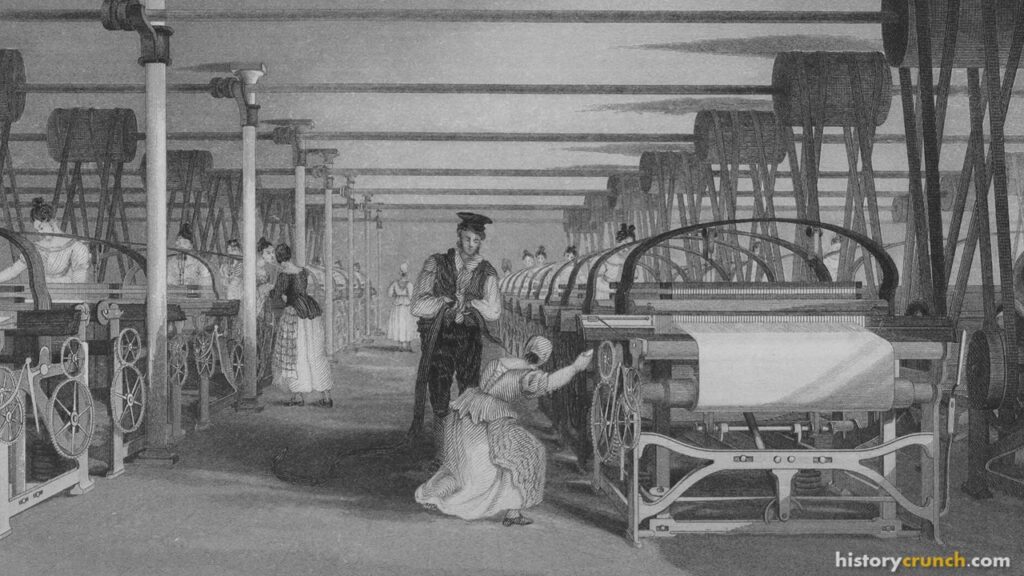
While working for the church Cartwright visited Richard Arkwright’s cotton spinning mills and saw the cotton spinning machines in action.  Richard Arkwright was another important inventor during the timeframe of the Industrial Revolution and is best known for developing the water frame. After seeing the spinning machines Cartwright thought that he could make something similar for weaving and so was inspired to create a machine called the power loom.  He began working on the designs of the machine in 1784 and fully built it in 1785. Many people thought that Cartwright would not be able to make a machine that was able to weave automatically, but he did. The first machine he made was simplistic, but he soon made improvements that enabled the machine to be used in factories. Essentially, the power loom mechanized the function of a loom by use of large shaft and sped up the process of textile manufacturing.  In general, looms were used to weave together fabrics in order to create textiles.  Cartwright did not benefit much from his invention of the power loom.  For instance, he made very little money from his invention.  With that said, the power loom had a transformative impact on society and went on to have a profound effect on industrial production.​

Power Loom Invention in the Industrial Revolution
‘Illustration of power loom weaving’ by T. Allom, Engraver J. Tingle. The Power Loom was an important invention during the time of the Industrial Revolution.

In 1796 Cartwright moved to London, England. He continued inventing, and came up with a number of different ideas.  However, none of his inventions proved successful or were sold. In 1809, he was awarded £10,000 for the national benefits of his power loom and was later elected as a Fellow of the Royal Society.
Textile Manufacturing in the Industrial Revolution
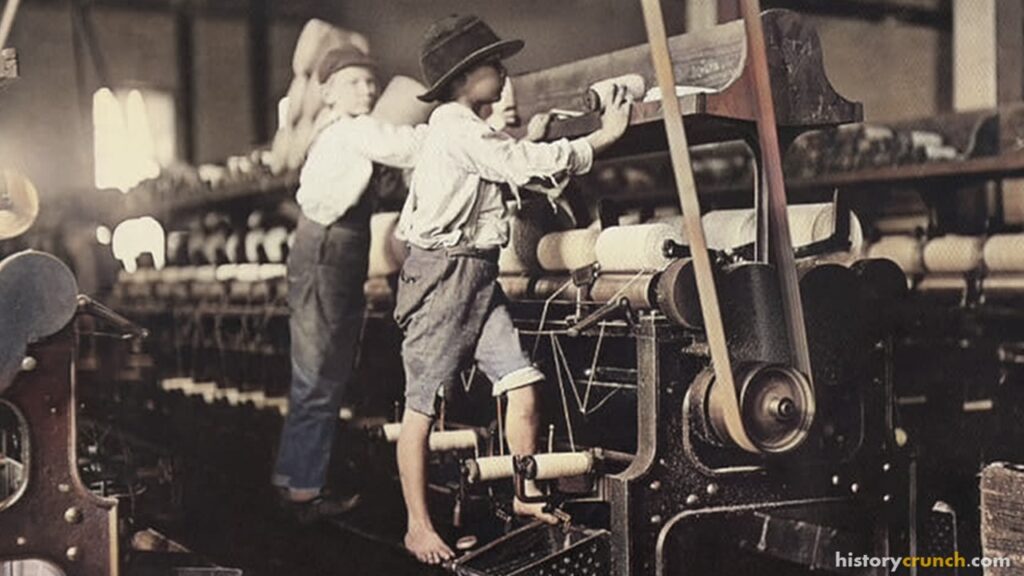
Child laborers in a textile factory in Georgia in 1909. (Colorized by historycrunch.com)

EDMUND CARTWRIGHT – DEATH AND LEGACY

Cartwright died on October 30th, 1823 in Sussex, England.  While he made very little money from his invention of the power loom, the device went on to have a profound impact in textile manufacturing.  For example, in 1803, there were approximately 2,400 looms in all of Britain.  However, by the mid-1800s, his power loom design was used in numerous factories across Britain and helped power the major impacts of the Industrial Revolution especially in terms of textile manufacturing.  For instance, by 1857, it is estimated that there were more that 250,000 looms in use in Britain.

EDMUND CARTWRIGHT – INFOGRAPHIC
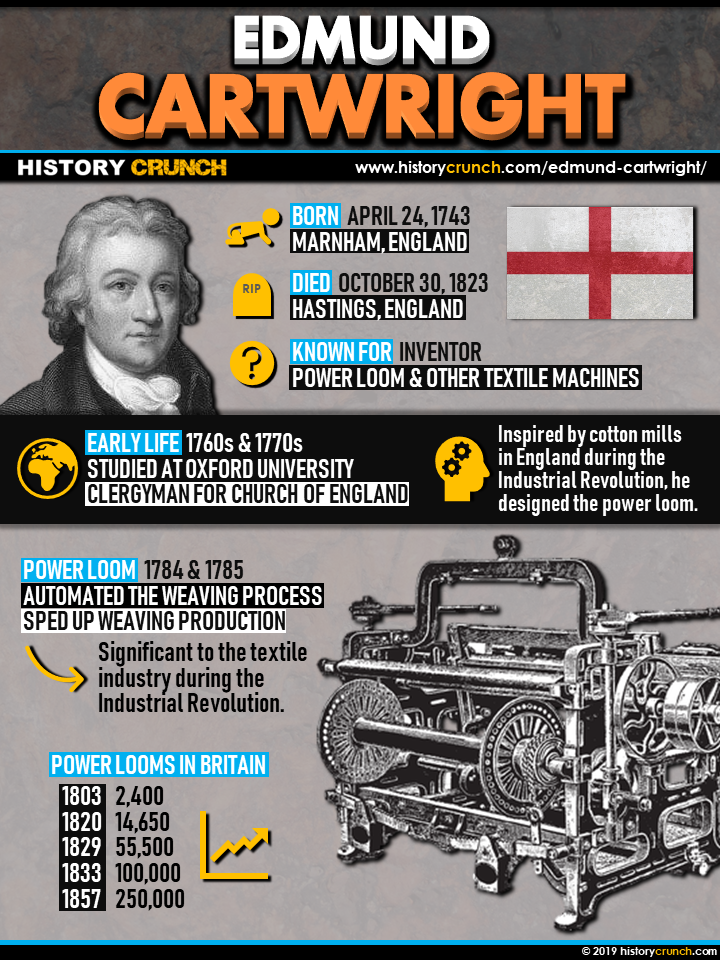
Edmund Cartwright Infographic
Edmund Cartwright Infographic created by History Crunch

We strive to produce educational content that is accurate, engaging and appropriate for all learners. If you notice any issues with our content, please contact us and let us know!

AUTHOR INFORMATION
Picture of Elias Beck

Elias Beck

I'm a passionate history and geography teacher with over 15 years of experience working with students in the middle and high school years. I have an Education Degree with a focus in World History. I have been writing articles for History Crunch since 2015 and love the challenge of creating historical content for young learners!

First Red Scare: A Detailed Summary

The First Red Scare occurred from 1917 to 1920 and was a period of intense fear and persecution of communists, socialists, and anarchists in the United States.

Tezcatlipoca
Aztec Empire

Tezcatlipoca (Aztec God): A Detailed Summary

Tezcatlipoca was one of the most important Aztec gods. His name is translated as ‘smoking mirror’ in the Nahuatl language of the Aztec and he is often associated with several different concepts, including: the night sky, night winds, hurricanes, the north, jaguars, obsidian, and war.

Airplanes WW1
World War I

Airplanes in World War I: A Detailed Summary

Airplanes in World War I were important to the overall war effort. For instance, airplanes in World War I were used for various activities, such as: spying on the enemy, bombing enemy lines and mid-air dog-fights.

Acamapichtli
Aztec Empire

Acamapichtli (Aztec Emperor): A Detailed Biography

Acamapichtli was the first Aztec Emperor, which was referred to as the huey tlatoani (Great Speaker). This article details the history and significance of Acamapichtli in relation to the Aztec Empire.

Robert Owen
Industrial Revolution

Robert Owen: A Detailed Biography

Robert Owen was a social reformer and industrialist known for his pioneering efforts in improving working conditions and promoting cooperative communities, particularly through his work at the New Lanark mills in Scotland. As such, historians soldier him important to the Industrial Revolution and the Utopian Socialism movement.

Religion in Ancient Rome: A Detailed Summary

Religion in Ancient Rome was a significant part of ancient Roman culture. It had a profound impact on the history of the Roman Empire, especially in relation to the emergence of Christianity. This article details the history of religion in Ancient Rome, as well as the gods and goddesses of ancient Roman beliefs.