Aztec religion centered on a few main factors, such as a wide array of gods and the practise of human sacrifice. The Aztec people were deeply religious and celebrated their many gods through festivals, rituals and cultural traditions. As such, religion played an important role in the daily lives of the Aztec people. This article details the major gods and religious practises of the Aztec.
WHO WERE THE AZTEC?
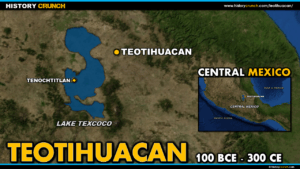
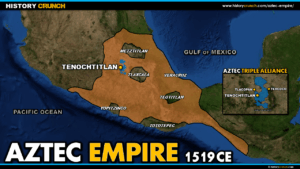
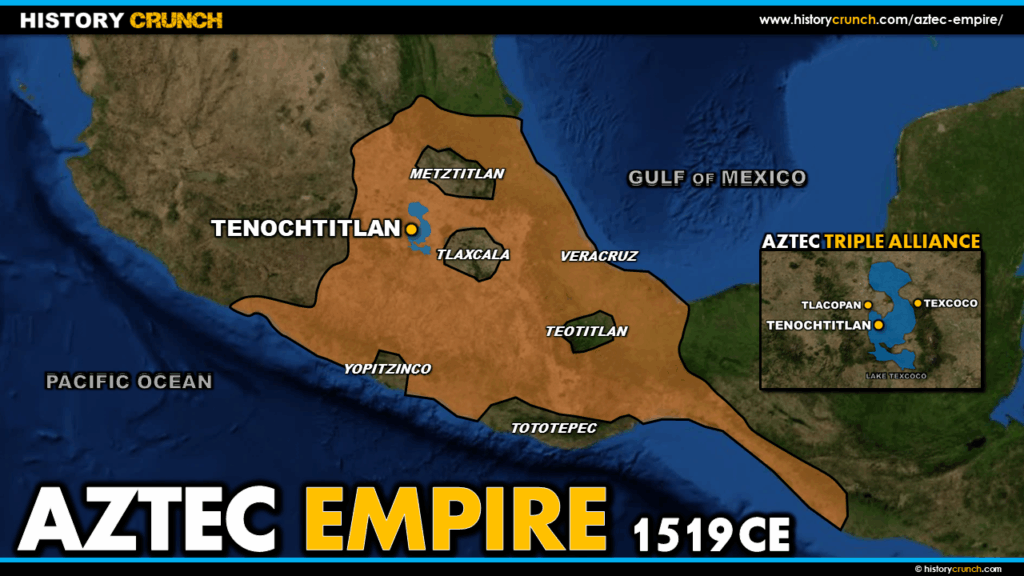
The Aztecs ruled over a powerful empire throughout much of central Mexico in the centuries before the arrival of Spanish conquistadors during the European Age of Exploration. An important aspect of the Aztec Empire and history was their religious beliefs and practices. In general, the Aztecs shared many of their main religious beliefs and practices with other societies in the region. For example, some gods and religious practices were common throughout different Mesoamerican societies, including: Toltec and Teotihuacan. As such, when learning about Aztec religion it’s important to understand that much of it also applies to other civilizations throughout the history of the region.
AZTEC RELIGION – GODS
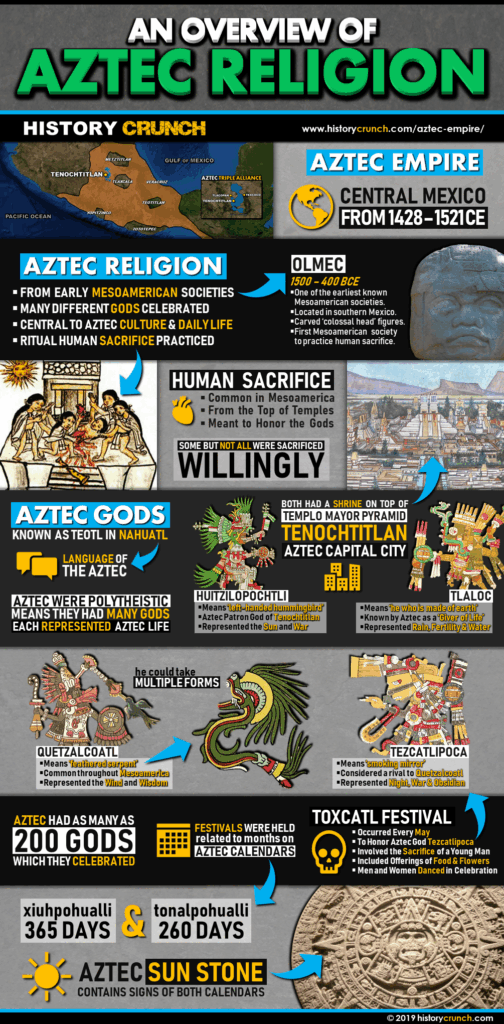
The concept of ‘god’ in Aztec society is referred to as ‘Teotl’ in Nahuatl, the language of the Aztec. The Aztecs, like other Mesoamerican societies, had a wide pantheon of gods. As such they were a polytheistic society, which means they had many gods and each god represented different important parts of the world for Aztec people. Whereas a monotheistic religion, such as Christianity, only has one god. The wide variety of gods in Aztec religion is a result of several factors. First, the Aztec Empire emerged after the fall of earlier Mesoamerican societies, such as: Toltec, Olmec, Teotihuacan and Maya. As a result, the Aztec shared similar gods to these earlier societies. Second, during the rise to power of the Aztec Empire its power and authority quickly spread out from its capital city, Tenochtitlan, in the Valley of Mexico and conquered many other city-states. When the Aztec conquered a rival city-state (referred to as an altepetl) they would force the conquered people to accept the Aztec gods, but the Aztec also allowed them to keep their own original gods. As a result, over time the Aztec society adopted and built on their own system of gods and eventually included many different gods from across the empire.
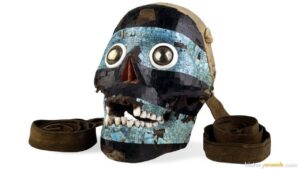
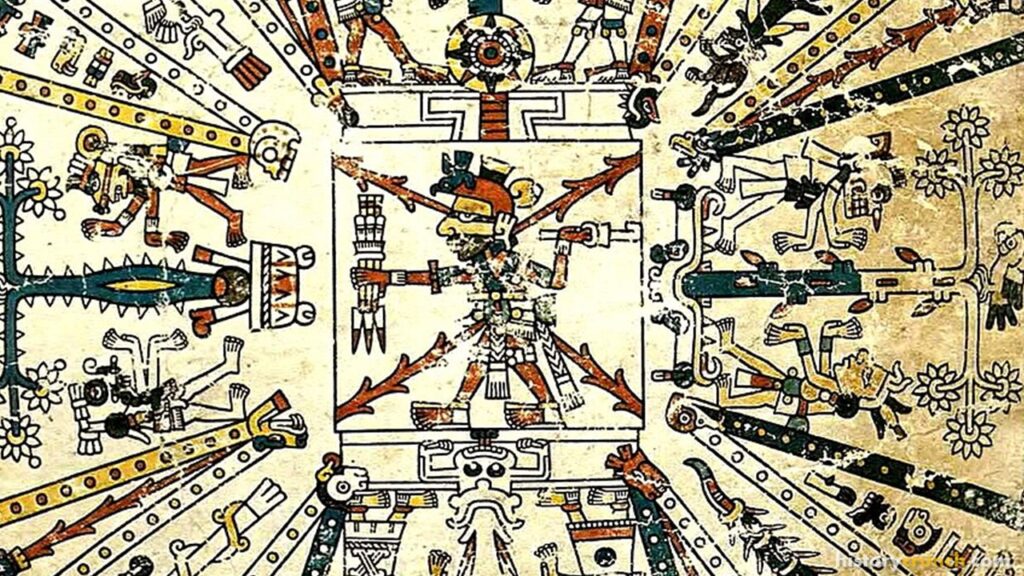
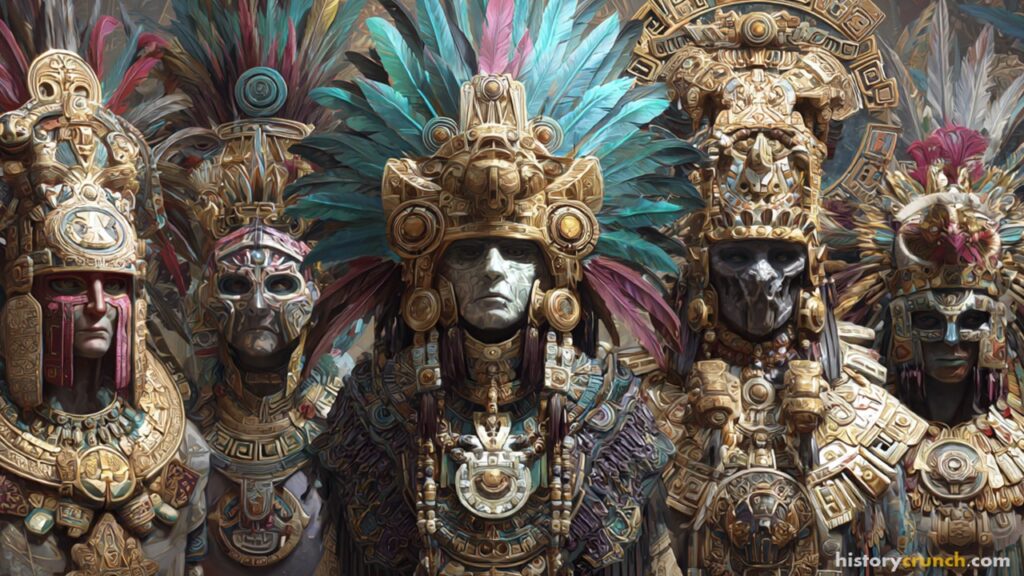
As stated above, the gods in the Aztec religion represented different aspects of life and the world for the Aztec people. The aspects that the gods represented included: culture of Aztec society and Mesoamerica, nature and the natural world, creation stories, fertility, food, death and the underworld, trade and excess or entertainment. Each god had different attributes and personality traits and were usually represented in distinct ways by the Aztec. Some could take human or animal form and were celebrated in festivals and rituals. There were many gods in the Aztec religion but some of the most prominent included: Huitzilopochtli, Quetzalcoatl, Tezcatlipoca, Mictlāntēcutli, and Tlaloc. Click the links to read more about each of the gods.
AZTEC RELIGION – HUMAN SACRIFICE
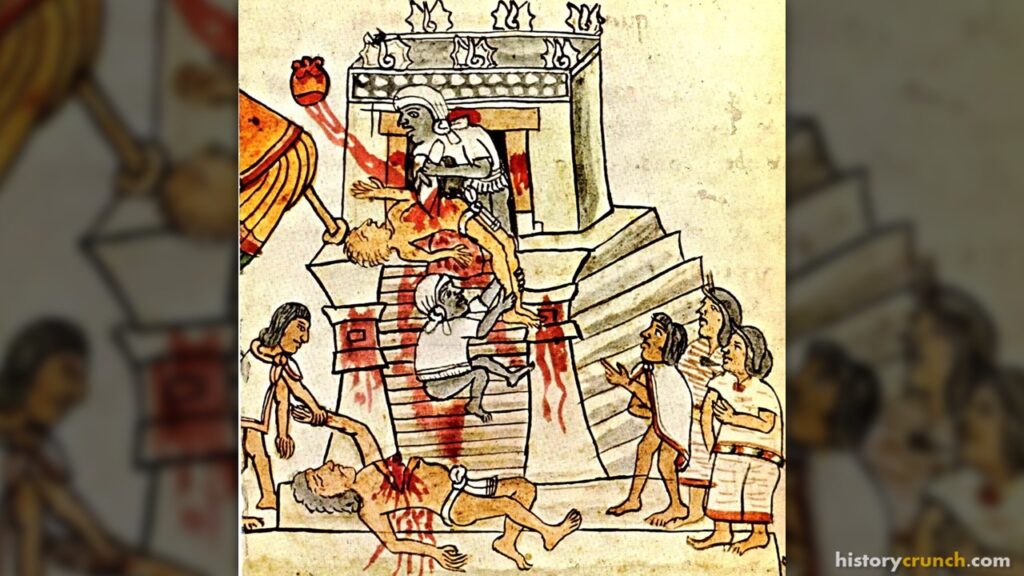
Another important aspect of Aztec religion and culture was the practice of human sacrifice. Human sacrifice had a long history in Mesoamerica, before the rise to prominence of the Aztec Empire. As such, historians consider human sacrifice to be a relatively common practice in Mesoamerica during years before and during the Aztec Empire. However, to the Spanish conquistadors that arrived in the Aztec territory in the early 1520s, the practice of human sacrifice carried out by the Aztecs was horrific and brutal. For example, several early accounts by these Spanish conquistadors highlight their horror to seeing festivals and ceremonies in which people were sacrificed atop Aztec temples and pyramids.
However, from the perspective of the Aztec, sacrifice was necessary to ensure the survival of life. For instance, in Aztec religion, the world was created from the sacrifice of the gods. As such, they viewed sacrifice as necessary to repay their debts to the gods. Therefore, sacrifice did not necessarily just focus on human beings, as both animals and precious objects were also offered to the gods. Further to this idea, some historians have suggested that the Aztec practice of sacrifice was designed to protect and ensure the survival of the universe.
As stated previously, the actual sacrifice generally took place atop large temples or pyramids with the most prominent being the Templo Mayor in Tenochtitlan. It most commonly involved the removal of the heart of the sacrificed victim. There was even ornate structure built to hold the removed hearts during the ceremony. Once having their heart removed the body was thrown down the steps of the pyramid to the crowd below. With that said, the removal of the heart was not the only method of death in ritual sacrifice. Depending on the god being celebrated and the festival requirements, ritual sacrifice could also include: death by fire, death by starvation, death by flaying (removal of the skin), death in ritual battle, and death by decapitation (removal of the head). As well, who was sacrificed changed with each festival as well. Sometimes it involved adult slaves, other times children, or people of noble birth. As stated above, death by sacrifice was considered to be an honor as your death would be in tribute to the gods and maintain the survival of the universe.
AZTEC RELIGION – INFOGRAPHIC