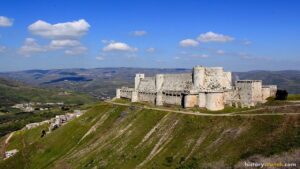
The Fifth Crusade began in 1217 CE with the goal of capturing Egypt, which was a key base of Muslim power during the timeframe of the Fifth Crusade. as a strategic path to reclaiming Jerusalem. Crusaders initially gained ground but failed to advance further due to poor planning and leadership. After a disastrous retreat and failed negotiations, the Crusade ended in 1221 with the Crusaders forced to surrender and leave Egypt.
WHAT WERE THE CRUSADES?
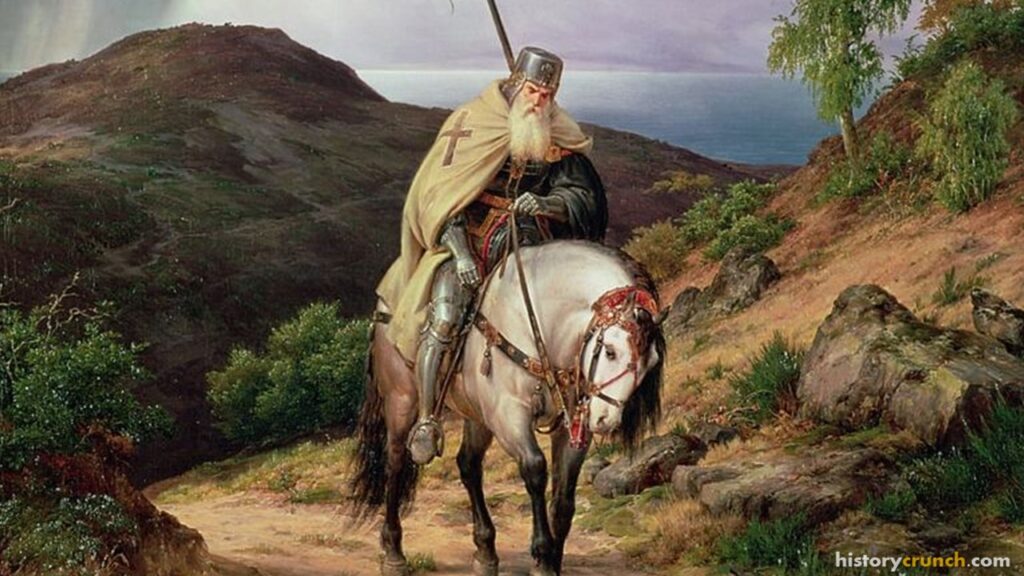
The Crusades are one of the most significant events in the history of Europe and the Middle East. They were a series of religious wars carried out by Christian crusaders from Europe during the timeframe of the Middle Ages. Beginning in 1095 CE, the Crusades saw European knights and noblemen travel to the Middle East in an attempt to capture the Holy Land away from Muslim people that had controlled the region for the previous centuries. The term crusade means ‘cross’. Therefore, the Europeans that became crusaders viewed themselves as ‘taking up the cross’. In fact, many of the crusaders wore crosses on their clothing and armor as they made their pilgrimage to the Holy Land. This article details the events of the Fifth Crusade. Click here to read more information about the other major Crusades.
FIFTH CRUSADE – WHEN AND WHY DID IT OCCUR?
The Fifth Crusade took place from 1217 until 1221 CE and was a major event in the history of the Crusades. In general, the Fifth Crusade was caused by the earlier failure of the European crusaders to capture the city of Jerusalem. This is particularly notable in the Second Crusade, Third Crusade and Fourth Crusade. For example, the Muslim leader, Saladin, had gained control over the city of Jerusalem in the Second Crusade. The crusaders returned to recapture Jerusalem in the Third Crusade, which lasted from 1189 until 1192. While the crusaders of the Third Crusade had made major gains in the Holy Land, they ultimately failed to take control of the city of Jerusalem. The Fourth Crusade was misguided, and failed to carry out any meaningful attack against the Muslims in the Holy Land. This caused many in Europe to want to return to the Holy Land again, which led to the events of the Fifth Crusade.
As stated above, the capture of Jerusalem was an important goal of the Fifth Crusade, as it was in earlier Crusades. In fact, the city of Jerusalem was the heart of the fighting of the Crusades. The city was centrally located in the Holy Land between the Mediterranean Sea and the Dead Sea. While the history of the city itself goes back much further, it was a significant site in the Crusades because of the importance it holds in the three main religions of the region: Christianity, Islam and Judaism. For Christians, Jerusalem was the site of Jesus Christ’s crucifixion and resurrection. As such, the city was vitally important to their understanding of the teachings and history of Jesus.
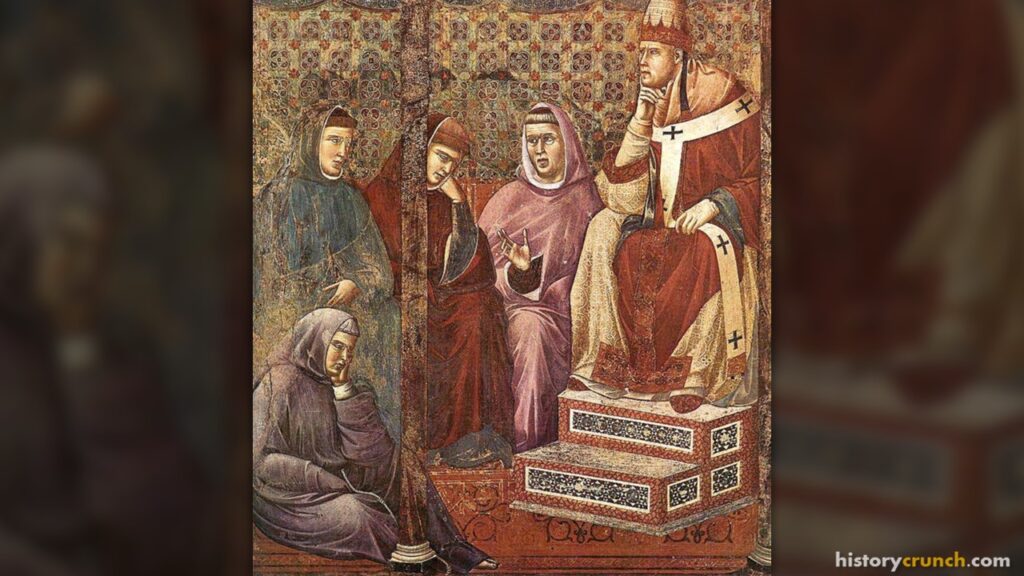
The Fifth Crusade was first called by Pope Innocent III in April of 1213, with the hope of recapturing Jerusalem from the Muslims. Pope Innocent III had also called the Fourth Crusade a decade earlier. Unfortunately, Pope Innocent III died on July 16th of 1216, before the start of the Fifth Crusade. Regardless, his replacement, Pope Honorius III continued the push for the Fifth Crusade.
FIFTH CRUSADE – MAJOR EVENTS
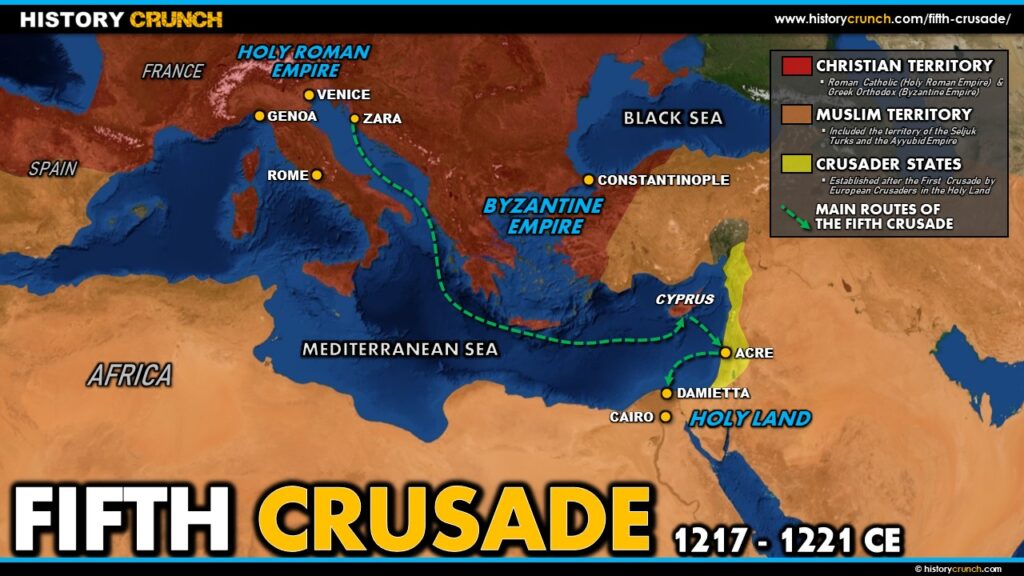
The Fifth Crusade was undertaken by many different people from across Europe, including regions such as: France, Hungary, Germany, Portugal and Georgia. It is estimated that as many as 30,000 crusaders participated in the Fifth Crusade, which is said to have first begun in July of 1217 when Andrew II of Hungary departed for the Holy Land. Andrew II was considered to be the leader of the Fifth Crusade and led his troops across the Mediterranean Sea on fleet of Venetian ships. The crusaders landed in the Holy Land in the region of Acre, where they planned their attack.
Andrew II and the crusaders experienced some early victories in the Holy Land in late 2017, due to their large army and horse mounted divisions. In fact, many Muslims fled Jerusalem in fear of a Christian takeover of the city. However, early in 1218, Andrew II became ill and returned back to Hungary, effectively ending his role in the Fifth Crusade. Others such as Oliver of Cologne led a German centered assault into the Holy Land.
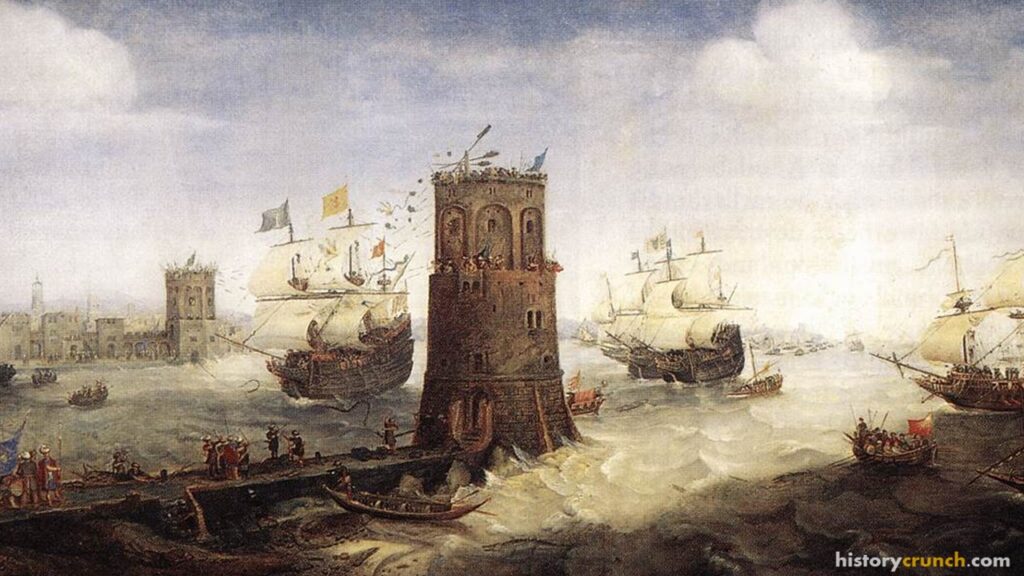
The German forces of the Fifth Crusade decided to carry out their attack against Egypt as it was the most powerful region in the Middle East at this point in history. The crusaders began their assault in July of 1218 against the city of Damietta, which was a key Egyptian stronghold on the coast of the Mediterranean Sea. The Siege of Damietta was a long and difficult battle and did not see the crusaders achieve victory until November of 1219. At one point, the crusaders were even offered the city of Jerusalem in return for giving up their siege against Damietta, but they refused and carried on their assault until they captured the city fully.
In July of 1221, the crusaders continued their attack into Egyptian territory with the intent of capturing the main city of Cairo. The hope was to conquer the Egyptian capital and then use it as a launching pad to gain full control over the Holy Land, including Jerusalem. Unfortunately for the crusaders, they experienced significant difficulties in their march to Cairo, including an unforeseen flood of the Nile River. As such, the crusaders became trapped and suffered heavy losses from frequent attacks by the Muslims. As a result, the crusaders called for a retreat and surrender to the Muslim forces. This effectively ended the Fifth Crusade.
FIFTH CRUSADE – SIGNIFICANCE
The Fifth Crusade is viewed with mixed results for the crusaders. They gained initial victories in northern Egypt, but failed to gain the foothold in the Holy Land that they had long sought. Also, as part of the crusader surrender they were forced to return the city of Damietta to the Egyptians in return for a piece of the True Cross, which is said to be the original cross that Jesus Christ was crucified on. This relic was never delivered to the Christians. Finally, the Fifth Crusade was the last crusade organized by the Roman Catholic Church, and the last time that multiple leaders from across Europe fought together for control of the Holy Land.