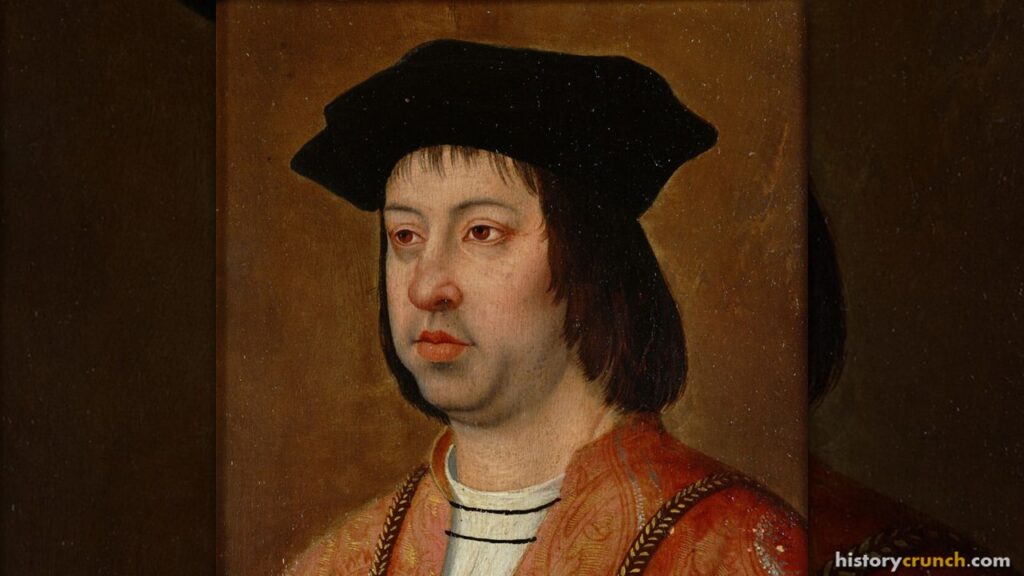
Ferdinand II of Aragon, also known as Ferdinand the Catholic, was one of the most important rulers in the history of medieval Spain. Together with his wife Queen Isabella I of Castile, he completed the Reconquista, established the Spanish Inquisition and funded the first voyage of Christopher Columbus in 1492 CE. Ferdinand is remembered as a skilled military commander and diplomat who played a central role in uniting the kingdoms of the Iberian Peninsula into the foundations of the modern nation of Spain.
Ferdinand II of Aragon – Early Life
Ferdinand II of Aragon was born on March 10th, 1452 CE in the town of Sos del Rey Catolico, in the Kingdom of Aragon. His father was John II of Aragon and his mother was Juana Enriquez. Ferdinand grew up in a royal court that spanned much of the western Mediterranean, and he was educated from a young age in the skills of politics, diplomacy and warfare.
Ferdinand’s early life was marked by political conflict. His father John II was involved in a long struggle with his half-brother Charles of Viana over the inheritance of Aragon. Ferdinand was drawn into this conflict at a young age and proved himself as a capable military leader. For instance, by the age of seventeen he had secured for himself the inheritance of the Aragonese throne and had won a number of important military victories in support of his father. As such, Ferdinand came to the throne already experienced in both warfare and the complex politics of the Iberian Peninsula.
Ferdinand II of Aragon – Marriage to Isabella
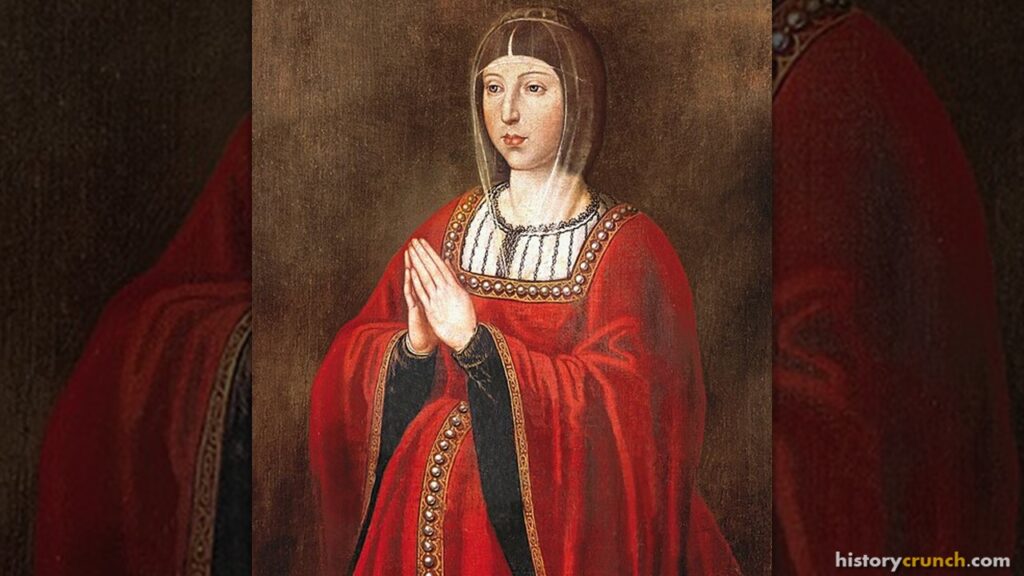
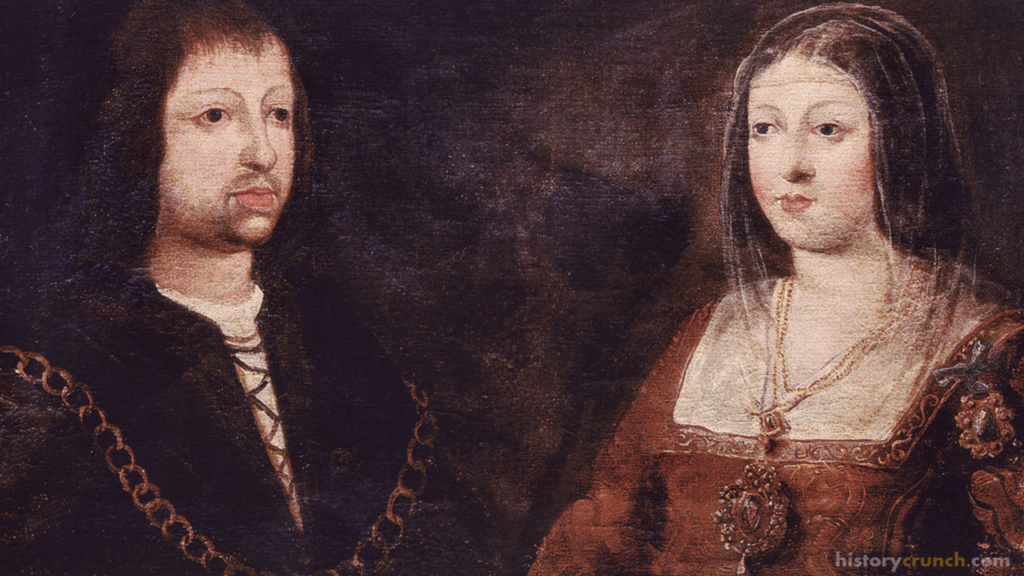
The most significant event of Ferdinand’s early life was his marriage to Isabella of Castile on October 19th, 1469 CE in Valladolid. Isabella was the heir to the throne of Castile, the largest and most powerful kingdom on the Iberian Peninsula. The marriage was a strategic alliance that both Ferdinand and Isabella had pursued carefully, recognizing that a union between their two kingdoms would create a far more powerful political entity than either could achieve alone.
The marriage faced significant opposition from several quarters. For instance, the king of Portugal and the king of France both opposed the union, fearing the power it would create. As well, Isabella’s half-brother King Henry IV of Castile initially disowned her in favor of his own daughter. Regardless, Ferdinand and Isabella were determined to make the marriage work. Isabella became Queen of Castile in 1474 CE following the death of Henry IV, and Ferdinand became King of Aragon in 1479 CE following the death of his father. As such, the two kingdoms were united under a single pair of rulers for the first time, laying the foundation for the modern nation of Spain.
Ferdinand II of Aragon – Reconquista
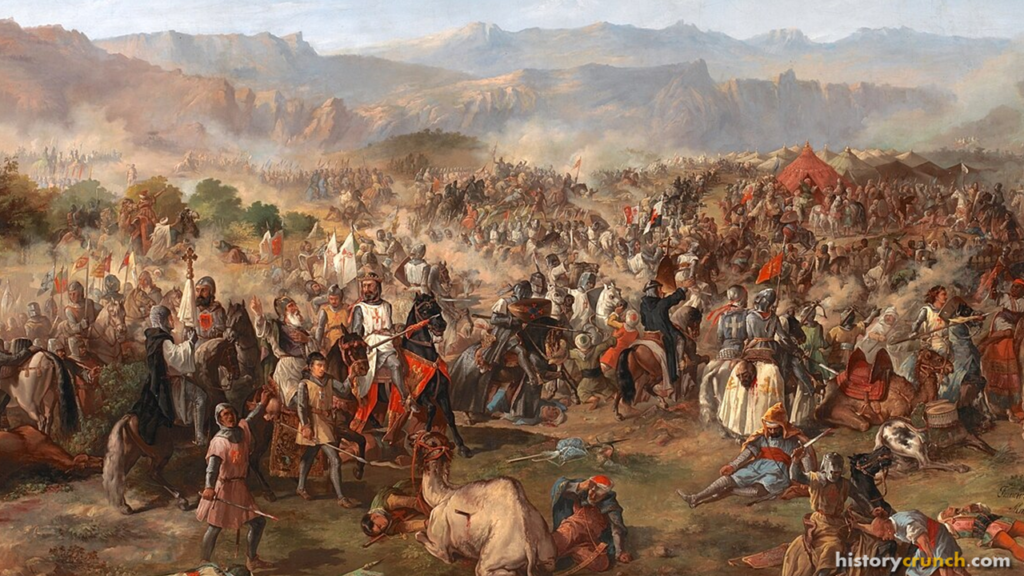
One of the most significant achievements of Ferdinand’s reign was the completion of the Reconquista. The Reconquista was a centuries-long series of wars fought between the Christian kingdoms of the north of the Iberian Peninsula and the Muslim rulers who controlled much of the region. Beginning in the early 8th century and ending in 1492 CE, the Reconquista reshaped the political, religious and cultural landscape of what is now Spain and Portugal.
By the time Ferdinand and Isabella came to power, the Muslim presence in the Iberian Peninsula had been reduced to the small southern kingdom of Granada. Ferdinand directed a military campaign against Granada that began in 1482 CE and lasted for ten years. The campaign involved a series of sieges and battles across the mountainous terrain of southern Spain. Ferdinand personally led many of these military operations and proved himself to be a capable and determined battlefield commander. On January 2nd, 1492 CE, the city of Granada surrendered to Ferdinand and Isabella, bringing the Reconquista to an end after nearly eight centuries of conflict. As such, the fall of Granada was one of the most significant events of the Middle Ages and marked the completion of one of the longest military campaigns in European history.
Ferdinand II of Aragon – Spanish Inquisition
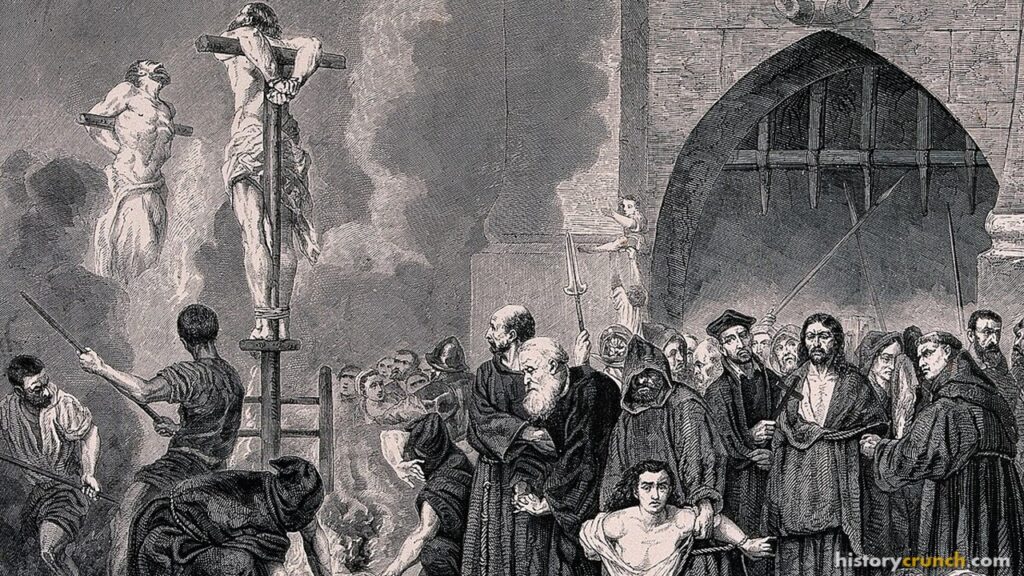
Ferdinand and Isabella were deeply committed to the Catholic faith and to the idea of a religiously unified Spain. In 1478 CE, with the approval of Pope Sixtus IV, they established the Spanish Inquisition. The Spanish Inquisition was a religious institution designed to enforce Catholic orthodoxy across Spain. It was primarily directed against Jewish and Muslim converts to Christianity who were suspected of secretly continuing to practice their old faiths.
The Spanish Inquisition operated through a network of courts and investigators who used a range of methods, including torture, to investigate and punish those it considered to be false converts. Ferdinand and Isabella appointed Tomas de Torquemada as the first Grand Inquisitor, who quickly established a reputation for harshness. The Inquisition had a profound impact on the religious and cultural life of Spain. As such, it became one of the most significant and controversial institutions of the late Middle Ages and its methods were feared across the Iberian Peninsula.
Ferdinand II of Aragon – Expulsion of the Jewish
In March of 1492 CE, the same year that Granada fell, Ferdinand and Isabella issued the Alhambra Decree, which ordered all Jewish people in Spain to either convert to Christianity or leave the country. This event is known as the Expulsion of the Jews and was one of the most significant forced migrations in the history of the Middle Ages. Historians estimate that approximately 100,000 to 200,000 Jewish people were expelled from Spain as a result of the decree. Many settled in other parts of Europe, the Middle East and North Africa. Those who converted to Christianity and remained in Spain were known as conversos and continued to be watched closely by the Spanish Inquisition. As such, the Expulsion of the Jews had a lasting impact on the Jewish people and on the cultural and religious history of Spain.
Ferdinand II of Aragon – Christopher Columbus
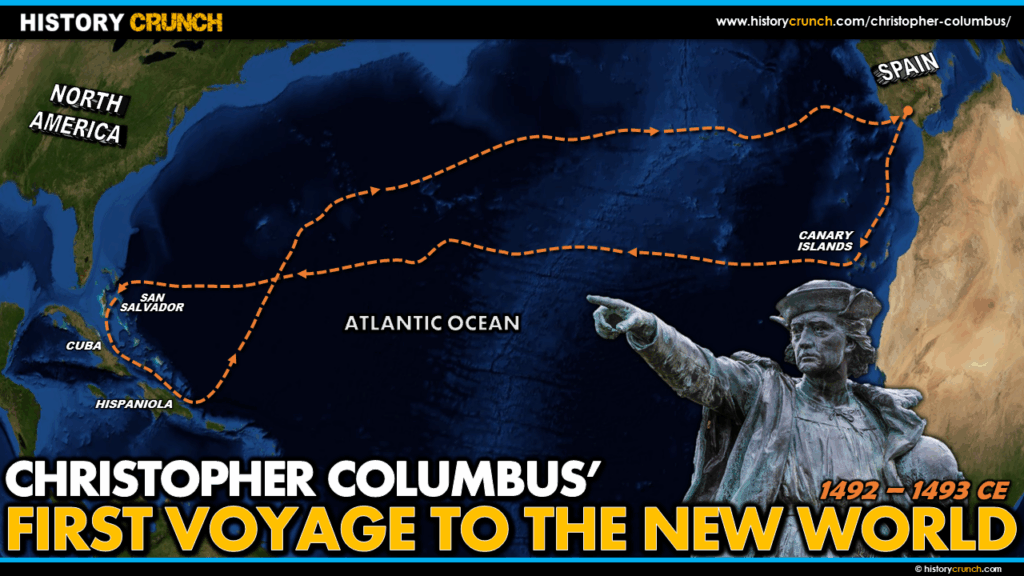
Also in 1492 CE, Ferdinand and Isabella made the decision to fund the first voyage of Christopher Columbus across the Atlantic Ocean. Columbus had been seeking support for his plan to find a westward sea route to Asia for several years and had been turned down by the Portuguese crown before approaching Ferdinand and Isabella. Isabella in particular was enthusiastic about the plan. Ferdinand was initially less convinced but ultimately agreed to support the voyage. Columbus set sail in August of 1492 CE and reached the Americas in October of the same year. As such, the funding of Columbus’s voyage was one of the most consequential decisions of Ferdinand’s reign and helped launch the Age of Exploration that would transform the world in the centuries that followed.
Ferdinand II of Aragon – Later Reign
Following the completion of the Reconquista and the voyages of Columbus, Ferdinand continued to expand Spanish power and territory. For instance, he conquered the Kingdom of Naples in 1504 CE following a successful military campaign in Italy, making Spain one of the most powerful states in Europe. As well, he added the Kingdom of Navarre to the Spanish crown in 1512 CE, further extending the territory under his control.
Isabella died on November 26th, 1504 CE, which was a significant personal and political loss for Ferdinand. Following her death, their daughter Joanna became Queen of Castile. However, Joanna suffered from serious mental illness and was unable to govern effectively. As a result, Ferdinand became regent of Castile on behalf of his daughter, effectively continuing to rule over both kingdoms. He remarried in 1505 CE, taking as his second wife Germaine de Foix, niece of the King of France, though the couple had no surviving children.
Ferdinand II of Aragon – Death and Legacy
Ferdinand II of Aragon died on January 23rd, 1516 CE in Madrigalejo, Spain, while traveling through Granada. He was sixty-three years old. He was succeeded by his grandson Charles, who became King Charles I of Spain and later Holy Roman Emperor Charles V. Ferdinand left behind a transformed Spain that was now one of the most powerful states in Europe and had begun its entry into the Age of Exploration.
Ferdinand is remembered as one of the most significant rulers of the Middle Ages. Together with Isabella, he united the kingdoms of the Iberian Peninsula, completed the Reconquista, established the Spanish Inquisition and funded the voyages that led to the European discovery of the Americas. Pope Alexander VI awarded him and Isabella the title of the Catholic Monarchs in 1496 CE in recognition of their commitment to the Catholic faith. As such, Ferdinand of Aragon was a defining figure of the late Middle Ages and his reign shaped the history of Spain and the wider world in lasting and profound ways.