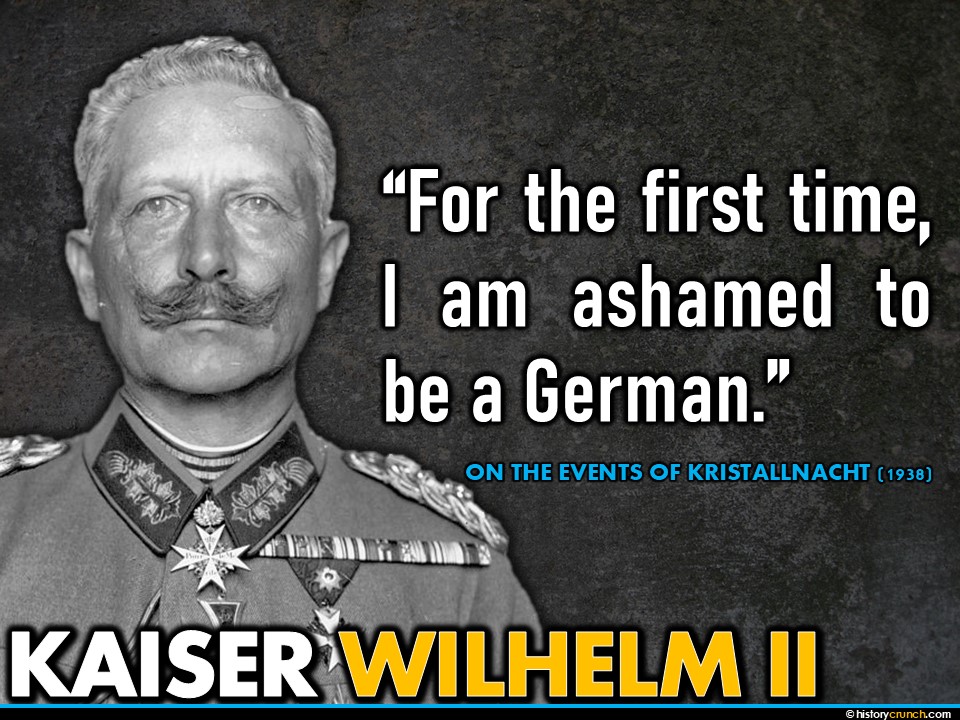
Kristallnacht, also known as the ‘Night of Broken Glass’, was an organized attack against Jewish people, Jewish businesses and synagogues that took place on November 9th to the 10th in 1938. The events of Kristallnacht took place across Nazi Germany and Austria. It was significant because historians consider it to be an early example of the Nazi regime’s persecution of Jewish people, which ultimately resulted in the brutality of the Holocaust.
WHAT WAS THE HOLOCAUST?
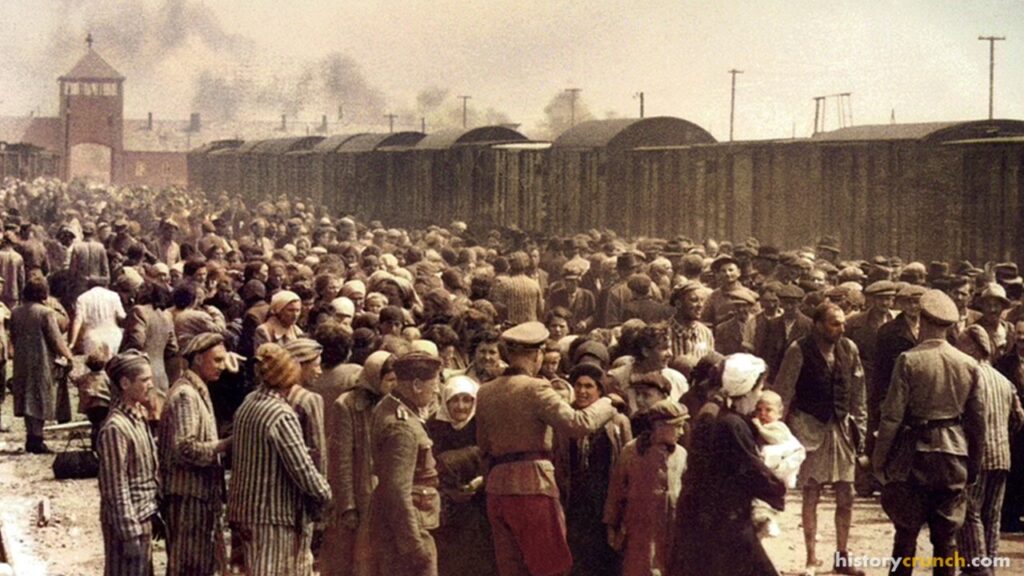
The Holocaust is one of the most important events of the 20th century and is perhaps the most significant genocide in human history. A genocide is a mass killing of a group of people for ethnic, religious or racial reasons. The term ‘holocaust’ refers to death by fire in reference to the way that people were executed during the event. It unfolded during the reign of Adolf Hitler in Germany and the major events of World War II. During the Holocaust, which occurred from 1933 to 1945, over 11 million people were executed. In total, 6 million were Jewish people, while the other 5 million included several other groups, including: disabled people, homosexuals, communists, Soviet and Polish prisoners of war, gypsies, and other religious and ethnic minorities.
KRISTALLNACHT – BACKGROUND
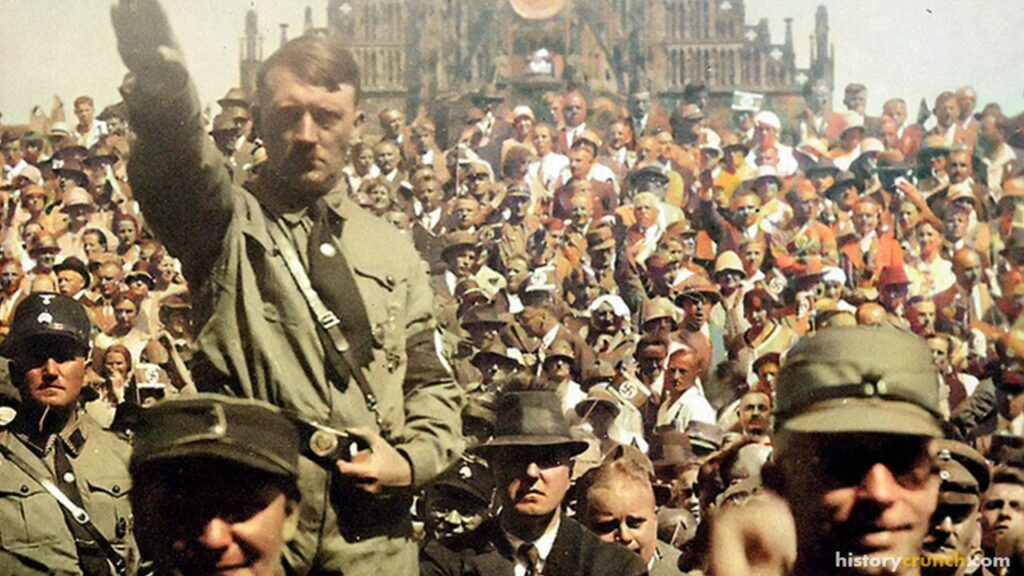
Throughout the 1930s, Adolf Hitler and the Nazi Party had risen to power in German politics. By 1938, the Nazi Party was well established in Germany and was a popular political force in the Reichstag, which was the name for the German parliament. The Nazi regime held control over German society through a variety of means, including: fear and discrimination. For instance, the Nazi Party used its own paramilitary forces to instill fear and compliance into German society.
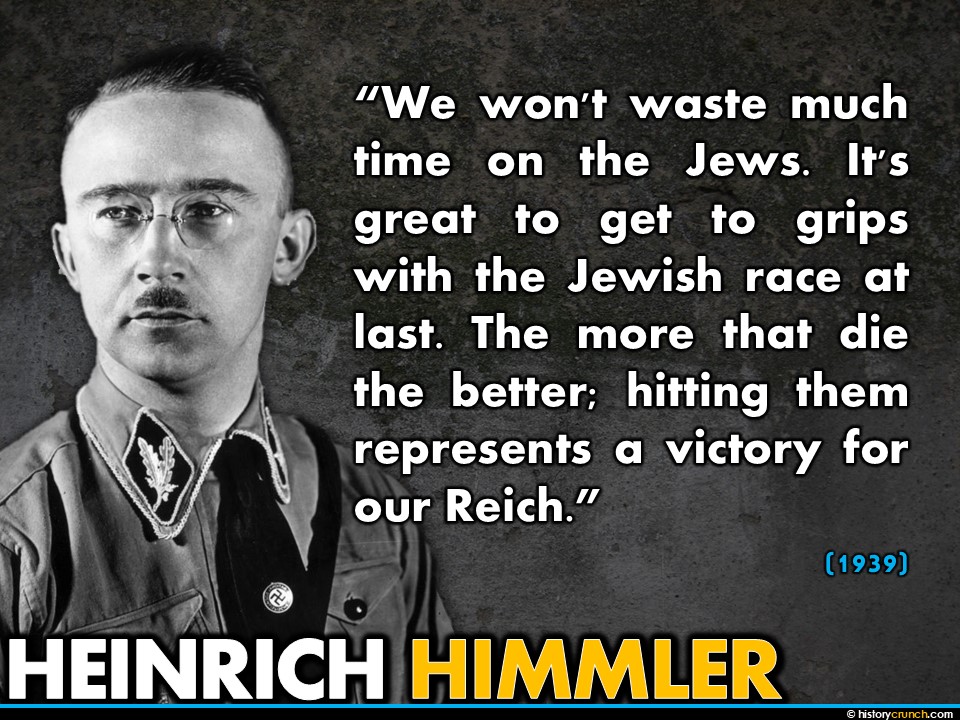
The Sturmabteilung (SA) forces were made up of members of the Nazi Party and acted as a protection force for the party while also carrying out aggressive attacks against those deemed to be enemies of Germany, including the Jewish. One of the ways the SA did this was by carry out acts of prejudice and discrimination against targeted groups. This can be seen in the passage of the Nuremberg Laws.
First passed in 1935, the Nuremberg Laws made German Jewish people second class citizens and banned sexual relations and marriage between Jewish people and persons of German blood. Officially, the Nuremberg Laws were known as the ’Law for the Protection of German Blood and Honor’. The goal of the laws for the Nazis was to limit the ability of Jewish genetic traits to spread and to legalize discrimination against Jewish people in Germany. In general, the Nazi regime carried out several different forms of discrimination against undesirable people in society, including: economic discrimination, social discrimination and political discrimination. The Nuremberg Laws best represents social discrimination, because the laws isolated Jewish people within their own country and outlawed them from expressing a sense of connection with the nation. As well, the ever present discrimination set the stage for more violent attacks against Jewish people, which was seen in the events of Kristallnacht.
KRISTALLNACHT – SUMMARY
As stated above, one of the most important events of the Holocaust is known as Kristallnacht, which translates to ‘Night of Broken Glass’. It was an organized attack carried out against Jewish people living in Germany and Austria on November 9th and 10th in 1938. The attack was carried out by Sturmabteilung (SA) forces which were the paramilitary part of the Nazi Party.
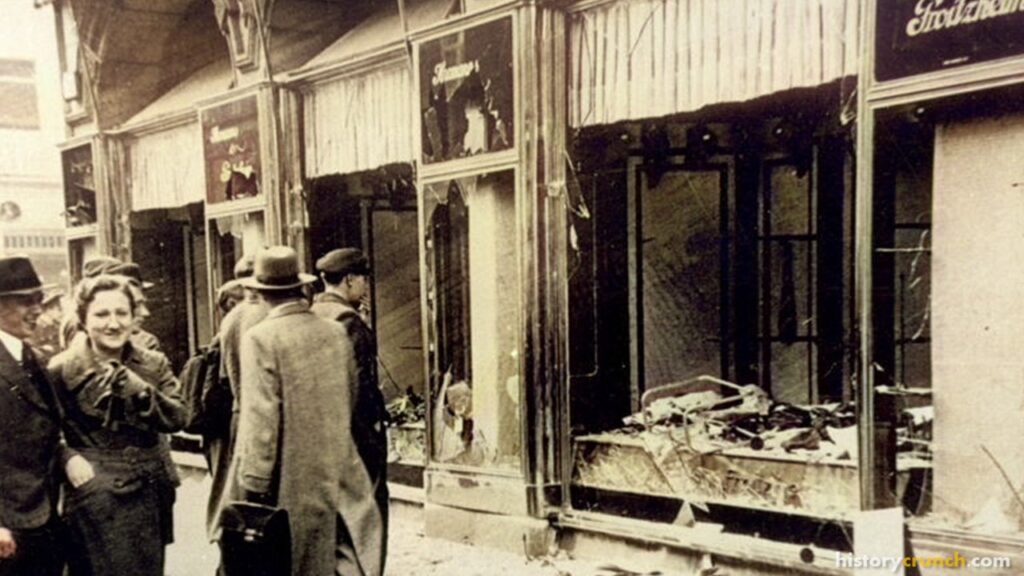
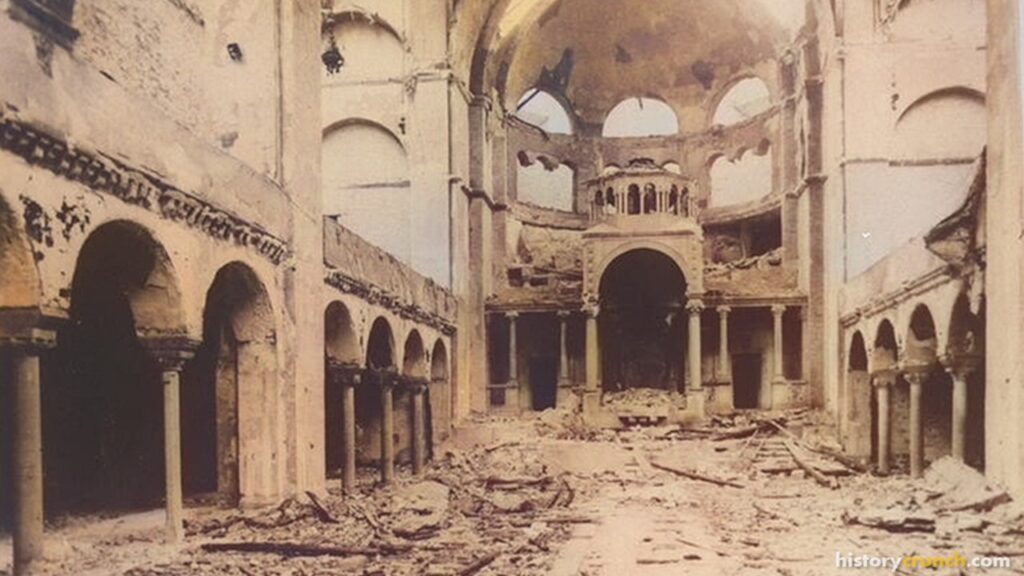
The events of Kristallnacht saw SA forces destroy Jewish owned businesses, synagogues and homes. In fact, it is believed that the Nazi forces destroyed over 1,400 synagogues, 7,500 Jewish-owned businesses, and countless homes. It was called ‘Night of Broken Glass’ due to the large amount of broken glass that was on the streets the next morning from the storefronts and homes. In total, 91 Jewish people were murdered and another 30,000 Jewish men were arrested and imprisoned. More specifically, it is believed that the imprisoned Jewish men were sent to concentration camps like Dachau and Buchenwald, where many were tortured or killed. As well, Jewish business owners were forced to pay for the damages themselves. The Nazi government blamed the Jewish community for the violence and imposed massive fines and financial penalties. In fact, insurance payouts were seized by the Nazi regime, and new anti-Jewish laws quickly followed, barring Jewish people from schools, public spaces, and economic life in German society.
KRISTALLNACHT – SIGNIFICANCE
Kristallnacht is significant because it is often viewed as the first organized violence carried out against the Jewish people of Germany, and is therefore an early stage of the Holocaust. In fact, the events of Kristallnacht displayed the increase in violence in the Nazi regime. For instance, before Kristallnacht, the Jewish people generally only faced social, economic and political discrimination. They were banned from certain spaces and denied access to job opportunities and political roles. However, Kristallnacht represented a shift from discrimination to violence.
While many Jewish people were emigrating out of the country as the Nazis rose to power, the events of Kristallnacht furthered Jewish emigration from the region. However, not all Jewish people were able to escape from the reach of the Nazi regime, which ultimately contributed to the brutality and cruelty of the Holocaust.