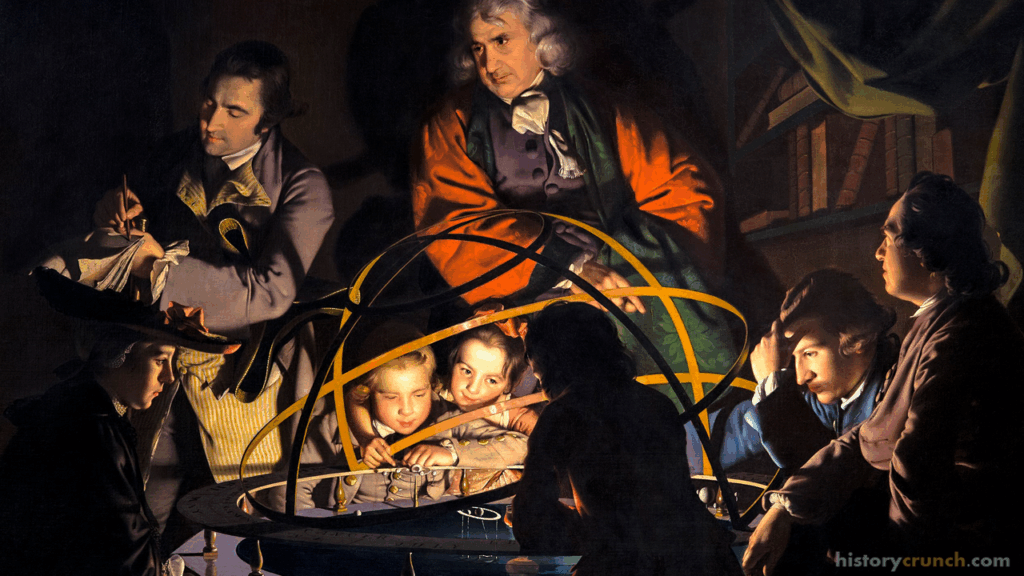
There were several main impacts of the Age of Enlightenment. In fact, the Age of Enlightenment is one of the most important events in the history of the western world. The Age of Enlightenment, or just the Enlightenment, occurred during the 18th century and is known as a time period of great change and new ideas. Specifically, the Enlightenment involved an intellectual movement, in which famous thinkers and philosophers challenged some of the basic foundations of society, including: role of the government, basic human nature, sources of authority and ideas centered on liberty. As such, the development and history of the Age of Enlightenment led to several significant impacts.
IMPACTS OF THE AGE OF ENLIGHTENMENT – GOVERNMENT
As stated above, the events of the Age of Enlightenment had a profound impact on the role of government and authority in society. For instance, in the time period before and during the Enlightenment, Europe was dominated by the rule of absolute monarchs. More specifically, during the 17th century many European countries were ruled by absolute monarchs such as Louis XIV of France, who held almost unlimited power. While these rulers strengthened their nations, their control also showed the dangers of unchecked authority.
However, famous thinkers from the Enlightenment, often argued against absolute authority and government. Instead, they often advocated for a separation of powers to act as ‘check’ on the power of the authority. For example, John Locke argued that people have natural rights to life, liberty, and property. Furthermore, he argued that it was the role of government to protect these rights. Furthermore, Baron de Montesquieu suggested that governments should be divided into three branches (Executive, Legislative and Judicial) to prevent abuses of power by a single leader or authority figure.
These ideas inspired major historical events such as the American Revolution in 1776 and the French Revolution in 1789. Both of these incidents saw the people of these nations lead violent revolts against absolute monarchs. As such, historians consider the new ideas of governance that emerged during the Enlightenment to be central causes to both the American and French Revolutions. Furthermore, documents such as the United States Constitution and the Declaration of the Rights of Man and Citizen were built on Enlightenment principles. These documents remain vitally important today and have been the inspiration for countless other declarations of rights and freedoms around the world.
Overall, historians consider the Age of Enlightenment to have had a profound impact on the development of democracy and modern democratic institutions. This is because, the thinkers of the Enlightenment, challenged the traditional concepts of authority and developed new ways in which authority could be established and replaced.
IMPACTS OF THE AGE OF ENLIGHTENMENT – SOCIAL STRUCTURES
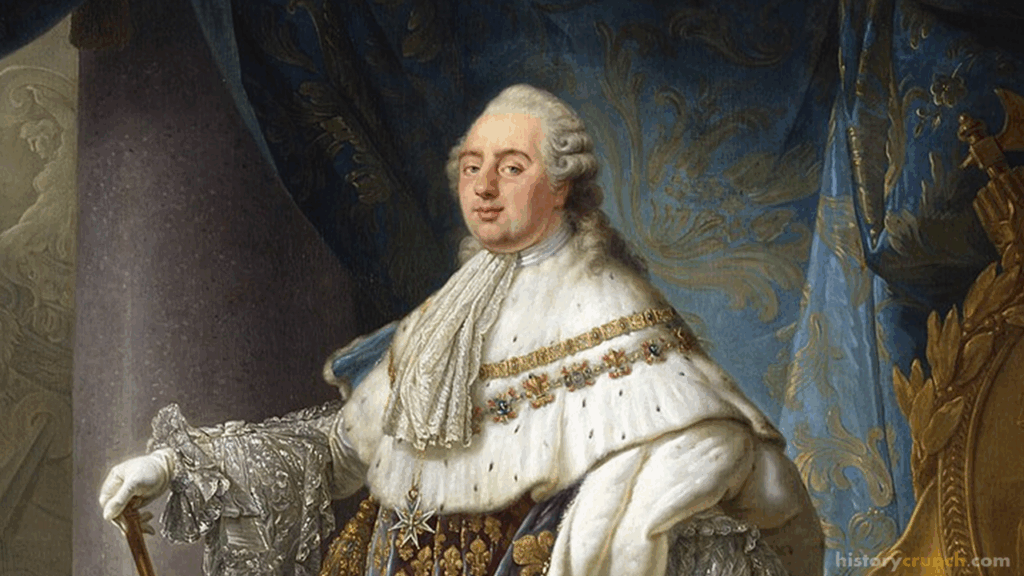
Similar to the impact on government, the Age of Enlightenment also greatly impacted the social structures of modern western society. This is because, before the Age of Enlightenment, the western world (ie. Europe) was dominated by societies that were highly organized and hierarchical. For instance, in France in the 1700s, life was dominated by the ‘Estates System‘. French society at the time was divided between distinct classes or groups in society.
At the top of society was Louis XVI, the absolute monarch of France. He believed that his authority to rule came from God and that any decision that Louis XVI made had to be obeyed by everyone within France. Meanwhile, French society was divided into three estates or orders. The estate to which a person belonged was very important because it determined that person’s rights, obligations and status. Usually a person remained in one estate for his or her lifetime, and any movement from upwards in the estate system could take many generations. This is the period before the French Revolution and is a time known as the Ancien Regime.
However, the thinkers of the Age of Enlightenment, challenged the norms of the time, including the basic structures of society. As such, when French peasants carried out the events of the French Revolution in the late 18th century, they did so as a means to dismantle the absolute monarchy of Louis XVI, but also to destroy the Estates System. Their goal was to replace it with a system that was based on the principles of equality, liberty and fraternity. This revolutionary push changed the course of history in France, but also around the world.
Today, most democratic countries are based on the these basic principles that offer people the freedom from rigid social structures. For instance, in modern countries such as the United States or Canada, it is possible for someone to change their political, economic or social status over time. Whereas, this would have been nearly impossible before the Age of Enlightenment.
IMPACTS OF THE AGE OF ENLIGHTENMENT – ECONOMIC
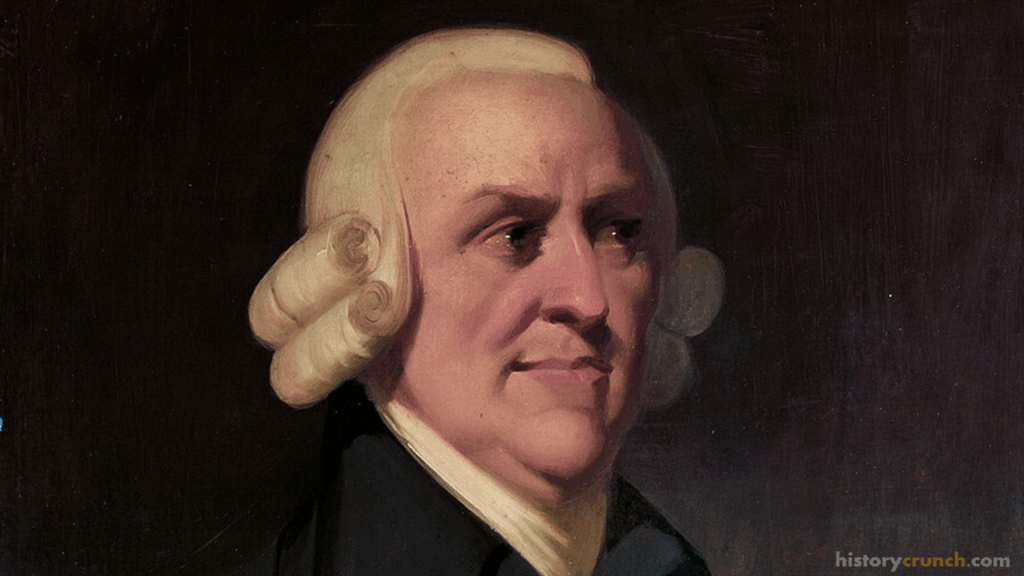
The next major impact that the Age of Enlightenment had on history was in regards to economics. Probably the most poignant example of this is in the ideas of capitalism, which were first formally established by Adam Smith, in his book ‘The Wealth of Nations’, which was published in 1776. In the work, Smith argued for free markets and limited government interference in the economy. This laid the foundation for modern capitalism. At the same time, Enlightenment thinkers criticized unfair social systems and called for reforms that promoted fairness and opportunity. Just as the Enlightenment thinkers called for freedom in governance and society, Smith called for freedom in economic life. As such, historians consider the growth of capitalism to be an impact of the Enlightenment.
IMPACTS OF THE AGE OF ENLIGHTENMENT – RELIGION
The Age of Enlightenment also had substantial impacts on religion. For instance, before the Enlightenment, religion dominated much of European life, and religious intolerance often led to wars and persecution. However, with the birth of the Enlightenment, prominent thinkers began arguing for rational thinking and the promotion of rights and freedoms. For example, thinkers such as Voltaire argued for freedom of religion and freedom of thought. These ideas, along with others by other prominent thinkers of the time, weakened the power of the Catholic Church and encouraged societies to become more secular, which means non-religious.
The movement to promote rights and freedoms was profound, in that it opened the doors for people to practise whatever religious traditions they wanted, or none at all. This has altered the role of religion in modern democracies, in that these societies now include a ‘separation of church and state’, meaning that religious tradition is separate from government rule.

IMPACTS OF THE AGE OF ENLIGHTENMENT – EDUCATION
Education was also impacted by the events of the Age of Enlightenment. Famous philosophers from the time of the Enlightenment believed that knowledge, reason and logic could improve the human condition. They were driven by advancements that emerged from the Scientific Revolution. In fact, the Enlightenment built on the earlier work of the Scientific Revolution which occurred in the centuries before the Enlightenment (16th and 17th centuries). The Scientific Revolution involved a movement in society towards modern science based on using logic and reason to come to informed conclusions.
For example, Denis Diderot’s famous work ‘Encyclopédie’ collected and shared information on science, philosophy, and the arts. It helped spread knowledge to a wider audience and furthered the revolution of information that began with the invention of the printing press during the Renaissance. In fact, during the time of the Enlightenment, literacy rates increased, schools expanded, and the middle class became more involved in cultural and political life. People began to believe in the power of education to bring progress. As such, historians view the Enlightenment as an important turning point in the history of education. For instance, the main goals and principles of the Enlightenment are still viewable in the education systems of modern societies.