The Age of Enlightenment occurred in the century before the outbreak of the French Revolution in 1789 CE. As such, many historians consider the Age of Enlightenment to be a significant factor that caused the outbreak of the revolution in France. For instance, the Age of Enlightenment set the stage for new, revolutionary ideas about government and society that ultimately inspired the people of France to overthrow the absolute monarchy of King Louis XVI.
WHAT WAS THE AGE OF ENLIGHTENMENT?
The Age of Enlightenment is one of the most significant events in the history of Western civilization. The Age of Enlightenment, also known as just the ‘Enlightenment’ or the ‘Age of Reason’, occurred during the 18th century and is known as a time period of great change and new ideas. Specifically, the Enlightenment involved an intellectual movement, in which famous thinkers and philosophers challenged some of the basic foundations of society, including: role of the government, basic human nature, sources of authority and ideas centered on liberty. Some of the most prominent of these thinkers, included: Thomas Hobbes, John Locke, Jean-Jacques Rousseau and Voltaire.
Ultimately, the Enlightenment transformed the way people thought about government, religion, science, and human rights. But what caused this dramatic shift in ideas? The Enlightenment did not appear suddenly—it was the result of several important historical developments that encouraged people to focus on reason, evidence, and critical thinking instead of tradition.

HOW DID THE AGE OF ENLIGHTENMENT IMPACT THE FRENCH REVOLUTION?
As stated above, the Age of Enlightenment occurred during the 18th century, in the decades before the 1789 outbreak of the French Revolution. Although the Enlightenment took place many years before the outbreak of the French Revolution, its ideas and achievements still had a profound effect on the French Revolution. In fact, many historians today look back on the Enlightenment as a major cause of the revolution.
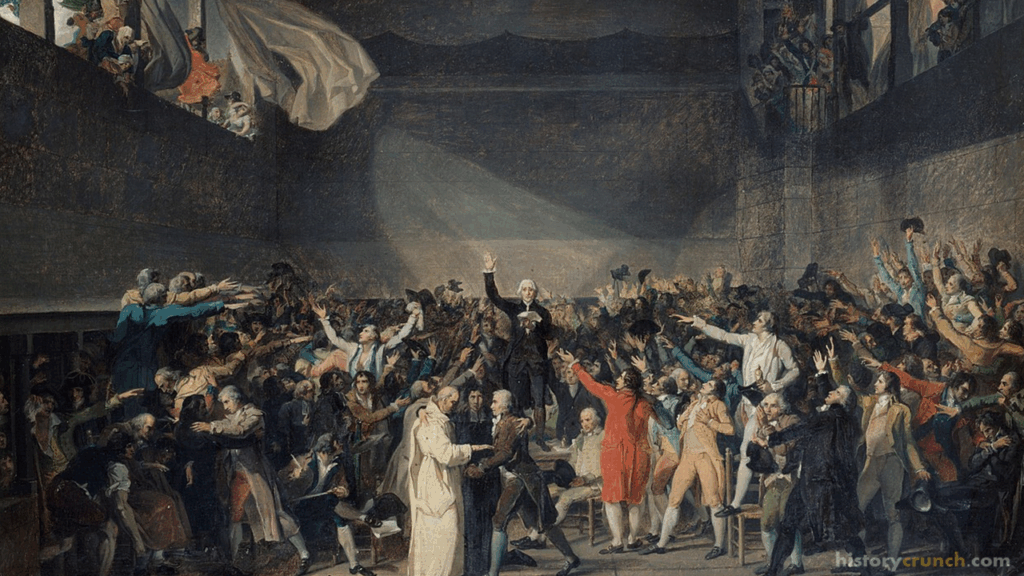
The French Revolution saw the feudal society of France overthrow the absolute monarchy of Louis XVI in favor of a republic that was based on respect for individual rights of the people. The ideals of liberty and equality, that were needed to overthrow Louis XVI, emerged first from the writings of important and influential thinkers of the Age of Enlightenment. Specifically, the writings of John Locke, Jean-Jacques Rousseau and Baron de Montesquieu greatly influenced the revolutionaries in France. Each of these three Enlightenment thinkers questioned the traditional authority of an absolute monarch and argued against the rigid class divisions of feudalism, or the estates-system, present in France. Their questioning of authority and the role of the government inspired the revolutionaries, and ordinary citizens, of France. In fact, the ideas of many Enlightenment thinkers were commonly discussed and debated in the salons of France, in which intellectuals and would gather to discuss the ideas of the day. In general, the French Revolution is often viewed today as a time when the ideas of the Enlightenment were put into action.
Another impact of the Enlightenment on the French Revolution can be seen in the Declaration of the Rights of Man and of the Citizen. The document was adopted by the National Assembly on August 26th, 1789. The declaration was vitally important to the French Revolution because it directly challenged the authority of Louis XVI. For example, the Declaration of the Rights of Man and of the Citizen set out a series of individual rights protected by law. The basic principles of the declaration can be seen in the ideas and arguments of the great thinkers of the Enlightenment. As well, the declaration is considered to be one of the first documents that argued in favor of natural rights for all citizens and is seen as a major turning point in the history of the modern western world.