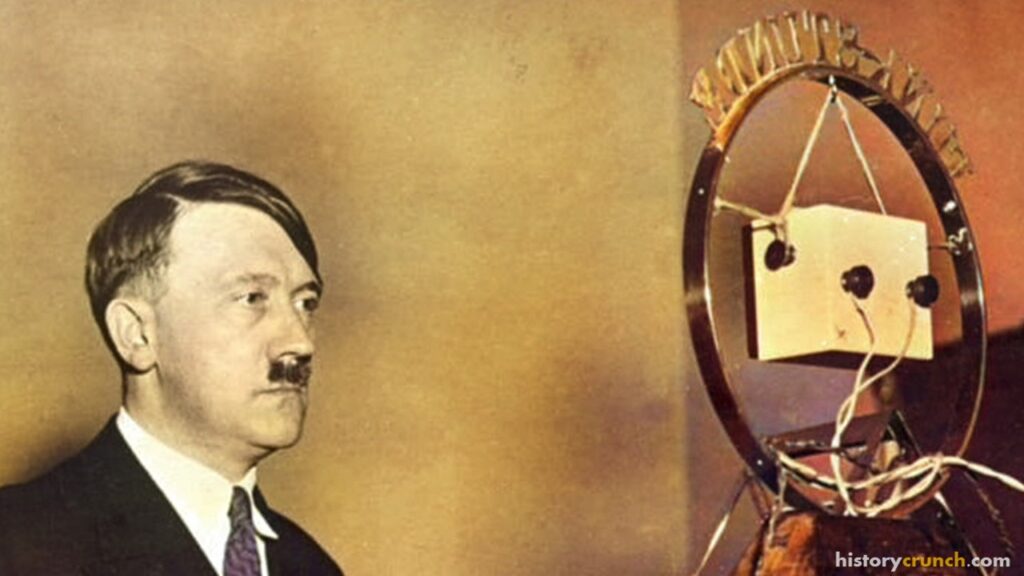
Adolf Hitler’s rise to power was a series of events that saw him take advantage of political instability, economic hardship, and widespread anger in post-World War I Germany. Born in Austria in 1889, Adolf Hitler served for Germany in World War I and later joined the German Workers Party in 1919, which later became the National Socialist German Workers Party (Nazi Party). Hitler quickly rose through the ranks of the Nazi Party and after becoming leader promoted a political platform based on ultranationalism, anti-Semitism, anti-communism, and the complete rejection of the terms of the Treaty of Versailles.
ADOLF HITLER’S RISE TO POWER – JOINS THE NAZI PARTY
Hitler began his rise to power in German politics after serving for Germany in World War I. In the summer of 1921, he assumed control of the political party called the ‘National Socialist German Workers Party’ (Nazi Party) and began to work to increase its prominence in German politics. He did this by delivering his characteristic public speeches concerning his views on the state of Germany. Hitler was masterful at public speaking in that he was charismatic and impassioned when he spoke.
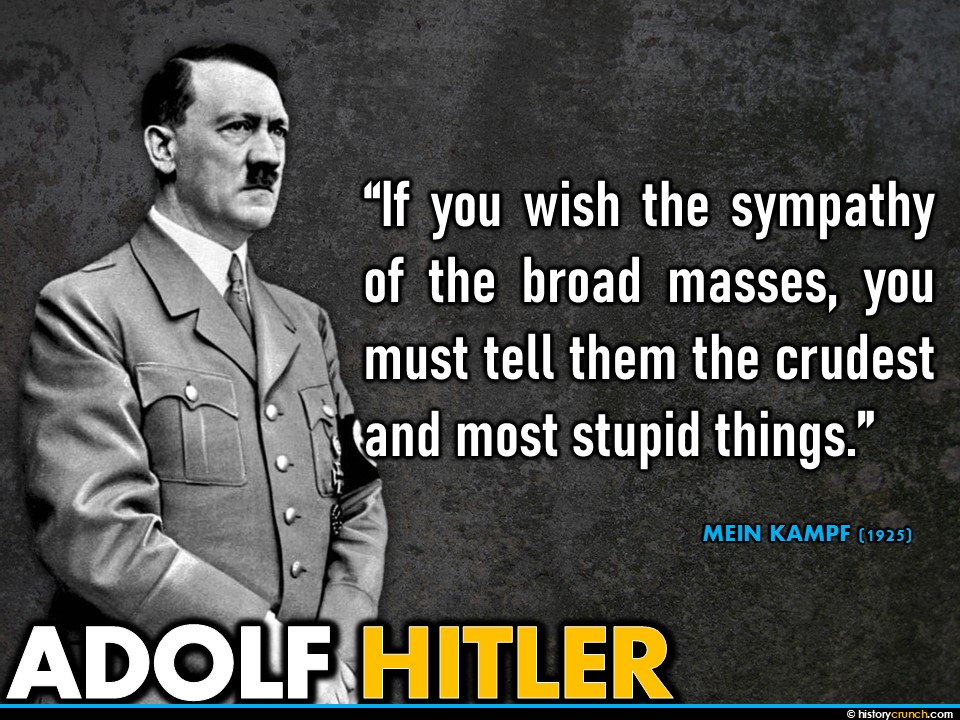
ADOLF HITLER’S RISE TO POWER – HITLER YOUTH AND THE S.A.
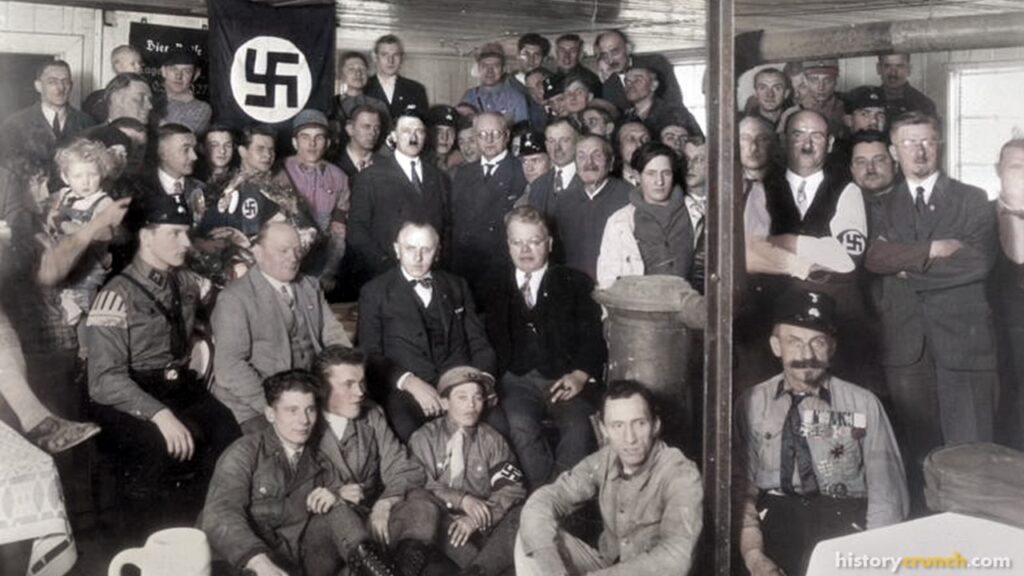
Next, Hitler worked to create and develop two important organizations for the Nazi Party. Near the end of 1922 and the beginning of 1923, he formed the basics of what would eventually become the Hitler Youth. This was a paramilitary youth organization that promoted the ideals of fascism and the Nazi Party in general. The Hitler Youth existed from 1922 to 1945 and was the second oldest paramilitary Nazi group, founded one year after its adult counterpart, the Sturmabteilung (the S.A.). It was made up of different sections for male youth ages 14–18; younger boys for ages 10–14; and a general girls section. The Hitler Youth were viewed as future “Aryan supermen” and were indoctrinated in anti-Semitism. The organization put more emphasis on physical and military training than on academic study. The other organization that he developed at generally the time was the Sturmabteilung (S.A.), which was the original paramilitary organization of the Nazi Party and was also referred to as the “Brown Shirts”. The SA was based on an ideology where commitment, effectiveness and political reliability, not class or education, would determine how far they succeeded in the organization. The SA also stressed total loyalty and obedience to orders unto death.
ADOLF HITLER’S RISE TO POWER – BEER HALL PUTSCH
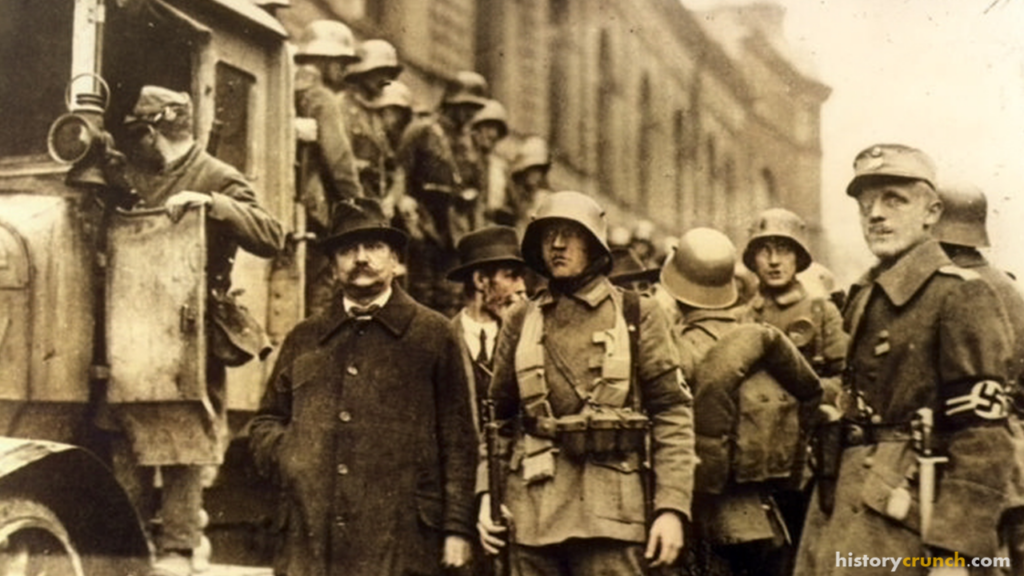
Inspired partially by Benito Mussolini in Italy, Hitler decided in 1923 that the Nazi Party would need to seize power in Germany through the use of force. In November of 1923 Hitler and the S.A. led the Beer Hall Putsch, which was the Nazi Party’s attempt to overrun the German government and assume control for itself. The Beer Hall Putsch was a failure and Hitler was put on trial for treason. In a rather spectacular trial in which Hitler endeavoured to turn the tables and put democracy and the Weimar Republic (German Government) on trial as traitors to the German people, he was convicted and sentenced to five years imprisonment. He was well-treated in prison, had a room with a view of the river, wore a tie, received visitors to his chambers and was permitted the use of a private secretary. He was eventually paroled, served only a little over eight months after his sentencing in early 1924. Hitler used the time in prison to consider his political strategy and write the first volume of his book Mein Kampf (My Struggle), which was an autobiographical account of his movement and its underlying ideology. Hitler’s ideology at the time centered on extreme German nationalism, anti-Semitism, anti-communism and Lebensraum (Living Space).
ADOLF HITLER’S RISE TO POWER – GROWING THE NAZI PARTY
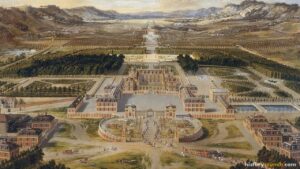
In 1925, Hitler promised to only use legal means to promote his politics and within two years, support for the Nazi Party had grown. By 1928 Nazi membership was at about 100,000 members, and they continued to gain popularity based on Hitler’s promised relief to the economic struggles that were plaguing Germany. Hitler blamed many of Germany’s economic problems on a variety of groups, such as communists, the Jewish and the Weimar Republic. Also, Hitler gained support among people from all classes of Germany because he was seen as a good leader who could return German pride. Germany was embarrassed by the conditions of the Treaty of Versailles, which was the treaty imposed on Germany at the end of the First World War by the victorious nations. In the treaty, Germany was made to take blame for the cause of the war and made to pay large amounts of reparations to cover the damage created from the war. Many Germans hated the conditions of the Treaty of Versailles and sought to end its control over Germany. Through Hitler’s tireless effort, by 1932, the Nazi Party had 800,000 members and had become the largest party in the Reichstag, which was the German parliament.
ADOLF HITLER’S RISE TO POWER – CHANCELLOR OF GERMANY
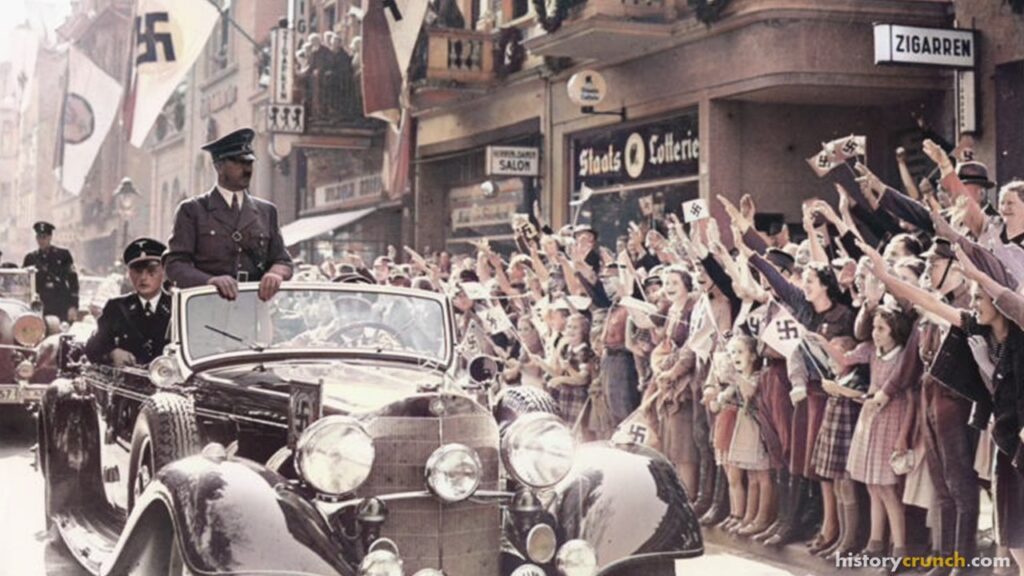
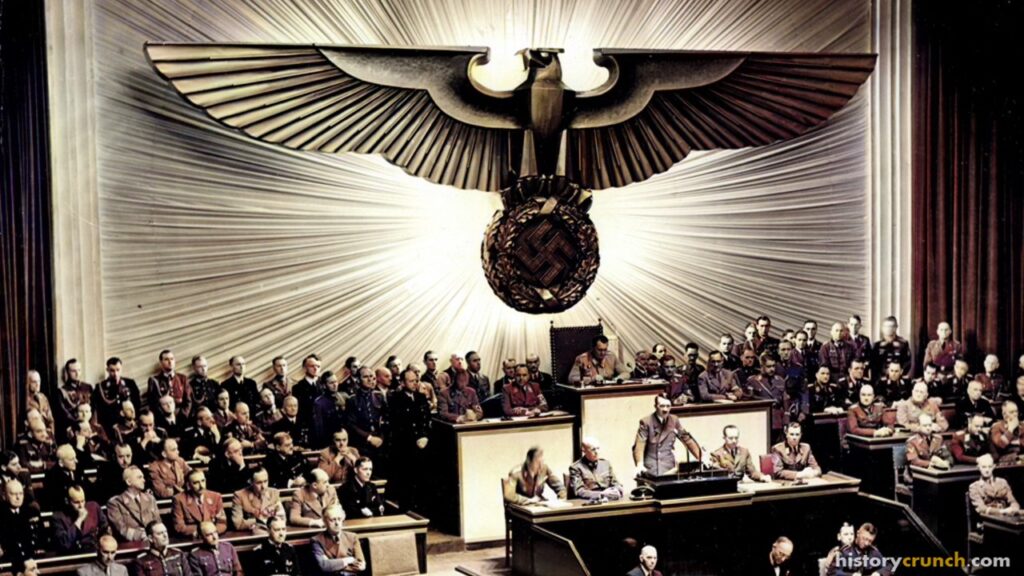
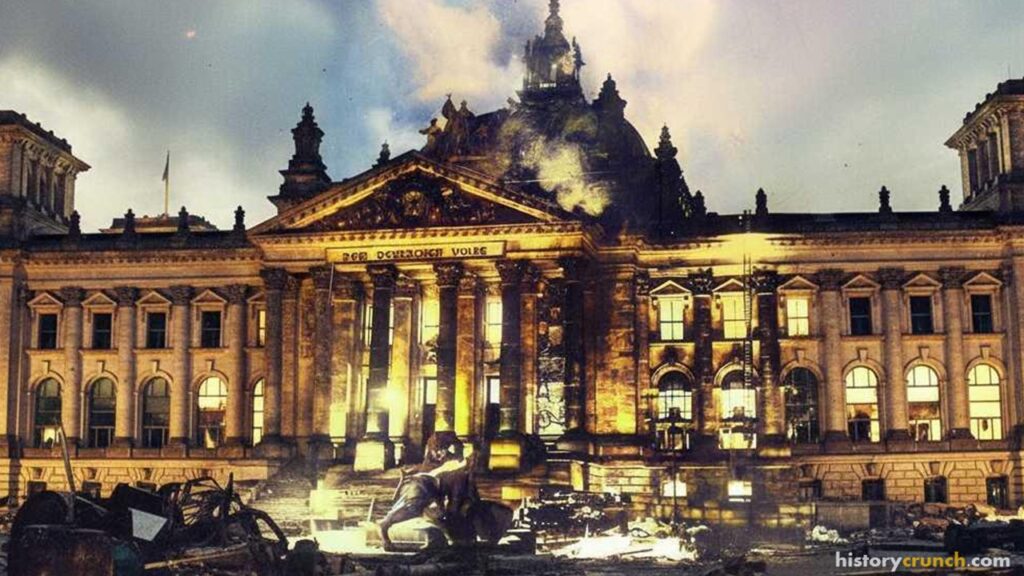
Hitler became the Chancellor of Germany, leader of the democratically elected government on January 30th, 1933. Having become Chancellor, Hitler foiled all attempts by his opponents to gain a majority in parliament, and was presented with an opportunity in February of 1933 when the Reichstag building was set on fire. Hitler believed this was his chance to use the people’s fear of communism as a means of gaining complete control of Germany. The fire was blamed on communists to build on people’s fears that there was a communist revolution emerging in Germany. Due to public and political concerns, the day after the fire Hitler asked for and received from President Hindenburg the Reichstag Fire Decree. It suspended most civil liberties in Germany and was used by the Nazis to ban publications not considered “friendly” to the Nazi cause.
ADOLF HITLER’S RISE TO POWER – ENABLING ACT
Next, on March 23rd, 1933, Germany’s Reichstag passed ‘The Enabling Act‘ which granted Hitler and the Cabinet the authority to enact laws without the participation of the Reichstag for four years. This allowed Hitler and the Nazi Party to ban all other political parties and Germany ceased to be a democratic country and became a dictatorship under Adolf Hitler. German President Paul von Hindenburg signed ‘The Enabling Act’ under public pressure of a communist takeover and based on the popularity of the Nazi Party and Hitler within Germany.
ADOLF HITLER’S RISE TO POWER – FUHRER
President Paul von Hindenburg died on August 2nd, 1934. Rather than holding new presidential elections, Hitler’s cabinet passed a law proclaiming the presidency dormant and transferred the role and powers of the head of state to Hitler as Führer und Reichskanzler (leader and chancellor). As head of state, Hitler now became supreme commander of the armed forces. Hitler’s rise to power of Germany was complete.