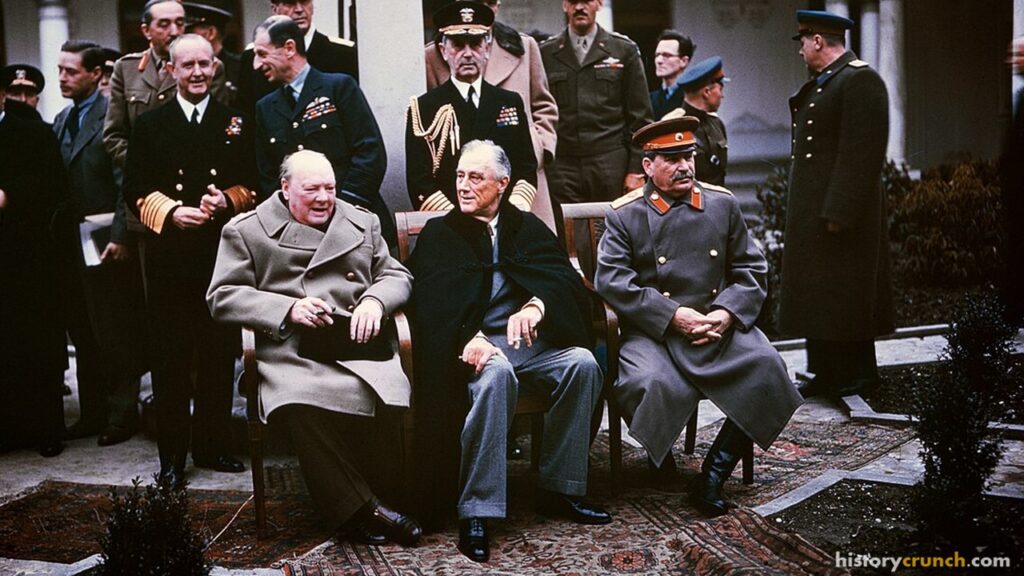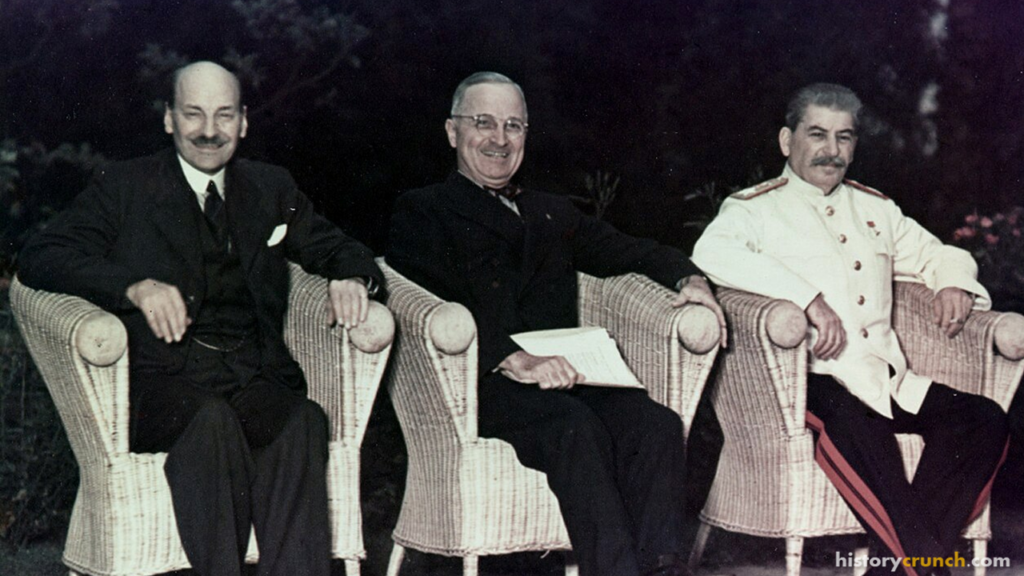
The Potsdam Conference was an meeting of the Allied leaders (United States, Britain and the Soviet Union) during the end stages of World War II in 1945. It saw the Allied leaders of World War II, discuss postwar plans for Europe and how to handle a defeated Nazi Germany. The Potsdam Conference resulted in agreements on the demilitarization and division of Germany into different occupation zones. However, tensions also emerged between the Allies, particularly between the Soviet Union and the other Allied nations. These disagreements contributed to the growing mistrust that ultimately led to the outbreak of the Cold War in the aftermath of World War II. The Potsdam Conference was one of two major conferences held by the Allied nations at the end of World War II. The other major meeting was the Yalta Conference, which took place in February of 1945. Historians consider both conferences to be significant to the end of World War II and the outbreak of the Cold War.
POTSDAM CONFERENCE – SUMMARY
The Potsdam Conference occurred from July 17th to August 2nd in 1945 and was a wartime meeting of the Allied leaders, including: Harry S. Truman, Winston Churchill (later replaced by Clement Attlee) and Joseph Stalin. Truman had just replaced Franklin D. Roosevelt as President of the United States following his death. The meeting took place in Potsdam, which at the time was in the Allied controlled area of Germany.
The purpose of the Potsdam Conference was for the three Allied powers to begin discussing how to handle the defeat of Nazi Germany, which had occurred just recently. Other goals focused on how the world would carry on after the events and destruction of the war. While, World War II in the Pacific was not over yet, the Allies could see that the end of the war was near and that Japan would also soon be defeated. As such, the leaders were hoping to develop a plan for a postwar Europe and World.
The hope was that the three leaders could agree on how to handle world issues after the war was over, including: peace treaty issues and the effects of the war. However, the Potsdam Conference is now viewed as a major event in the Cold War as well, because it highlighted the divide between Stalin and the other two leaders. Neither side trusted the other and Joseph Stalin was resentful of the other two believing that they delayed the Normandy Invasion and Allied invasion of Italy to cause the Soviet army to struggle alone against Nazi Germany. This divide was further highlighted at the earlier Yalta Conference. As well, it is at the Potsdam Conference that Truman made Stalin aware of the American atomic weapons program (Manhattan Project) and that the Americans had developed the world’s first atomic bomb. It was also at this conference that a deep divide was created between the United States and the Soviet Union. Truman was incredibly suspicious of Stalin and his intentions and Stalin felt a similar way towards Truman. In general terms, the seeds of the Cold War were planted at the Potsdam Conference. In fact, the United States bombed Hiroshima, Japan just days after the conference ended and World War II would be over in the just a few weeks, while the Cold War was just beginning.
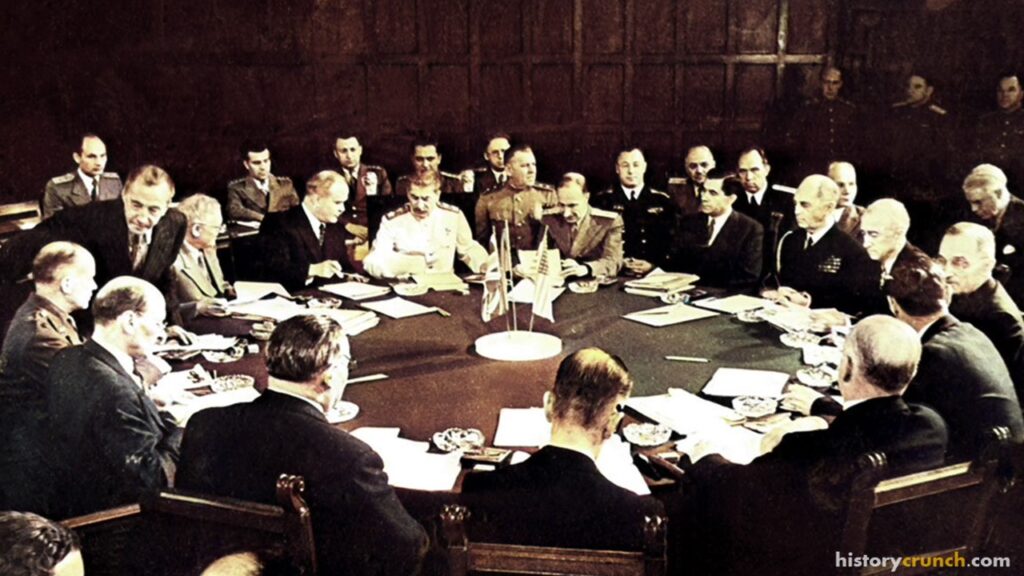
POTSDAM CONFERENCE – SIGNIFICANCE
The Potsdam Conference was significant for several key reasons. First, it was important because it helped shape the post-World War II order and laid the groundwork for the division of Europe along ideological lines. In fact, the main discussions between the Allied leaders about Germany’s reconstruction, demilitarization, and occupation set the stage for the long-term tensions that emerged during the Cold War. As stated above, the conference highlighted growing distrust between the Soviet Union and Western Allies, especially in relation to the fate of Eastern Europe. Simply put, the Potsdam Conference marked a turning point from wartime cooperation to the Cold War rivalry. As such, historians consider it to be a significant aspect of the start of the Cold War and the heightened tensions between the United States and the Soviet Union.