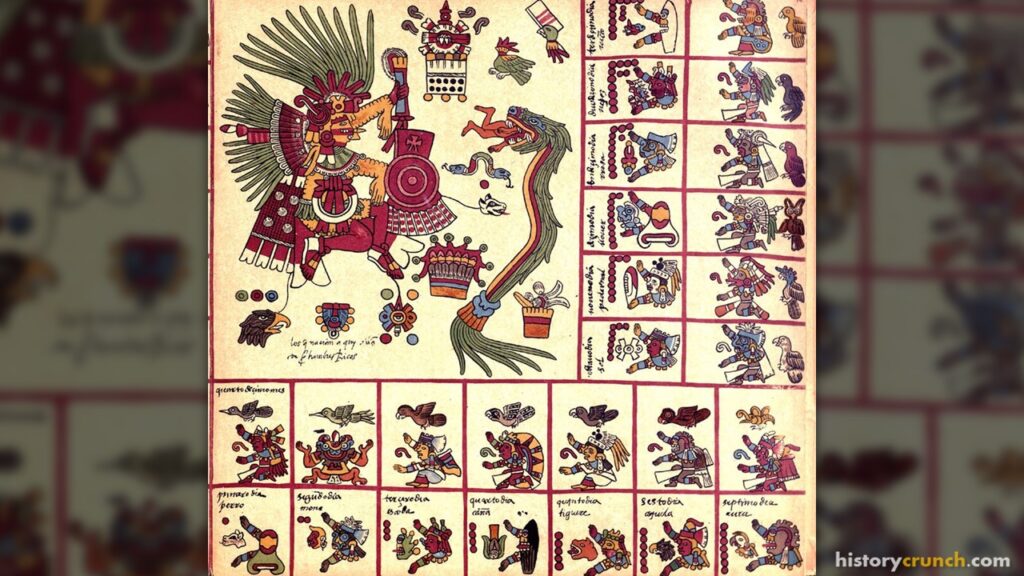
Aztec culture was a central aspect of life for people in the Aztec Empire. The Aztec Empire was a civilization in central Mexico that thrived in the time before the arrival of European explorers during the Age of Exploration. Throughout its history as a civilization the Aztec Empire expanded across much of central Mexico and other surrounding areas, to become the most dominant and powerful people in the region. Tenochtitlan, the main Aztec city (or altepetl), was the center of this vast empire. An important aspect of the Aztec Empire was the culture that the Aztec people expressed through their art, clothing, food, language, religious traditions and warfare.
AZTEC CULTURE – ART
The Aztec Empire is famous for many of its features including the amazing art and artistic objects that the Aztec people created. At its core, Aztec art was heavily influenced by the religious and cultural practices of the Aztec people. With that said, the Aztec religion and culture were based on earlier Mesoamerican civilizations, and thus Aztec art shared many similarities with the rest of Mesoamerica.
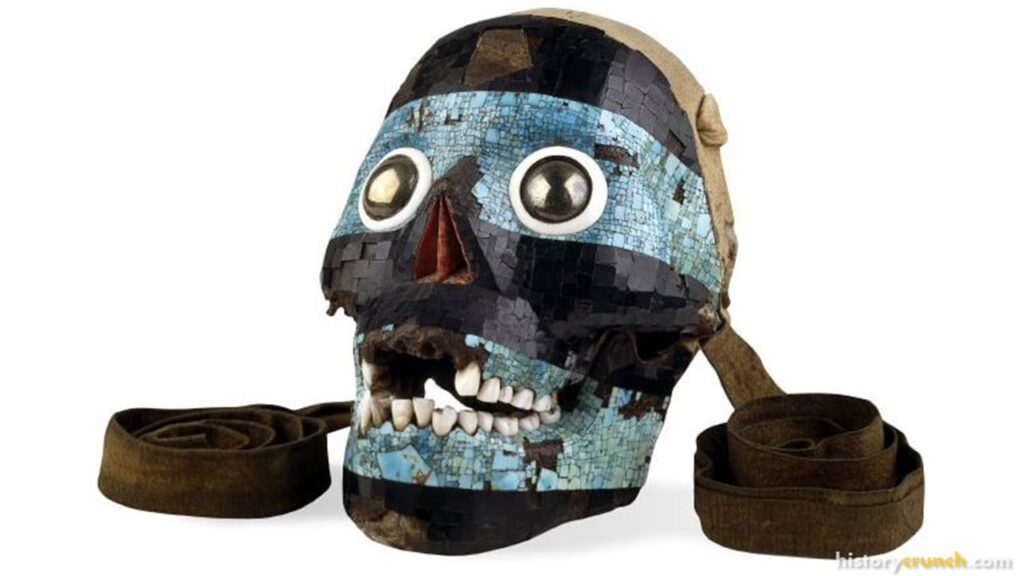
Aztec art is seen in many of the objects and structures that the Aztec people used on a daily basis. For example, Aztec clothing, pottery, jewelry, temples, and weapons contained artistic styles. More specifically, the Aztec were known to use bright colors and vivid imagery to convey their culture and religion on these objects. Common materials used to create these objects included: feathers (especially from the quetzal bird), shells, gold, silver, glass beads, and other gemstones.
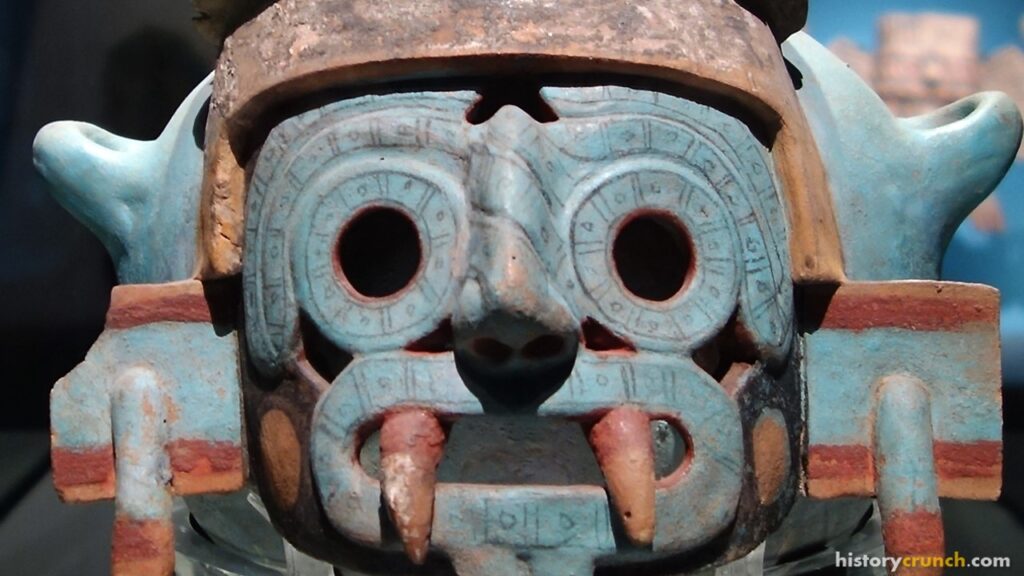
As stated above, Aztec religion and gods were central to Aztec art. As such, much of the surviving Aztec art is based on different Aztec gods. For instance, the ‘Tlaloc Vessel’ is a ceramic pot that was discovered in the ruins of the Templo Mayor (Aztec Temple) in Tenochtitlan. Historians believe that the pot dates from around 1470. It shows a depiction of the Aztec god Tlaloc. Tlaloc was an important god in Aztec religion. In Nahuatl, the Aztec language, Tlaloc translates to ‘earth’ and modern historians interpret the name as meaning ‘he who is made of earth’. The Aztecs considered him to be the god of rain, earthly fertility and water. He was a popular god throughout the Aztec Empire and widely recognized as a ‘giver of life’. The ‘Tlaloc Vessel’ is significant in Aztec art because it shows the craftsmanship of the Aztec people, as well as their use of bright colors.
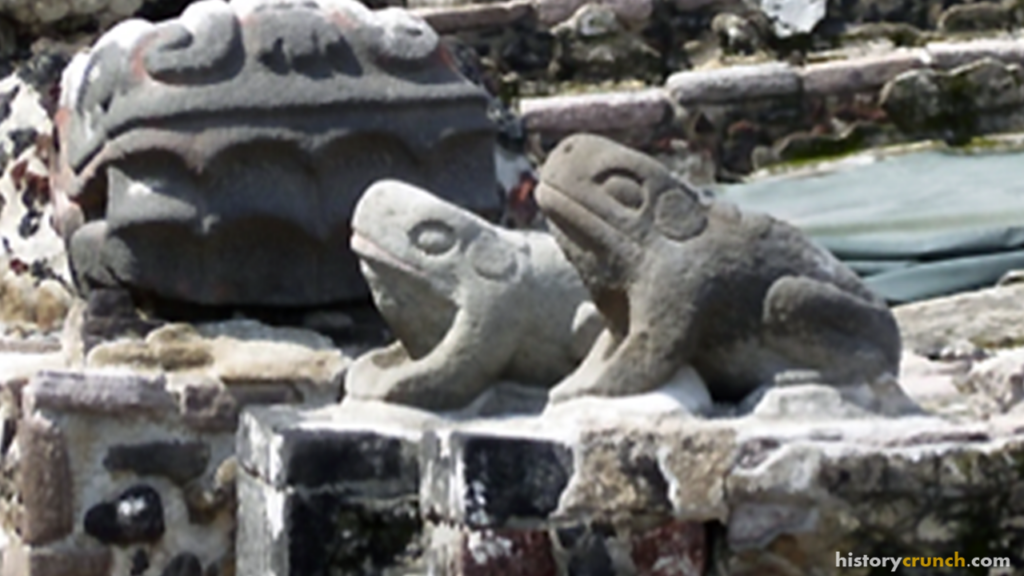
Symbolism was another important aspect of Aztec art. For instance, the natural world featured prominently in different pieces of Aztec art. Several common examples include: jaguars, frogs or toads, eagles, shells, serpents and more. More specifically, in the ruins of the Templo Mayor, a pair of frog statues was discovered which historians have referred to as the ‘Frog Altar’. The sculptures are said to have been created for the god Tlaloc and are meant to represent water, for which Tlaloc was related.
AZTEC CULTURE – CLOTHING AND DRESS
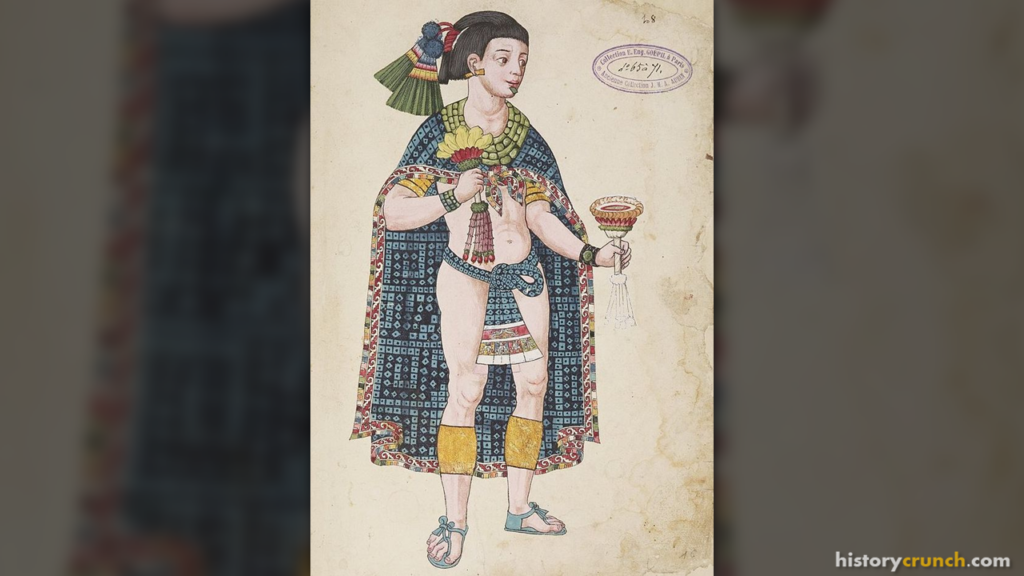
An important part of the Aztec culture was the clothing that the people made and wore. The clothing of the Aztec was similar to other pre-Columbian Mesoamerican groups, since they shared relatively similar histories and cultures. With that said, there are a few key points in relation to the clothing and dress of the Aztec. First, Aztec society was divided between distinct classes, and the different classes wore different types of clothing. For example, the high priests, nobility and royalty would wear very ornate clothing while the lower classes would not. Second, the basic item in Aztec clothing for men was the ‘maxtlatl’, which was a type of loincloth. Men would usually wear the maxtlatl with another garment that resembled a cloak called a ‘tilmahtli’. The timahtli were stylized differently to distinguish between the different classes in Aztec society. Third, Aztec women were known to wear a type of blouse called a ‘huīpīlli’ along with a long skirt called ‘cuēitl’. For footwear, the Aztec nobility wore a sandal which they called ‘cactli’. Commoners in Aztec society were not allowed to wear these as they were viewed as a sign of status. As well, all Aztec people were required to be barefoot when they entered a temple or when they were in the presence of the emperor (huey tlatoani).
Jewelry and accessories were also popular in Aztec society. For instance, both men and women were known to wear necklaces and bracelets made of gold and different types of stones. In general, jewelry was a status symbol for the Aztec, with the upper classes wearing more and the lower classes wearing less. Also prominent in Aztec jewelry and dress were feathers and shells. In fact, the blue-green feathers from the quetzal bird were highly prized and worn exclusively on the headdresses of the Aztec royalty.
AZTEC CULTURE – FOOD AND FARMING
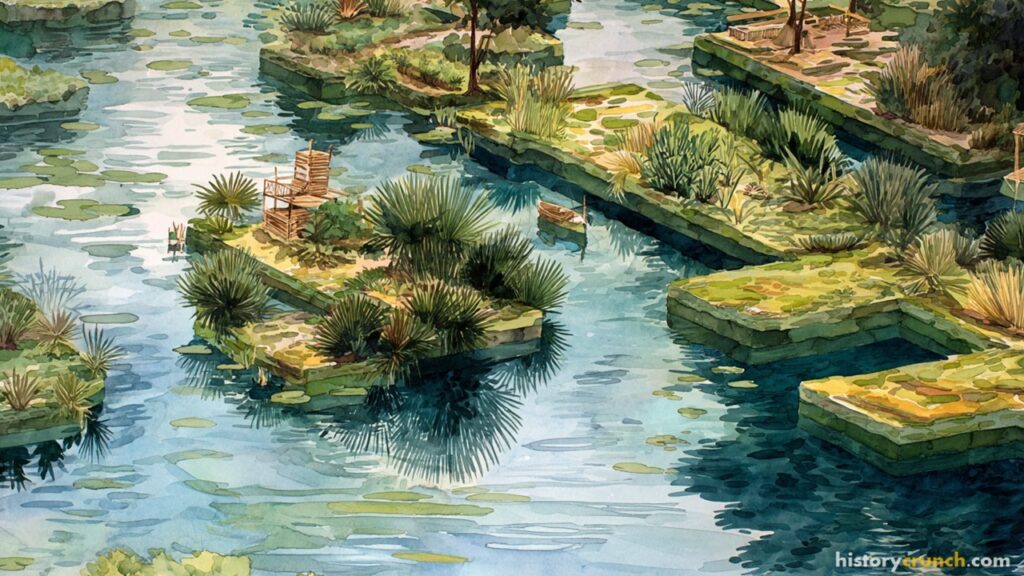
The Aztec had a diverse range of food items that made up their diet. With that said, because the events of the Columbian Exchange had not yet occurred, the Aztec where limited to locally grown foods. As such, since most domesticated animals originate from Eurasia, the Aztec diet was primarily based upon vegetables and fruits. For instance, likely the most common food item of the Aztec Empire was maize (corn). Maize is a cereal grain that was likely first grown by humans over 10,000 years ago in modern-day Mexico. As such, by the time of the Aztec Empire, maize had a long history of use in farming practices in Mexico. The Aztec would prepare the maize in several different ways, including grounding it down into a flour that could then be used to create a tortilla. Maize remains an important crop today and has spread across the world and is used in many different types of foods.
Besides maize, the Aztec also had other foods that were also important, such as beans, squash, tomatoes, potatoes, peanuts, chilies, and chocolate. In general, the vegetables listed provided the Aztec people with much of their nutritional needs. However, the Aztec were also known to eat some animals, including: ducks, turkeys, dogs, fish, and other smaller animals.
AZTEC CULTURE – LANGUAGE AND WRITING
The language of the Aztec is called Nahuatl, which was the dominant language of Central Mexico from as early as the 7th century CE. While historians and linguists have identified several different varieties of Nahuatl, it is best known as the language of the Aztecs from their rise to prominence in the 14th century until they were conquered by Spanish conquistadors in 1521. As well, there is some disagreement among historians about where Nahuatl originated as a language but it is generally accepted that the language first began in Central Mexico or a little more to the north in Northern Mexico or the Southwestern United States.
AZTEC CULTURE – RELIGION
An important aspect of the Aztec Empire and history was their religious beliefs and practices. In general, the Aztecs shared many of their main religious beliefs and practices with other societies in the region. For example, some gods and religious practices were common throughout different Mesoamerican societies, including: Toltec and Teotihuacan. As such, when learning about Aztec religion it’s important to understand that much of it also applies to other civilizations throughout the history of the region.
The concept of ‘god’ in Aztec society is referred to as ‘Teotl’ in Nahuatl, the language of the Aztec. The Aztecs, like other Mesoamerican societies, had a wide pantheon of gods. As such they were a polytheistic society, which means they had many gods and each god represented different important parts of the world for Aztec people.
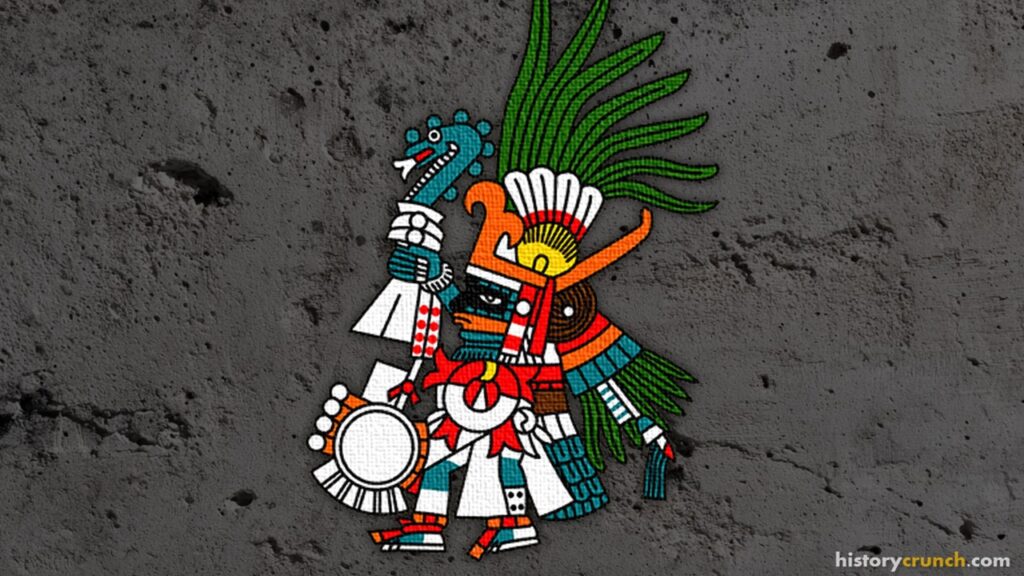
As stated above, the gods in the Aztec religion represented different aspects of life and the world for the Aztec people. The aspects that the gods represented included: culture of Aztec society and Mesoamerica, nature and the natural world, creation stories, fertility, food, death and the underworld, trade and excess or entertainment. Each god had different attributes and personality traits and were usually represented in distinct ways by the Aztec. Some could take human or animal form and were celebrated in festivals and rituals. There were many gods in the Aztec religion but some of the most prominent included: Huitzilopochtli, Quetzalcoatl, Tezcatlipoca, Mictlāntēcutli, and Tlaloc.
AZTEC CULTURE – HUMAN SACRIFICE
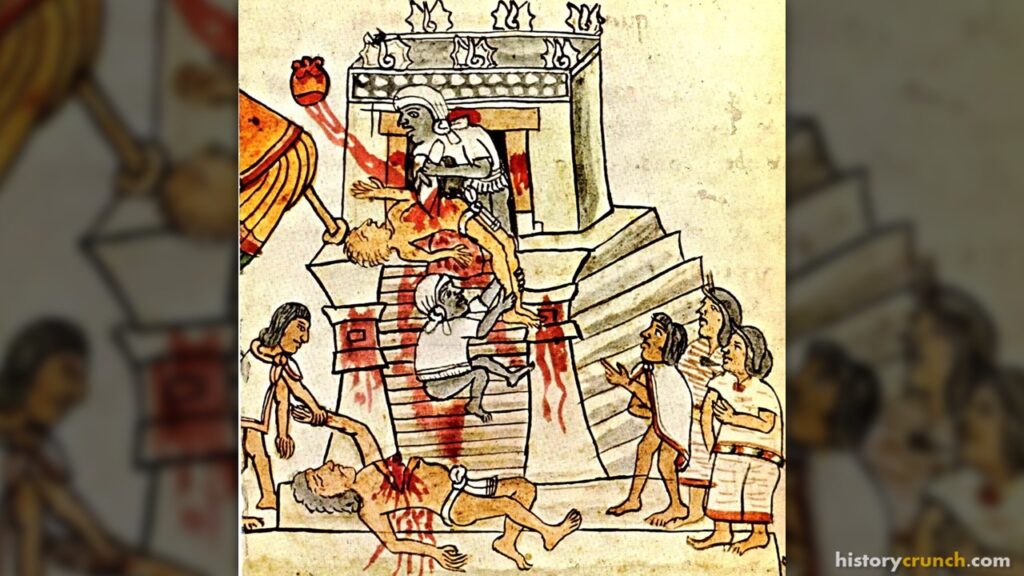
An important aspect of Aztec religion and culture was the practice of human sacrifice. Human sacrifice had a long history in Mesoamerica, before the rise to prominence of the Aztec Empire. For example, there is archaeological evidence that both the Toltec and Teotihuacan practiced human sacrifice in the centuries before the Aztec Empire. As such, historians consider human sacrifice to be a relatively common practice in Mesoamerica during years before and during the Aztec Empire.
From the perspective of the Aztec, sacrifice was necessary to ensure the survival of life. For instance, in Aztec religion, the world was created from the sacrifice of the gods. As such, they viewed sacrifice as necessary to repay their debts to the gods. Therefore, sacrifice did not necessarily just focus on human beings, as both animals and precious objects were also offered to the gods. Further to this idea, some historians have suggested that the Aztec practice of sacrifice was designed to protect and ensure the survival of the universe. This concept is best related to the Aztec god Huitzilopochtli, who was one of the main gods of the Aztec and likely the most prominent.
AZTEC CULTURE – WAR AND WARFARE
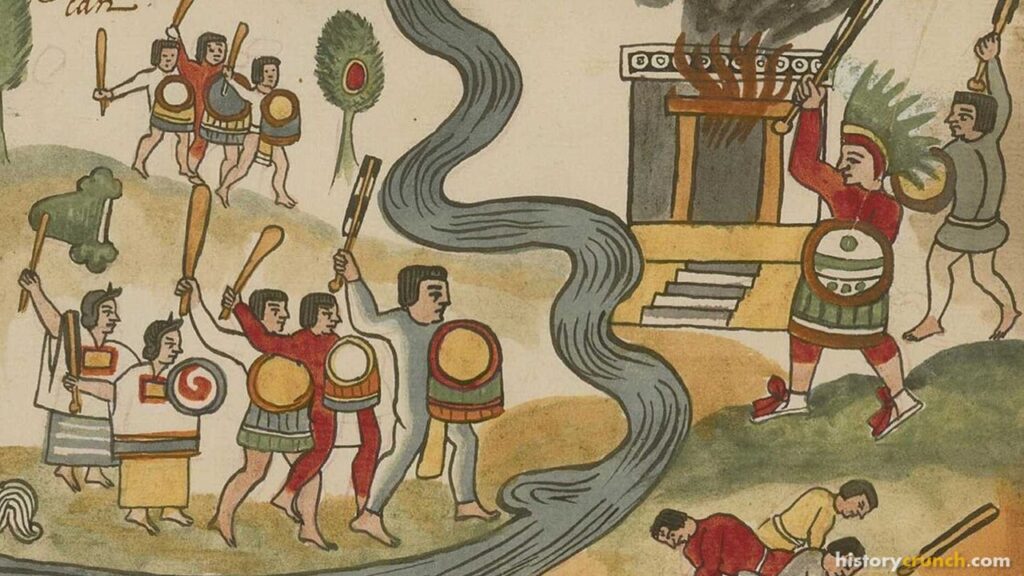
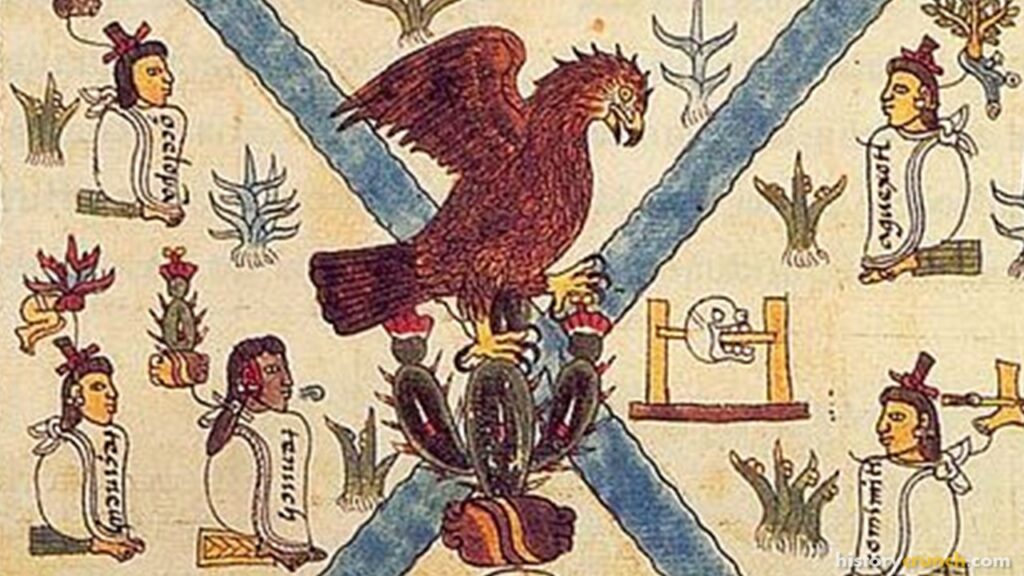
Throughout much of their history, the Aztec were a militaristic people who focused on the expansion of their empire. Following the Aztec’s founding and construction of Tenochtitlan in the Valley of Mexico in 1325, they quickly established their authority across the other societies in the valley. At the time the Valley of Mexico was populated by many different powerful civilizations, including: Chalco, Tepanec, Tlacopan, Texcoco, Culhuacan, and Chichimec. Several of these civilizations were also on the shores of Lake Texcoco, including the Culhuacan, which were on the south shore. Eventually, the Aztec Empire extended throughout most of central Mexico. As such, warfare was a central component of Aztec culture and Aztec warriors played an important role in Aztec society.