Nazi Germany

Axis Powers of World War II: A Detailed Summary

The Axis Powers of World War II were Nazi Germany, fascist Italy and Imperial Japan. Their rise, expansion and defeat are important in understanding the significance of World War II. This article details the history and importance of the Axis Powers of World War II.

Erwin Rommel: A Detailed Biography

Erwin Rommel is remembered mainly for his battlefield leadership, especially in North Africa, where he became one of the most famous Nazi German generals of World War II. This article details the life and significance of Erwin Rommel, especially in relation to his actions during World War II.

Genocide

Genocide: A Detailed Overview

Genocide is the intentional and systematic destruction of a national, ethnic, racial, or religious group, often through mass killings, forced displacement, and other acts of violence. This article details the history and significance of genocide, especially in relation to the 20th century.

Crimes Against Humanity

Crimes Against Humanity: A Detailed Overview

Crimes against humanity are serious offenses, such as murder, torture, or persecution, committed as part of a widespread or systematic attack against civilians. This article details the history and significance of crimes against humanity.

Nazi Book Burning Rallies: A Detailed Summary

Nazi book burning rallies were an early and powerful sign of the censorship, anti-Semitism and authoritarian control that would come to define Nazi Germany. As such, historians consider the Nazi book burning rallies as an important component of life in Nazi Germany and overall Nazi ideology. This article details the history and significance of the Nazi book burning rallies of the 1930s.

Nuremberg Trials

Nuremberg Trials: A Detailed Summary

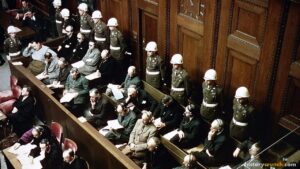
The Nuremberg Trials were a series of military tribunals held after World War II to prosecute top Nazi leaders for war crimes, crimes against humanity, and genocide. This article details the history and significance of the Nuremberg Trials.

War Crimes

War Crimes: A Detailed Overview

War crimes are serious violations of the laws of war, including acts like targeting civilians, torture, and the use of prohibited weapons during armed conflict. This article details the history and significance of war crimes and various war criminals.

Weimar Republic: A Detailed Summary

The Weimar Republic connected the end of the old German Empire to the rise of Hitler and Nazi Germany. In fact, was the democratic government of Germany from 1919 to 1933, during the difficult years between World War I and the rise of Nazi Germany. This article details the history and significance of the Weimar Republic.

Social Darwinism

Social Darwinism: A Detailed Summary

Social Darwinism is a theory that applies the concept of ‘survival of the fittest’ from Charles Darwin’s theory of natural selection to human societies, often justifying inequality, imperialism, and social hierarchy. It is most commonly seen in history in terms of economic, the Age of Imperialism and Nazi Germany.

Munich Conference

Munich Conference: A Detailed Summary

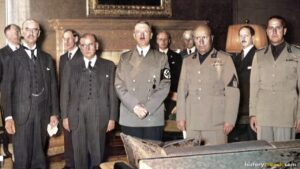
The Munich Conference of 1938 was a highly significant event in terms of the growth of Nazi Germany before the outbreak of World War II. This article details the history and significance of the Munich Conference.