German unification refers to when many separate German-speaking states of central Europe were brought together into a single unified nation. More specifically, before 1871, Germany did not exist as a single country. Instead, the region was made up of dozens of separate kingdoms, duchies, and smaller states that shared a common language and cultural heritage but were each governed independently. The process of German unification was driven by the rise of nationalism in the 19th century and was ultimately achieved by the Prussian statesman Otto von Bismarck through a combination of skilled diplomacy and three decisive wars. On January 18th, 1871, the German Empire was officially proclaimed, bringing the long period of German fragmentation to an end. Historians consider German unification to be one of the most important events of the 19th century because it fundamentally changed the balance of power in Europe and had direct consequences for the events of World War I and World War II.
What Was Germany Before Unification?
Before unification, the region of Germany was a separate collection of states that had existed in roughly that form for centuries. For instance, in the early 19th century, this area was made up of more than 30 separate kingdoms, grand duchies, principalities, and free cities. Most of these states were part of a loose organization called the German Confederation, which had been established at the Congress of Vienna in 1815 after the defeat of Napoleon Bonaparte. The German Confederation was supposed to coordinate the interests of the German-speaking states, but it was generally considered to be weak and ineffective. The two most powerful states within the confederation were Austria and Prussia, and the two frequently competed for dominance over the other German states.
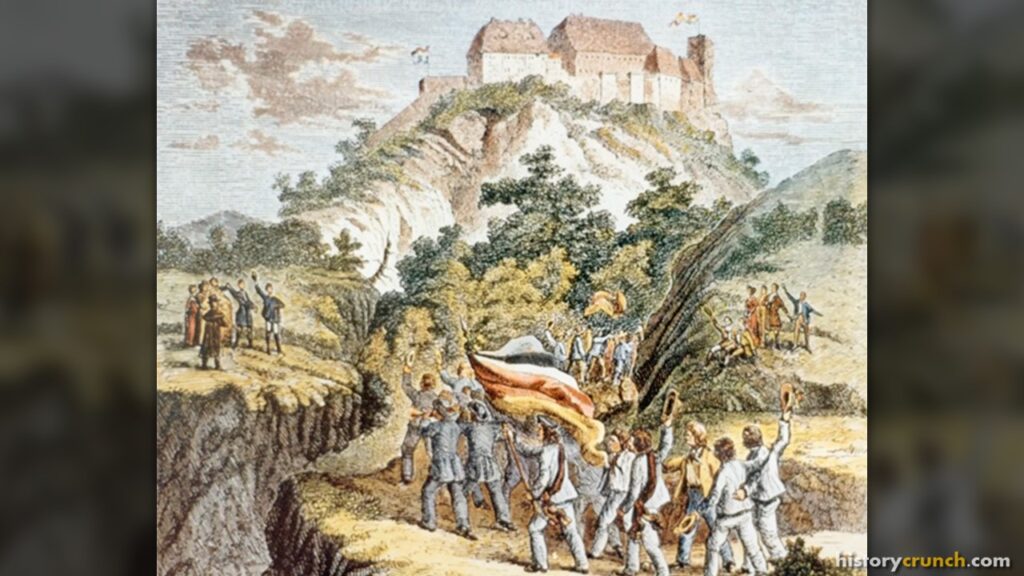
As mentioned above, the idea of a unified German nation had been growing in popularity throughout the early 19th century, driven largely by the rise of nationalism. Nationalism is the idea that people who share a common language, culture, and heritage should be united as a single nation. For example, the defeat of Napoleon Bonaparte by several German states in the early 19th century had helped fuel a strong sense of shared German identity and pride. Many Germans, particularly liberal intellectuals and students, began to call for the creation of a unified German state with a democratic constitution. In 1848, revolutions broke out across Europe, including in many of the German states, as people demanded greater political freedom and national unity. However, these revolutions ultimately failed. As such, the task of achieving unification ultimately led to the conservative Prussian statesman Otto von Bismarck.
Causes of German Unification
There were several main causes of German unification, including: the rise of nationalism, the growing power of Prussia and the political leadership of Otto von Bismarck.
The most important long-term cause of German unification was the rise of nationalism in the 19th century. In the decades following the Napoleonic Wars, a growing number of Germans developed a strong sense of shared national identity based on their common language, history and culture. This nationalistic feeling created a widespread desire for a unified German nation, particularly among the educated middle classes, students, and liberal political movements. Nationalism also increased tensions between the German-speaking world and its neighbors, as Germans resented foreign interference in their affairs.
Another important cause was the growing power and ambition of Prussia. Prussia was the largest and most powerful of the German states outside of Austria. It had a highly efficient military, a strong economy, and an effective government. By the middle of the 19th century, Prussia had become the natural candidate to lead the unification of Germany. In 1862, King Wilhelm I of Prussia appointed Otto von Bismarck as Minister-President of Prussia. Bismarck was a skilled conservative statesman who believed that German unification could only be achieved through what he called ‘blood and iron’, meaning through military force rather than through political negotiation alone. Under Bismarck’s leadership, Prussia pursued unification through a deliberate strategy of military conflict and diplomacy.
Three Wars of German Unification
German unification was achieved through three short but decisive wars that Prussia fought between 1864 and 1871. Each war brought more German states under Prussian leadership and moved the country closer to full unification.
The first war was the Second Schleswig War of 1864, which was fought between Prussia and Austria together against Denmark. The conflict arose over the German-speaking territories of Schleswig and Holstein, which were ruled by the Danish king. Prussia and Austria won the war quickly, and the two territories were placed under joint Austro-Prussian control. This gave Bismarck a useful pretext for the next stage of his plan.
The second war was the Austro-Prussian War of 1866, which is also known as the Seven Weeks’ War because of how quickly it ended. Bismarck used a disagreement over the administration of Schleswig and Holstein as a reason to go to war with Austria. The Prussian military, armed with modern weapons and efficient organization, defeated Austria decisively at the Battle of Königgrätz in July of 1866. The defeat of Austria was a crucial step in the unification process because it removed Austrian influence from German affairs entirely. As a result, Bismarck dissolved the German Confederation and replaced it with the North German Confederation, which brought the German states north of the River Main under Prussian leadership. The southern German states, including Bavaria, Württemberg, and Baden, remained independent for the time being but signed military agreements with Prussia.
The third and final war was the Franco-Prussian War, which lasted from 1870 to 1871. Bismarck deliberately manipulated a diplomatic dispute between France and Prussia over the Spanish throne to provoke France into declaring war. He famously edited a diplomatic telegram, known as the Ems Dispatch, to make it appear more insulting than it actually was, which inflamed public opinion in both countries and led France to declare war on Prussia on July 19th, 1870. The German states, swept up by nationalist feeling and viewing France as the aggressor, rallied to Prussia’s side. Prussian and German forces quickly defeated France in a series of battles, including the decisive Battle of Sedan on September 1st, 1870, in which French Emperor Napoleon III was captured. Paris was besieged and surrendered on January 28th, 1871.
Proclamation of the German Empire
Even before France had officially surrendered, Bismarck moved quickly to complete the unification of Germany. He negotiated with the rulers of the southern German states and convinced them to join the North German Confederation and the new unified Germany. On January 18th, 1871, in the famous Hall of Mirrors at the Palace of Versailles in France, King Wilhelm I of Prussia was officially proclaimed Emperor of the new German Empire. The choice of location was deliberate and deeply symbolic. By proclaiming the new German Empire in the palace of the French kings, Bismarck was making a powerful statement about German power and the humiliation of France. Otto von Bismarck was appointed as the first Chancellor of the German Empire, making him the most powerful political figure in the new nation.
The formal end of the war was agreed through the Treaty of Frankfurt, signed on May 10th, 1871. Under the terms of the treaty, France was required to give up the territories of Alsace and most of Lorraine to Germany and to pay a large financial penalty of five billion francs. These harsh terms created deep resentment in France and would remain a source of tension between the two countries for decades.
Significance of German Unification
German unification was significant for several reasons. First, German unification was significant because it created one of the most powerful nations in Europe almost overnight. Before 1871, the German-speaking lands had been a fragmented collection of states with little unified military or economic power. After unification, the German Empire was immediately one of the strongest military and industrial powers on the continent. For example, in the decades following unification, Germany underwent rapid industrialization and economic growth that eventually made it the leading industrial nation in Europe.
German unification was also significant because it fundamentally changed the balance of power in Europe. The creation of a powerful unified Germany threatened France, Britain, and other established powers and contributed to the system of competing alliances that developed in the decades that followed. For instance, France’s deep resentment over the loss of Alsace and Lorraine and Germany’s growing military ambitions contributed directly to the arms race and alliance systems that were among the main causes of World War I in 1914. In fact, France and Germany each doubled the size of their armies between 1870 and 1914 as a result of the rivalry that German unification had created. Click on the links to learn more about the causes of World War I and militarism as a cause of World War I.
Finally, German unification was significant because of the long-term consequences it had for the history of the 20th century. The powerful and militaristic German Empire that Bismarck created set the stage for both World War I and World War II. In particular, the harsh terms imposed on France in 1871 created a pattern that was repeated in reverse in the Treaty of Versailles in 1919, when France and its allies imposed even harsher terms on a defeated Germany. Historians consider this cycle of national humiliation and revenge to be one of the important factors in understanding the causes of both world wars.