The Vietnam War was one of the most important conflicts of the 20th century and left behind a profound set of impacts that extended far beyond the battlefields. The war lasted from 1955 until 1975 and involved the United States, North Vietnam, South Vietnam, and a wide range of allied forces on both sides. In general, historians consider the main impacts of the Vietnam War to include: the human cost of the conflict, the fall of South Vietnam and the reunification of the country under communist rule, the deep political and social divisions created within the United States, and the overall impacts on the Cold War.
WHAT WAS THE VIETNAM WAR?
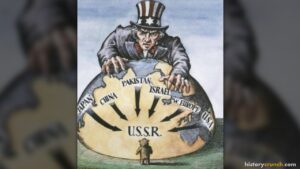
The Vietnam War was fought between the communist government of North Vietnam and the government of South Vietnam, which was supported primarily by the United States. The war grew out of decades of tension related to the history of colonialism, nationalism, and the ideological conflict of the Cold War between the United States and the Soviet Union. In general, North Vietnam was backed by communist allies including the Soviet Union and China, while South Vietnam received military and financial support from the United States and other western nations. As such, historians consider the Vietnam War to be a ‘proxy war‘ within the larger Cold War, in which the two superpowers backed opposing sides without fighting each other directly. The war ended on April 30th, 1975, when North Vietnamese forces captured Saigon, the capital of South Vietnam, bringing the conflict to an end.
IMPACTS OF THE VIETNAM WAR – HUMAN COST
One of the most significant impacts of the Vietnam War was the enormous human cost it produced on all sides of the conflict. The war resulted in the deaths of an estimated 58,000 American soldiers, as well as hundreds of thousands more who were wounded or permanently disabled. Furthermore, the human cost extended far beyond American casualties alone. For instance, historians estimate that between 1 and 3 million Vietnamese people died during the course of the Vietnam War, including both military personnel and civilians on both sides. As such, the Vietnam War was one of the deadliest conflicts of the entire Cold War era.
It should also be noted that the civilian population of Vietnam suffered enormously throughout the course of the war. For instance, American bombing campaigns such as Operation Rolling Thunder dropped millions of tons of bombs across North Vietnam and parts of South Vietnam, destroying infrastructure, farmland, and entire communities. As well, the widespread use of the chemical known as ‘Agent Orange’ had devastating and long-lasting effects on both the Vietnamese population and American veterans. In fact, Agent Orange was sprayed across large areas of jungle and farmland to destroy vegetation that provided cover for enemy forces. However, its toxic effects caused serious health problems, including cancer and birth defects, that affected generations of people long after the war ended.
The psychological impact of the war was also tremendous. Many American veterans returned home suffering from what is now recognized as post-traumatic stress disorder (PTSD), and struggled for years to readjust to civilian life. In general, the human cost of the Vietnam War was felt not just during the conflict itself, but continued to affect the lives of soldiers, civilians, and families for decades afterward.
IMPACTS OF THE VIETNAM WAR – FALL OF SOUTH VIETNAM
One of the most direct impacts of the Vietnam War was the fall of South Vietnam and the resulting reunification of the country under communist rule. More specifically, after the Paris Peace Accords were signed on January 27th, 1973, the United States withdrew its combat forces from Vietnam. With that said, the fighting between North and South Vietnam did not stop. North Vietnam continued to push southward, and without direct American military support, the South Vietnamese government and military struggled to hold its ground.
In March of 1975, North Vietnamese forces launched a major offensive against South Vietnam. The South Vietnamese military collapsed rapidly under the pressure of the assault, and city after city fell to the advancing forces from the north. On April 30th, 1975, North Vietnamese tanks entered Saigon and the South Vietnamese government surrendered, effectively causing the end of South Vietnam. Following the fall of Saigon, Vietnam was formally reunified as the Socialist Republic of Vietnam in 1976 under communist rule, with Hanoi as its capital. Saigon was subsequently renamed Ho Chi Minh City, in honor of the communist leader of North Vietnam.
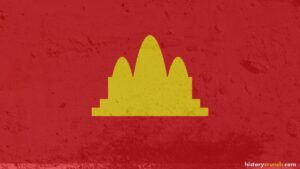
The fall of South Vietnam had significant consequences for the region as well. For instance, in the years that followed the end of the war, communist governments also took power in neighboring Laos and Cambodia. In Cambodia, the communist ‘Khmer Rouge‘ movement, led by Pol Pot, took control of the country and carried out one of the most brutal genocides of the 20th century, which historians refer to as the Cambodian Genocide.
IMPACTS OF THE VIETNAM WAR – DIVISIONS IN THE UNITED STATES
The Vietnam War also had a profound and lasting impact on American society and politics. Throughout the course of the war, anti-war protests grew from small campus demonstrations into a broad national movement that challenged government policy and divided American public opinion. For instance, by the late 1960s, millions of Americans were actively opposing the war through marches, demonstrations and public acts of resistance. Events such as the Kent State Shooting on May 4th, 1970, in which members of the Ohio National Guard killed four student protesters at Kent State University in Ohio, became powerful symbols of how deeply the war had divided the country.
The war also severely damaged public trust in the American government. Throughout the conflict, government officials had repeatedly assured the public that the war was being won and that an end was close. However, events such as the Tet Offensive in January of 1968 made clear that the government was not being entirely honest in regards to the reality of the war. Furthermore, the release of the ‘Pentagon Papers‘ in 1971 revealed that the government had deliberately misled the American public about the nature and extent of its involvement in Vietnam. These revelations deepened a growing sense of distrust toward government institutions that has had lasting effects on American political culture.
IMPACTS OF THE VIETNAM WAR – THE COLD WAR
The Vietnam War had important consequences for the overall course of the Cold War between the United States and the Soviet Union. In general, the outcome of the war was seen as a significant setback for the United States and its policy of containment, which had sought to prevent the spread of communism in Southeast Asia and around the world. The fall of South Vietnam demonstrated that the United States could commit enormous military power and still fail to achieve its political objectives, which weakened American credibility on the world stage.
At the same time, the enormous cost of the Vietnam War in terms of money, lives, and public opinion led to changes on government policy in regards to the Cold War. For instance, the period following the war saw a move toward ‘détente‘, which referred to a relaxing of tensions between the United States and the Soviet Union. During this period, both superpowers sought to manage their rivalry through diplomacy rather than direct military confrontation. As such, the Vietnam War played an important role in reshaping the nature of the Cold War in the years that followed.
IMPACTS OF THE VIETNAM WAR – SIGNIFICANCE
The impacts of the Vietnam War were felt across many different areas of life for decades after the conflict ended. In terms of human cost, the war resulted in the deaths of millions of people and left lasting physical and psychological wounds on an entire generation of soldiers and civilians. In terms of political impact, it transformed American society, deepened public distrust of government, and permanently changed the way the United States approached military engagement abroad. For Vietnam itself, the war ended with reunification under communist rule but left behind enormous destruction, displacement, and the long-term effects of chemical warfare. The Vietnam War remains one of the most studied and debated conflicts in modern history, and its impacts continue to shape the world today.