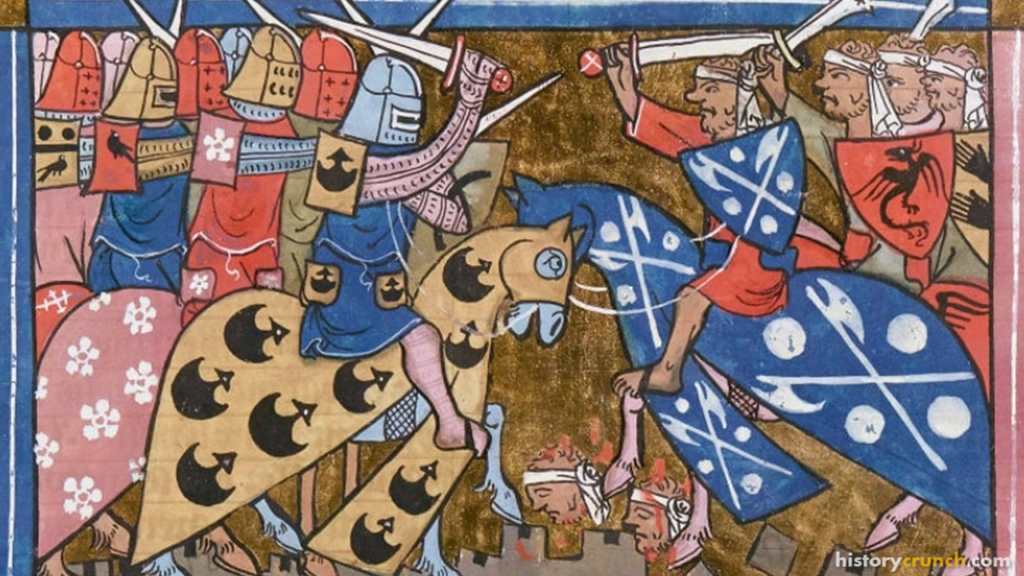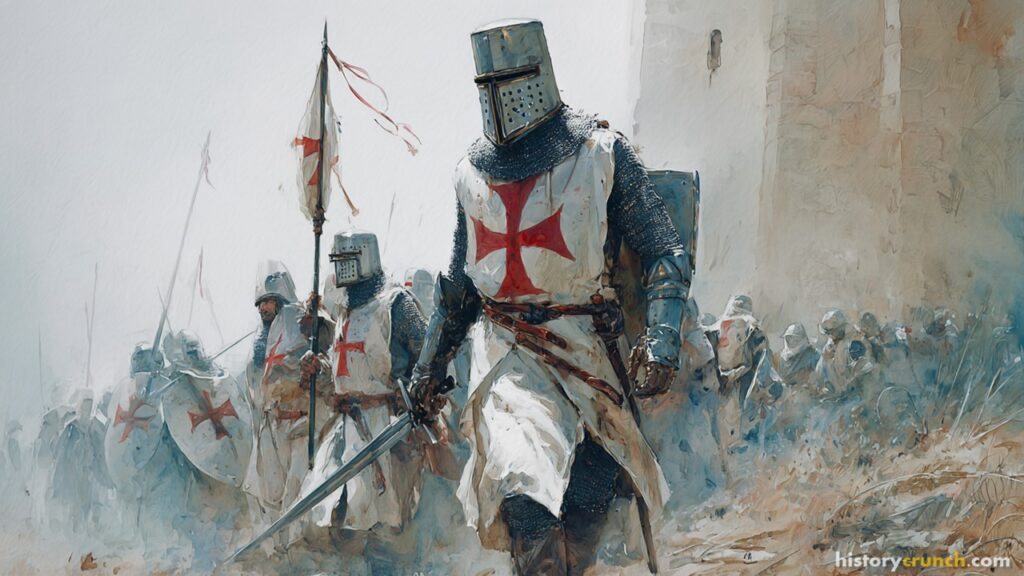
The life of a crusader was difficult, dangerous, and often brutal. In fact, crusaders experienced difficulties, such as: long journeys, food shortages, disease, fear, religious devotion and constant violence. As such, their lives were shaped by both war and faith during the major events of the Crusades.
WHAT WERE THE CRUSADES?
The Crusades were a series of religious wars fought mainly between European Christians and Muslims during the Middle Ages. They began in the late 11th century when Pope Urban II called on Christians in Europe to help reclaim Jerusalem and other holy places in the Middle East. As a result, thousands of men left their homes and families across the regions of Europe to become crusaders. Some were knights and nobles, while others were common soldiers or ordinary pilgrims. Regardless, the life of crusaders was difficult.
WHY DID THEY BECOME CRUSADERS?
Historians have identified several reasons why European men became crusaders and joined the Crusades. First, many joined because of their religious faith, which was Christianity. These Christians believed that taking part in a crusade was a way to serve God. In fact, the Catholic Church promised spiritual rewards to those who joined. As a result, for many Christians in medieval Europe, this was a very powerful reason.
Second, some men joined for personal or political reasons. For example, nobles and knights sometimes hoped to win glory, land or wealth. At the same time, younger sons from noble families often had fewer chances to inherit property in Europe, due to the nature of hereditary succession. Therefore, the Crusades seemed to offer an opportunity for many who sought to carve out their own path.
Finally, some people joined because of loyalty, pressure, or adventure. For instance, a knight might follow his lord in the battles of the Crusades. Alternatively, an ordinary peasant for serf might join because others in the community were leaving as well. Whatever the reason, becoming a crusader meant entering a life of uncertainty and hardship.
LIFE OF A CRUSADER – TAKING THE CROSS
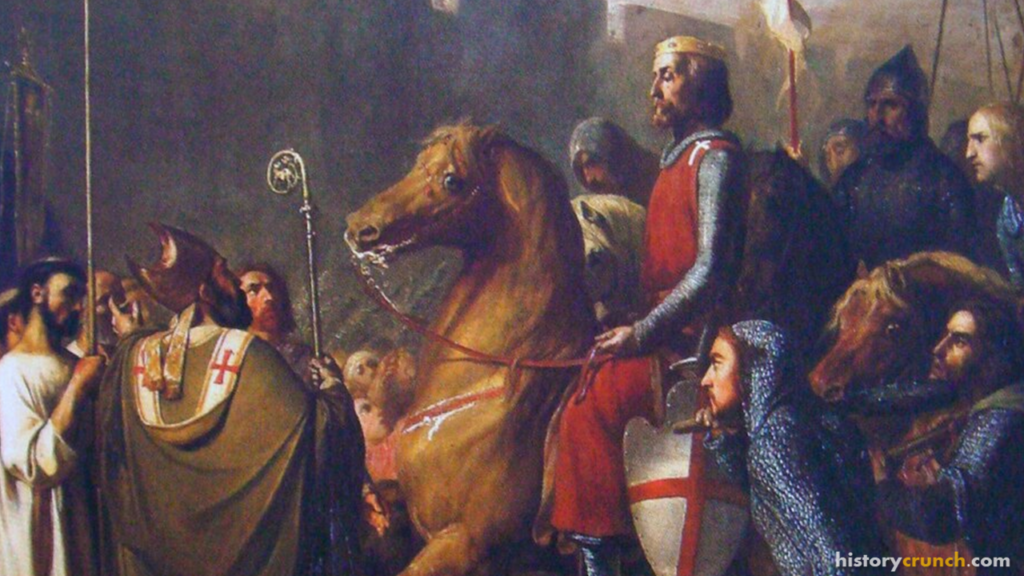
When a man decided to join a Crusade, he often made a religious vow. This was known as ‘taking the cross’, and became a key feature of the Crusades as a historical event. As mentioned above, this is because the crusaders were usually devout Christians and sought to carry out the wishes of their faith. For instance, during the First Crusade, many Christians across Europe joined the fight due to the calls of Pope Urban II. More specifically, Pope Urban II called for the First Crusade on November 27th, 1095, during a sermon at the Council of Clermont in France. He urged Western European Christians to take up arms to aid the Byzantine Empire and reclaim the Holy Land. Crusaders usually sewed a cloth cross onto their clothing to show their commitment. As a result, this symbol became closely connected to the Crusades.
‘Taking the cross’ was a serious decision for the crusades since it meant leaving home for a long and dangerous journey. In many cases, men had to sell land, borrow money, or give away possessions in order to prepare. A knight especially had many expenses, such as: armor, weapons, horses, food and supplies. Therefore, the life of a crusader often became difficult even before the actual fighting began. The decision to join required sacrifice from both the crusader and his family.
LIFE OF A CRUSADER – JOURNEY TO THE HOLY LAND
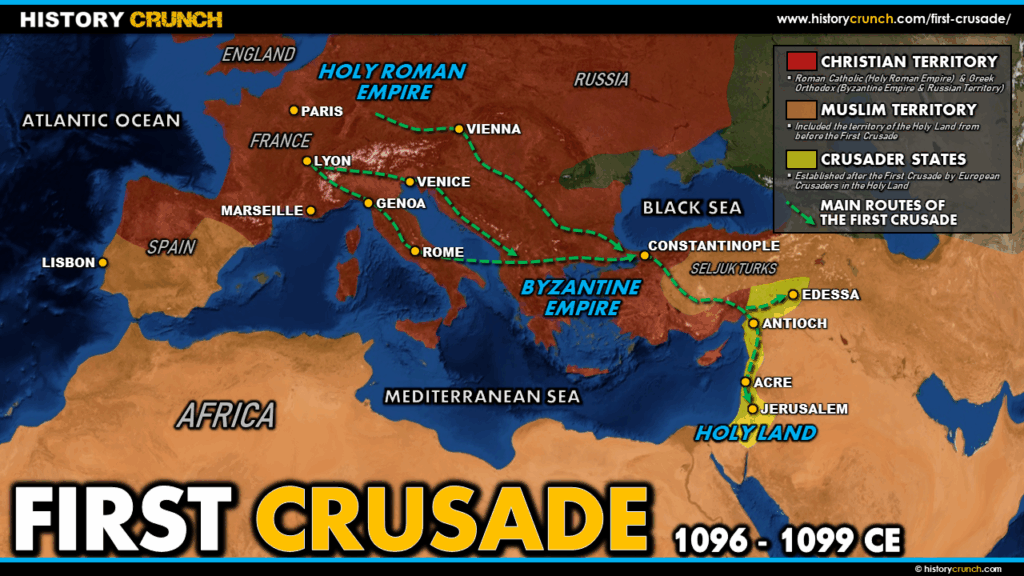
One of the most difficult parts of a crusader’s life was the journey to the Holy Land. Crusaders traveled from different parts of Europe and had to cross enormous distances. Some went by land, some by sea and many used a combination of both. The trip to the Holy Land often took many months though many different regions of Europe, Northern Africa and the Middle East.
Travel during the Middle Ages, obviously, made this even more difficult of a task. As a result, the journey to the Holy Land for the crusaders was generally slow and dangerous. For instance, road conditions were often poor, the weather could be severe, and supplies were usually limited. Crusaders often marched for long hours carrying weapons and equipment. As such, they faced hunger, thirst, exhaustion and sickness. In fact, many crusaders died before they ever reached the Middle East. The journey also exposed crusaders to places and people that were unfamiliar to them. Many Europeans had never traveled far from home before.
LIFE OF A CRUSADER – LIFE IN THE CRUSADER STATES
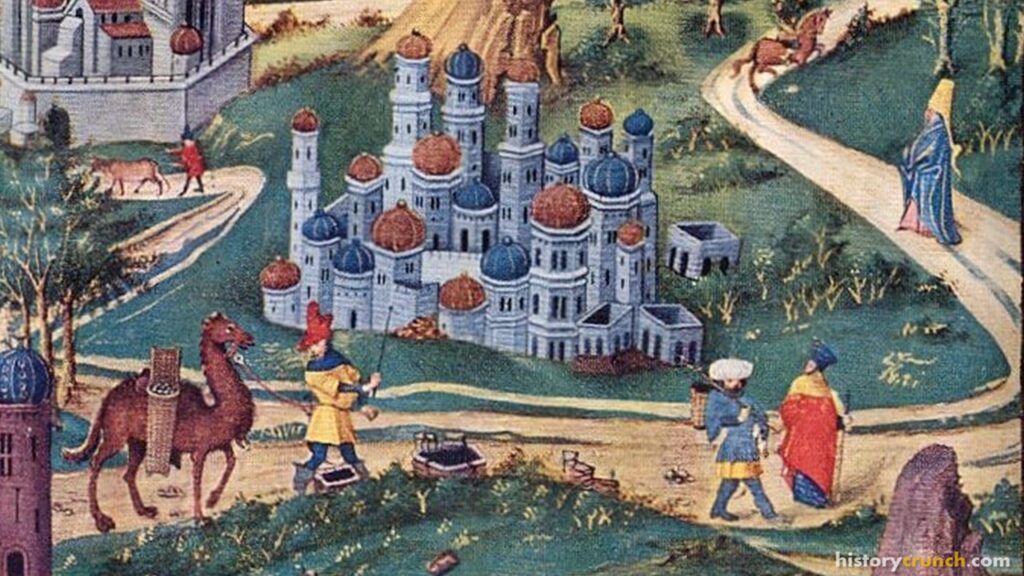
The ‘Crusader States’ of the Crusades were a series of Christian kingdoms established by crusaders from the time of the First Crusade in the region of the Holy Land. These Crusader States were vitally important to the history of the Crusades. Life in the Crusader States was based around several key factors including: economy, religion and military. In terms of ethnic makeup, the Crusader States were quite diverse and included people that originated from Europe, the Middle East and Northern Africa. This was due to the importance of the region as a trading and religious center.
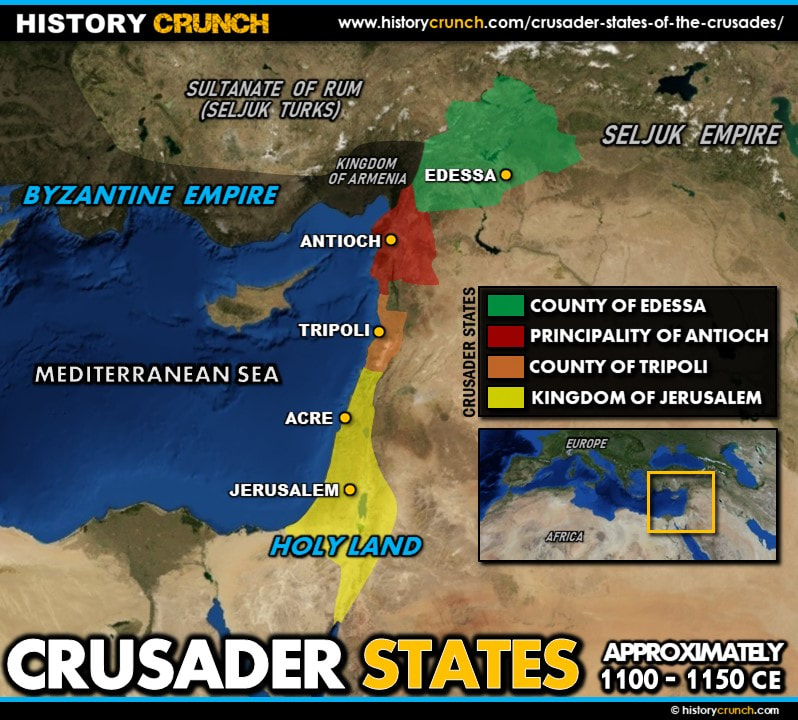
In general, the Crusader States were centrally located in the Holy Land, which sat at the crossroads of major trade routes that spanned from Europe to Africa and Far East Asia. For instance, the most famous of these trade routes was the Silk Road. The Silk Road was perhaps one of the earliest and largest trade networks in human history, and played a vital role to many different civilizations throughout Eurasia from approximately 120 BCE to 1450 CE. At its height, the Silk Road stretched from Japan and China in the east to the Mediterranean area including Italy in the west, which was a span of over 4000 miles. Along the way it travelled through many different regions including: India, Persia, the Middle East, Africa and Eastern Europe.
There were many different civilizations that participated in the Silk Road over the centuries of its existence. Obviously, Chinese and Mongol traders played an important role in the Silk Road, as many of their goods were highly desired in faraway markets, such as Europe.
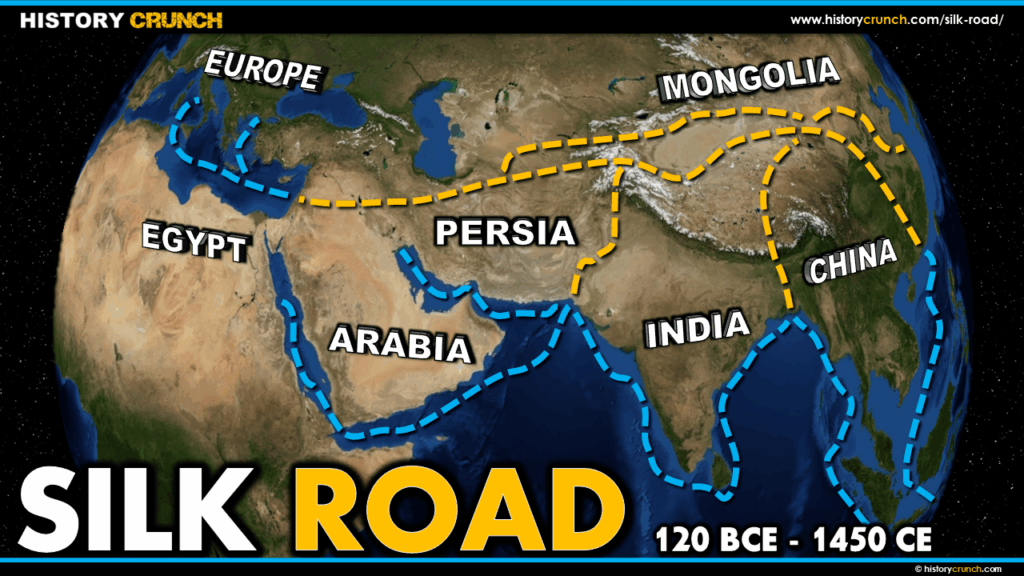
Therefore, European traders often travelled to areas in the Middle East to secure rare and desirable products, from the far East. For their part, the traders of the Middle Eastern civilization were essentially the middle men who traded goods from both sides. This situation greatly benefitted the Middle Eastern societies and the region of the Crusader States.
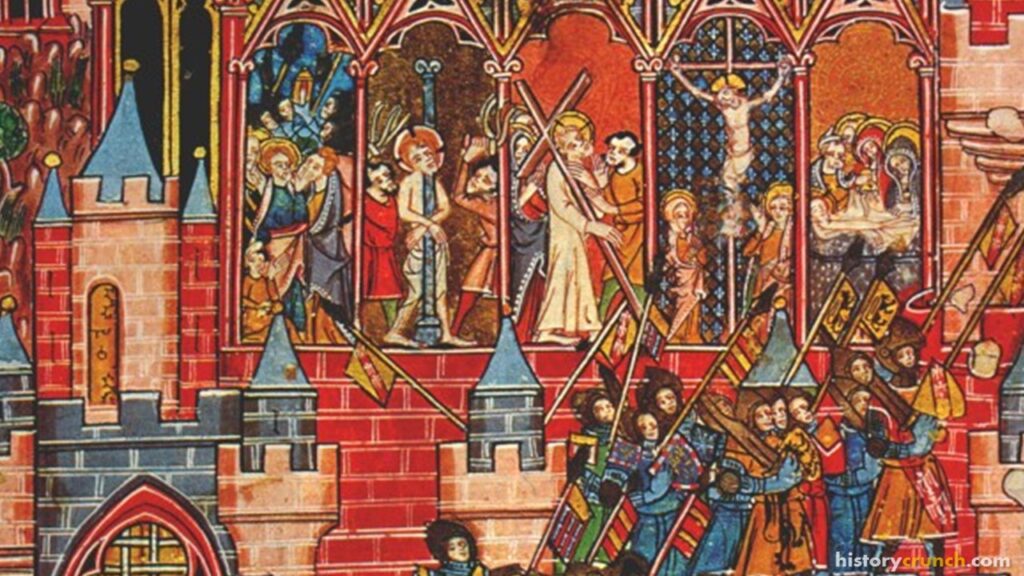
Another important aspect of life in the Crusader States was the role of religion. The Holy Land, which is where the Crusader States were located was a vitally important region to all three of the major religions: Christianity, Islam and Judaism. This was especially true in the city of Jerusalem. The city was centrally located in the Holy Land between the Mediterranean Sea and the Dead Sea. While the history of the city itself goes back much further, it was a significant site in the Crusades because of the importance it holds in the three main religions of the region: Christianity, Islam and Judaism. For Christians, Jerusalem was the site of Jesus Christ’s crucifixion and resurrection. As such, the city was vitally important to their understanding of the teachings and history of Jesus. For Muslims, the city was the land guaranteed by Abraham and the place where the prophet Muhammed ascended into heaven to meet Allah (God). For Jewish people Jerusalem was important because it was the land guaranteed to them by Abraham. All three religions had (and still have) important religious sites in the city including temples, churches, mosques and synagogues. As a result, all three religions wanted access to the city which led to clashes and disagreements over time.
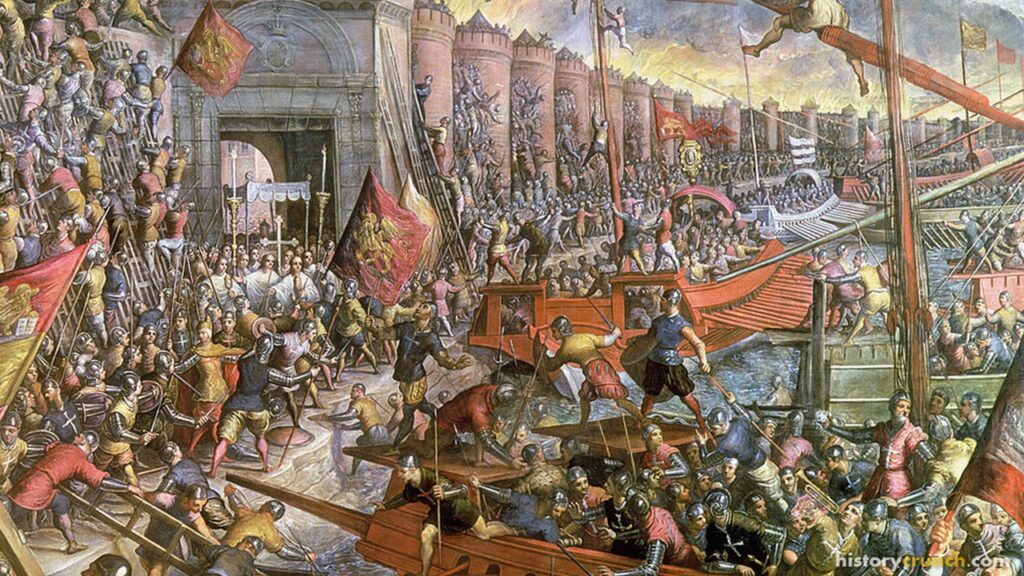
The final aspect of life in the Crusader States is related to the military. Since the Crusader States were located in the center of the Holy Land, they were the site of many different battles and conflicts throughout the two-century history of the Crusades. As such, citizens living in the Crusader States were often called upon to participate in armed conflicts against Muslim armies. This reality meant that the Crusader States were operated as feudal kingdoms, which was the similar method used in Europe at the time. Under this system, the Crusader States were ruled over by local lords who used serfdom to call on their subjects to act as soldiers in times of conflict. This meant that military life and participation was an ongoing aspect of life for people in the Crusader States. Furthermore, the leaders of the Crusader States often called upon European leaders and the Roman Catholic Church to fund crusades and military aid to protect the territories of the Crusader States.
LIFE OF A CRUSADER – WHAT HAPPENED AFTER THE CRUSADE
Not every crusader returned home to their lives in Europe. For instance, many died during the campaign, while others settled in the Crusader States created in the Middle East and decided to stay there. With that said, some returned with honor and a stronger reputation among their societies in Europe. Others returned poor because crusading was expensive and drained their savings. In fact, many families faced debt after sending a man on a Crusade. Therefore, even when a crusader survived, the effects of the crusade could continue for years. The experience of crusading could also shape a man’s view of religion, war, and the wider world. For some, the crusade may have seemed like a noble act of faith. For others, it was likely remembered as a period of suffering and loss.
LIFE OF A CRUSADER – WHY THE LIFE OF A CRUSADER WAS SIGNIFICANT
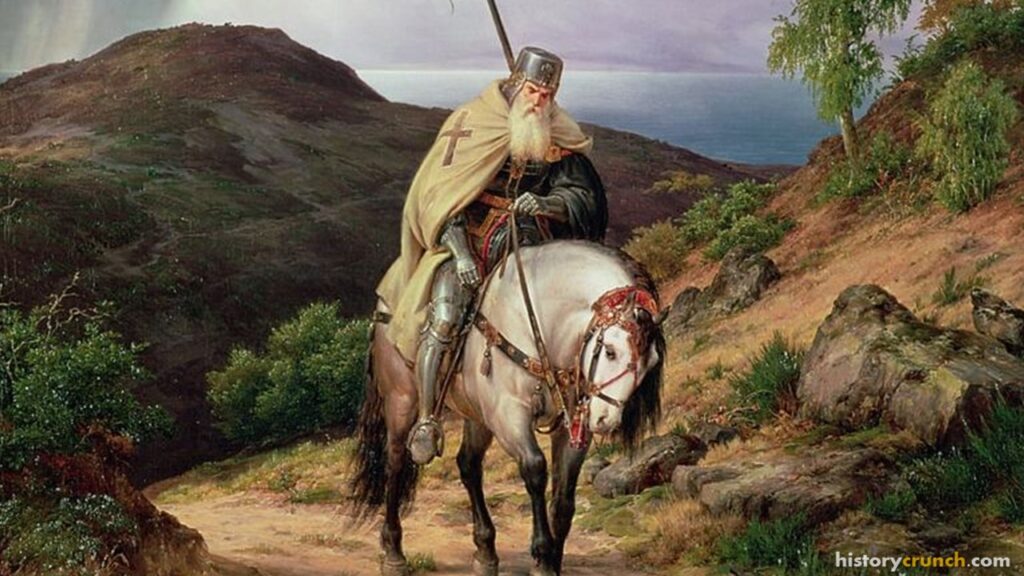
The life of a crusader was significant because it helps historians understand what the Crusades were really like for the people who took part in them. Crusaders were not simply warriors in armor. In fact, they were men who faced hunger, disease, fear, and violence while fighting for a cause they believed was sacred. Their experiences also show the power of religion in medieval Europe. Faith influenced decisions, shaped warfare, and encouraged great sacrifice. At the same time, the life of a crusader also reveals the harsh realities of medieval war.
Overall, the life of a crusader was marked by hardship, danger, and devotion. Some men hoped for glory, some sought forgiveness, and others simply followed their leaders. No matter why they joined, most crusaders discovered that life on crusade was far more difficult than they could have imagined.