The Late Middle Ages was the final period of the Middle Ages in European history, lasting from the start of the 14th century to the end of the 15th century. It followed the High Middle Ages and preceded the beginning of the Renaissance in Europe. The Late Middle Ages was a difficult time for most people in Europe, marked by devastating disease, widespread warfare, famine, and the decline of many of the institutions that had defined medieval life.
What Were the Middle Ages?
The Middle Ages, also known as the Medieval Period, lasted for approximately 1000 years from the 5th century to the 15th century. Due to its timeframe, the Middle Ages in Europe is divided into three smaller periods referred to as the Early, High, and Late Middle Ages. The Early Middle Ages began in the 5th century during the decline of the Roman Empire and lasted until approximately the end of the 10th century. The High Middle Ages began at the start of the 11th century and lasted until approximately the end of the 13th century. The final period of the Middle Ages is called the Late Middle Ages and is considered to have occurred from the start of the 14th century to the end of the 15th century. As stated above, the Late Middle Ages was a difficult time for most people in Europe and the surrounding areas, and it ended with the emergence of the Renaissance, which marked the beginning of a new era in European history.
The Great Famine
The Late Middle Ages began with a period of serious hardship that set the tone for much of what followed. In the early 14th century, the population of Europe was larger than it had ever been, having grown significantly during the prosperous years of the High Middle Ages. With that said, this growth had pushed the limits of what European agriculture could support, and when changes in the climate led to a series of poor harvests beginning in 1315, the results were catastrophic. The Great Famine of 1315 to 1317 caused widespread crop failures across northern Europe, leading to starvation and death on a massive scale. For example, it is estimated that the Great Famine killed between 10 and 25 percent of the population in some of the worst-affected regions of Europe. The famine weakened the population significantly and left many people vulnerable to the disease that followed in the decades after.
The Black Death
The most devastating event of the Late Middle Ages was the spread of the bubonic plague that led to the events of the Black Death. The Black Death is one of the most important events in Western history and is the most famous pandemic in all of human history. A pandemic is the term used to describe the spread of an infectious disease over a wide area including the entire planet. The Black Death occurred during the 14th century and ravaged human populations throughout Asia and Europe as it spread along trade routes and through trading ports. Throughout history it has also been referred to as the Great Mortality and Great Pestilence.
The death toll of the Black Death is a debated topic and different historians have offered different views on the issue. Regardless, the reported death tolls are massive, with some suggesting that it resulted in the deaths of between 75 and 200 million people in Europe and Asia. These high numbers suggest that between 30 and 60 percent of people died due to the infectious disease. Some regions suffered more than others, but in general it is widely accepted that approximately half of Europeans died as a result of the disease. For example, it has been recorded that both Paris, France and London, England saw half of their populations succumb to the pandemic. The Black Death also had devastating results in the Middle East and Asia with equally dramatic death tolls.
The impact of the Black Death on European society was enormous. With so many people dead, there was a serious shortage of workers across Europe. As well, this shortage of labor meant that the peasants and workers who survived had more bargaining power than they had ever had before, since lords and landowners desperately needed people to work their land. For instance, many peasants were able to demand better wages and conditions, which began to slowly weaken the traditional feudal system that had organized European society for centuries. The Church also suffered during the Black Death, as its inability to explain or stop the plague led many people to question its authority and power.
Warfare and Political Instability
The Late Middle Ages was also a time of widespread warfare and political instability across Europe. One of the most significant conflicts of the period was the Hundred Years War, a long series of conflicts fought between England and France from 1337 to 1453. The war grew out of disputes over the French throne and English-held territories in France and lasted for approximately 116 years, involving five different English kings and five different French kings. The Hundred Years War caused enormous destruction across France in particular and placed a heavy burden on both countries in terms of soldiers, money, and resources.
As well, the Late Middle Ages saw serious conflicts within the Catholic Church itself. The Western Schism, which lasted from 1378 to 1417, was a period during which there were two and sometimes three competing claimants to the position of Pope at the same time, each supported by different European kingdoms. This division deeply damaged the authority and reputation of the Catholic Church, which had been one of the most powerful and unifying institutions in European life throughout the Middle Ages. For many ordinary people, the sight of popes competing against each other for power was deeply troubling and contributed to growing criticism of the Church during this period.
In England, the end of the Hundred Years War in 1453 was quickly followed by another major conflict. The Wars of the Roses, which lasted from approximately 1455 to 1485, was a series of civil wars between two rival branches of the English royal family, the House of Lancaster and the House of York, each of which believed they had the right to rule England. The conflict finally ended with the victory of Henry VII, who established the Tudor dynasty and brought a period of greater stability to England.
Decline of Feudalism
One of the most important long-term developments of the Late Middle Ages was the gradual decline of the feudal system, which had organized European society since the Early Middle Ages. Feudalism was a form of government common during medieval Europe that involved society being structured in a very rigid and hierarchical way, with kings, nobles, and lords at the top and peasants at the bottom. As stated above, the Black Death had significantly weakened the feudal system by giving peasants more bargaining power than they had previously held. As well, the growth of towns and trade during the High Middle Ages had created a new class of merchants and craftsmen who did not fit neatly into the old feudal hierarchy.
The Hundred Years War also contributed to the decline of feudalism. For instance, the war required both England and France to raise large armies that included ordinary soldiers and new kinds of fighters, such as the English longbowmen who had proven so effective at battles like Crécy and Agincourt. This gave ordinary men a more important role in warfare and gradually reduced the dominance of the armored knight, who had been the central figure of feudal military power. As such, by the end of the Late Middle Ages, the feudal system was significantly weaker than it had been at its height during the High Middle Ages, and Europe was beginning to move toward a new kind of political and social organization.
Beginning of New Eras
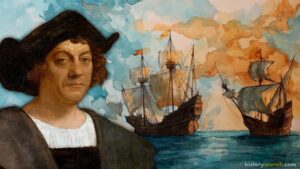
While the Late Middle Ages was a difficult time for most people in Europe, it also saw the beginning of several major developments that would shape the future of the world. First, the Age of Exploration began at the end of the Late Middle Ages. For example, Christopher Columbus arrived in the New World on his first famous voyage in 1492, opening up contact between Europe and the Americas for the first time. Portuguese sailors had also been exploring the coast of Africa during this period, and by 1498 Vasco da Gama had sailed around Africa and reached India, opening up a new sea route for trade between Europe and Asia.
Second, the Renaissance in Europe emerged out of the Late Middle Ages. The Renaissance was a period of intellectual and cultural renewal that began in the Italian city-states in the 14th century and eventually spread across Europe. It was sparked in part by the rediscovery of ancient Greek and Roman texts, many of which had been preserved in the Byzantine Empire and brought to western Europe by scholars fleeing the Fall of Constantinople in 1453. The Renaissance led to major changes in art, literature, science, philosophy, and religion, and is widely considered to mark the beginning of the modern era.
Significance of the Late Middle Ages
In conclusion, the Late Middle Ages was a period of great suffering and change in European history. Life during this time was dominated by the devastating impact of the Black Death, widespread warfare including the Hundred Years War, the decline of the feudal system, and growing criticism of the Catholic Church. With that said, the Late Middle Ages was also a time of important new beginnings. The Age of Exploration, the Renaissance, and the early development of stronger national kingdoms all had their roots in this difficult but transformative period. As such, the Late Middle Ages is a vital period for students to understand, as it connects the world of the High Middle Ages to the dramatically different world of the Renaissance and the modern era that followed.