The Crusades gradually ended in the late 13th century as European interest in more crusades lessened due to repeated failures, high costs, and shifting political priorities. The fall of the last Crusader stronghold, Acre, in 1291 CE marked the end of major Christian military efforts in the Holy Land. After centuries of warfare, the Crusades left behind a legacy of cultural interaction and religious conflict that shaped future relations between Europe and the Middle East. As such, the Crusades are remembered as one of the most significant periods in the Middle Ages.
WHAT WERE THE CRUSADES?
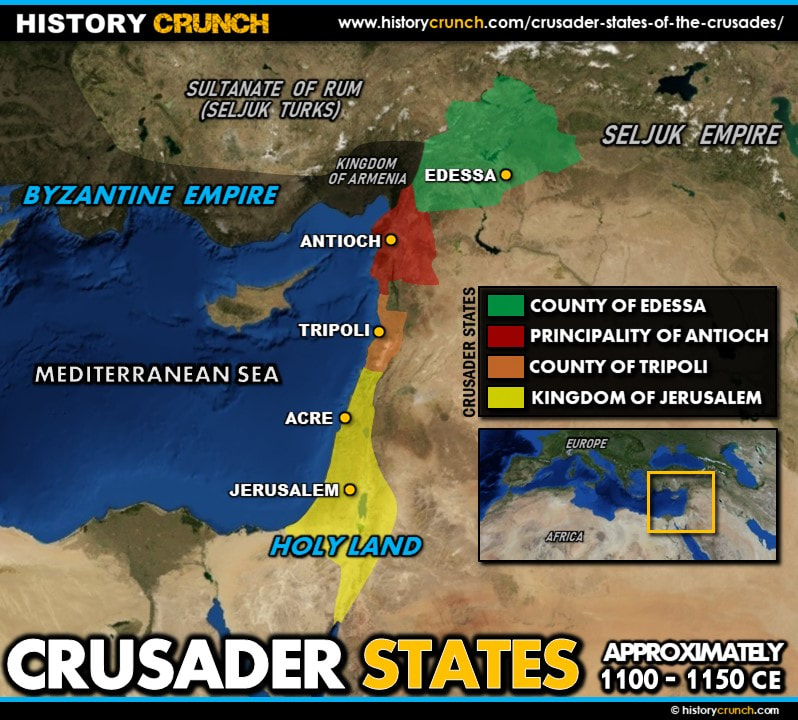
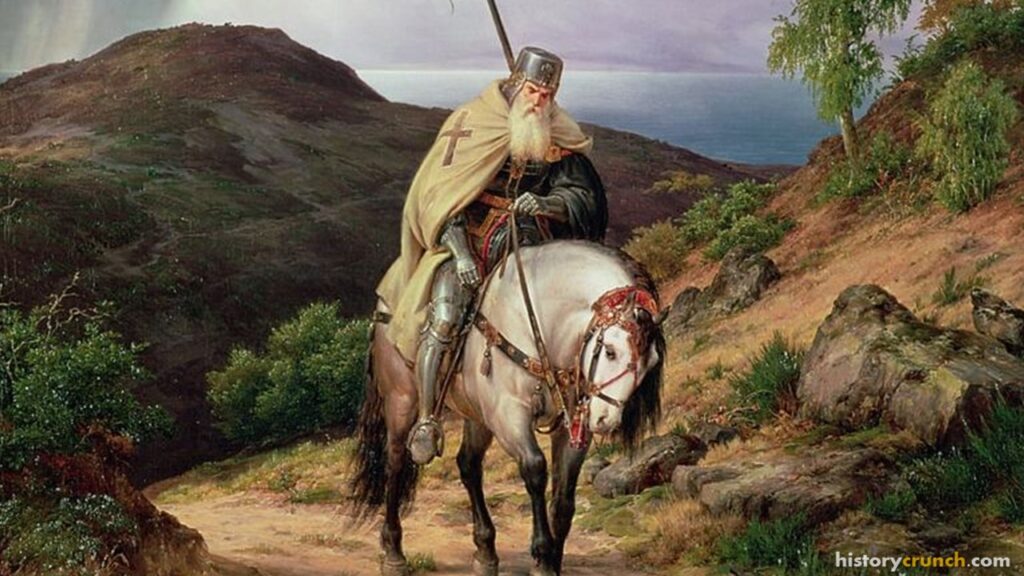
The ‘Crusader States’ were a series of Christian kingdoms established by crusaders from the time of the First Crusade in the region of the Holy Land. These Crusader States were vitally important to the history of the Crusades. The Crusades are one of the most significant events in the history of Europe and the Middle East. They were a series of religious wars carried out by Christian crusaders from Europe during the timeframe of the Middle Ages. Beginning in 1096 CE, the Crusades saw European knights and noblemen travel to the Middle East in an attempt to capture the Holy Land away from Muslim people that had controlled the region for the previous centuries. The term crusade means ‘cross’. Therefore, the Europeans that became crusaders viewed themselves as ‘taking up the cross’. In fact, many of the crusaders wore crosses on their clothing and armor as they made their pilgrimage to the Holy Land.
As stated above, the Crusades first began in 1096 CE with the events of the First Crusade. Then, over the course of two centuries eight more crusades unfolded. In each of these nine Crusades, the European Crusaders journeyed from their homes distant lands to fight for their religious beliefs. Most of the time this involved European crusaders making their way to the Holy Land in the Middle East to battle against powerful Muslim civilizations. In fact, the most common goal of the Europeans in the Crusades was the capture of the city of Jerusalem.
HOW DID THE CRUSADES END?
However, after two centuries and many Crusades to the Holy Land, the will of the Europeans to journey vast distances began to lessen. This was likely due to the struggle that the Christians faced in fighting in the Holy Land and the back and forth nature of the conflicts associated with the Crusades. Throughout the Crusades, the Holy Land changed hands many times as Muslim civilizations battled for control over key regions.
Another key aspect for the lessening of support for the Crusades in Europe was the reduced role of the Roman Catholic Church in the later Crusades. In the first five Crusades, the Catholic Church played a significant role in each Crusade. For instance, the Pope would often call for the Crusades to the Holy Land to capture territory or to reduce Muslim control in the region. For example, On November 27th 1095 CE, Pope Urban II called for a crusade to the Holy Land as part of a sermon at the Council of Clermont. In the speech, Pope Urban II argued for many different things, but one particular passage called for Europeans to assist the Byzantine Empire in the battle against Muslim civilizations to the east. Historians consider this speech to be the event that sparked the first crusade and began the movement of European Christians into the Middle East. However, after the Fifth Crusade, the Catholic Church no longer officially supported Crusades, and the remaining four Crusades were supported and organized by European leaders.
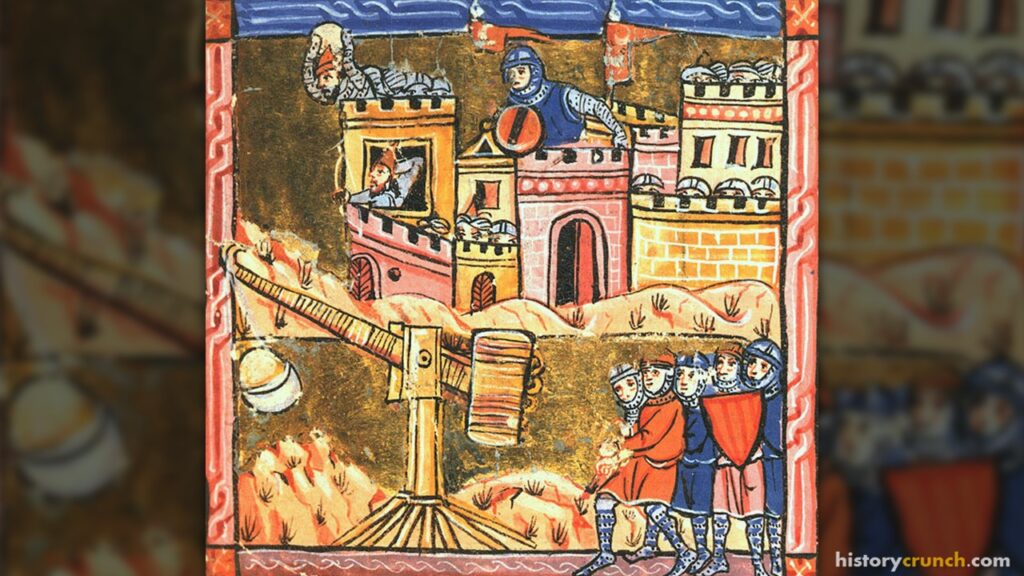
In the end, the Crusades as a historical movement essentially ended with the events of the Ninth Crusade. While there were calls for more crusades after the events of the Ninth Crusade, these were never realized, and European Christians slowly lost control over the Holy Land. Finally, in 1291, the Muslim forces carried out a siege against Acre, the last remaining Crusader State. The Muslim forces quickly captured the city and effectively ended the era of Christian-held territory in the Holy Land. Some remaining Christians and supporters of the Christian cause carried out fighting until approximately 1303, when they finally defeated. With this, the Crusades were finally over as a historical event. As a result, the Ninth Crusade is considered to be significant today due to it being the end of a major historical event.