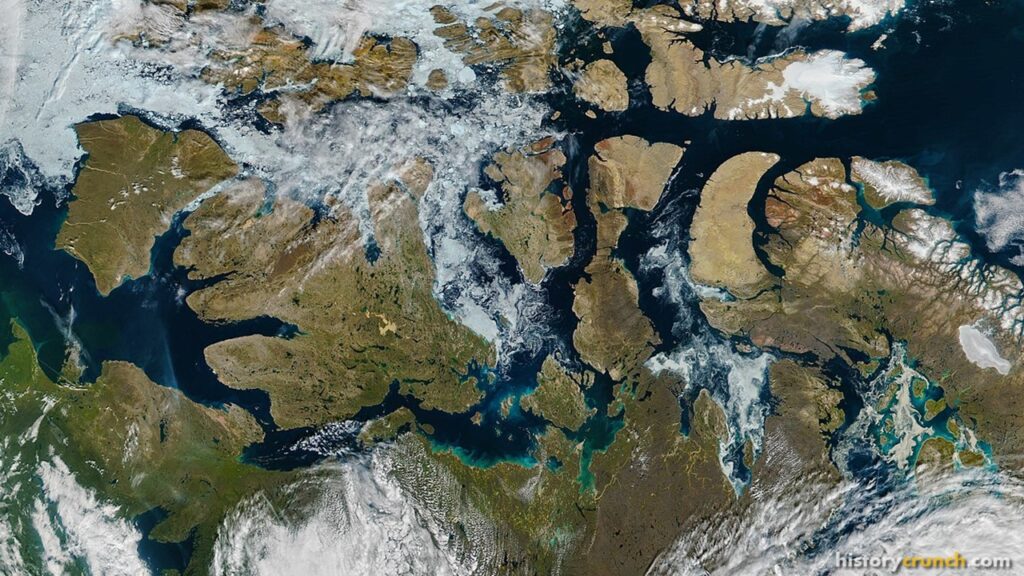
The Northwest Passage was one of the most important goals of the Age of Exploration, capturing the imagination and ambition of European explorers for centuries. It refers to a sea route through the Arctic waters of northern North America that would connect the Atlantic Ocean to the Pacific Ocean. Finding such a route was considered enormously valuable because it would give European nations a much faster and more direct path to the trading markets of Asia. The search for the Northwest Passage drove some of the most daring and difficult voyages in the history of exploration, and the story of those efforts is deeply connected to the overall history of European exploration in the New World.
What Was the Northwest Passage?
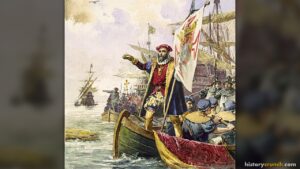
The Northwest Passage is a sea route that runs through the Arctic Archipelago of northern Canada, connecting the Atlantic Ocean in the east to the Pacific Ocean in the west. For European explorers during the Age of Exploration, finding this route was a major priority. European nations had long sought faster and more direct sea routes to the wealthy trading markets of Asia, particularly China, India, and Japan. Portugal had found a route to Asia by sailing south around the tip of Africa with that voyages of Bartolomeu Dias and Vasco da Gama. Also, Spain had sent Christopher Columbus westward across the Atlantic in the hope of reaching Asia that way. However, Columbus’s voyages revealed the existence of the Americas, a massive landmass that stood between Europe and Asia when sailing west. This discovery raised a new question: was there a way to sail through or around this landmass through the cold waters of the north? The answer to that question became one of the defining challenges of the Age of Exploration.
Early Search for the Northwest Passage
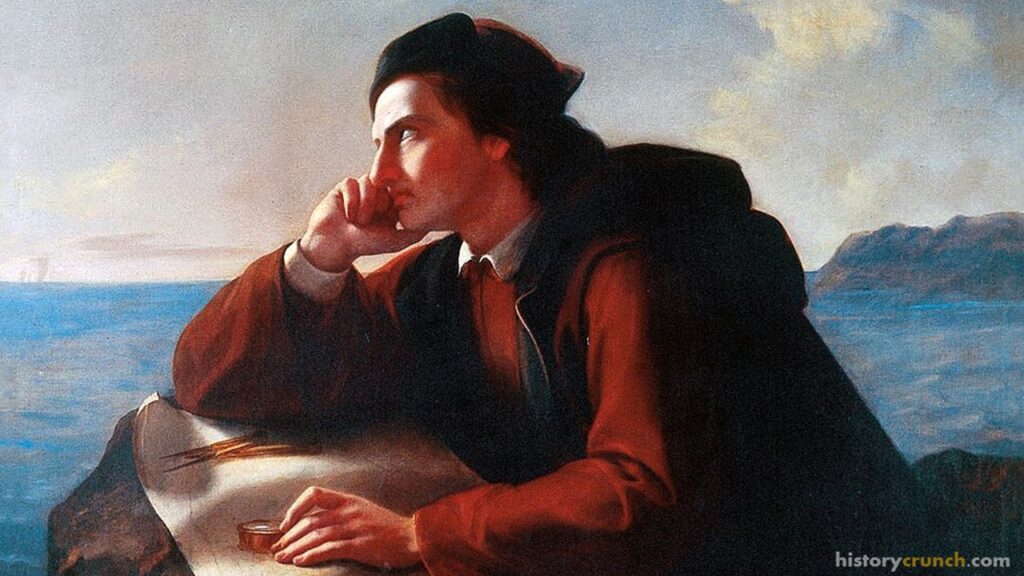
The search for the Northwest Passage began in earnest in the late 15th century, shortly after Columbus’s voyages revealed the existence of the New World. One of the earliest explorers to search for a northern route was John Cabot. Cabot was an Italian-born navigator who sailed for England, and in 1497 he crossed the Atlantic and made landfall on the coast of North America, becoming the first European to reach the North American mainland since the Norse Vikings in the eleventh century. Although Cabot’s voyage did not find a passage to Asia, it established England’s early claim to territory in North America and demonstrated that a northern sea route might be possible. Cabot set out on further voyages in search of the passage, but the outcome of his later expeditions remains uncertain, and he is thought to have died at sea around 1500.
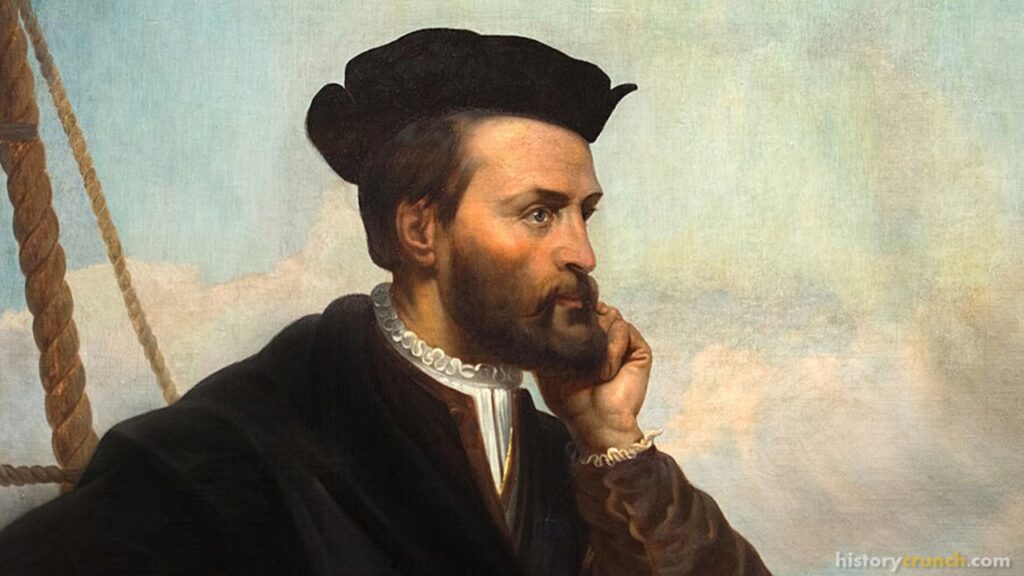
Another early explorer who contributed to the search was Jacques Cartier, the French navigator who carried out three voyages to North America between 1534 and 1542. Cartier was commissioned by the French king to find a western passage to Asia, and he explored the Gulf of Saint Lawrence and the Saint Lawrence River in what is today Canada in the hope that these waterways might lead him through the continent to the Pacific. While Cartier never found the passage he was looking for, his voyages gave France its early claim to the territories of Canada and greatly expanded European knowledge of the North American interior.
Henry Hudson and the Search for a Northern Route
One of the most famous explorers associated with the search for the Northwest Passage was Henry Hudson, an English navigator who carried out several voyages in the early 17th century in search of a northern route to Asia. Hudson was a skilled and determined sailor who was willing to push into waters that other explorers had avoided, and his voyages took him further into the Arctic than most Europeans had ever gone.
In 1609, Hudson was hired by the Dutch East India Company to find a safe northwesterly route to China. His fleet initially attempted to sail around the Arctic, operating on the belief that summer temperatures would melt enough ice to allow passage. When ice blocked the planned route, Hudson redirected the voyage westward through North America. This led him to explore the region surrounding what is today New York, including the river that now bears his name, the Hudson River. While this voyage did not find the Northwest Passage, it opened the door to Dutch colonization in the greater New York area.
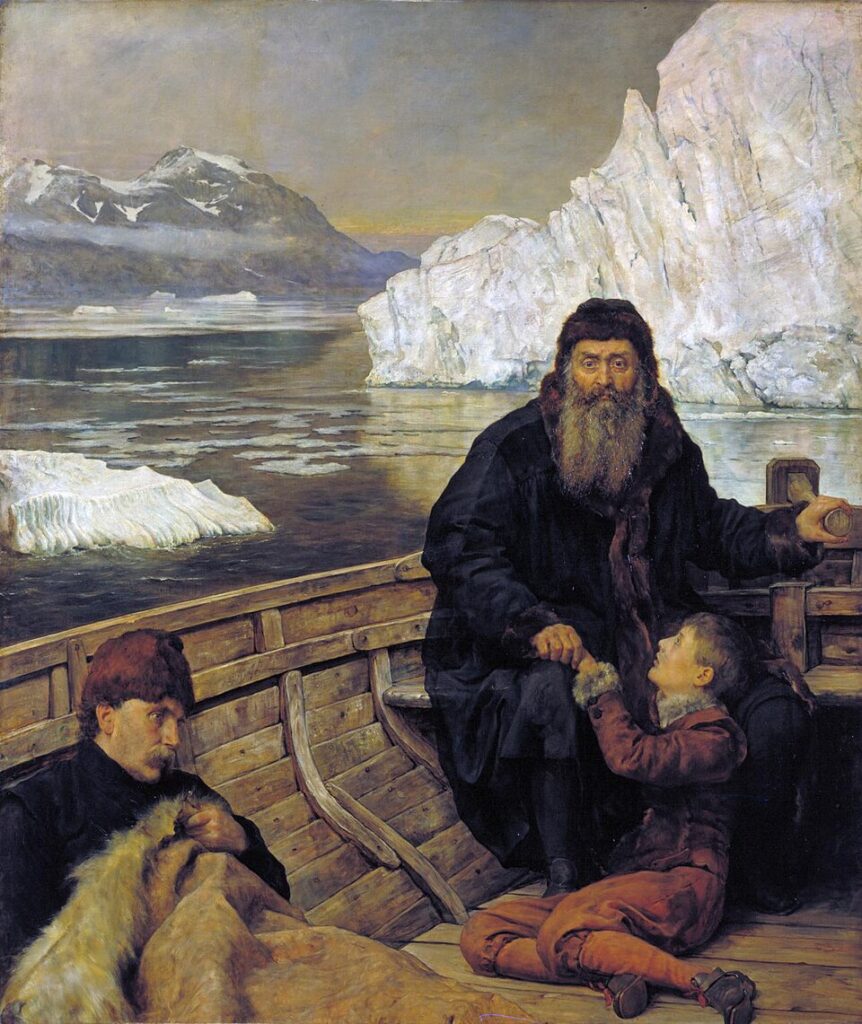
In 1610, Hudson secured backing from the British East India Company for another voyage, this time aboard a ship called the Discovery. He sailed into the large body of water in northern Canada that is today known as Hudson Bay, believing it might be the passage he was searching for. However, the expedition became trapped in ice and was forced to spend the winter in the James Bay area. The difficult conditions created serious tension among the crew, and when the ice melted in 1611 and Hudson wanted to press on rather than return home, the crew mutinied. Hudson, his son, and seven other crew members were cast adrift in a small boat and were never seen again. He was reported dead in 1611. Despite his tragic end, Hudson’s explorations greatly expanded European knowledge of the Canadian Arctic and the waters of Hudson Bay.
Later Expeditions and the Search Continues
The search for the Northwest Passage continued long after the Age of Exploration formally ended, driven by the enduring belief that a navigable route through the Arctic must exist. Throughout the 17th, 18th, and 19th centuries, numerous expeditions set out from England and other European nations to find the passage, often at great cost in lives and ships. The Arctic proved to be one of the most hostile and unforgiving environments on earth, and many expeditions were lost to ice, starvation, and the brutal cold.
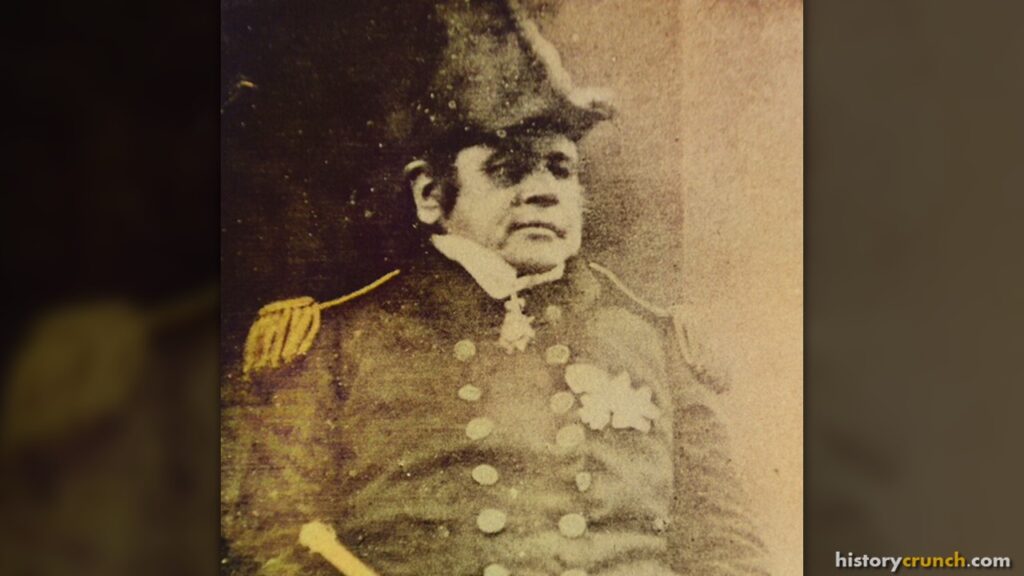
The most famous and tragic of these later expeditions was led by Sir John Franklin of England in 1845. Franklin set out with two ships and 128 men in what was the best-equipped Arctic expedition England had ever sent. The ships became trapped in ice near King William Island in the Canadian Arctic and were never freed. All 129 men eventually perished, and the fate of the expedition remained one of the great mysteries of the 19th century for many years. Search parties sent to find Franklin and his men discovered important clues about the geography of the Arctic and helped piece together the route of the Northwest Passage, but the full story of Franklin’s fate was not confirmed until archaeological work in the 20th and 21st centuries.
The Northwest Passage was finally navigated for the first time in history by the Norwegian explorer Roald Amundsen between 1903 and 1906. Amundsen and his small crew spent three winters in the Arctic ice before successfully completing the passage in a small vessel called the Gjøa. His achievement confirmed that the passage existed and could be navigated, but also demonstrated just how extraordinarily difficult and dangerous it was. The route Amundsen completed was far too icy and shallow to be useful for commercial shipping at the time.
Significance of the Northwest Passage
The significance of the Northwest Passage in the history of exploration is considerable. For centuries it represented one of the greatest unsolved challenges of the Age of Exploration and beyond, inspiring generations of sailors and explorers to push into some of the most dangerous and remote waters on earth. The search for the passage led directly to the European mapping of the North American Arctic and contributed enormously to the geographic knowledge that Europeans gradually built up about the continent. The voyages of Cabot, Cartier, Hudson, and many others who searched for the passage helped shape the colonial history of Canada and the broader story of European expansion in the New World.
The Northwest Passage has also taken on new significance in the modern world. As global temperatures have risen due to climate change, the Arctic sea ice has been melting at a historically unprecedented rate. This melting has made the Northwest Passage increasingly navigable during the summer months, raising the possibility that it could eventually become a practical shipping route connecting the Atlantic and Pacific Oceans. This development has made the Northwest Passage not just a historical topic but also a subject of ongoing importance in discussions about the environment, international trade, and Arctic sovereignty. For all of these reasons, the history of the Northwest Passage remains one of the most compelling and significant stories in the broader history of exploration.