World War II was the deadliest and most destructive conflict in human history, lasting from 1939 to 1945 and involving nations from every corner of the globe. It resulted in the deaths of an estimated 70 to 85 million people, the collapse of entire empires, and changes to the world map that are still visible today. The war reshaped the political, social, and economic landscape of the entire world and set in motion a series of events whose consequences are still felt in the present day. Understanding the significance of World War II is essential because so much of the modern world was shaped directly by the events of this deadly conflict.
World War II and the Human Cost
The most immediate and devastating significance of World War II was the sheer scale of human suffering it caused. The war resulted in the deaths of between 70 and 85 million people, making it by far the deadliest conflict in recorded history. This total included both military personnel killed in battle and civilians who died as a result of bombing, famine, disease, and deliberate acts of violence. In fact, more civilians than soldiers died during World War II, which reflected the total nature of the conflict. World War II is widely considered an example of total war, meaning that the conflict impacted virtually every aspect of society and not just the military. Entire cities were destroyed by bombing campaigns, economies were redirected entirely toward the war effort, and ordinary citizens were expected to contribute to the fight in ways that had never been seen before on such a large scale.
The human cost of the war was felt differently in different parts of the world, but no country that participated in the conflict escaped without enormous losses. The Soviet Union alone suffered an estimated 27 million deaths, more than any other single nation. Germany, Japan, Poland, China, and many other countries also lost millions of people. For the families of those who died, the war left a legacy of grief that lasted for generations, and remembrance ceremonies held around the world each year continue to honor the sacrifice of those who were killed.
World War II and the Holocaust
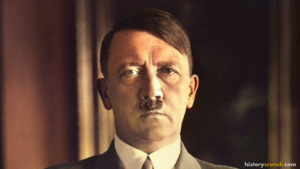
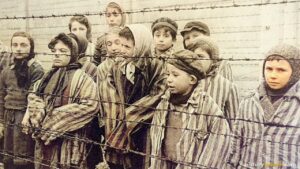
One of the most significant and horrifying aspects of World War II was the Holocaust, in which the Nazi regime of Germany systematically murdered approximately 11 million people, including 6 million Jewish people. The Holocaust was carried out through a deliberate and organized program of persecution, deportation, and mass murder that Adolf Hitler and the Nazi Party had been developing since they came to power in Germany in the 1930s. Jewish people across Nazi-occupied Europe were stripped of their rights, forced into overcrowded ghettos, and eventually transported to concentration camps and death camps where they were killed. The Holocaust also claimed the lives of other groups targeted by the Nazis, including Soviet prisoners of war, disabled people, Roma people, homosexuals, and members of various religious groups.
The Holocaust is one of the most significant events in the history of the 20th century and stands as a stark warning about the dangers of hatred, racism, and the abuse of state power. In the years following the war, the revelation of the full scale of the Holocaust shocked the world and led directly to the development of new international laws and institutions designed to protect human rights and prevent genocide from occurring again. The Holocaust also had a profound impact on the Jewish people, and the experience of the war played a central role in the establishment of the state of Israel in 1948.
World War II and the Role of Women
World War II had a significant impact on the lives of women in many of the countries involved in the conflict. Before the war, very few women worked outside the home, and those who did were generally limited to roles such as teachers, secretaries, and nurses. However, when the war began and millions of men left their jobs to enlist in the military, women were needed to fill the jobs they left behind. In the United States in particular, women entered the industrial workforce in enormous numbers for the first time, taking on jobs in factories that produced weapons, vehicles, and other materials needed for the war effort. The iconic image of Rosie the Riveter became a symbol of the contribution that American women made to the war effort during this period.
The experience of working outside the home during World War II had lasting consequences for the role of women in society. Having demonstrated their ability to perform jobs that had previously been considered the exclusive domain of men, many women were reluctant to return to their pre-war roles after the conflict ended. The changes in women’s employment during the war helped lay the groundwork for the broader women’s rights movements that would emerge in the decades that followed.
World War II and the Atomic Bomb
One of the most significant and far-reaching developments of World War II was the development and use of the atomic bomb. The United States, working in secret through a program known as the Manhattan Project, developed the world’s first nuclear weapons during the war. On August 6th, 1945, the United States dropped an atomic bomb on the Japanese city of Hiroshima, killing an estimated 70,000 to 80,000 people instantly and tens of thousands more in the days and weeks that followed from radiation and injuries. Three days later, on August 9th, a second atomic bomb was dropped on the city of Nagasaki, killing an estimated 40,000 people immediately. The devastating power of these two bombs contributed directly to Japan’s decision to surrender, which brought the war in the Pacific to an end.
The use of the atomic bomb on Japan marked the beginning of the nuclear age, one of the most significant developments in the history of human civilization. For the first time in history, human beings had developed weapons capable of destroying entire cities in a single strike. The existence of nuclear weapons fundamentally changed the nature of warfare and international relations in the decades after World War II. During the Cold War that followed, the United States and the Soviet Union both built up enormous nuclear arsenals, and the threat of nuclear destruction shaped global politics for the rest of the 20th century. The development and use of the atomic bomb during World War II remains one of the most debated and significant events in modern history.
World War II and the Cold War
The end of World War II did not bring a lasting peace to the world. Instead, it gave rise to a new period of tension and rivalry known as the Cold War, which lasted from approximately 1947 until 1991. The Cold War was a conflict of ideologies between the two superpowers that emerged from World War II, which included the United States and the Soviet Union. The United States promoted liberal democracy and capitalism, while the Soviet Union promoted communism. Although the two countries never fought each other directly in a major military conflict, they competed fiercely for influence across the globe, supporting opposing sides in regional conflicts, engaging in an arms race, and competing in the space race.
The Cold War divided much of the world into two opposing camps and shaped the politics of Europe, Asia, Africa, and Latin America for decades. Germany itself was divided into two separate countries. West Germany, which was aligned with the United States and Western Europe, and East Germany, which was controlled by the Soviet Union. The division of Germany and the broader division of Europe between the democratic West and the communist East was one of the most visible and lasting consequences of World War II. The Cold War ultimately ended with the collapse of the Soviet Union in 1991, but the tensions and conflicts that the war helped create continued to shape world events long after that.
World War II and the United Nations
One of the most important institutional consequences of World War II was the creation of the United Nations in 1945. The United Nations was established by the Allied nations in the final stages of the war as a replacement for the League of Nations, which had proven too weak and ineffective to prevent the outbreak of World War II. The goal of the United Nations was to provide a forum where countries could resolve their disputes peacefully and to prevent another global conflict from breaking out. The United Nations also worked to establish and protect basic human rights around the world, particularly in the wake of the Holocaust and the other atrocities committed during the war.
The United Nations has remained one of the most important international organizations in the world since its founding and continues to play a central role in global politics, humanitarian efforts, and peacekeeping operations today. Its creation was a direct response to the failures of the international community that allowed World War II to happen and reflected a determination among the nations of the world to build a more stable and just international order in the aftermath of the conflict.
World War II and the End of European Colonialism
World War II also accelerated the process of decolonization, meaning the end of European colonial empires around the world. Before the war, European nations such as Britain, France, and the Netherlands controlled vast colonial territories across Asia, Africa, and the Middle East. However, the war severely weakened these European powers both economically and militarily, and it undermined the moral authority that Europeans had used to justify their colonial rule. The war had been fought in the name of freedom and democracy, and it was difficult for European powers to justify denying those same values to the peoples of their colonies in its aftermath.
In the years and decades following World War II, colony after colony gained independence from European rule, fundamentally reshaping the political map of the world. India gained independence from Britain in 1947, and a wave of independence movements swept through Africa and Asia in the 1950s and 1960s. The end of European colonialism was one of the most transformative political developments of the 20th century, and it was directly connected to the changes that World War II set in motion.