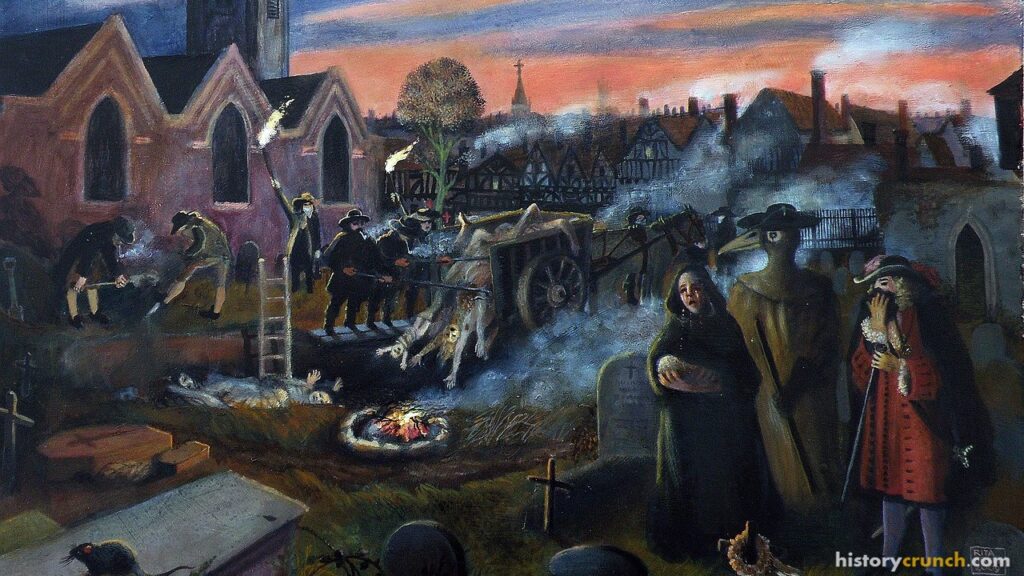
Many people died in the Black Death due to the highly contagious nature of the bubonic plague, lack of medical knowledge, and poor hygiene and living conditions in medieval Europe. The plague spread quickly, especially in crowded cities where people lived in close quarters with rats and fleas. Additionally, ineffective treatments and a limited understanding of disease made it nearly impossible to contain the outbreak.
WHAT WAS THE BLACK DEATH?
The Black Death is one of the most important events in Western history and is the most famous pandemic in all of human history. A pandemic is the term used to describe the spread of an infectious disease over a wide area including the entire planet. The Black Death occurred during the 14th century and ravaged human populations throughout Asia and Europe as it spread along trade routes and through trading ports. Throughout history it has also been referred to as the ‘Great Mortality’ and ‘Great Pestilence’.
The Black Death is the term that historians use to describe the spread of the bubonic plague. It is believed that the plague first began in Central Asia and spread to Europe through vast trade routes such as the Silk Road. Historians studying the spread of the plague discovered that the disease was spread by fleas that are commonly found on rodents such as rats and mice. As such, it is now understood that the plague spread via trade routes as the rodents travelled in caravans and on merchant ships. In total, the spread of the plague caused the death of millions and a large percentage of the population.

WHY DID SO MANY PEOPLE DIE IN THE BLACK DEATH?
The death tolls were so high due to several factors. First, hygiene played a crucial role in the spread of the disease. Europe in the Middle Ages lacked the modern conveniences of sanitation and running water. Instead, human filth was often just dumped in the street. This situation caused rodents such as rats and mice to flourish which helped spread the fleas that carried the plague with them. As such, crowded cities and towns were often havens for the plague since it attracted rodents that were drawn to human activity. The second factor that caused the plague to lead to such high death tolls was the lack of understanding of the disease on the part of Europeans and doctors. At the time, there was little understanding of the connection between hygiene and disease. As a result, there were several different theories on the cause and spread of the diseases, which were all ultimately incorrect. For example, during the Middle Ages, many medical doctors believed that human health was related to the movement of the planets in our solar system. As such, many related the spread of the plague to the rotation of the planets including Mars and Jupiter. Another common belief about the plague was that it was spread by certain ethnic groups. For example, immigrant groups and Jewish people were often blamed for the spread of the disease and were persecuted as a result. Next, some believed that the plague was a result of God’s will and was punishment for the actions of people. As such, many people turned to their faith during the crisis.
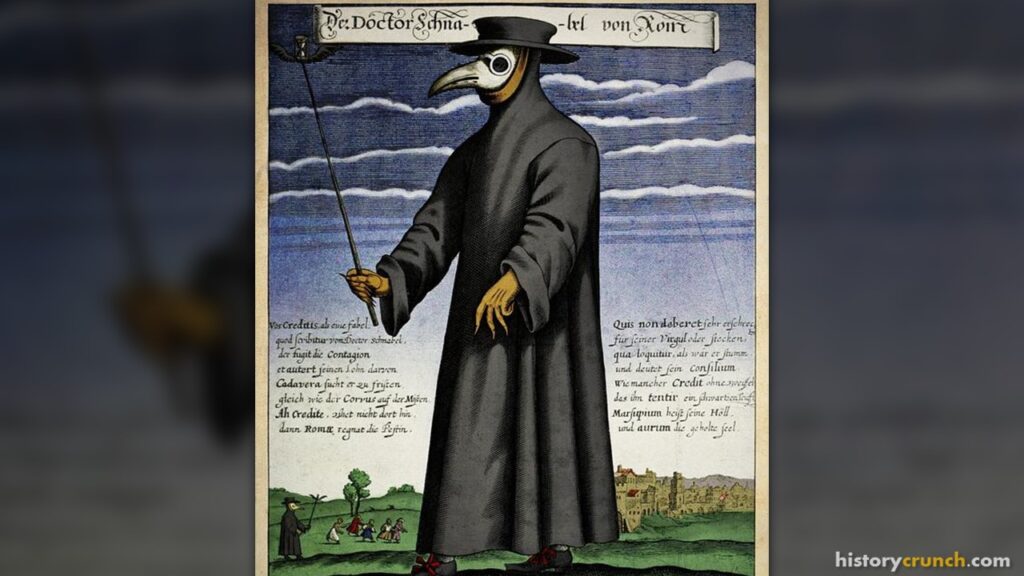
The lack of medical understanding during the time is evidenced by the remedies or cures that people believed would work. For instance, some believed that the plague was spread by “bad air” and thought that they could cleanse the air with the burning of incense. This belief led to doctors of the period wearing strange outfits with masks that looked like the beak of a bird. Believing that the plague was spread through the air, the doctors would fill the nose area of the mask with incense in order to overpower the “bad air”. However, it also served to mask the smell of death, which was a common reality due to the large number of dead.
In all, the Black Death was an important event that fundamentally changed life for people across Europe and Asia. It was caused by the spread of the bubonic plague and caused massive death tolls wherever it occurred. It is remembered today as one of the most important pandemics in all of human history and for its role in other major events and time periods, such as: the Silk Road, the Middle Ages and the Renaissance.