Tanks in World War I played a significant role in the overall war. In fact, tanks were first developed during World War I by Britain and eventually became an important weapon for all of the different nations. World War I was a deadly conflict as shown by the millions of military and civil casualties it caused. The large number of casualties was the result, in part, of the development and use of weaponry that took place during the war. In all, tanks were one of the most significant weapons of World War I alongside other important weapons, such as: airplanes, airships, machine guns, poison gas, rifles and submarines.
DEVELOPMENT OF THE TANK FOR WORLD WAR I
World War I was characterized primarily by the stalemate of trench warfare, which was especially true on the Western Front. In fact, the Allied Powers (Britain and France) struggled to push back the German Army, which also struggled to gain any momentum with its own battles. As a result, each country sought a way of breaking the stalemate in their favor. This caused the different European powers to develop and use different kinds of weapons. Britain was the first country to develop the tank and use it in battle. Britain hoped that the new invention would end the stalemate on the Western Front and allow British forces to advance against the German Army.
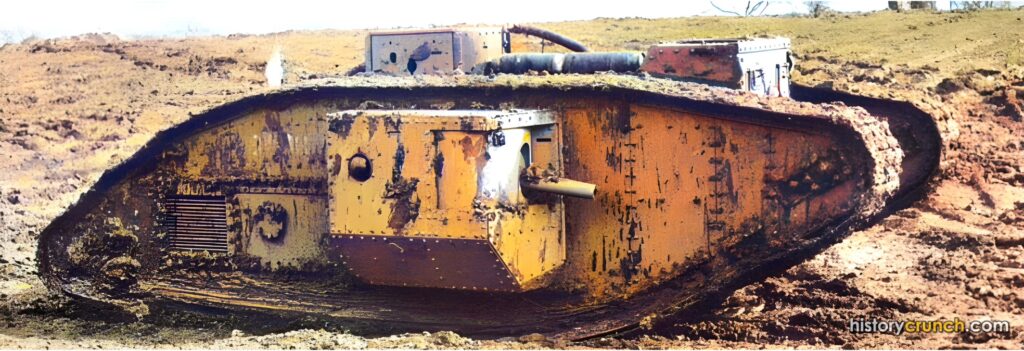
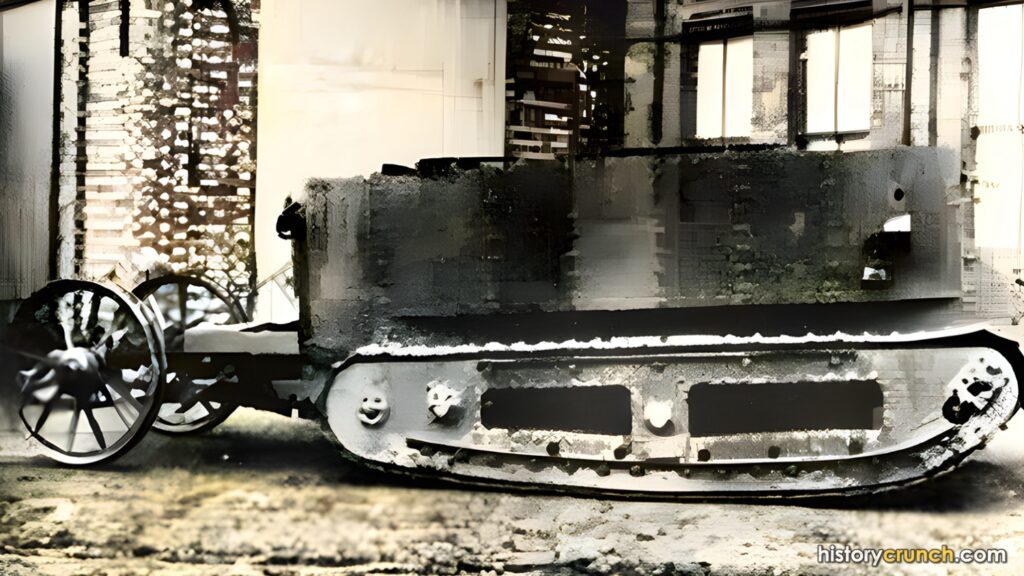
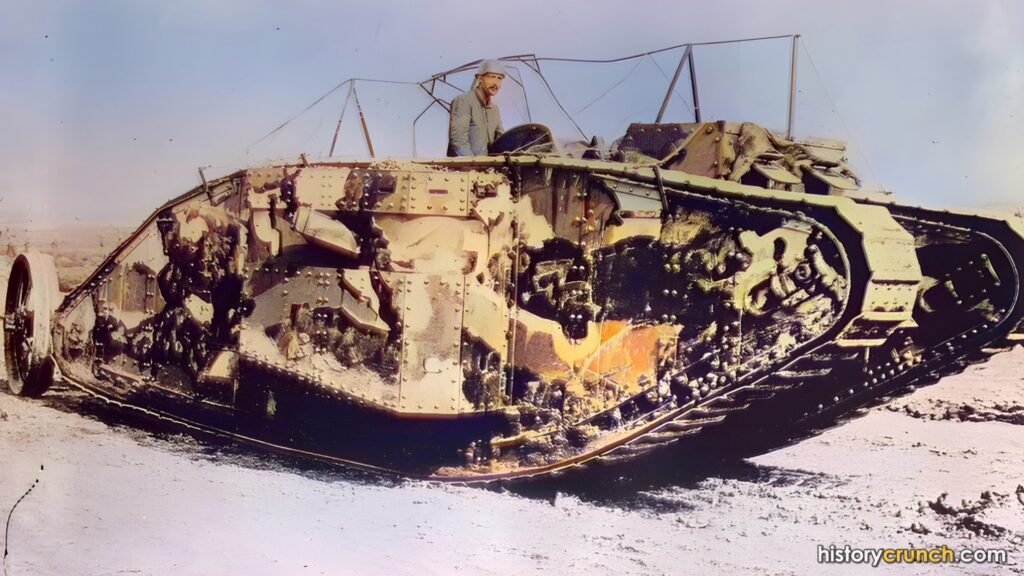
The development of the first tank began in 1915 and was based on earlier armored vehicle designs that had already been used in World War I. More specifically, the first practical tank design was undertaken by William Foster & Co Ltd in Lincoln, England. This first design, which was completed in September of 1915, was called ‘Little Willie’ and is considered to be the prototype to the first British tank. The ‘Little Willie’ tank was a 14 ton armored box with a 105 hp Daimler engine. It also included caterpillar tracks, which became the standard form of movement for all later tanks. Regardless, the construction of ‘Little Willie’ proved to the British Army that the invention had potential. Revisions were made to the original design, including changing the body shape to better meet the needs of the battlefields of the Western Front. For instance, a rhomboidal shape was chosen because it allowed the tanks better ability to scale over and out of enemy trenches. As well, the new design, which was first referred to as ‘Big Willie’ or ‘Mother’ included side mounted 6-pounder (57 mm) guns. After testing, the British government ordered the production of 150 ‘Mother’ style tanks, which occurred in early 1916.
British commanders wanted to use the tank as a surprise attack against German forces on the frontline trenches in 1916 and therefore worked to keep the development of the tank a secret. For example, the original name of the tank was ‘Landships’ as they were designed to cross over enemy trenches and help advancing soldiers to capture enemy trenches. To maintain secrecy, British commanders began referring to the new invention as ‘Water Carriers’ or ‘Water Tanks’. This was because the shape of the vehicle resembled a water tank, and this allowed the British to offer a reasonable explanation for what it was while transporting it to the frontlines. The name stuck and remained to this day.
FIRST USE OF TANKS IN WORLD WAR I
The first tank used in battle was the British Mark I. It was first introduced in the Battle of the Somme in 1916 under the command of British General Douglas Haig. The Battle of the Somme was one of the largest and deadliest conflicts of World War I. The Battle of the Somme occurred in the summer and fall of 1916 along the trenches of the Western Front in northern France. Today the battle is remembered as one of the most significant from World War I and is viewed as characteristic to the nature of fighting at the time. For instance, during the Battle of the Somme, hundreds of thousands of soldiers for both the Allied and Central Powers were injured and killed. As such, the battle is a seen as an example of the ‘waste of humanity’ that the trenches of the Western Front became known for. The battle was so large that it was made up of several smaller conflicts. For instance, the Battle of Flers–Courcelette was important because it involved the first introduction of the tank as a weapon.
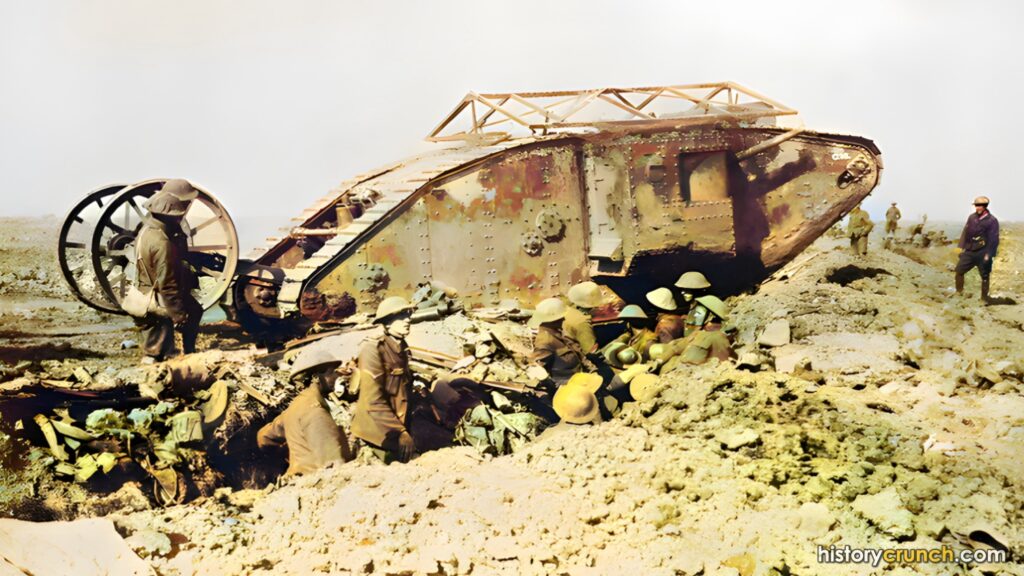
The British introduced the first tanks ever into the battlefield of the Battle of the Somme on September 15th, 1916. The first use of tanks in battle had mixed results. Many of them failed due to mechanical failure and were largely uncontrollable or became stuck in the thick mud of Northern France. However, they also provided a psychological advantage as the Germans were shocked to see these giant vehicles approaching them across ‘No Man’s Land’.
However, they were able to attack the German lines and convinced the British that they were a useful tool in the war effort. This caused the British to order the construction of more tanks for use in other battles. As well, other European nations including France and Germany began to develop their own tanks as the war continued, and the tank would come to play an important role in the remainder of the war.
FAMOUS TANKS IN WORLD WAR I
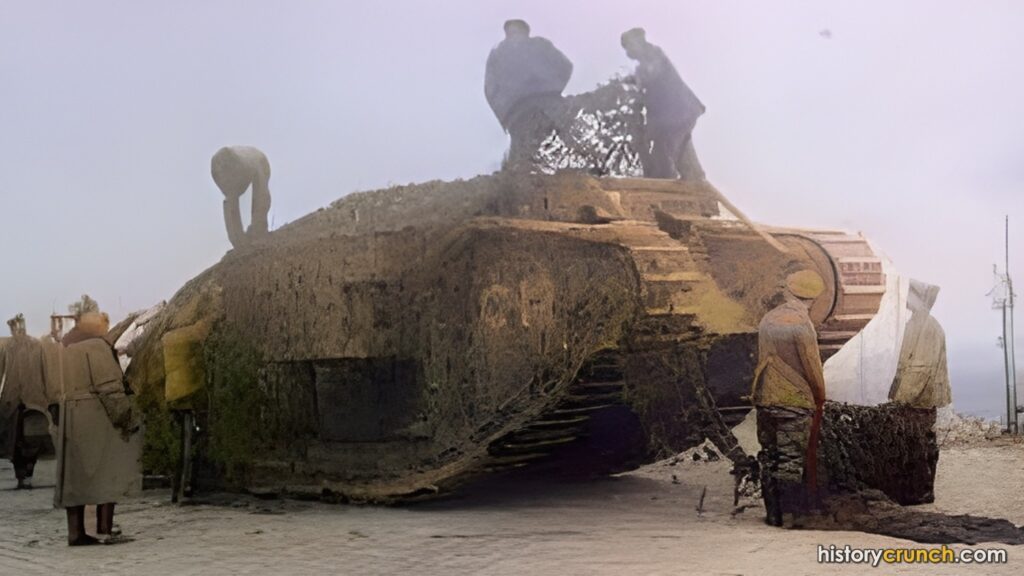
As stated above, the first tank used in battle in World War I was the Mark I. As World War I continued, Britain continued to develop versions of the original tank, including the Mark IV and Mark V. It should also be noted that the British developed a ‘male’ and ‘female’ version of each tank. For example, Britain produced both a ‘male’ Mark I and a ‘female’ Mark I. The two versions of the tank were different in their arrangement of weapons. For instance, the ‘male’ version included a pair of 6-ounder guns, while the ‘female’ version included only an array of machine guns.
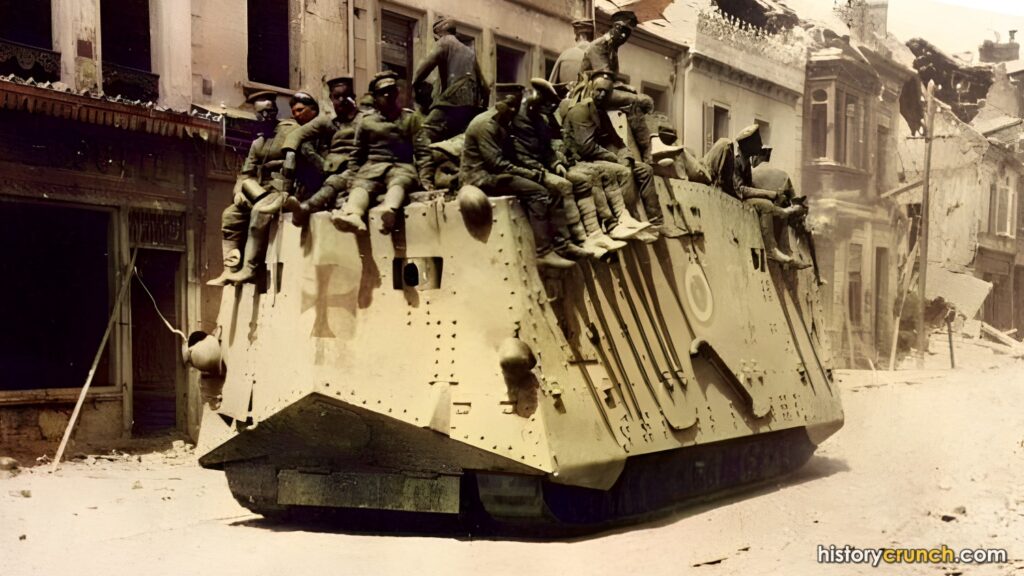
After the successful use of tanks by the British, both the French and the Germans began to develop their own versions. For example, by the end of the war, France had produced the most tanks out of any of the major powers. With that said, France did not introduce their first tank until 1917, which was the Schneider CA1. The second French tank of World War I was the Saint-Chamond. However, by 1918, the French had developed thousands of the Renault FT. The Renault FT was a revolutionary tank design because it included the first fully rotatable turret, which became a common feature of tanks throughout the remainder of the 20th century. For their part, Germany introduced its first tank in 1918, near the end of World War I, and only produced 20 into total. The German tank was called A7V and only saw action from March to October in 1918. As such, Britain and France vastly outnumbered the Germans in terms of tank production.
SIGNIFICANCE OF TANKS IN WORLD WAR I
Some historians debate the effect that the introduction of the tank had on the outcome of the war and the overall war effort for each country. For example, while tanks were more widely used on the Western Front, they did not necessarily have much of an impact on the other fronts of World War I. As well, the tank was originally introduced as a means of attempting to end the stalemate of the war. However, it proved ineffective in this regard, as the stalemate conditions of the war continued for several more years after the 1916 introduction of the tank. Others argue that the tank was more important as a psychological weapon because of the fear and confusion it caused for the enemy. Regardless, the tank is significant as a new weapon in World War I and the impact its invention has had on warfare since.