Despite the fact that Germany was a powerful country at the start of World War I in 1914 it was still unable to win the overall war. The outcome of World War I was influenced by a combination of factors, including military strategies, economic conditions and morale. Germany, despite early successes in the First World War, ultimately faced defeat due to a combination of internal and external factors. This article delves into the key reasons and aims to answer the question: ‘Why did Germany lose World War I?’
WHY DID GERMANY LOSE WORLD WAR I? – MILITARY REASONS
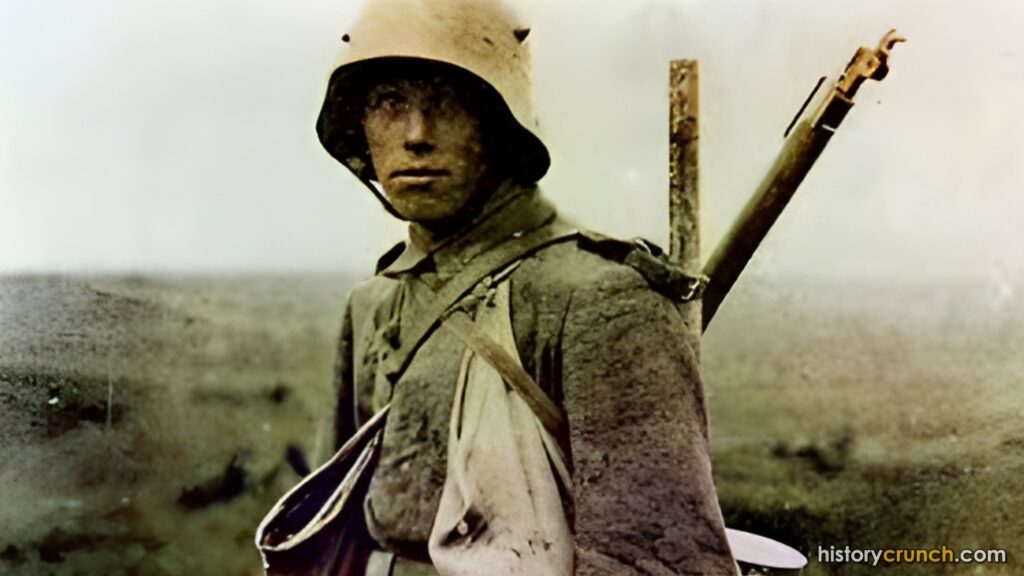
At the outbreak of the war Germany’s army was well-trained and had over 4 million soldiers. The country was well-known for its military might in the years before the outbreak of World War I and proved a difficult opponent on the battlefields of Europe. Its army is what helped Germany last through the miserable four years of fighting on the Western and Eastern Fronts of the war.
However, Germany lacked the colonies of both France and Britain which meant that it did not have the vast natural resources or colonial populations that either of those countries had. In 1914, Britain had five times as many colonies as Germany while France had over two times as many. Having these empires allowed both Britain and France to continue fighting for much longer as they were able to use the colonial resources to restock the war effort and they were able to use soldiers from their empires to help fight on the fronts in Europe.
In fact, in World War I Germany found itself facing a strong coalition of Allied Powers, including France, Britain, Russia, and later the United States. The combined resources, manpower, and industrial capacity of the Allies outweighed those of Germany and its Central Powers allies. The Allies coordinated their efforts effectively, launching offensives on multiple fronts and gradually wearing down German forces.
WHY DID GERMANY LOSE WORLD WAR I? – FAILURE OF THE SCHLIEFFEN PLAN
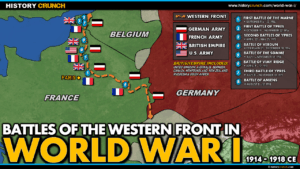
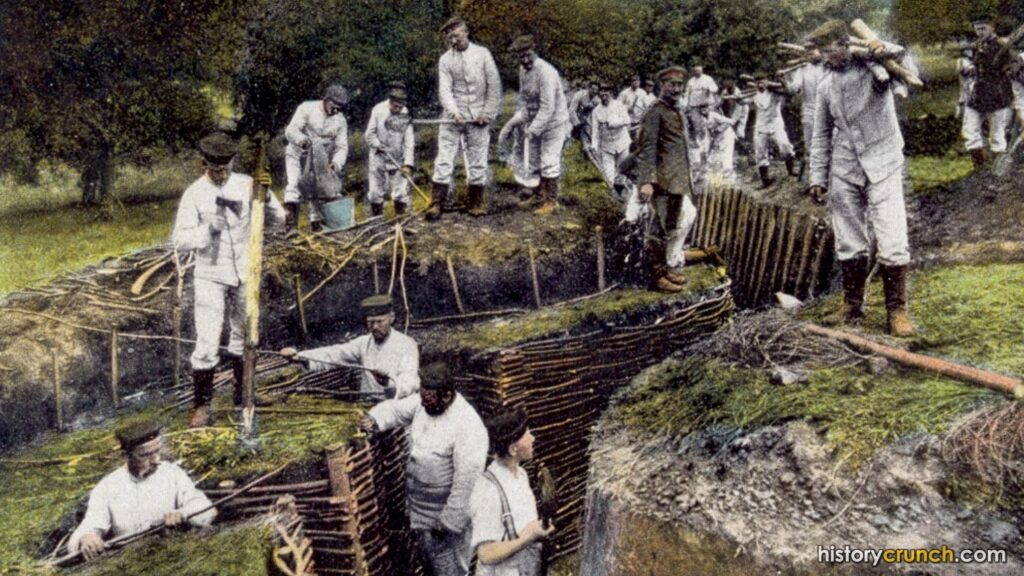
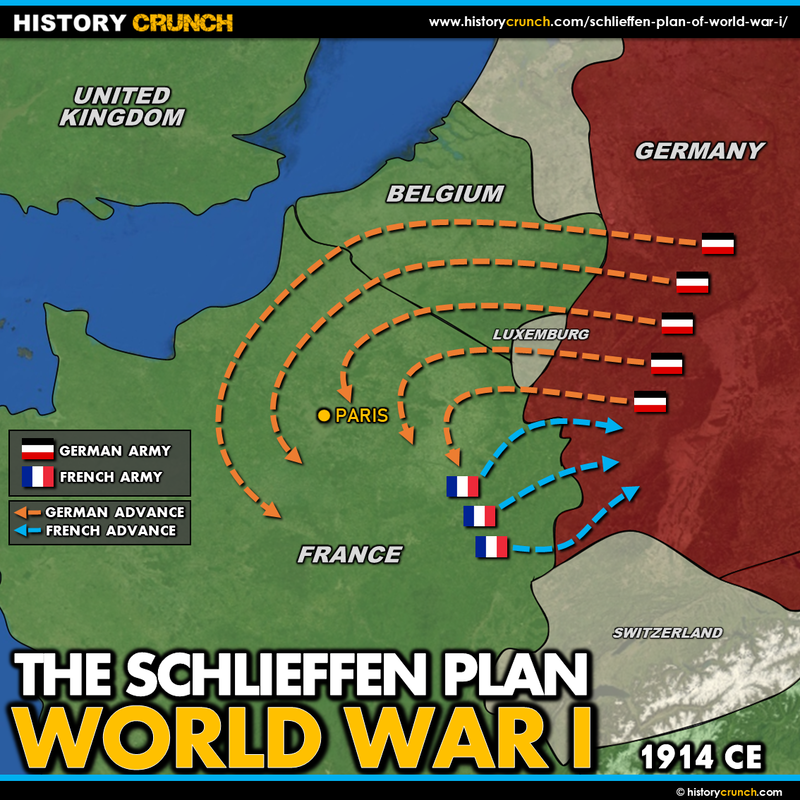
At the start of the war in 1914, Germany planned to end the war as quickly as possible. For instance, Germany attempted to knock France out of the war first through the use of the Schlieffen Plan. The German plan of attack called for Germany to invade France through Belgium and to force France out of the fighting of the war. Then Germany could turn its attention towards Russian forces in the east and avoid fighting a two-front war. The Schlieffen Plan failed due, in part, to French resistance at the First Battle of the Marne on the Western Front. This ultimately resulted in four years of trench warfare, which World War I has become known for. The failure of the Schlieffen Plan ultimately forced Germany to fight a two-front war from which they could not overcome and did not have the colonies or production to support the war effort over a prolonged period.
WHY DID GERMANY LOSE WORLD WAR I? – NAVAL WARFARE
The next reason for Germany’s failure in World War I was related to naval warfare in the North Atlantic. For instance, the British had naval superiority at the time of World War I and carried out a naval blockade that effectively cut off Germany from crucial imports of food, raw materials, and other resources. This blockade, combined with the British Royal Navy’s control of sea lanes, severely hindered Germany’s ability to sustain its war effort. The resulting shortages, inflation, and economic hardship destabilized German society and undermined morale on the home front.
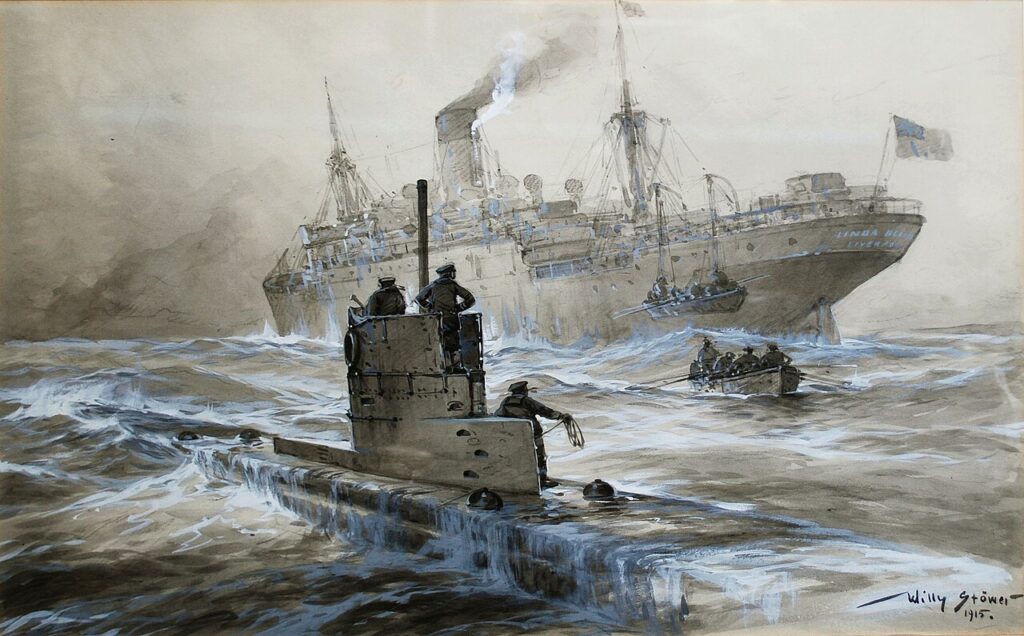
As well, Germany’s decision to carry out submarine attacks against Allied merchant ships in the Atlantic Ocean during the war also proved disastrous. For example, Germany launched numerous U-boats (submarines) during World War I and used them to try to force Britain from the war. Britain, an island nation, depended upon merchant ships from Canada and the United States to maintain its supplies for the war effort and for the home front. Germany hoped that by attacking these merchant ships they could force Britain to withdraw from the war and help improve the German situation in the trenches of the Western Front.
However, the German plan ultimately caused the United States to join the war effort on the side of the Allied Powers after German U-boats repeatedly sunk ships that contained American citizens. The arrival of American troops to the frontlines of World War I in 1917 helped drive the Allied advance in the final stages of the war. This ultimately caused Germany to accept the terms of the armistice on November 11th, 1918.
WHY DID GERMANY LOSE WORLD WAR I? – INTERNAL ISSUES
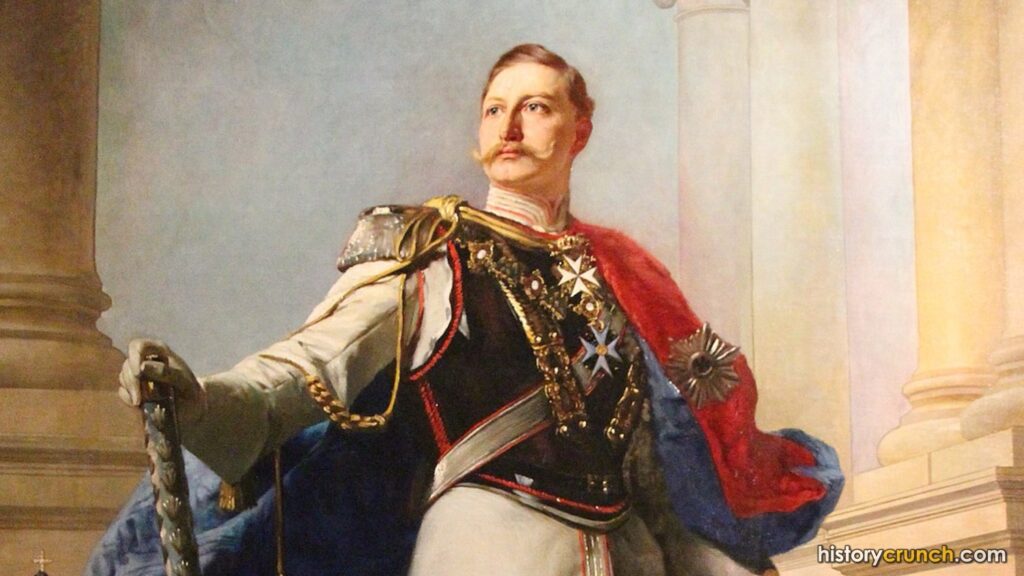
Finally, Germany faced internal dissent and revolutionary upheaval on the home front, further weakening its war effort. Widespread anger among the German population, fuelled by food shortages, low morale for the continuation of the war, erupted into strikes and protests among soldiers and civilians. In fact, the November Revolution of 1918 led to the abdication of German Kaiser Wilhelm II and the establishment of the Weimar Republic, paving the way for Germany’s surrender.