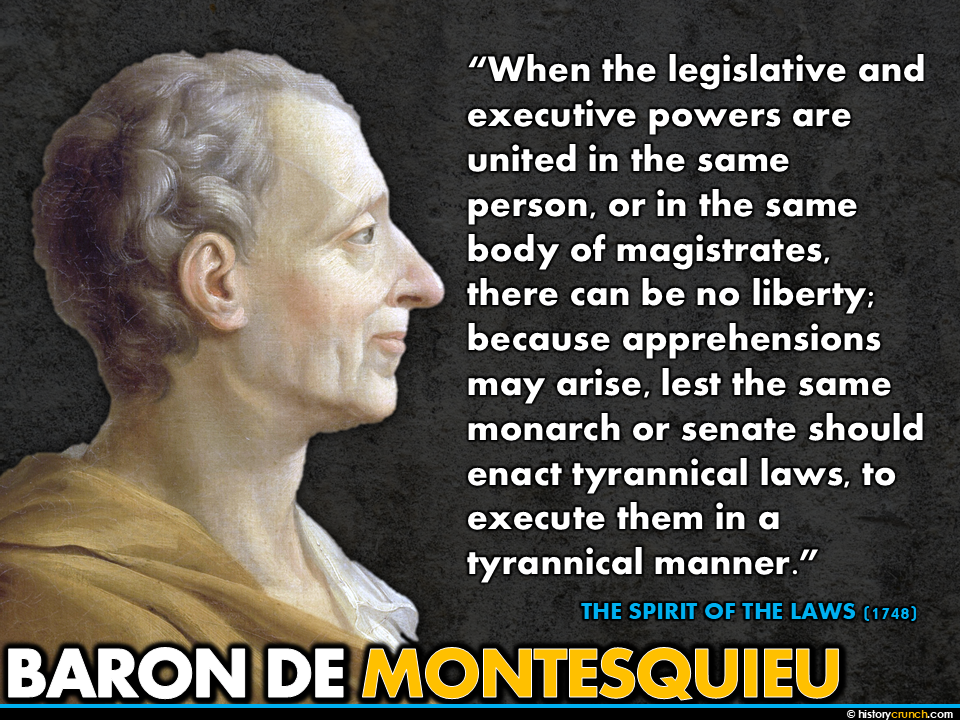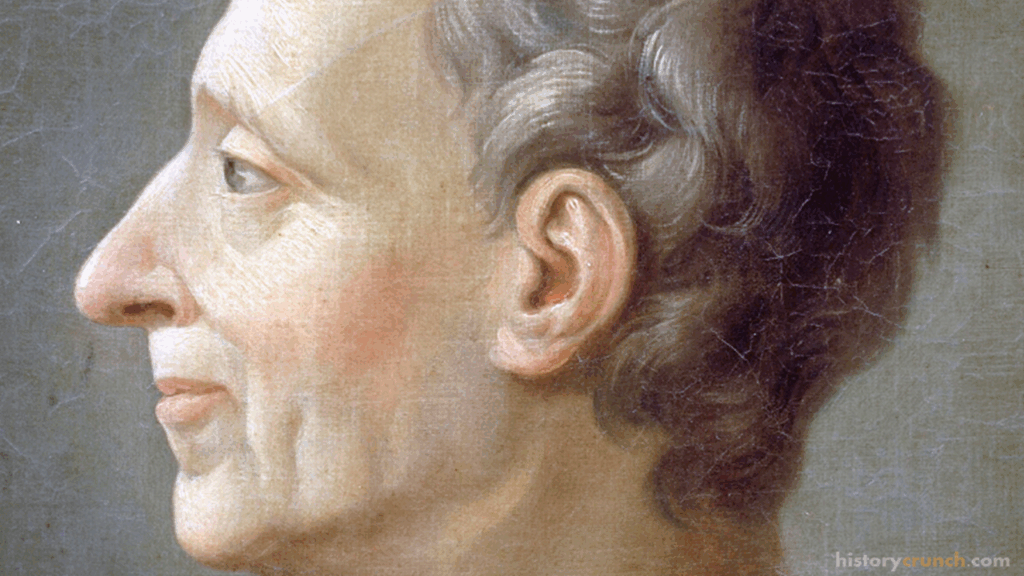
Baron de Montesquieu, commonly known as just ‘Montesquieu’, was one of the most influential political philosophers of the Age of Enlightenment. In fact, Montesquieu’s works helped lay the intellectual groundwork for several modern political concepts, such as: modern liberal democracy, the separation of powers and constitutional government. His most famous book, ‘The Spirit of the Laws’, which was published in 1748, became a profoundly influenced the development of political institutions in Europe and the Americas, including the United States Constitution. Historians consider him to be one of the most significant voices during the Age of Enlightenment, alongside others, such as: Thomas Hobbes, John Locke, Jean-Jacques Rousseau and Voltaire.
BARON DE MONTESQUIEU – EARLY LIFE
Charles-Louis de Secondat, Baron de La Brède et de Montesquieu was born on the 18th of January, 1869 in La Brède, France. Today he is more commonly referred to as ‘Baron de Montesquieu’ or simply as ‘Montesquieu’. He was born to parents of the noble class. His father Jacques de Secondat was a soldier, while his mother, an heiress, died when we was just seven years old.
From 1700 to 1711, he attended the prestigious Catholic College of Juilly. After the death of his father in 1713, Montesquieu lived with his uncle, and began to practise law in France. He also received a classical education and studied law at the University of Bordeaux. In 1716, he inherited his uncle’s title and position as president of the Bordeaux Parliament, which was a regional judicial body.
BARON DE MONTESQUIEU – AGE OF ENLIGHTENMENT
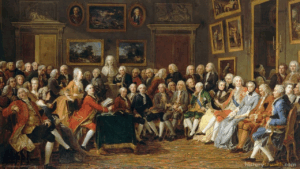
Although trained as a lawyer and judge, Montesquieu had several other intellectual interests. For instance, he was known to study history, science, politics, and culture. As well, he was an active participant in Enlightenment intellectual circles. Also referred to as the ‘Age of Reason’, the Enlightenment was an intellectual and cultural movement that emerged in Europe during the 17th and 18th centuries. It was spearheaded by numerous writers, scholars and philosophers that questioned and studied different aspects of human society. For his part, Montesquieu was a significant writer and scholar during this time and contributed greatly to the advancements of the Enlightenment.
While he wrote several works, his book titled ‘Spirit of the Laws’ was his most famous and influential. First published in 1748, Montesquieu released the ‘Spirit of the Laws’ anonymously in order to avoid censorship. Since the ideals of the Enlightenment often opposed the absolute monarchies of Europe, Montesquieu’s work was often in opposition to the governments of his time. Regardless, the ‘Spirit of the Laws’ was widely read across Europe, especially in Britain and America, and became one of the most influential works of the entire Age of Enlightenment. In particular, Montesquieu’s ideas on the separation of powers appealed to many revolutionaries including the founding fathers of the United States.
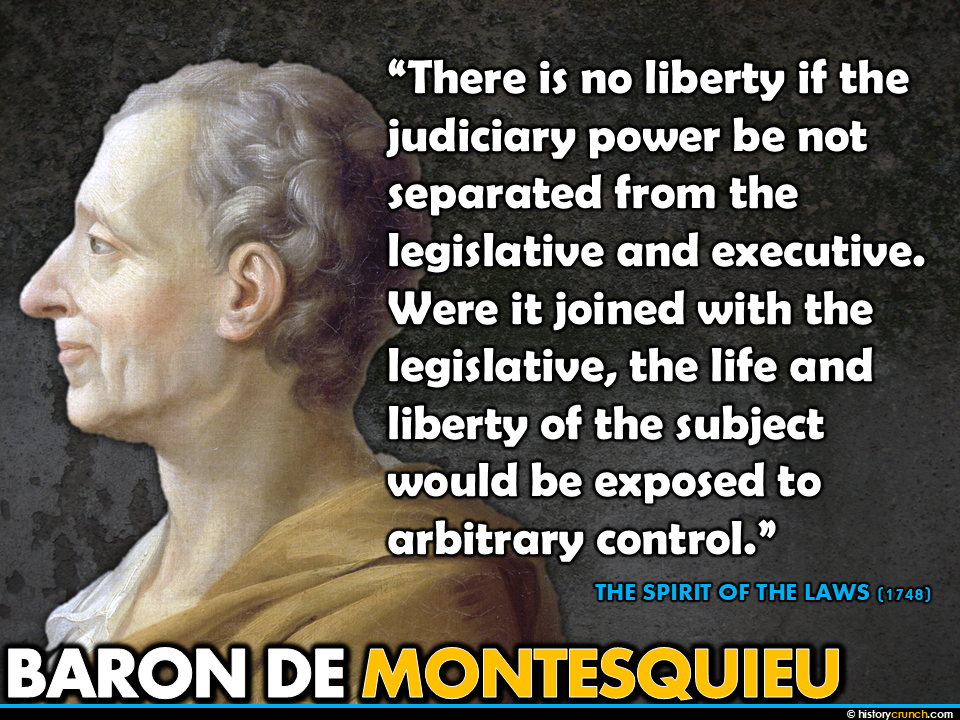
In his theory of the separation of powers, Montesquieu argued against all forms of absolute authority (such as absolute monarchy) and instead proposed that the authority of a government should be divided between three branches of government. Specifically, he stated that the branches of government should include an executive branch, legislative branch and judiciary branch. The executive branch was to be composed of a constitutional monarch, the legislative branch was to be made up of an elected body and the judiciary was to come from professionals in the legal system, such as lawyers and judge. Each of the three branches was to be separate and have the ability to act as a ‘check’ of power for the others. As a result, no single branch could dominate the others and therefore limited the ability for any form of absolute authority to form. This idea of a separation of powers has lasted into today’s world, as many democracies are based upon this foundation. For example, England, Canada and the United States, each contain the three branches of government, as laid out by Montesquieu, in their respective forms of government.
Montesquieu was also a fierce critic of absolutism and despotism, especially as practiced in France under Louis XIV and Louis XV. He categorized political systems into three main types: republics, monarchies, and despotisms, and he warned that unchecked power always led to tyranny. His analysis gave intellectual weight to the Enlightenment’s push for constitutional government and civil liberties.
BARON DE MONTESQUIEU – LATER LIFE AND DEATH
Montesquieu wrote several other works related to politics and how society should be structured, but by far, the ‘Spirit of the Laws’ was his most influential work. In his later years, he struggled with poor eyesight and was completely blind when he died in France on February 10th, 1755 from complications related to a fever. He was 66 years old at the time of his death.
BARON DE MONTESQUIEU – SIGNIFICANCE
As stated previously, Montesquieu was one of the most influential and significant writers of the Age of Enlightenment. In fact, his ideas about the structure of government, rule of law, and political liberty became central aspects of Enlightenment political thought. For example, other thinkers were inspired by his work and liberal philosophers in Britain, America, and France drew from his insights. Furthermore, Montesquieu’s idea of separated powers and balanced government directly influenced the framers of the United States Constitution in 1787. His ideas were referenced extensively in the Federalist Papers and guided the structure of the American federal system.
Today, he is widely regarded as one of the founders of modern political science and his writings remain central to issues related to democracy, liberty, and law. In fact, in France, his work helped shape revolutionary demands for a constitutional government, during the events of the French Revolution. In America, his ideas helped build a republic.