Christopher Columbus Legacy: A Detailed Summary

Christopher Columbus Legacy
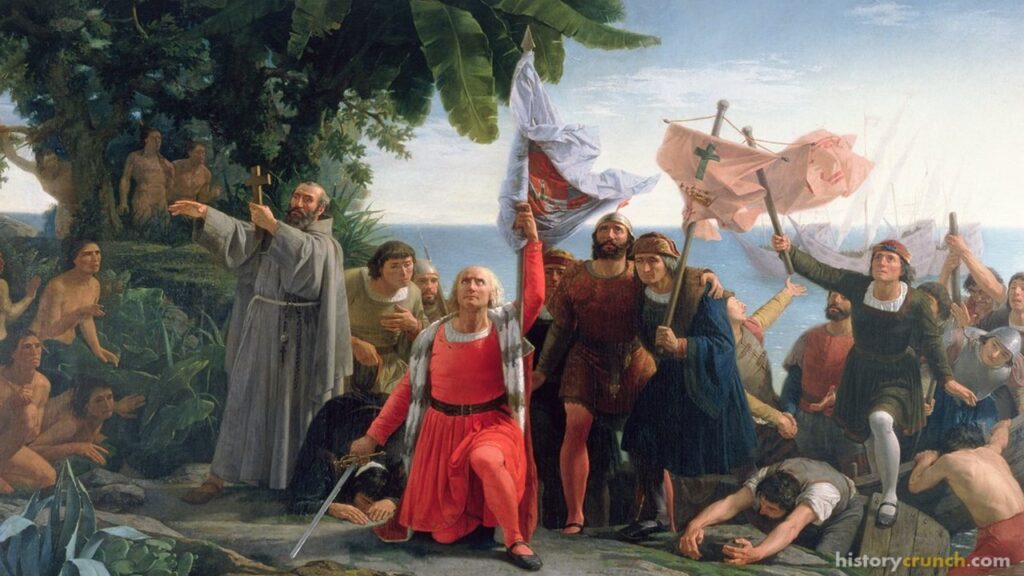
'The First Landing of Christopher Columbus' by Dioscoro Teofilo Puebla Tolin. (1862)
Christopher Columbus's legacy is highly complex and debated, since he is credited with opening the Americas to European exploration and colonization. This article details the legacy of Christopher Columbus.

Table of Contents

Christopher Columbus is one of the most significant figures in all of World History and is particularly important to major world events such as the Age of Exploration and Renaissance.  His four famous journeys to the New World in the late 15th century and early 16th century altered the history of the world and led to a mass migration of people from the Old World to the New World.  Today, he is best remembered as a famous European navigator, explorer and colonizer.​

CHRISTOPHER COLUMBUS LEGACY – COLUMBUS DAY

Christopher Columbus’ arrival in the New World in 1492 has been celebrated throughout history and across both the Americas and in Spain.  For example, in the United States, Columbus Day occurs every year on the second Monday of October, to roughly correspond with Columbus’ arrival on his first voyage.  Some argue against celebrating Columbus as a historical figure due to the violence and brutality that resulted from his arrival and actions in the New World.

Christopher Columbus
‘Portrait of Christopher Columbus’ by Sebastiano del Piombo. (1519)

CHRISTOPHER COLUMBUS LEGACY – FOUR VOYAGES

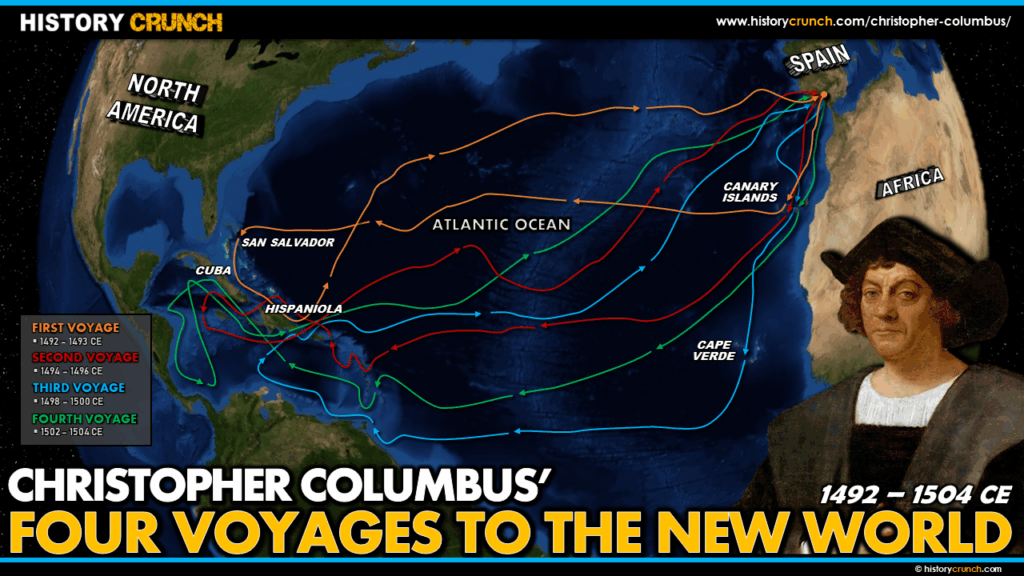
With that said, Christopher Columbus has left a lasting legacy on the world and his four voyages are some of the most significant events in all of world history.  His first voyage to the New World inspired countless other European explorers to make their own journeys.  For instance, Columbus’ voyages inspired fellow Spanish conquistadors such as Hernán Cortes and Francisco Pizarro.  Cortes led a 16th century mission that eventually overthrew the great Aztec Empire of central Mexico, while Pizzaro led another mission to overthrow the Inca Empire in modern day Peru.  This eventually led to mass migration of European settlers to the numerous colonies of the Americas and fundamentally altered life for people on both sides of the Atlantic Ocean.​

Christopher Columbus All Four Voyages to the New World Map
Christopher Columbus All Four Voyages to the New World Map by History Crunch

CHRISTOPHER COLUMBUS LEGACY – COLUMBIAN EXCHANGE

As well, Columbus’ second voyage to the New World is considered to be the event that start the ‘Columbian Exchange’ between the New and Old Worlds. The cargo and people that Columbus brought with him on the second voyage started a ‘grand exchange’ and revolution between the New World and the Old World that would alter the world forever because he had brought with him seeds, plants and livestock that were not originally occurring in the New World.  The major exchange between the two worlds centered on the exchange of plants, animals, and diseases.  Although the exchange began with Christopher Columbus it continued and developed throughout the remaining years of the Age of Exploration.  Ultimately the Columbian Exchange impacted the social and cultural makeup of both sides of the Atlantic and dramatically impacted the people living in these regions.  Click the link above to read more about the details and impacts of the Columbian Exchange.​

Columbian Exchange Map
Columbian Exchange Map created by History Crunch
Facebook
X
Reddit
Pinterest
LinkedIn

We strive to produce educational content that is accurate, engaging and appropriate for all learners. If you notice any issues with our content, please contact us and let us know!

AUTHOR INFORMATION
Picture of Elias Beck

Elias Beck

I'm a passionate history and geography teacher with over 15 years of experience working with students in the middle and high school years. I have an Education Degree with a focus in World History. I have been writing articles for History Crunch since 2015 and love the challenge of creating historical content for young learners!
Christopher Columbus First Voyage
Age of Exploration

Christopher Columbus’ First Voyage: A Detailed Summary

Christopher Columbus’ first voyage westward from Europe began in 1492, following his financing deal from the Spanish king and queen – Ferdinand and Isabella. This article details the history and significance of Columbus’ first voyage to the New World.

Isabella I of Castile
Middle Ages

Isabella I of Castile: A Detailed Summary

Isabella of Castile, known as Isabella the Catholic, was one of the most important rulers of the Middle Ages who completed the Reconquista, established the Spanish Inquisition and funded the voyages of Christopher Columbus. This article details the life and significance of Isabella of Castile.

Ferdinand II of Aragon
Middle Ages

Ferdinand II of Aragon: A Detailed Biography

Ferdinand of Aragon, known as Ferdinand the Catholic, was one of the most important rulers of medieval Spain who completed the Reconquista, established the Spanish Inquisition and funded the voyages of Christopher Columbus. This article details the life and significance of Ferdinand of Aragon.

Hernan Cortes
Aztec Empire

Hernan Cortes: A Detailed Biography

Hernán Cortés was a Spanish conquistador and explorer who travelled to the New World in the early 16th century. This article details the history and significance of Hernán Cortés, especially in relation to the history of the Aztec Empire.

Atlantic Slave Trade Map
Maps

Atlantic Slave Trade Map

This Atlantic Slave Trade map was created by History Crunch to help students and teachers understand the geographic scope of the Atlantic Slave Trade from the 16th to the 19th century. It shows the regions of Africa from which enslaved people were taken, the routes across the Atlantic Ocean and the destinations across North America, South America and the Caribbean. Designed for students in grades 5 to 12.

Silk Road Map
Maps

Silk Road Map

This Silk Road map was created by History Crunch to help students and teachers understand the geographic routes of one of the most important trade networks in human history. It shows the land and sea routes that connected China and East Asia to the Mediterranean and Europe from approximately 120 BCE to 1450 CE. Designed for students in grades 5 to 12.