The Reconquista was one of the most significant events in the history of medieval Europe and the Iberian Peninsula. It was a centuries-long series of wars fought between Christian kingdoms in the north of the Iberian Peninsula and the Muslim rulers who controlled much of the region. Beginning in the early 8th century and ending in 1492, the Reconquista reshaped the political, religious, and cultural landscape of what is now Spain and Portugal and had lasting consequences for the wider world. Due to its timeframe, historians consider the Reconquista to be important to the Middle Ages and the Age of Exploration.
What Were the Middle Ages in Europe?
The Middle Ages in Europe was a period of history that lasted roughly from the 5th century to the end of the 15th century. It began with the fall of the Western Roman Empire and ended with major developments such as the Renaissance and the Age of Exploration. During the Middle Ages, Europe was dominated by the Catholic Church, feudal systems of government, and a series of conflicts both within the continent and beyond. Kings and nobles controlled land and power, while the majority of ordinary people worked as peasants under the feudal system. Religion shaped nearly every aspect of daily life, and the authority of the Pope in Rome extended across much of the continent. It was within this world that the Reconquista took place. Beginning in 711 CE when Muslim forces conquered the Iberian Peninsula, the Reconquista was a centuries-long struggle by Christian kingdoms to reclaim the region. It was not a single continuous war but rather a long series of military campaigns, truces, alliances, and conflicts that unfolded over many generations across what is now Spain and Portugal. The Reconquista ended in 1492 with the fall of the last Muslim kingdom of Granada, making it one of the defining events of the final years of the Middle Ages.
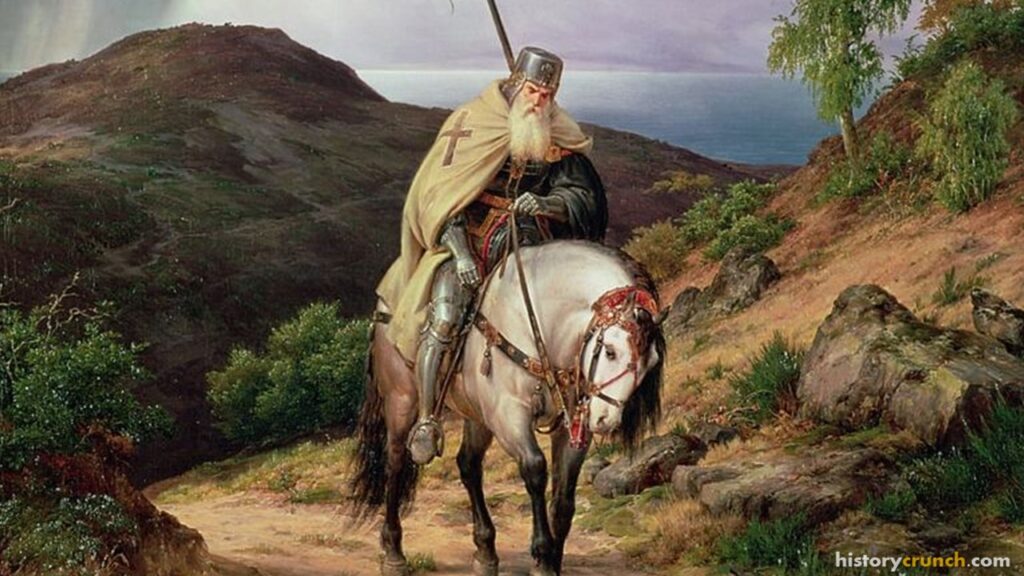
Reconquista – Muslim Conquest of the Iberian Peninsula
To understand the Reconquista, it is important to understand how Muslim rulers came to control the Iberian Peninsula in the first place. Before the 8th century, the region was ruled by the Visigoths, a Germanic Christian people who had controlled the peninsula since the fall of the Western Roman Empire. In 711 CE, a Muslim army from North Africa, made up largely of Berbers and Arabs, crossed the Strait of Gibraltar and invaded the Iberian Peninsula under the command of a general named Tariq ibn Ziyad. The Visigoth kingdom collapsed quickly and within a few years the Muslim forces, known as the Moors, had conquered most of the peninsula. The Moors established a territory they called Al-Andalus, which at its height covered the majority of the Iberian Peninsula and became one of the most advanced and prosperous civilizations in the medieval world. Cities such as Cordoba, Seville, and Toledo became major centers of learning, trade, and culture. However, small Christian kingdoms survived in the mountainous regions of the north, and it was from these kingdoms that the Reconquista would eventually begin.
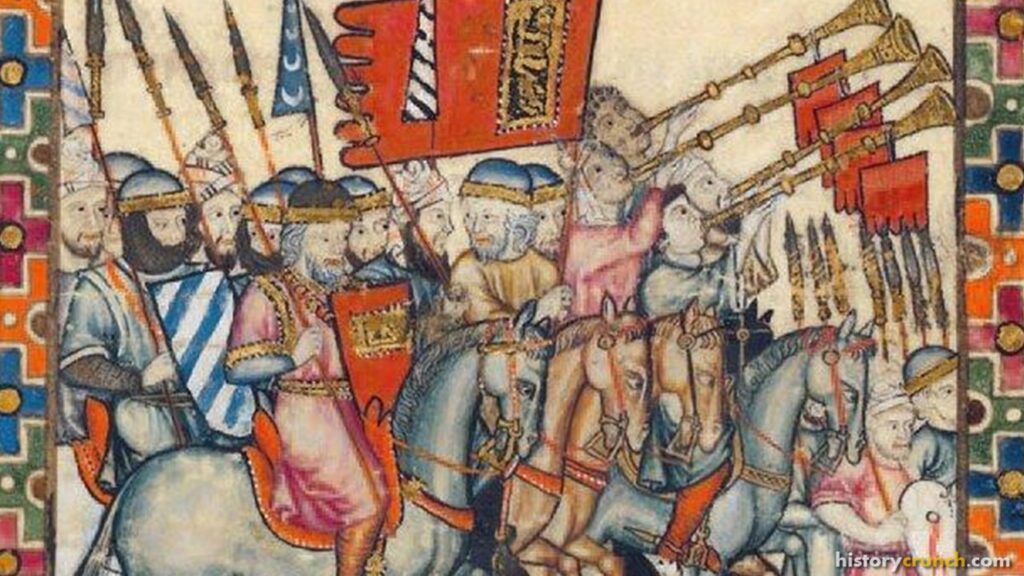
Reconquista – Early Stages
The Reconquista is traditionally said to have begun with the Battle of Covadonga in 718 CE, when a Christian nobleman named Pelayo led a small force against a Muslim army in the mountains of northern Spain and won a decisive victory. While this battle was relatively small in scale, it is remembered as the symbolic starting point of the Christian resistance and Pelayo went on to establish the Kingdom of Asturias, the first Christian kingdom of the Reconquista era. Over the following centuries, the Christian kingdoms of the north grew slowly stronger and began to push southward. The process was slow and often interrupted by internal conflicts among the Christian kingdoms themselves, as well as periods of relative peace and cooperation between Christian and Muslim rulers. During this time, the Iberian Peninsula was notable for a degree of cultural and religious mixing that was unusual in the medieval world. Christians, Muslims, and Jews lived alongside one another in many cities, and ideas, art, and scholarship flowed between the different communities. However, religious tensions were never far from the surface and military conflict remained a constant feature of life on the peninsula.
Reconquista – Growth of the Christian Kingdoms
By the 11th century, the Christian kingdoms of the north had grown significantly in power and the balance of the Iberian Peninsula began to shift. The Muslim rulers of Al-Andalus, weakened by internal divisions, split into a series of smaller kingdoms known as taifas, which made them more vulnerable to Christian military pressure. In 1085, one of the most important events of the Reconquista took place when King Alfonso VI of Castile captured the city of Toledo, one of the most significant cities on the peninsula. The fall of Toledo was a major symbolic and strategic victory for the Christian kingdoms and showed that the tide of the conflict was beginning to turn. Around the same time, a legendary Christian military leader named Rodrigo Diaz de Vivar, known popularly as El Cid, became one of the most celebrated figures of the Reconquista through his military campaigns in the eastern part of the peninsula. El Cid’s story became deeply embedded in Spanish culture and he remains one of the most famous figures of medieval Spain.
The Christian kingdoms continued to grow and consolidate throughout the 12th and 13th centuries. A major turning point came at the Battle of Las Navas de Tolosa in 1212, when a coalition of Christian kingdoms from across the Iberian Peninsula joined forces and defeated a large Muslim army. The battle is considered one of the most decisive military engagements of the entire Reconquista and opened up the southern part of the peninsula to Christian conquest. In the decades that followed, the Christian kingdoms captured many of the major cities of Al-Andalus, including Cordoba in 1236 and Seville in 1248. By the end of the 13th century, Muslim rule in the Iberian Peninsula had been reduced to the small southern kingdom of Granada.
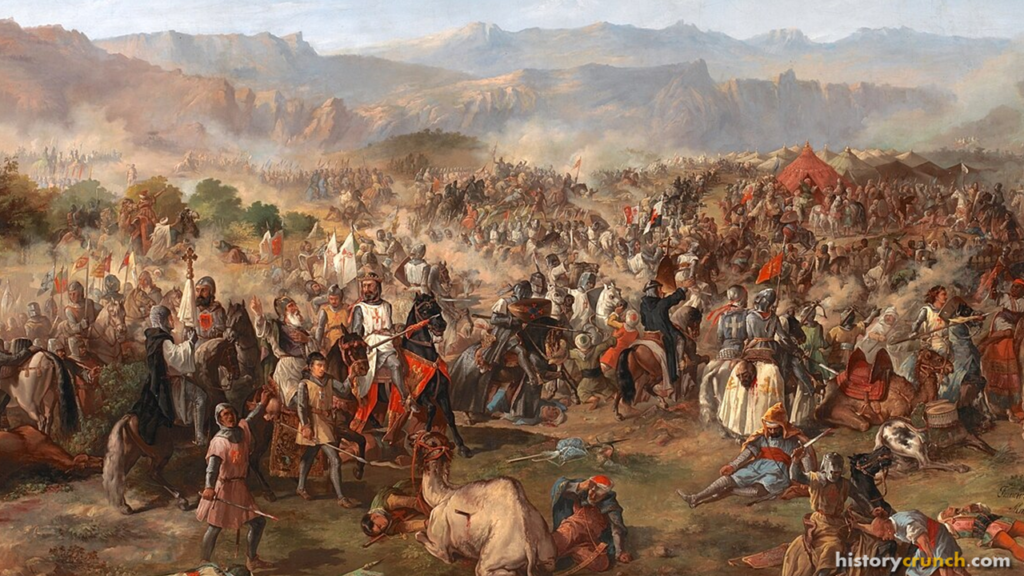
Reconquista – End of the Reconquista and Fall of Granada
The Kingdom of Granada survived for another two centuries as the last Muslim territory on the Iberian Peninsula, protected partly by its mountainous geography and partly by its ability to play the Christian kingdoms off against one another. However, the political landscape changed dramatically in 1469 when King Ferdinand II of Aragon married Queen Isabella I of Castile, uniting the two most powerful Christian kingdoms on the peninsula. Ferdinand and Isabella, known together as the Catholic Monarchs, made the completion of the Reconquista one of their primary goals. They launched a ten-year military campaign against the Kingdom of Granada beginning in 1482. The campaign was methodical and well organized, gradually capturing towns and cities across the kingdom until Granada itself was surrounded. On January 2nd, 1492, the last Muslim ruler of Granada, Muhammad XII, surrendered the city to Ferdinand and Isabella. The Reconquista was over.
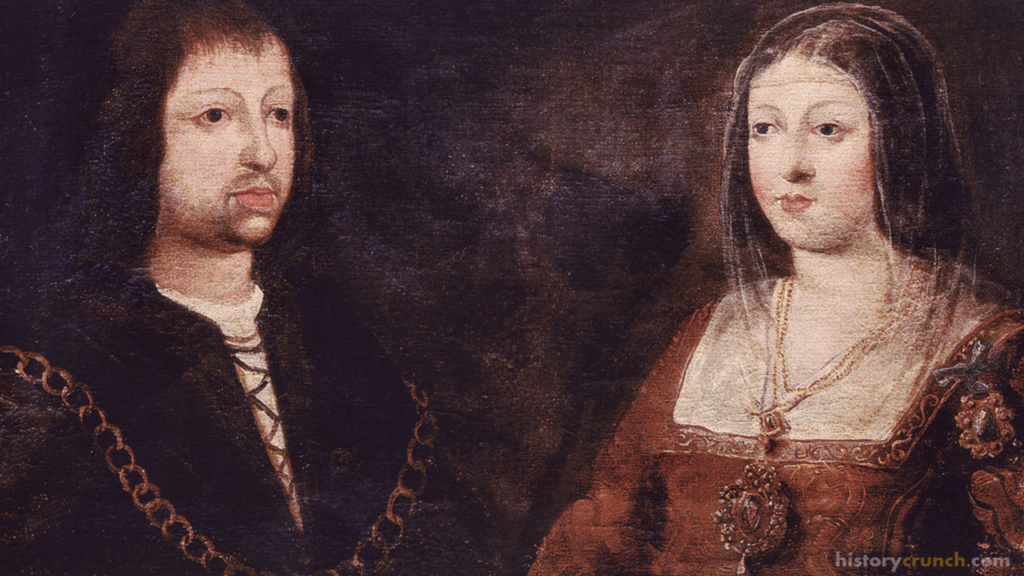
Significance of the Reconquista
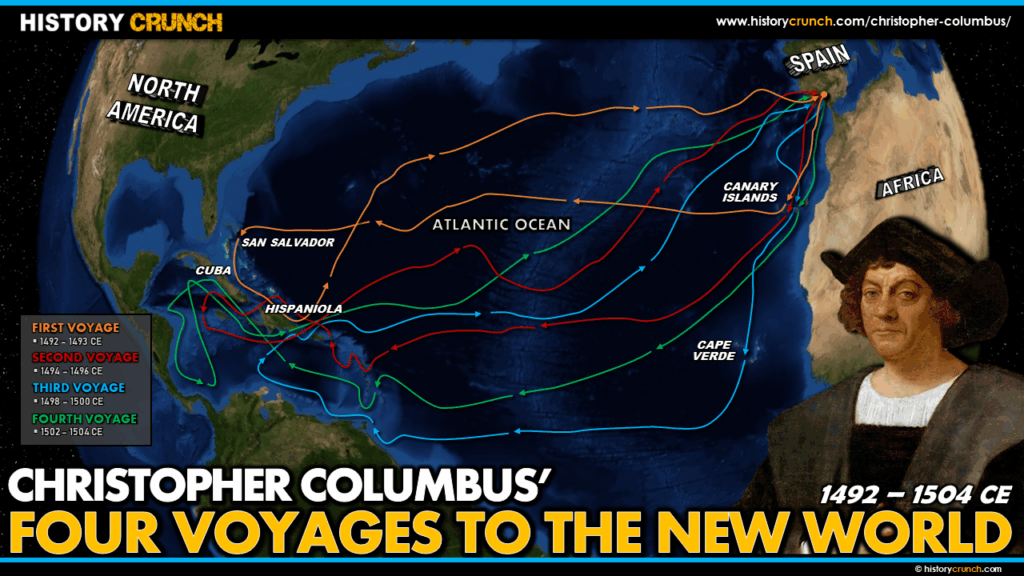
The end of the Reconquista in 1492 had enormous consequences for Spain and the wider world. The unification of the Iberian Peninsula under Ferdinand and Isabella created a powerful and confident Spanish kingdom that was ready to expand its influence beyond Europe. Later in the same year, 1492, Ferdinand and Isabella sponsored Christopher Columbus on his voyage westward across the Atlantic Ocean, which led to the European discovery of the Americas and the beginning of the Age of Exploration. The spirit of military conquest and religious mission that had defined the Reconquista carried directly into the Spanish conquest of the Americas in the decades that followed. This included the Spanish conquest of the Aztec Empire and the Inca Empire. Within Spain itself, the end of the Reconquista also led to darker consequences. Ferdinand and Isabella expelled the Jewish population of Spain in 1492 and pushed Muslim communities to convert to Christianity or leave the country, ending the centuries of religious diversity that had characterized much of the Reconquista era. The Reconquista therefore stands as one of the most complex and consequential events of the medieval world, shaping the history of Europe, the Americas, and beyond.