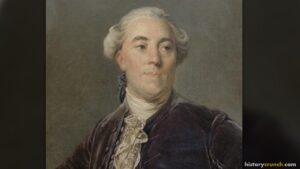
The Girondins were a major political group in the French Revolution and became the leading voice of the more moderate republicans during its middle stage. Active mainly from 1791 to 1793, they played important roles in the Legislative Assembly and the National Convention, supported war against revolutionary France’s foreign enemies, and later lost power in a struggle with the more radical Jacobins.
GIRONDINS – ORIGINS
The Girondins were not a tightly organized political party in the modern sense. Instead, they were a loose group of deputies who shared similar views during the French Revolution. The name came from the département of Gironde, in southwestern France, because several prominent members were connected to that region, although not all Girondins came from there. Important figures linked to the group included Jacques-Pierre Brissot, Pierre Victurnien Vergniaud, Jean-Marie Roland, and Madame Roland.
Their rise needs to be understood within the larger course of the Revolution. In 1789, the French Revolution began as a struggle to limit royal power and reform France’s political system. However, by 1791, the Revolution had become more divided. The new Legislative Assembly had to deal with economic crisis, distrust of Louis XVI, and growing tension with other European monarchies. In that setting, the Girondins emerged as one of the most important political forces in revolutionary France.
GIRONDINS – RISE DURING THE FRENCH REVOLUTION
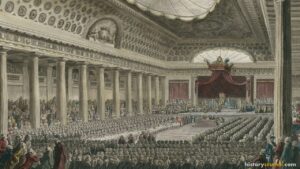
The Girondins became especially important in the Legislative Assembly, which ruled from October of 1791 to September of 1792. This period was a turning point in the French Revolution because France had moved from the first burst of reform in 1789 into a more unstable phase marked by political distrust and the threat of war. The Girondins attracted support from many middle-class professionals, merchants, and people who wanted a republic but did not want the Revolution to become dominated by the Paris crowd.
One of the best-known positions of the Girondins was their support for war against Austria in 1792. They believed war would expose enemies of the Revolution, strengthen patriotism, and spread revolutionary ideas beyond France. This became a major issue because not all revolutionaries agreed. For instance, Robespierre opposed the war at first, fearing that it would strengthen the army and distract from problems inside France. Even so, war began in April of 1792, and it changed the Revolution in dramatic ways.
War made French politics more extreme. Military defeats, fear of invasion, and suspicion of treason increased anger in Paris, France. As well, Louis XVI was already deeply distrusted after his failed attempt to flee the country in June of 1791. That event made many revolutionaries believe the king could not be trusted to support the Revolution. Therefore, by 1792, the political atmosphere had become much harsher than it had been in the early years of reform.
GIRONDINS – THE REPUBLIC
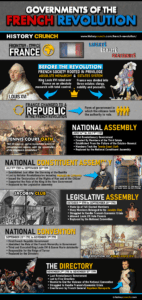
A major turning point came on August 10th, 1792, when revolutionaries in Paris, France, attacked the Tuileries Palace and the monarchy effectively collapsed. Soon afterward, the National Convention replaced the Legislative Assembly, and in September of 1792 France became a republic. The Girondins remained influential in this new government and at first were among its leading voices.
Even so, the Girondins were now caught in a much more dangerous political world. The National Convention had to deal with war, internal rebellion, economic hardship, and the question of what to do with Louis XVI. The Girondins supported the republic, but they were generally less willing than the Jacobins to accept the most extreme forms of pressure and violence coming from Paris, France. This difference became more serious as the Revolution entered 1793.
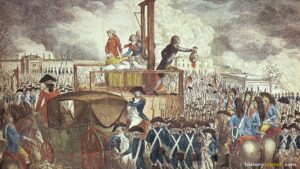
The trial and execution of Louis XVI made the crisis even deeper. The king was convicted of treason and executed on January 21st, 1793. This was one of the most important moments of the French Revolution because it ended any serious hope of restoring a constitutional monarchy and pushed France into a more radical republican phase. After that, political conflict between the Girondins and their opponents became much harder to control.
GIRONDINS – CONFLICT WITH THE JACOBINS
The Girondins increasingly came into conflict with the Jacobins. In simple terms, the Girondins tended to be more suspicious of the radical Parisian crowd and more supportive of political and economic liberty, while the Jacobins were more willing to use emergency government and harsher measures to defend the Revolution. This mattered because the Revolution was now deciding not only who held power, but also what kind of republic France would become.
The struggle became worse after France faced military danger abroad and unrest at home in 1793. In April of 1793, the National Convention created the Committee of Public Safety to defend the republic against foreign invasion and internal revolt. At the same time, fear and suspicion kept growing. The Girondins tried to resist the growing power of the radicals in Paris, France, but this only increased hostility between the two sides.
A key moment came when the Girondins tried to move against Jean-Paul Marat, one of the most radical revolutionary figures. He was acquitted, and this hurt the Girondins politically because it made them look weak in the face of popular radicalism. By this point, many sans-culottes and radical leaders in Paris saw the Girondins as obstacles to the Revolution rather than its defenders.
GIRONDINS – FALL FROM POWER
The fall of the Girondins came in the insurrection of May 31st to June 2nd, 1793. During this uprising, armed crowds and the Paris Commune pressured the National Convention to arrest leading Girondin deputies. This was a decisive turning point because it marked the victory of the more radical revolutionaries inside the Convention and helped clear the way for the Reign of Terror.
After their fall in Paris, France, some Girondins tried to organize resistance in the provinces. These efforts helped spark what are often called the Federalist Revolts, which were movements against the dominance of Paris and the radical Convention. However, these efforts failed, and the Girondins did not recover their political position.
Many leading Girondins were later put on trial and executed. One of the most famous groups was guillotined on October 31st, 1793. Their destruction showed how quickly the French Revolution could turn against former leaders once they were seen as enemies. As such, the fate of the Girondins helps explain how the Revolution moved from political debate into a period dominated by fear, emergency power, and execution.
GIRONDINS – SIGNIFICANCE
The Girondins were significant because they represented an important middle stage of the French Revolution. They supported republican government and wanted to defend the Revolution, but they were less radical than the Jacobins and more uneasy about the political violence developing in Paris, France. Their story helps students see that the Revolution was not simply a struggle between the monarchy and the people. It was also a struggle between different revolutionary groups that wanted very different futures for France.
At the same time, the Girondins remain a debated group in history. Some people remember them as defenders of political liberty who were crushed by radical violence. Others note that they supported war and revolutionary change and were not simply calm moderates in every sense. Regardless, the Girondins are essential to understanding why the French Revolution became more divided, more radical, and more violent between 1791 and 1793.