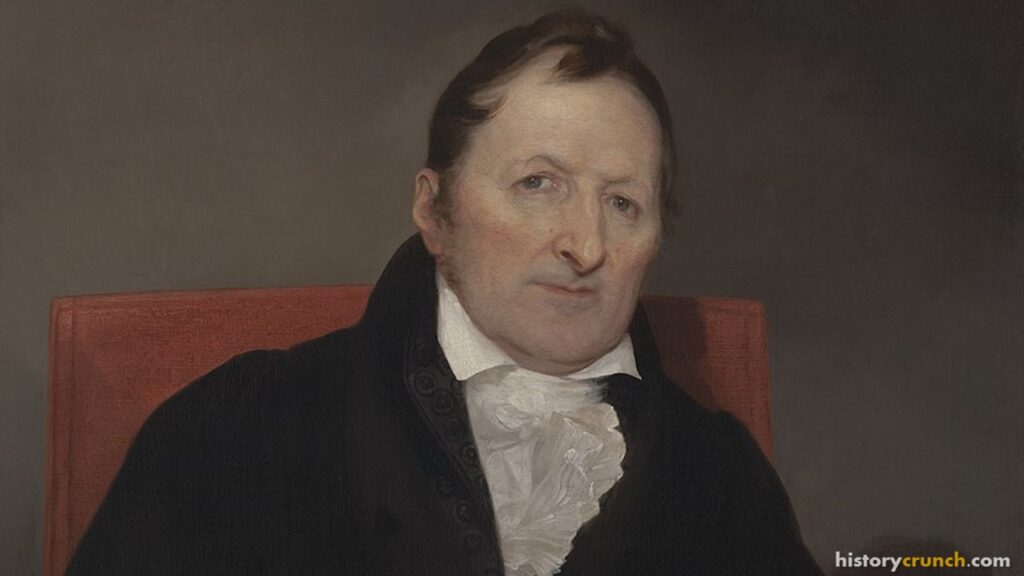
Interchangeable parts manufacturing in the Industrial Revolution was first introduced by Eli Whitney in the early 19th century. It marked a pivotal shift in the Industrial Revolution by enabling the production of uniform and standardized components. This innovation allowed for the mass production of goods, as individual parts could be easily assembled and replaced without the need for custom fitting. As well, it significantly reduced manufacturing costs and time, while improving the reliability and reparability of products, laying the groundwork for modern industrial production methods.
INNOVATIONS IN THE INDUSTRIAL REVOLUTION
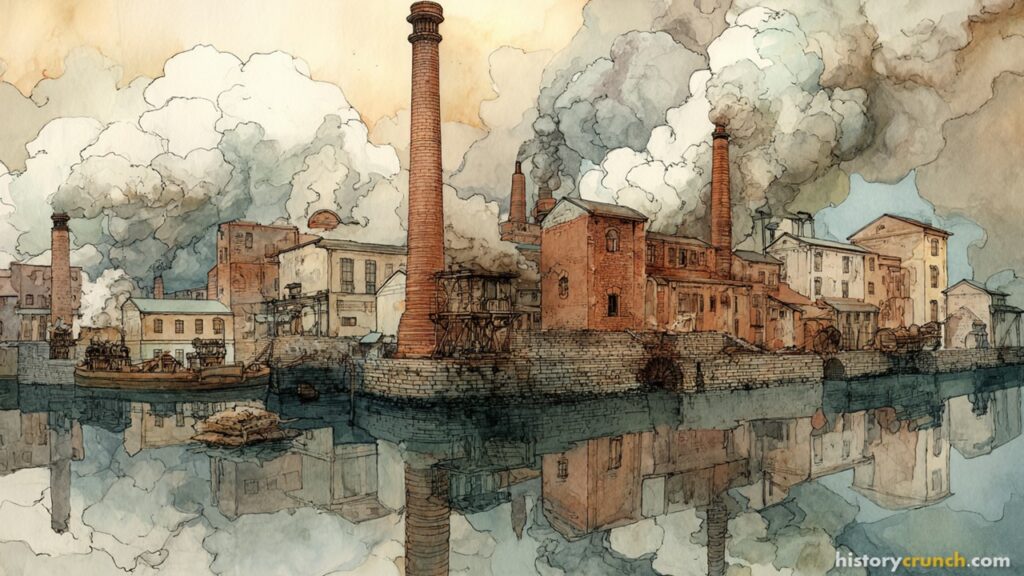
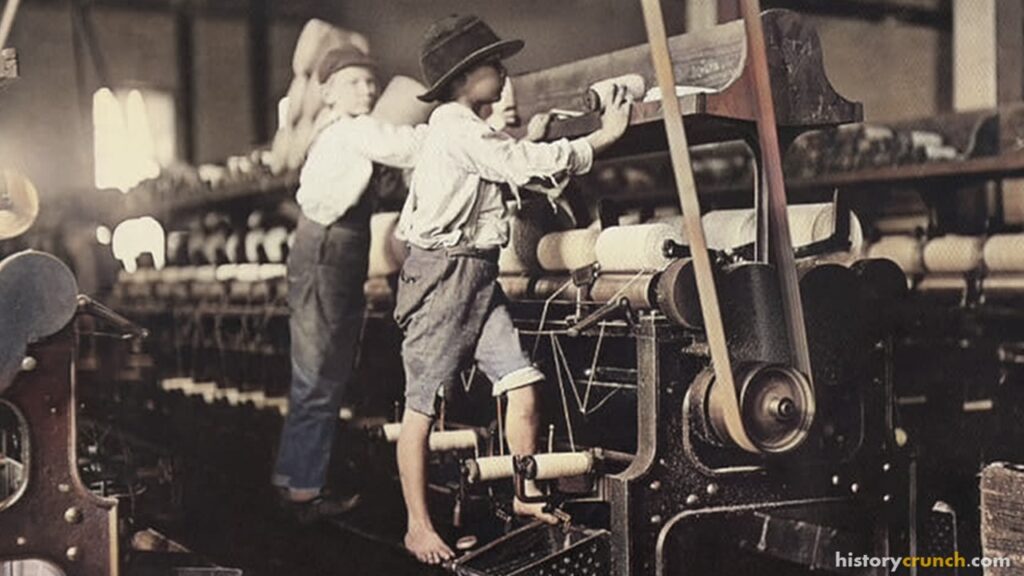
The Industrial Revolution is one of the most significant events in all of world history and had a profound impact on the modern world. It began first in Britain in the 1700s but soon expanded to the rest of Europe and North America. Before the innovations of the Industrial Revolution, most production depended on water, wind or human energy. The businesses that existed at this time were called cottage industries. Cottage industries were an early stage of economic development in society in which workers produce a limited amount of goods in home-based businesses. However, by the mid-1700’s, new methods of production were being developed across Europe, especially in Great Britain. This transition led to the factory system, which was the creation of factories in centralized locations such as industrial towns and cities. This period of innovation continued throughout the 19th century and led to many new inventions by now famous inventors. In fact, one of the key features of the Industrial Revolution is the development of new inventions that led to more automation by machines. Significant inventions or innovations of the Industrial Revolution included: flying shuttle, spinning jenny, power loom, water frame, cotton gin, steam engine, telephone, light bulb, automobile, assembly line production and interchangeable parts.
DEVELOPMENT OF INTERCHANGEABLE PARTS MANUFACTURING
A significant innovation of the late period of the Industrial Revolution was the development of interchangeable parts manufacturing, which relates to the idea that a product or good was produced with easily replaceable parts. This was a relatively new idea in the Industrial Revolution and was centered on creating goods that could be easily and cheaply fixed. Prior to this, repairs on items were difficult and time consuming, as items were not generally designed to be repaired.
The Industrial Revolution was one of the most important events in human history and dramatically transformed life for people throughout the world. While it first began in Britain, its effects later spread to other parts of Europe, the Americas and now parts of Asia. In general, the Industrial Revolution unfolded in a series of stages, which historians refer to as the First Industrial Revolution and the Second Industrial Revolution. The First Industrial Revolution began in the 18th century and focused primarily on textile manufacturing and steam power. The Second Industrial Revolution began in the mid-19th century and continued until World War I in 1917. The Second Industrial Revolution focused instead on steel production, the automobile and advances in electricity. The explosion of centralized factories in the Industrial Revolution made for perfect environment for the development of interchangeable parts as a method of production. Historians have identified several early examples of the use of the interchangeable parts method in the late 1700s and early 1800s. For example, the by the late 1700s firearms makers had begun to try to use interchangeable parts so that their weapons could easily be repaired in the field by soldiers. Prior to this time, firearms were built so uniquely that if they became damaged, they required a skilled gunsmith to repair them. However, the goal behind interchangeable parts was to make repairing the firearm (or any other product) easier and quicker by almost anyone.
ELI WHITNEY AND INTERCHANGEABLE PARTS
However, the most famous known example of the use of interchangeable parts was by Eli Whitney. Eli Whitney was an American inventor during the timeframe of the Industrial Revolution and is best remembered today for his invention of the cotton gin and the innovation of interchangeable parts. He manufactured arms and arms and developed a relationship with the United States Army. For instance, in the early 1800s he was granted a contract to develop firearms for the United States Army. This led to his company pioneering the innovation of the interchangeable parts systems of production which was important for a number of processes. Whitney’s company developed firearms which this system in mind, making Whitney an early pioneer in the process of interchangeable parts, which has come to dominate the world of mass production. While he did not live to see the concept fully realized, his company is considered to have shown the idea as feasible.
Eli Whitney’s early success, was by no means the end of interchangeable parts, and the idea soon expanded to many different industries. For instance, the first mass production that used interchangeable parts was completed in 1803 by a small team at the Portsmouth Block Mills (Dockyard) in Hampshire, England. The team (which included shipbuilders and engineers) developed thousands of pulley blocks for ship rigging on sail ships. The team used machine tools to develop identical parts for the pulley blocks. In fact, the entire system was still in use well it the 20th century.
The development of interchangeable parts as a method of production was a significant step forward in the mass production of goods. As such, it became an important production technique throughout the later years of the Industrial Revolution and remains an important innovation still today.