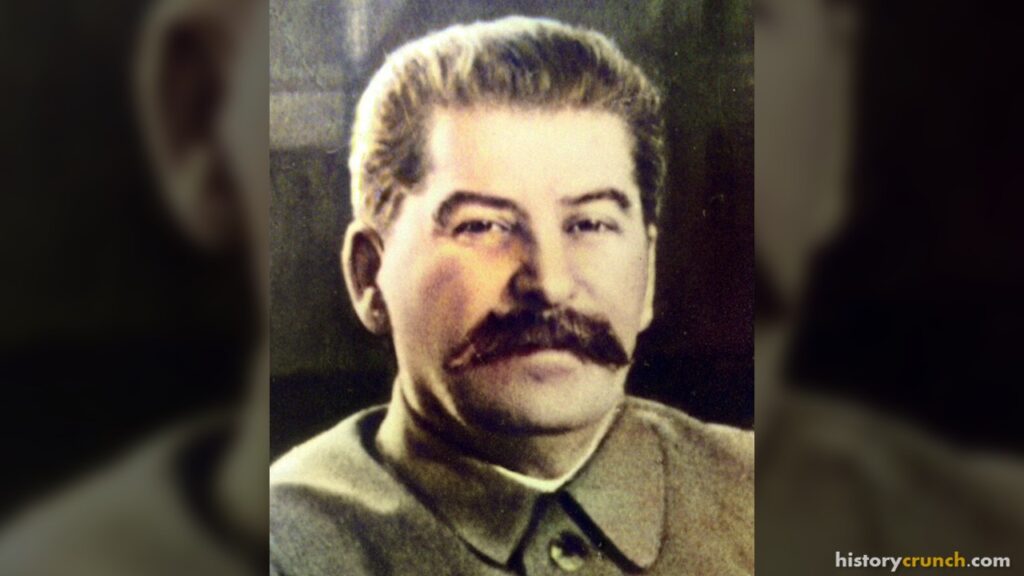
The purges in the Soviet Union refer to the repeated campaigns of political repression carried out by the Soviet government under Joseph Stalin from the late 1920s through to his death in 1953. A purge, in this context, means the systematic removal and punishment of people that the government considered to be enemies, traitors, or threats to its power. Those targeted during the purges were arrested, imprisoned in the Gulag labor camp system, sent into exile, or executed. The most intense and violent period of the purges was known as the Great Purge or the Great Terror, which lasted from 1936 to 1938. During this period alone, historians estimate that at least 750,000 people were executed and more than a million others were sent to forced labor camps. The purges had a devastating effect on the Soviet Communist Party, the military, and Soviet society as a whole.
WHAT WAS THE SOVIET UNION?
The Soviet Union was a communist state established in Russia following the Bolshevik Revolution of 1917. It was governed by the Communist Party, which held a complete monopoly on political power. The head of the Communist Party was the most powerful person in the country, and Stalin used this position to carry out the purges as a tool for eliminating anyone he saw as a rival, a critic, or a potential threat to his absolute control. In fact, the purges were one of the most extreme examples in history of a government turning its power of repression against its own people, including many of its most loyal and senior members.
PURGES IN THE SOVIET UNION – BACKGROUND AND CAUSES
Stalin came to power in the Soviet Union following the death of Vladimir Lenin in 1924. He consolidated his position gradually over the following years, outmaneuvering rivals including Leon Trotsky, who was eventually forced into exile in 1929 and later assassinated in Mexico in 1940. By the early 1930s Stalin was the unchallenged leader of the Soviet Union, but he remained deeply suspicious of those around him and was constantly alert to any perceived threat to his power.
Several factors contributed to the purges. Stalin was by nature deeply paranoid and distrustful. He was also acutely aware that many senior party members remembered a time when other figures, particularly Trotsky, had been seen as equally or more important than Stalin himself. He feared that these old Bolsheviks, as the founding members of the Communist Party were known, might challenge his leadership or undermine his authority. Furthermore, the enormous disruption caused by the forced collectivization of agriculture and the rapid industrialization of the Five-Year Plans had created widespread suffering and resentment within Soviet society. Stalin used the purges in part to direct blame for this suffering onto scapegoats, labeling economic failures and social problems as the work of saboteurs and enemies of the people rather than as the result of his own policies.
PURGES IN THE SOVIET UNION – THE EARLY PURGES
The purges did not begin suddenly in 1936 but grew out of a pattern of repression that had been building throughout the early 1930s. Thousands of Communist Party members were expelled from the party in the early 1930s for expressing doubts about Stalin’s leadership or for being associated with his rivals. Many were arrested and imprisoned. As stated above, the collectivization campaign of the late 1920s and early 1930s also produced large-scale repression, with millions of peasants arrested, shot, or deported to labor camps for resisting the forced takeover of their farms.
The event that triggered the most intense phase of the purges was the assassination of Sergei Kirov in December of 1934. Kirov was a senior and popular member of the Communist Party who led the party organization in Leningrad. He was shot and killed at Communist Party headquarters by a man named Leonid Nikolayev. Many historians believe, based on evidence that has emerged since the fall of the Soviet Union, that Stalin himself ordered Kirov’s murder. Kirov’s popularity within the party may have made him a potential rival, and his death gave Stalin a convenient excuse to launch a broader campaign of repression against alleged conspirators and enemies within the party.
Following Kirov’s assassination, Stalin introduced harsh new laws against political crime and used the investigation into the murder to begin arresting and executing people he accused of involvement in a vast conspiracy against the Soviet leadership.
PURGES IN THE SOVIET UNION – THE GREAT PURGE
The Great Purge, also known as the Great Terror, was the most violent and wide-ranging phase of Stalin’s repression, lasting from 1936 to 1938. It was carried out primarily by the NKVD, the Soviet secret police, which was given enormous powers to arrest, interrogate, and execute suspects without normal legal processes. During the most intense period of the purge, NKVD officers were given arrest quotas, meaning they were required to arrest a certain number of people in their area regardless of whether those people had actually done anything wrong.
The most public face of the Great Purge was the Moscow Trials, a series of three major show trials held between 1936 and 1938. The defendants were prominent former leaders of the Communist Party and the Soviet state, including Grigory Zinoviev, Lev Kamenev, and Nikolai Bukharin, all of whom had been important figures in the founding of the Soviet Union. They were accused of treason, sabotage, and conspiring with foreign powers to destroy the Soviet state. In court, the defendants confessed to these crimes in detail. However, it was later established that these confessions were false and had been obtained through torture, threats, and psychological pressure by the NKVD. Almost all of the defendants were found guilty and executed.
The show trials were only the most visible part of the purge. Across the Soviet Union, hundreds of thousands of ordinary party members, government officials, factory managers, military officers, intellectuals, and ordinary citizens were arrested on accusations of being enemies of the people. Neighbors informed on neighbors. Colleagues denounced colleagues. Being related to someone who had already been arrested could itself be enough to bring a person under suspicion. The terror spread rapidly and became increasingly difficult to control. Even Nikolai Yezhov, the head of the NKVD who oversaw the most intense period of the purge, was himself arrested and executed in 1940.
PURGES IN THE SOVIET UNION – THE PURGE OF THE MILITARY
One of the most consequential aspects of the Great Purge was the destruction of the Soviet military leadership. In 1937 and 1938, Stalin ordered the arrest and execution of a large proportion of the senior officers of the Red Army, including Marshal Mikhail Tukhachevsky, one of the most capable military minds in the Soviet Union, along with thousands of other officers at every level of command.
The purge of the military had a devastating effect on Soviet military capabilities. Experienced commanders who had spent years learning their profession were replaced by younger and less experienced officers who owed their promotions to the purge rather than to military skill. In fact, most historians agree that the weakness of Soviet military leadership in the first months after Nazi Germany’s invasion in June of 1941 was directly caused by the destruction of the officer corps during the Great Purge. The Red Army performed disastrously in the early stages of the war, suffering enormous casualties and losing vast territories, partly because so many of its most capable leaders had been shot by their own government just a few years earlier.
PURGES IN THE SOVIET UNION – WHO WAS TARGETED?
The range of people targeted by the purges was enormous. Senior Communist Party members who had been associated with Stalin’s rivals were among the first to be arrested. Old Bolsheviks who had known Lenin personally and who might remember a time when Stalin was not the supreme leader were particularly vulnerable. Military officers, especially those with foreign contacts or training, were targeted during the military purge.
Beyond the party and military, the purges affected virtually every section of Soviet society. Factory managers and engineers were arrested on accusations of deliberate sabotage when production targets were not met. Intellectuals, writers, artists, and scientists were arrested for producing work that did not conform to the approved communist ideology. Members of ethnic minority groups, including Poles, Germans, Ukrainians, and others, were targeted in large numbers on the grounds that they might be disloyal to the Soviet state. For instance, approximately 75,000 ethnic Germans living in the Soviet Union were arrested between 1936 and 1938.
In many cases, being arrested was largely a matter of chance. Anyone who had foreign relatives, had traveled abroad, or had contact with foreigners was considered suspicious. Accusations from informants were frequently used by the NKVD as the basis for arrest, and people who were arrested were routinely tortured into naming others, spreading the circle of suspicion ever wider.
PURGES IN THE SOVIET UNION – END OF THE GREAT PURGE AND LATER REPRESSION
The Great Purge officially ended in November of 1938, when a joint decree from the government and the Communist Party cancelled most of the NKVD’s powers of summary repression and suspended the implementation of death sentences. The end of the most intense phase of the purge came partly because the terror had become so extreme and so random that it was beginning to damage the Soviet state itself, destroying the very institutions and expertise that Stalin needed to govern the country.
However, political repression did not end in 1938. Arrests, executions, and deportations to the Gulag continued throughout the 1940s and into the early 1950s. During World War II, Stalin ordered the arrest and deportation of entire ethnic groups, including the Volga Germans, the Chechens, and the Crimean Tatars, on the grounds that they might collaborate with the German enemy. Soviet soldiers who had been captured by the Germans were frequently sent to the Gulag after the war on suspicion of having collaborated with the enemy.
Stalin died in March of 1953. His successor, Nikita Khrushchev, subsequently denounced the purges in his famous Secret Speech of 1956, acknowledging for the first time at the highest levels of Soviet government that the victims had largely been innocent and that Stalin’s methods had been criminal. Large numbers of survivors were released from the Gulag and some of those who had been executed were posthumously rehabilitated.
PURGES IN THE SOVIET UNION – SIGNIFICANCE
The significance of the purges in the Soviet Union is considerable. They were one of the most extreme examples in history of a government using mass terror against its own population, including many of its most loyal and senior members. The Great Purge alone resulted in the deaths of hundreds of thousands of people and the imprisonment of millions more.
The purges also had direct consequences for World War II. The destruction of the Soviet military leadership left the Red Army dangerously weakened at the very moment when the threat from Nazi Germany was growing most severe. When Germany invaded in June of 1941, the Soviet Union suffered catastrophic early defeats that might have been avoided had the officer corps not been decimated by Stalin’s own repression. In this sense, the purges were not just a domestic tragedy but a military disaster with enormous consequences for the course of the war.
Furthermore, the purges stand as a powerful illustration of the dangers of totalitarian government. A system in which a single leader holds absolute power with no accountability to law or justice, and in which a secret police force can arrest, torture, and execute anyone at will, produced one of the most destructive campaigns of state violence in the history of the modern world. As such, the purges in the Soviet Union remain one of the most important and sobering topics in 20th-century history.