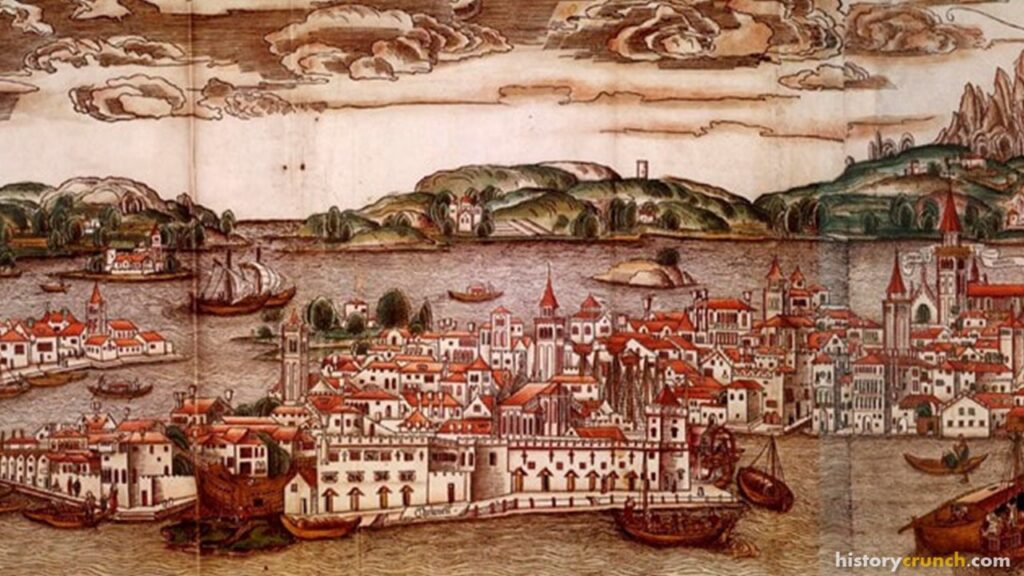
Venice in the Renaissance was a wealthy and influential city-state, known for its powerful navy, thriving trade network, and distinctive art and architecture. The city attracted renowned artists like Titian and Bellini, and developed a unique style that blended Byzantine, Islamic, and Renaissance influences. Venice also became a major center for printing and publishing, helping spread humanist and scientific ideas across Europe.
WHAT WAS THE RENAISSANCE?
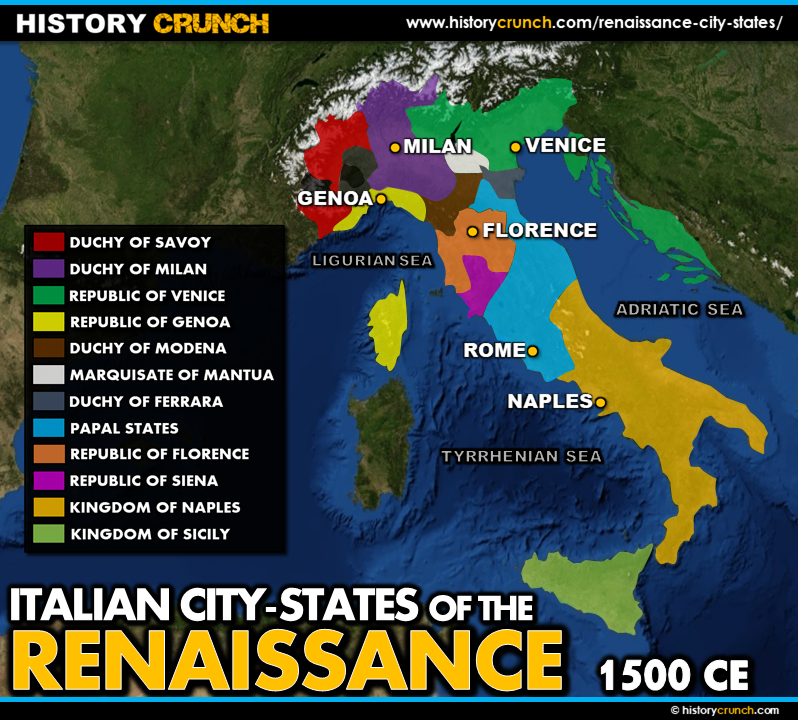
The Renaissance is an important event in European history that stretched from the 14th century to the 17th century. It was preceded by the Middle Ages in Europe and eventually led to other major events such as the Age of Enlightenment. In historical terms the Renaissance is important because it led to a major shift in European thought and worldview. The Renaissance is considered to have begun in the city-states of the Italian peninsula, such as: Genoa, Florence, Milan, Naples, Rome and Venice.
In each of these city-states, the significant changes of the overall Renaissance occurred and unfolded. For example, the most significant changes that emerged as a result of the Renaissance can be seen in European architecture, art, literature, mathematics, music, philosophy, politics, religion and science. Intellectual thought in these fields flourished during the timeframe of the Renaissance and led to many people questioning long held beliefs about each. This created an environment of discovery and curiosity in which new ideas were constantly being introduced and tested. As well, European life before the start of the Renaissance was dominated by feudalism and the Manor System, but these both played small roles for citizens in the powerful Italian city-states. As such, the major Italian city-states listed above were well positioned to undergo the societal shift brought about by the new Renaissance ideas.
VENICE BEFORE THE RENAISSANCE
Venice (or Venezia in Italian) is one of the most significant city-states from the Renaissance in Italy and developed along the coast of the northeastern section of the Italian peninsula next to the Adriatic Sea. The city of Venice is located in the Venetian Lagoon which is a shallow region filled with hundreds of islands. The city itself is constructed on a collection of 118 small islands which are connected by bridges and canals. In fact, the city of Venice is still world renown today for its famous canal system. Historians believe that people had been living in the region since ancient history but it became a much more significant area in the timeframe of the Middle Ages and the Renaissance.
The city-state of Venice was originally established as a safe haven for people fleeing persecution following the collapse of the Roman Empire. However, it soon prospered as a region due to trade in a variety of different goods, most notably salt. Venice was well positioned as a trading center for the merchant class due to its geographic position on the coast of the Adriatic Sea. As such, this would become a major feature for the city-state throughout its history. As well, the Venice city-state established itself as a military power in the Italian region due to its significant naval units, which were better equipped than others in the area. More specifically, throughout the time period of the Middle Ages, the Venice navy was made up of galleys, which were warships that were mainly propelled by an array of large oars that were used to row the ship forward. The galley was the largest and most heavily armed ship in the Venetian navy. At its height, Venice had over 3,000 ships in its navy, making it a formidable force in the Adriatic Sea and surrounding areas.
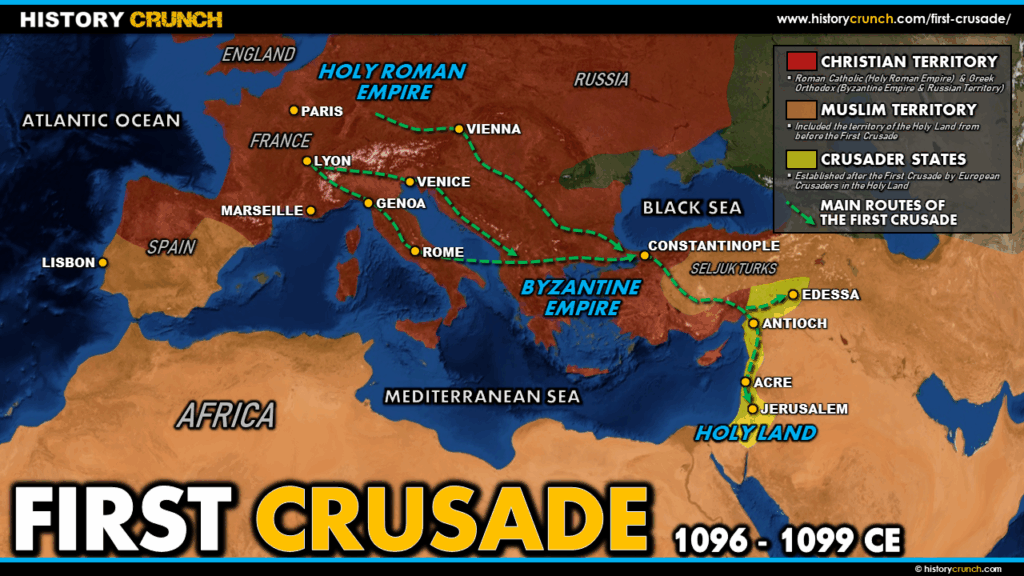
The geographic location of Venice and its powerful navy were important in establishing it as a major center for trade on the Italian peninsula. For instance, throughout the timeframe of the Middle Ages, Venice grew in both wealth and power due to its ability to control trade between Europe and the Middle East. This is exemplified by Venice’s participation and role in the crusades. The crusades were a series of religious wars carried out by Christian crusaders from Europe during the timeframe of the Middle Ages. Beginning in 1095 CE, the crusades saw European knights and noblemen travel to the Middle East in an attempt to capture the Holy Land away from Muslim people that had controlled the region for the previous centuries. The term crusade means ‘cross’. Therefore, the Europeans that became crusaders viewed themselves as ‘taking up the cross’. In fact, many of the crusaders wore crosses on their clothing and armor as they made their pilgrimage to the Holy Land.
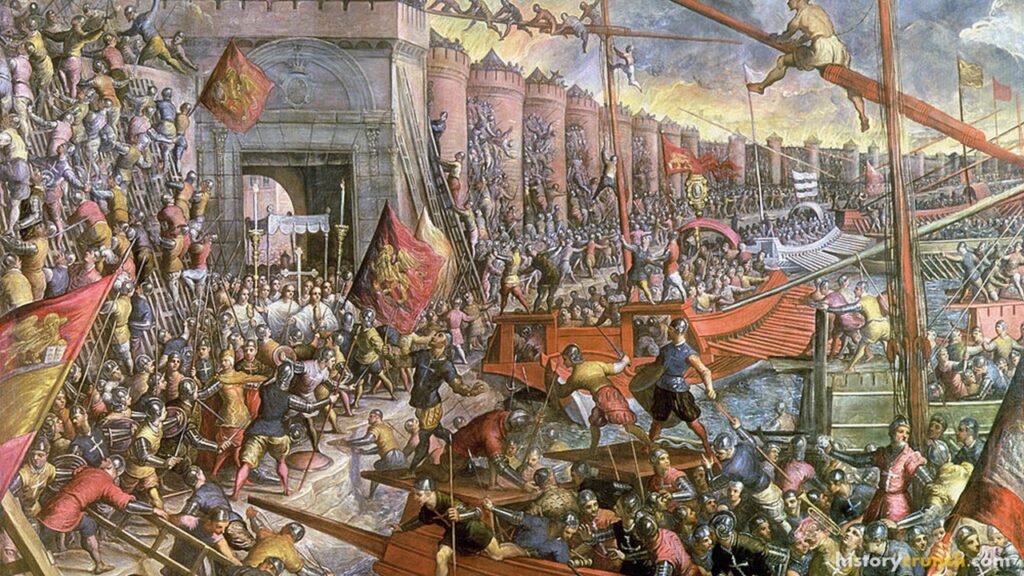
Venice played a significant role in the crusades. For instance, hundreds of Venetian ships were used in the First Crusade in 1095 to capture coastal cities in the Middle East for the European crusaders. As well, Venice benefitted financially from transporting crusaders from Northern Europe to the Holy Land. This assistance in the crusades gave Venice extensive trading power throughout the Middle East and the Byzantine Empire and benefitted the city-state financially. For instance, it established trading ports throughout the rest of Europe and the Middle East and became a gateway for goods that were being shipped to the rest of Northern Europe. As a result of its increased power and wealth, the city-state was able to spread its authority over different regions throughout the Adriatic Sea and on the mainland of the Italian peninsula throughout the 14th and 15th centuries.
VENICE IN THE RENAISSANCE – A POWERFUL TRADING CENTER
The wealth and power that Venice gained throughout the Middles Ages and Renaissance, helped grow a strong merchant class who benefitted greatly from trade. These merchants used their wealth to commission Renaissance art and artists, which came to symbolize the main impacts of the Renaissance in Italy.
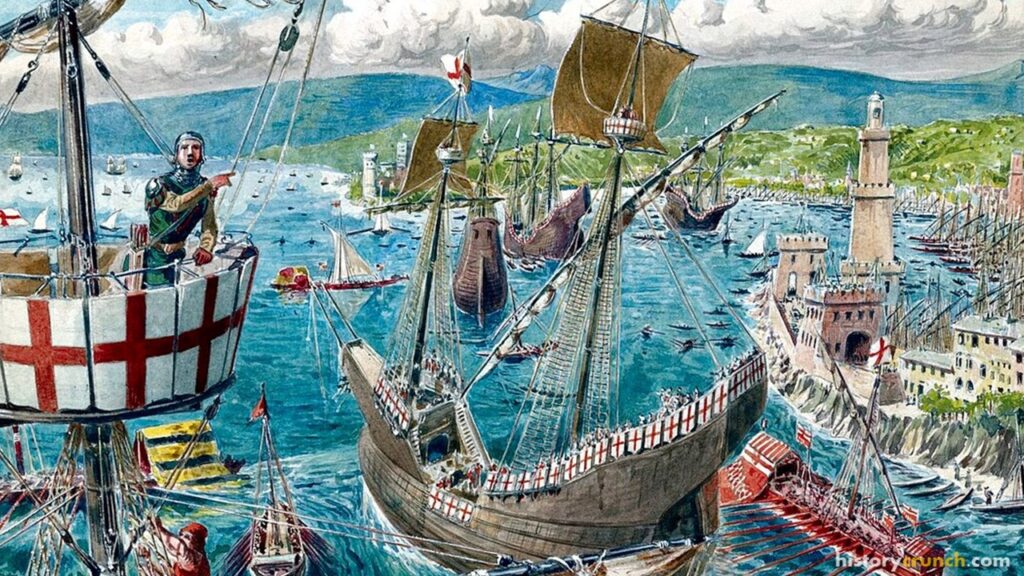
The growth that Venice experienced as a trading center caused it to come into conflict with other powerful city-states of the time including Genoa. Genoa and Venice became bitter rivals during the late Middle Ages and early Renaissance as each developed its own powerful navy and trade routes. For instance, this led to each competing for similar trading posts and for influence in the Mediterranean and surround area. The conflict with the two city-states eventually resulted in the Venetian-Genoese Wars which lasted from 1236 to 1381.
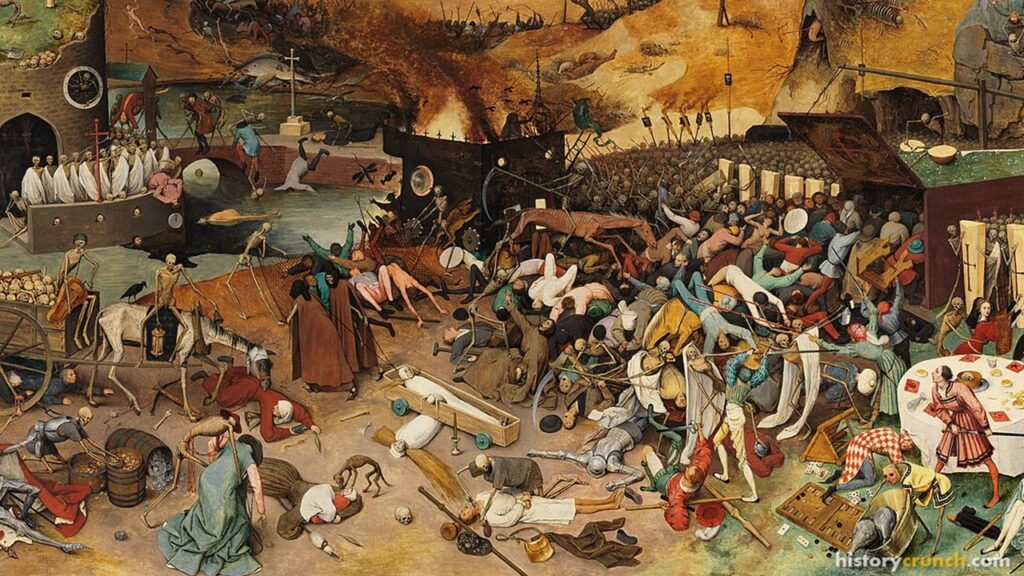
As with other cities in Europe at the time, the city-state of Venice was impacted by the events of the Black Death. The plague spread from Asia into Europe in 1347 and had devastating impacts for all of the European continent. For instance, many historians have argued that the large death tolls of the Black Death led to major societal changes, such as: demise of the feudal system and political and economic changes. Cities with large populations were especially hit hard because people were living in much closer situations and the plague was able to spread more easily.
VENICE IN THE RENAISSANCE – WAR WITH GENOA
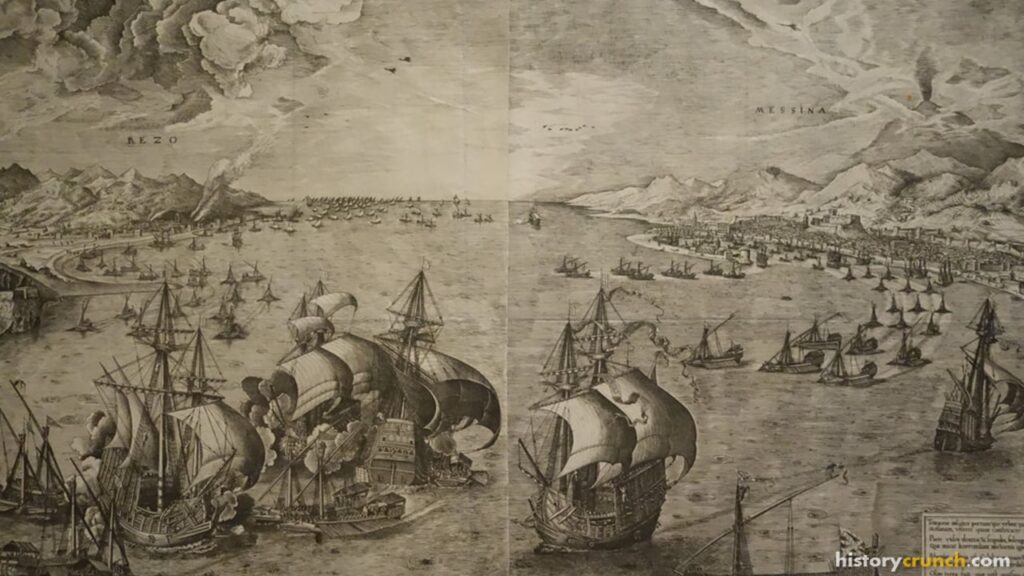
Regardless, an important event in the history of Venice was the signing of the Treaty of Turin in 1381. The treaty ended the War of Chioggia, which was part of the ongoing conflict between Genoa and its allies against Venice and its allies. In short, the treaty saw Venice as the victor over Genoa. In reality, Venice narrowly won the conflict and both city-states sought a peace to end the conflict and focus instead of commerce and trade. Some historians have viewed the concessions that Venice was forced to agree to in the Treaty of Turin as a sign of defeat. However, the peace that followed the Treaty of Turin benefitted both Genoa and Venice as it allowed each to focus on expanding their wealth and influence.
VENICE IN THE RENAISSANCE – GOVERNMENT
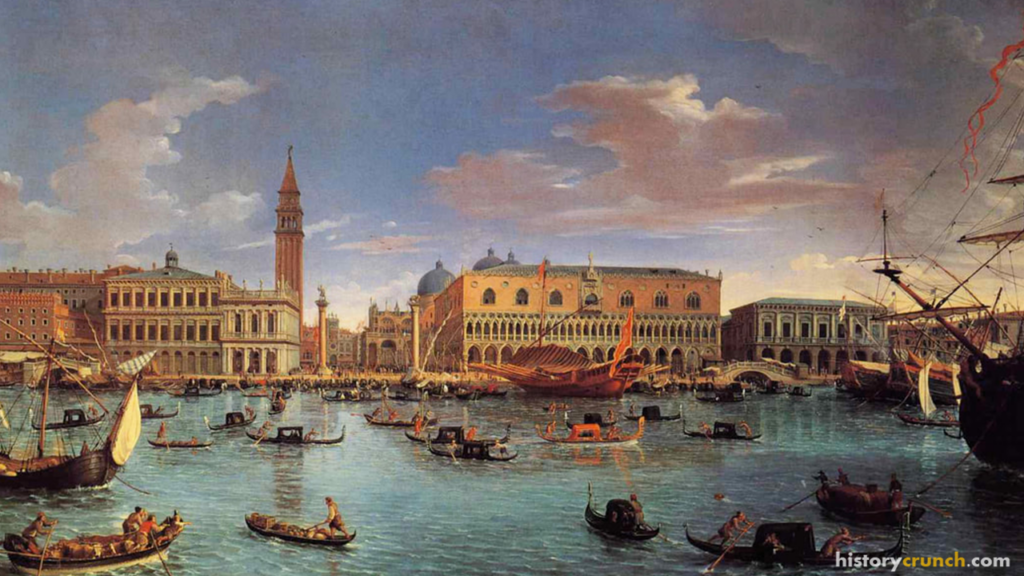
As with other city-states of the time, Venice during the Renaissance is referred to as a republic. Traditionally, a republic is a form of government in which the people of the state have a great deal more power and influence than they previously did under an absolute monarchy, which was the common form of government in Middle Ages Europe. In Venice, the leader of the republic was referred to as the Doge. It was an elected position in which the person could serve as the leader for the remainder of their life. In the early years of the city-state, the Doge ruled over Venice almost as a monarch, but in later years the position had its power limited by the promissione ducale. This was a pledge that the Doge was to take when elected that effectively required him to share his powers with a 480 member Great Council. The Great Council was made up of influential and wealthy families in Venice society, and they voted exclusively or the Doge. As such, the aristocracy in Venice had a great deal of influence over the government. While the Doge was the leader, the Great Council and the Senate had the real control over Venice as they introduced and passed laws that impacted the whole society.
VENICE IN THE RENAISSANCE – GREAT SCHOOLS
Another significant aspect of Venice life were the Scuole Grandi, which translates to ‘Great Schools’. The Scuole Grandi were known as charitable and religious organizations that operated as an important part of Venice social structure. For instance, the Scuole Grandi allowed members from all classes in Venice society. Since the Great Council was composed of only wealthy families of the Venice aristocracy, most people viewed the Scuole Grandi as more representative since it allowed people from the lower classes to influence the city-state. As part of their function, Scuole Grandi were known to carry out several different activities, including: sponsoring festivities within Venice, distributing food and clothing to poorer members, carrying out the burial of the poor, and the administration of hospitals in the city-state.
VENICE IN THE RENAISSANCE – MARCO POLO
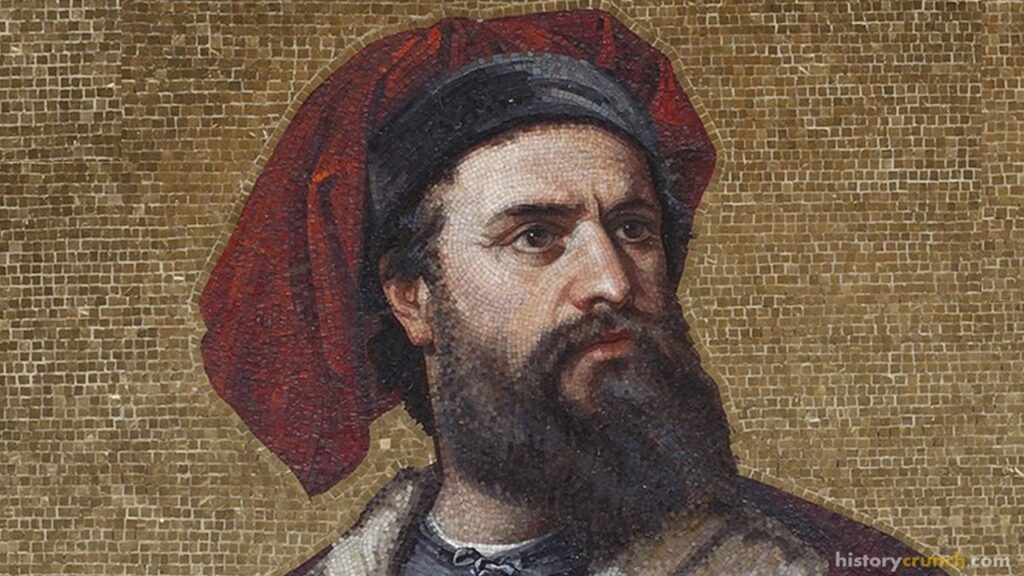
Many significant people emerged from the city-state of Venice in the timeframe of the Middle Ages and Renaissance. One such significant individual was the famous explorer Marco Polo. He was born in 1254 in Venice, although details about his childhood are unclear. He is famous for his travels to China and his writings about his adventure. In his writings, he talked about life in Asia including the Silk Road.