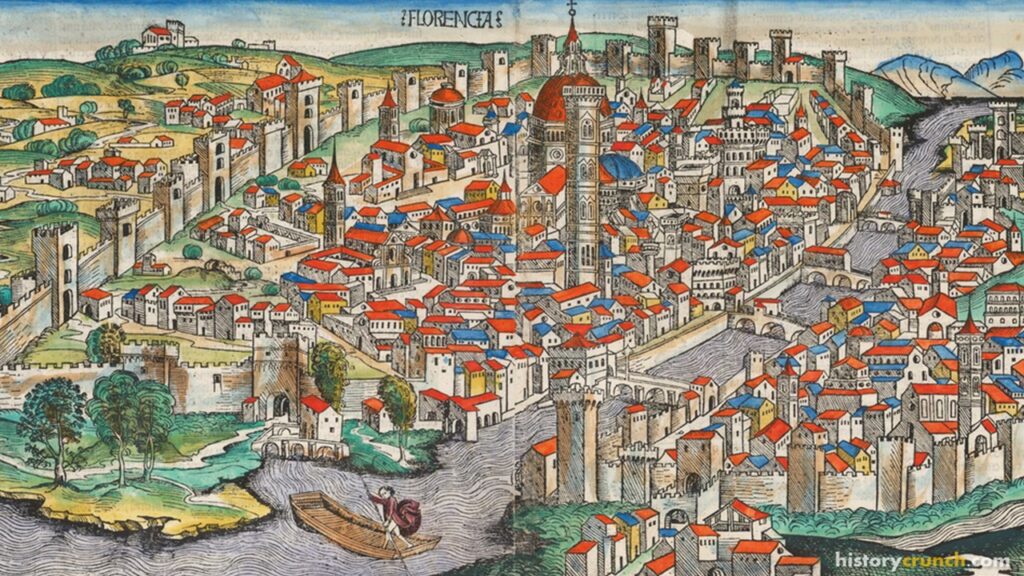
Renaissance city-states such as Genoa, Florence, Milan, Naples, Rome and Venice were important to the overall emergence and development of the Renaissance. The prosperity of these city-states important places of innovation and creativity, especially in relation to art, architecture, literature, philosophy and science. Furthermore, powerful families, such as the Medici Family in Florence, used their influence to support artists, scholars, and humanist thinkers, helping spark the overall Renaissance movement.
WHAT WAS THE RENAISSANCE?
The Renaissance is an important event in European history that stretched from the 14th century to the 17th century. It was preceded by the Middle Ages in Europe and eventually led to other major events such as the Age of Enlightenment. In historical terms the Renaissance is important because it led to a major shift in European thought and worldview. The Renaissance is considered to have begun in the city-states of the Italian peninsula, such as: Genoa, Florence, Milan, Naples, Rome and Venice.
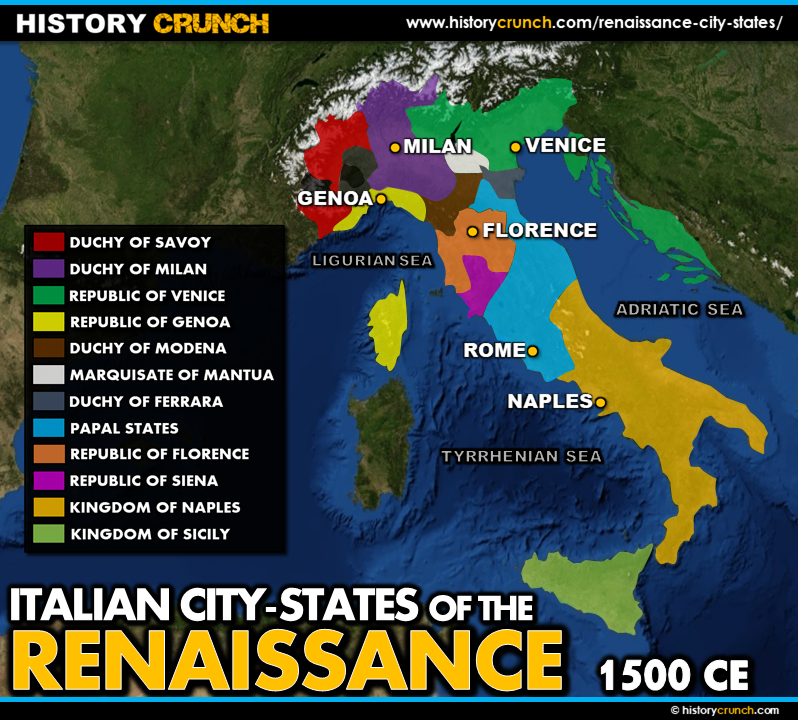
RENAISSANCE CITY-STATES – SUMMARY
In each of these city-states, the significant changes of the overall Renaissance occurred and unfolded. For example, the most significant changes that emerged as a result of the Renaissance can be seen in European architecture, art, literature, mathematics, music, philosophy, politics, religion and science. Intellectual thought in these fields flourished during the timeframe of the Renaissance and led to many people questioning long held beliefs about each. This created an environment of discovery and curiosity in which new ideas were constantly being introduced and tested. As well, European life before the start of the Renaissance was dominated by feudalism and the Manor System, but these both played small roles for citizens in the powerful Italian city-states. As such, the major Italian city-states listed above were well positioned to undergo the societal shift brought about by the new Renaissance ideas. This is why historians consider the city-states as important the causes of the Renaissance.
RENAISSANCE CITY-STATES – HUMANISM
Most of the changes that occurred in the Renaissance city-states were centered on Renaissance Humanism. One of the main features of the Renaissance was the rediscovery by European thinkers of ancient Greek and Roman ideas and texts. For example, the term ‘renaissance’ in French means ‘rebirth’. This is in relation to the idea that the intellectual culture of the Renaissance was sparked by the rediscovery of these ancient philosophies and ideas which had largely been ignored in Europe throughout the Middle Ages.
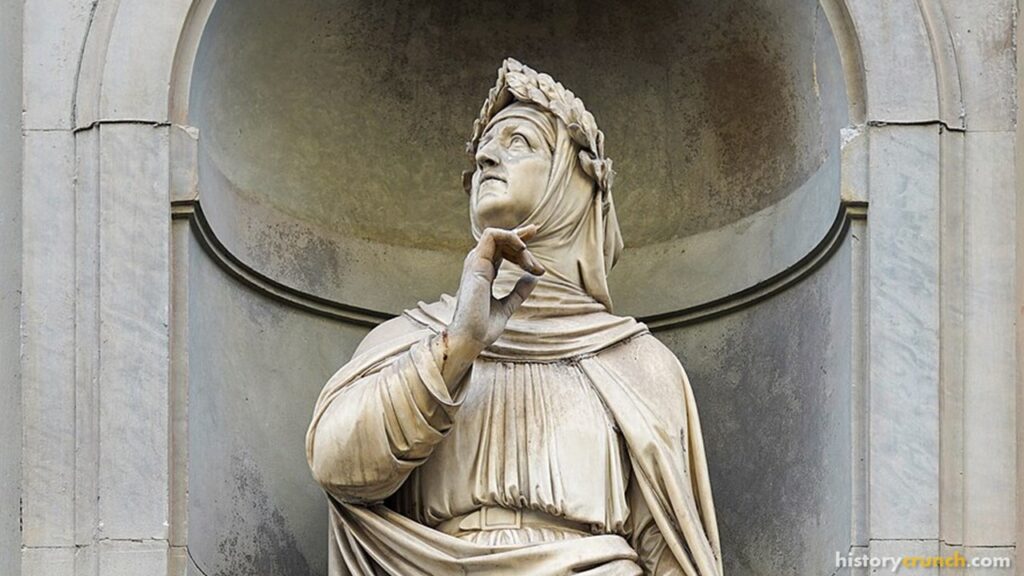
In general, Renaissance Humanism was the study of ancient Greek and Roman texts with the goal of promoting new norms and values in society. These norms and views varied from those at the time because they focused less heavily on a religious worldview. Instead, Renaissance humanists such as Petrarch used ancient texts to promote a worldview based on logic and reason. This was to be accomplished through the study of the ‘studia humanitatis’, which today is known as the humanities and includes topics such as: grammar, history, poetry, and philosophy. Renaissance humanists such as Petrarch promoted the idea that citizens should be educated in these topics in order to allow them to participate in the social and political life of their society. This was a fundamental shift from the feudalistic and religious life that was the reality for most people in the Europe in the Middle Ages. Humanist ideals flourished in the city-states of the Italian peninsula from the 15th to 16th centuries centuries because Renaissance scholars and artists began to study ancient texts and artworks for inspiration. This was especially important for Renaissance artists and sculptors of the time as they sought to use different styles and techniques in their own works that were heavily inspired by Ancient Roman art and architecture.
RENAISSANCE CITY-STATES – ART
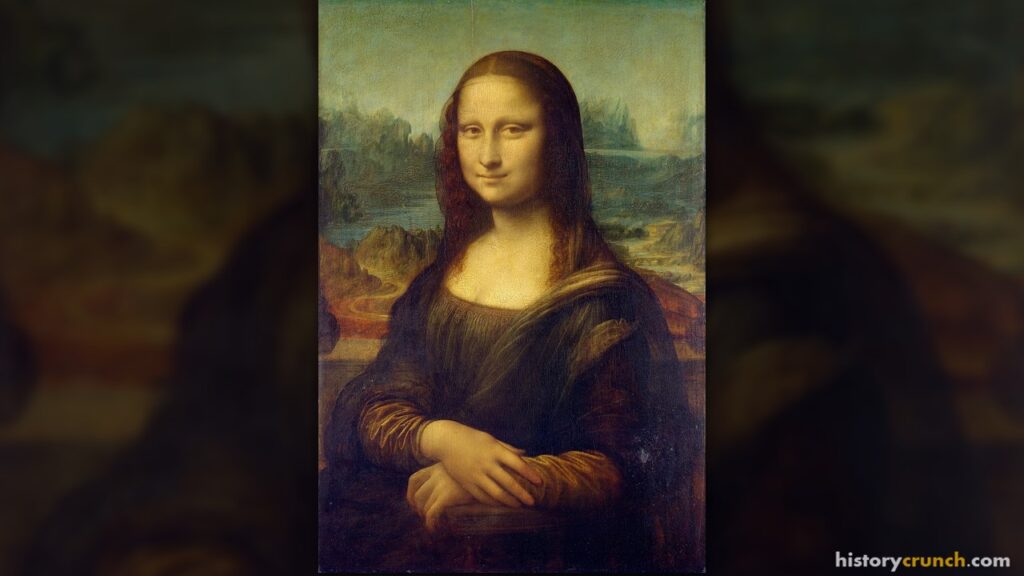
Just as Renaissance humanist scholars such as Petrarch were inspired by earlier Greek and Roman works, so too were Renaissance artists. This meant realism and the human form were important and central to the new styles of art. Furthermore, Renaissance artists such as Leonardo da Vinci and Michelangelo pioneered new skills and techniques, such as linear perspective, that allowed them to portray people and the world in news ways. Perspective refers to the artistic technique of showing depth and dimension in a painting. Linear perspective was the technique of providing realistic depth to an image. It involved creating the illusion of depth by using angled lines and shadowing. Another technique from the Renaissance was sfumato. This was a painting technique whereby the painter would soften the lines and blend the different paints to create blurred areas. This is likely best displayed in da Vinci’s famous ‘Mona Lisa’. The masterful work of art does not focus on religious themes or stylized depictions of the world but rather shows an unknown woman in a realistic fashion.