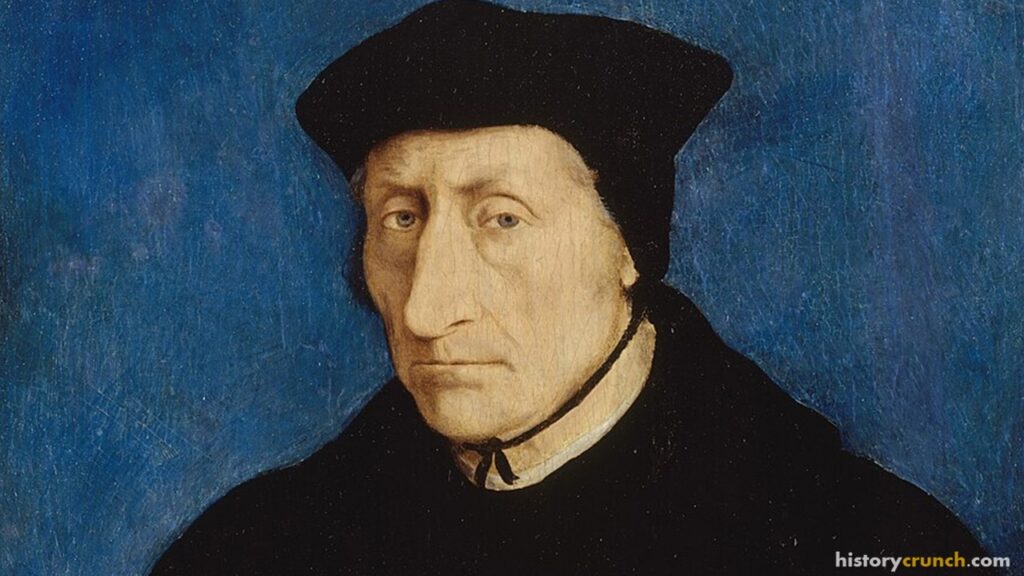
Guillaume Budé was a French Renaissance scholar and humanist known for his deep knowledge of Greek and Roman literature. In fact, he promoted classical studies in France and played a key role in founding the Collège de France to support humanist education.
GUILLAUME BUDE – EARLY LIFE
Guillaume Budé was a French scholar and significant figure during the European Renaissance. He was born in Paris, France on January 26th, 1467 in the midst of the Renaissance which had first began in Italy and later spread to Northern European areas such as France, England the Germanic Kingdoms.
As a young man he studied law at the University of Orleans in France. This helped lead to his contributions to the Renaissance in France. For instance, the ideals of the Italian Renaissance and humanist values spread to France in the 15th century, during the lifetime of Guillaume Budé. He is most famous for writing extensively about the importance of ancient writing on matters related to law and finance. For instance, he argued against using interpretations of ancient texts and instead suggested that the original Greek or Roman texts should be studied and used alone.
GUILLAUME BUDE – RENAISSANCE HUMANSIM
Furthermore, he was the royal secretary to King Francis I of France, who was vitally important to the establishment of the Renaissance in France. Francis I is credited with sparking the French Renaissance because he was a patron of the arts and inspired several prominent Italian artists to come to France. The best example of this is when Leonardo da Vinci went to France and brought with him the famous Mona Lisa painting. The Mona Lisa remains in France to this day in the Louvre Museum in Paris. Guillaume Budé helped convince Francis I to establish the Collegium Trilingue, which was a school that was heavily inspired by Renaissance Humanist Erasmus. The Collegium Trilingue was founded to help spread humanist ideas in France and Northern Europe, and focused on teaching ancient languages, such as: Greek, Roman and Hebrew. In fact, Budé and Erasmus often corresponded with each other in letters. They are both viewed as prominent scholars of the Renaissance and helped to expand both Renaissance and Humanist ideas at the time.
Budé is also credited with managing the National Library of France (Bibliothèque nationale de France) for Francis I. He helped to fill the library with many different manuscripts with a focus on humanist beliefs. To this day, the National Library of France remains one of the world’s greatest libraries.

GUILLAUME BUDE – RENAISSANCE
Budé is today remembered for his role in the Renaissance it is important to understand the basic history of this famous historical event. The Renaissance is an important event in European history that stretched from the 14th century to the 17th century. It was preceded by the Middle Ages in Europe and eventually led to the major events of the Age of Enlightenment. In historical terms the Renaissance is important because it led to a major shift in European thought and worldview. The most significant changes that emerged as a result of the Renaissance can be seen in European architecture, art, literature, mathematics, music, philosophy, politics, religion and science. Intellectual thought in these fields flourished during the timeframe of the Renaissance and led to many people questioning long held beliefs about each. This created an environment of discovery and curiosity in which new ideas were constantly being introduced and tested. One such new idea or worldview that developed during the time of the Renaissance was called humanism.
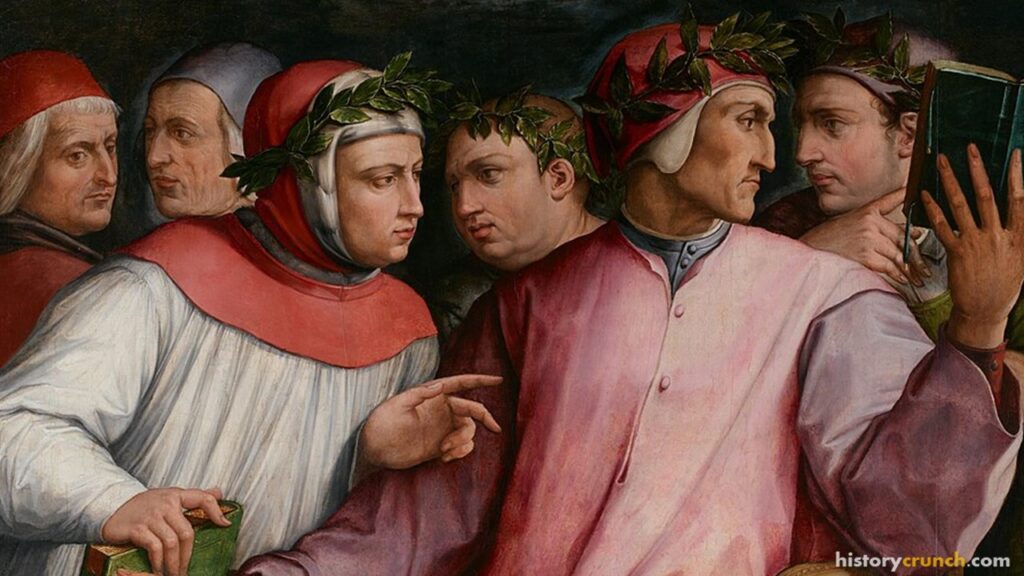
One of the main features of the Renaissance was the rediscovery by European thinkers of ancient Greek and Roman ideas and texts. For example, the term ‘renaissance’ in French means ‘rebirth’. This is in relation to the idea that the intellectual culture of the Renaissance was sparked by the rediscovery of these ancient philosophies and ideas which had largely been ignored in Europe throughout the Middle Ages. Many of these ancient texts were preserved by Islamic and Jewish cultures in the Middle East and were not rediscovered by Europeans until the time of the Renaissance. More specifically, famous Italian Renaissance scholar and humanist Petrarch is remembered for rediscovering the earlier work of Roman philosopher Cicero. Later scholars such as Erasmus and Budé are credited with helping to spread the humanist ideas out of the Italian peninsula and into northern Europe.

In general, Renaissance Humanism was the study of ancient Greek and Roman texts with the goal of promoting new norms and values in society. These norms and views varied from those at the time because they focused less heavily on a religious worldview. Instead, Renaissance humanists such as Budé used ancient texts to promote a worldview based on logic and reason. For Budé, this was especially important in all aspects related to law. As well, Renaissance humanists promoted the idea that citizens should be educated in these topics in order to allow them to participate in the social and political life of their society. This was a fundamental shift from the feudalistic and religious life that was the reality for most people in the Europe in the Middle Ages.
GUILLAUME BUDE – DEATH AND LEGACY
Budé died at the age of 73 on August 23rd, 1540 in Paris, France. Today he is considered to be one of the most important scholars of the Renaissance and a prominent figure in the humanist movement.