The Balkan Power Keg is a metaphor used by historians to refer to the nationalistic tensions present in the Balkans region of Europe before the 1914 outbreak of World War I. The Balkans is a name for the southeastern section of Europe that includes countries such as: Serbia, Greece, Bulgaria, Montenegro, etc. In the years before World War I, the Balkans (as well as the rest of Europe) were undergoing an increase in nationalism, which caused tensions to grow. As such, historians have argued that these tensions created a situation in the Balkans that led to a crisis, which eventually caused World War I.
NATIONALISM BEFORE WORLD WAR I
As stated above, nationalism was an important factor in the history of the Balkans and World War I. In fact, the 19th century was a period of continuous change and competition in Europe. Not only was it the height of European imperialism, but it also saw the rise of nationalism, which swept across the continent. In general, nationalism is the idea that people identify with one another based on different values, beliefs, and cultural traditions. For instance, both Germany and Italy formally unified as countries in 1871. In both cases, smaller kingdoms unified into one larger country and saw the people of each country identify with each other nationalistically. As such, nationalism played a significant role in carving up Europe between different groups of people. This created situations in which certain nations disagreed and did not trust each other to an extremely high degree. As well, some nations felt threatened by the nationalism of other nations, which led to several different crises. For example, the effects of nationalism were especially present in the Balkans and led to the Balkan Crisis.

BALKAN CRISIS
The Balkan Crisis before World War I refers to the issues that existed in the Balkans in the years before the outbreak of World War I. In short, this includes the Bosnian Crisis of 1908 and the two Balkan Wars (First Balkan War and Second Balkan War) which took place in 1912 and 1913. These events were significant because they led to the eventual 1914 outbreak of World War I. As such, historians consider the Balkan Crisis as a significant cause of World War I.
The Bosnian Crisis began in October of 1908 with the Austria annexation of Bosnia and Herzegovina. This means that Austria took control over the two territories. Previously they had been controlled by the Ottoman Empire but by this time the Ottoman Empire was in decline and losing its authority in the region.

At its core, the First Balkan War centered on the conflict between the nations of the Balkans and the Ottoman Empire. At the time, Serbia sought an alliance in order to assist in its attack against the Ottoman Empire, which led to the formation of the Balkan League. The Balkan League was an alliance between several Balkan nations, including as: Bulgaria, Greece, Montenegro, and Serbia. Historians consider the First Balkan War to be significant, because the Ottoman Empire gave up large sections of territory in the Balkans, which was taken over by the member nations of the Balkan League.
The Second Balkan War officially began on June 29th in 1913 following a period in which Bulgaria readied its armies. The main opponents that the Bulgarians faced in the conflict were Serbia and Greece, which were both former allies to Bulgaria in the First Balkan War. Both Serbia and Greece had signed a secret alliance before the outbreak of the Second Balkan War and were the main nations that Bulgaria argued with over territories in the Balkans. In general, the Second Balkan War did not last long. In fact, the total duration of the war was just over a month. It ended in August of 1913 when Bulgaria sought an end to the war, after suffering terrible losses.
In all, the three events discussed above, display the tensions that existed in the Balkans in the time before the outbreak of World War I. As a result, the Balkan Crisis, has come to be referred to as the ‘Balkan Powder Keg’ due to the dangerous situation it created.

WHAT IS THE ‘BALKAN POWDER KEG’?
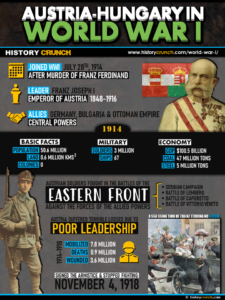
The information presented on this page highlights the tensions that existed in the Balkans before the outbreak of World War I in 1914. In fact, the event that sparked World War I was the assassination of the Austrian Archduke Franz Ferdinand on June 28th, 1914. Austria blamed Serbia for this action, since Ferdinand was murdered by Gavrilo Princip – a Bosnian nationalist and member of the Black Hand. The Black Hand was a secret organization aimed at promoting Serbian (and Slavic) nationalism, and assassinated Ferdinand in protest of Austria’s influence in the Balkans.

Therefore, historians consider the nationalistic tensions that existed in the Balkans in the early 20th century as an important factor in the eventual outbreak of World War I. In fact, the term ‘Balkan Powder Keg’ was used to describe the crisis in the Balkans before World War I. In general, the term is a metaphor and compares the nationalistic tensions present in the Balkans before World War I to that of a keg (or barrel) of gunpowder, which is essentially a bomb. Thus, the only thing the powder keg needed to explode was a spark, which was the assassination of Austrian Archduke Franz Ferdinand.