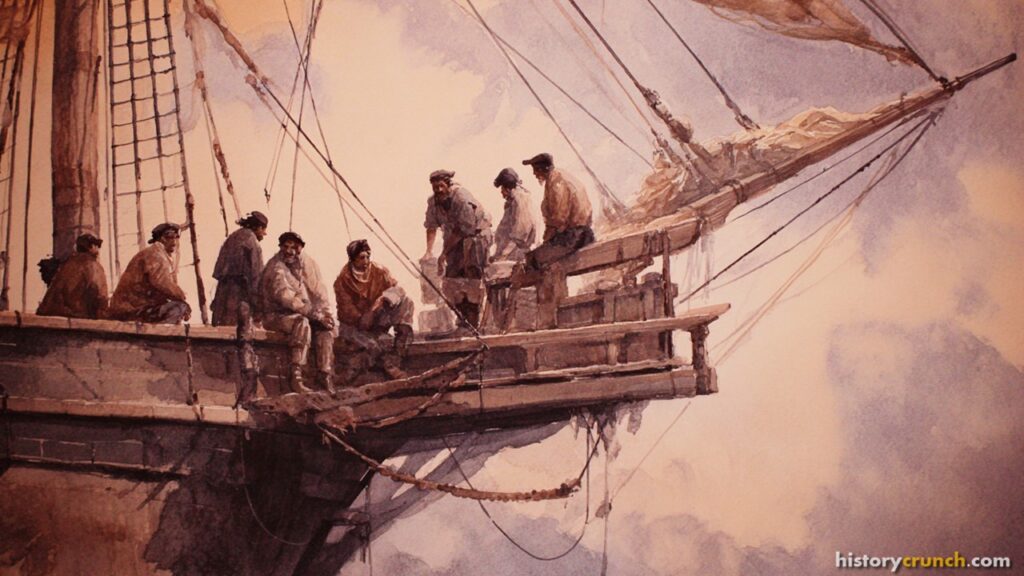
The life of a sailor in the Age of Exploration is important because it highlights the difficulties and dangers experienced by the sailors who carried out some of the most significant voyages of the time. For instance, life at sea during the Age of Exploration meant months or even years spent in cramped, dangerous, and often miserable conditions far from home. Sailors faced threats including disease, starvation, storms, and the possibility of shipwreck on an unknown coast.
What was the Age of Exploration?
The Age of Exploration was a period of European history that lasted from approximately the early 15th century to the early 17th century, during which European explorers and sailors set out across the world’s oceans in search of new trade routes, territories, and wealth. Famous explorers such as Christopher Columbus, Ferdinand Magellan, and Vasco da Gama led voyages that reshaped the world in many significant ways. However, these expeditions would not have been possible without the crews of ordinary sailors who manned the ships. As such, understanding the life of a sailor in the Age of Exploration is important in the study of the time period.
Who Were the Sailors of the Age of Exploration?
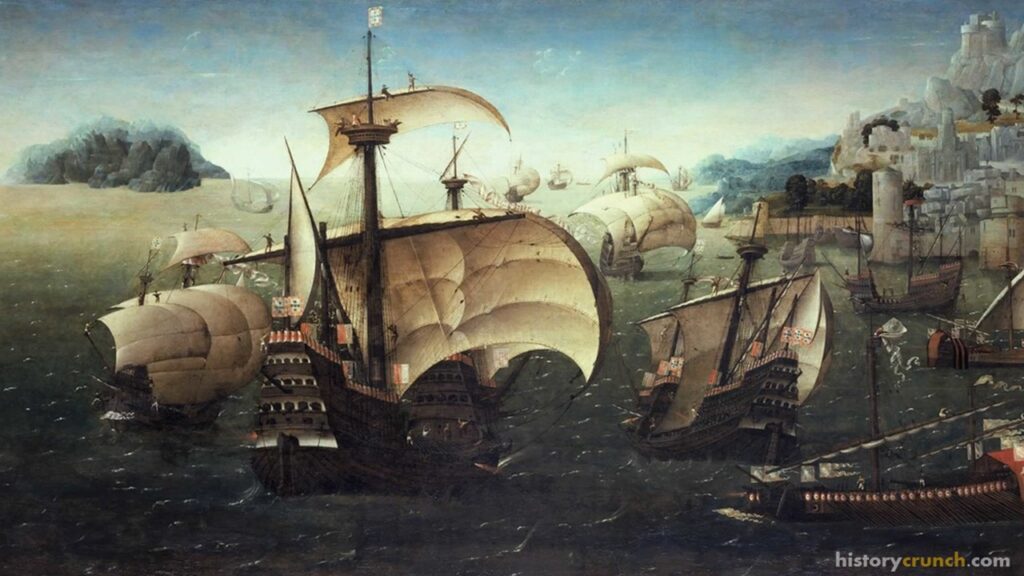
The sailors who crewed the ships of the Age of Exploration came from a wide range of backgrounds. Most were young men, often in their teens or twenties, who came from poor or working-class families in coastal towns and cities across Europe. For many, the sea offered one of the few opportunities available to men without property or wealth to earn a wage and perhaps improve their standing in society. However, signing on to a voyage of exploration was a difficult choice and often led to hardship for many sailors. As such, the conditions and dangers were well known, and captains often struggled to recruit enough willing men for long ocean voyages.
As a result, sailors were recruited through different methods, such as: by force, by deception, promised good wages and the promise of adventure. However, the reality was often that the sailors were then trapped aboard a ship far from shore. Others were convicted criminals given the choice between prison and service at sea. Regardless of how they came to be aboard, the sailors of the Age of Exploration represented a diverse group that sometimes included men from different countries, religions, and backgrounds sailing together under the same flag. Ferdinand Magellan’s famous circumnavigation of the globe, for example, included sailors from Portugal, Spain, Italy, Greece, and several other nations. Regardless, the main nations that participated (sponsored) in the voyages of the Age of Exploration were England, France, the Netherlands, Portugal and Spain.
Living Conditions on the Ships of the Age of Exploration
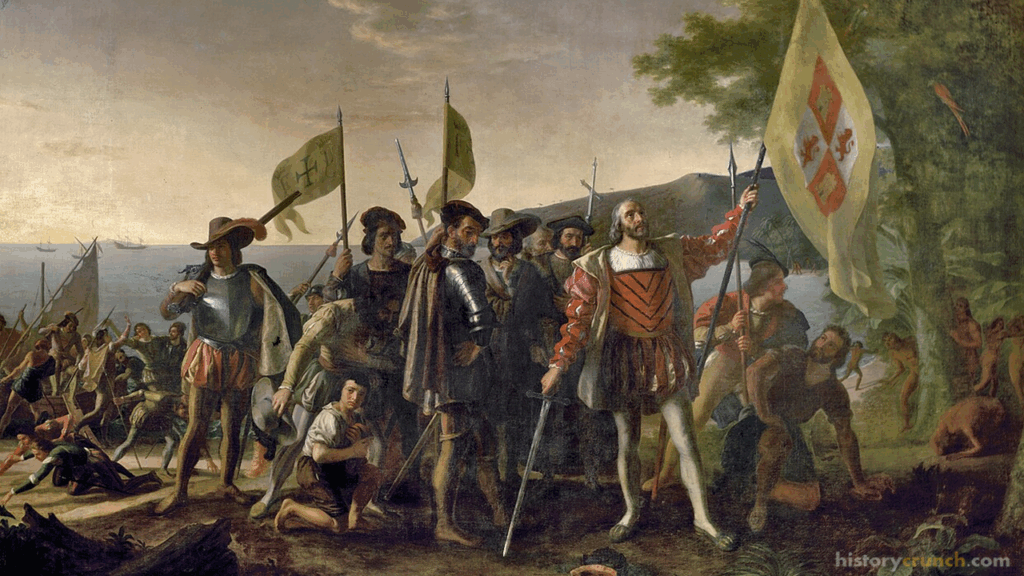
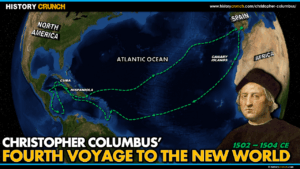
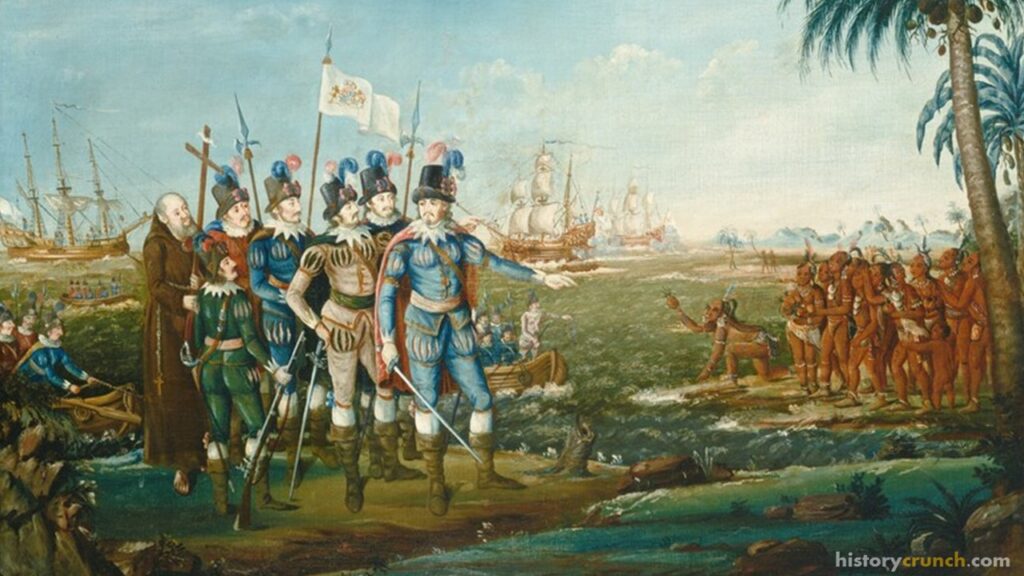
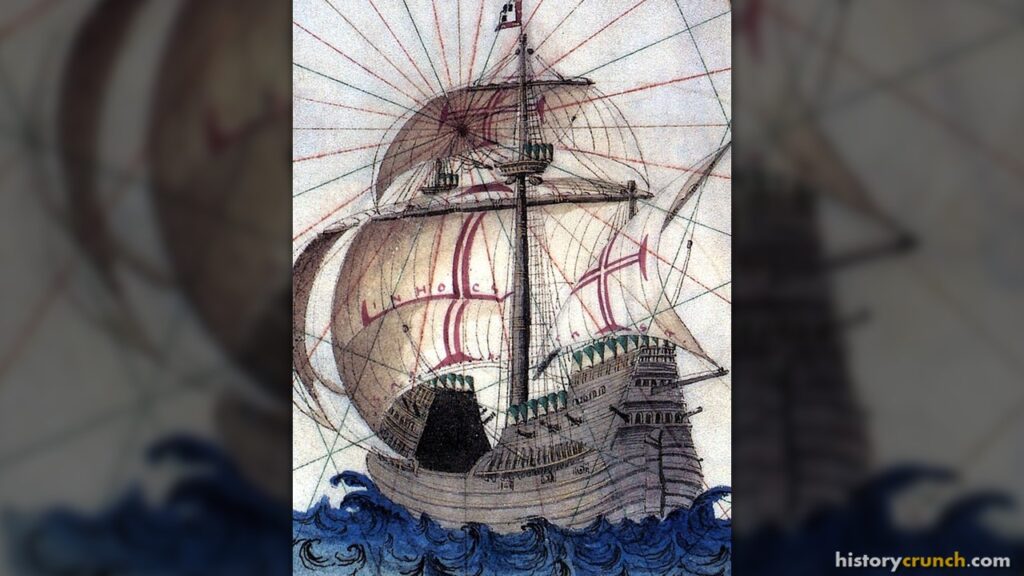
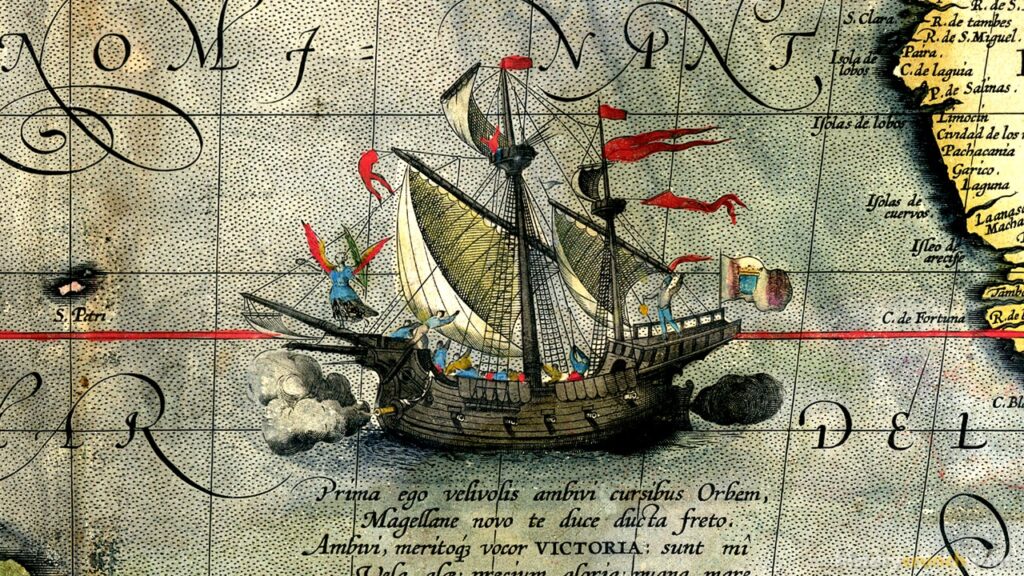
The ships used during the Age of Exploration were specifically designed for long ocean voyages, but they were not built with the comfort of their crews in mind. The two most important ship types of the era were the caravel and the carrack. The caravel was a relatively small, lightweight, and highly maneuverable vessel developed by Portuguese shipbuilders in the 15th century. The carrack was a larger vessel that could carry far more supplies and cargo. For example, Christopher Columbus used caravels on his first voyage to the Americas in 1492, while his flagship, the Santa Maria, was a carrack.
Despite being capable vessels, these ships offered sailors almost no personal space or comfort. For instance, most sailors had no private cabin or sleeping quarters. Instead, they slept on the bare wooden deck or in the hold of the ship, which was dark, damp, and shared with food supplies, water barrels, cargo, and live animals. With crews of between 20 and 100 men sharing such a small space, conditions were extremely crowded and unsanitary. In warm climates the lower decks became very hot, while in cold weather sailors suffered from the chill that came through the wooden hull of the ship.
Food and Water on the Voyages
Food and water were among the most serious challenges of any long ocean voyage during the Age of Exploration. Before departing, ships were loaded with as much food and freshwater as possible. However, keeping provisions from spoiling over a voyage that could last many months was extremely difficult.
The main food for most sailors was ship’s biscuit, also known as hardtack. Hardtack was a dense, dry cracker made from flour and water that could last longer at sea than ordinary bread. Sailors also ate salted or dried meat, dried fish, beans, and cheese. As a voyage continued, food supplies began to deteriorate. Weevils and other insects would infest the hardtack, meat would rot, and cheese would go bad. In some cases, sailors were forced to eat food that was heavily spoiled because there was no other option. For example, during Ferdinand Magellan’s crossing of the Pacific Ocean, the crew ran out of proper food entirely and were forced to eat sawdust and leather to survive.
Freshwater was stored in wooden barrels aboard the ship, but it quickly became stale and foul-tasting. As a result, sailors often drank wine, beer, or water mixed with vinegar instead of plain water, as these lasted better at sea. When freshwater supplies ran out on very long voyages, the crew faced the serious risk of dying of thirst. For this reason, captains would stop at islands or coastlines whenever possible to take on fresh food and water. For instance, stops at the Canary Islands and the Cape Verde Islands were common practice on voyages heading across the Atlantic Ocean.
Daily Work of a Sailor in the Age of Exploration
Life aboard a ship during the Age of Exploration was organized around the constant need to keep the vessel sailing and on course. Sailors worked in rotating shifts known as watches. This means that there was always a crew on deck and alert regardless of the time of day or night. A typical watch lasted four hours, after which a sailor could rest before his next shift. As a result, most sailors rarely got more than a few hours of uninterrupted sleep at a time.
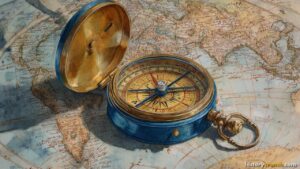
The daily work of an ordinary sailor included a wide range of physically demanding tasks. Sailors were responsible for managing the sails and the rigging, which often involved climbing the masts at great heights regardless of the weather. They also repaired sails and rigging, pumped water from the lower levels of the ship to prevent flooding, scrubbed the decks, and carried out whatever tasks the ship’s officers required. The navigation of the ship was the responsibility of the captain and the pilot, who used instruments such as the magnetic compass, the astrolabe, and the quadrant to determine the ship’s position and course. For example, Henry the Navigator of Portugal is credited with being one of the first to require captains to keep a log or record of their journeys, which helped future sailors build on the knowledge of those who had gone before.

Disease and Danger in the Age of Exploration
Disease was one of the most serious threats facing sailors during the Age of Exploration, and many voyages lost more men to illness than to any other cause. The most feared disease among sailors was scurvy. Scurvy is a condition caused by a lack of vitamin C in the diet. This means that scurvy developed when sailors went too long without eating fresh fruits and vegetables, which were unavailable during long ocean voyages. Symptoms of scurvy included bleeding gums, loose teeth, severe fatigue, and bruising of the skin, and it could result in death if left untreated. For example, the crew of Ferdinand Magellan’s circumnavigation began showing signs of scurvy during their crossing of the Pacific Ocean, which lasted over three months without any resupply of fresh food.
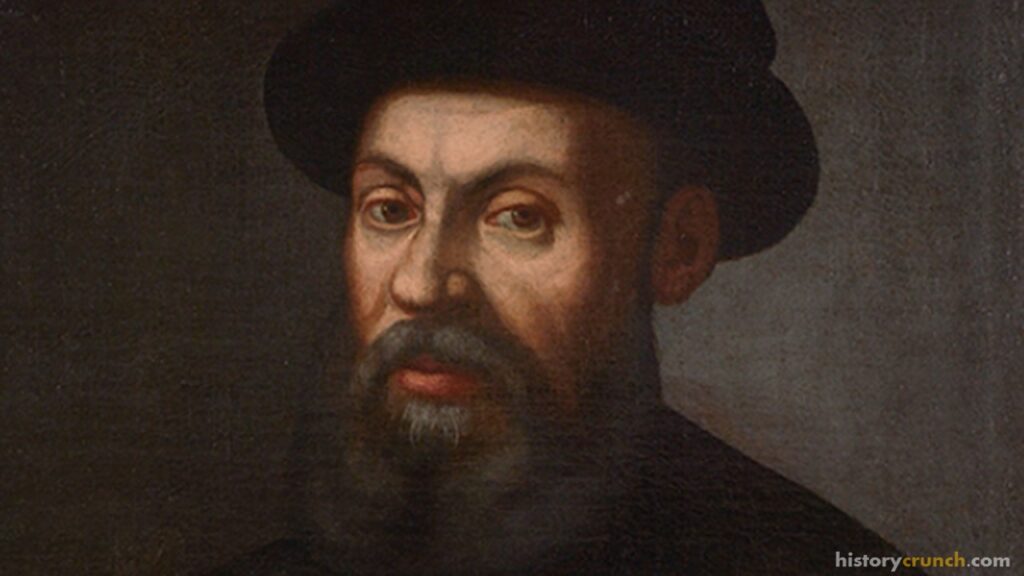
Other diseases that commonly affected sailors included dysentery, typhus, and malaria, all of which spread easily in the cramped and unsanitary conditions of a ship. Physical danger was also a constant reality. A sailor who fell overboard in the open ocean had very little chance of survival. Shipwrecks were common during the Age of Exploration. For example, of the five ships that set out with Ferdinand Magellan in 1519, only one completed the voyage. The high death toll of voyages during this era reflects just how dangerous life at sea truly was.
Punishments for Sailors in the Age of Exploration
Life aboard a ship during the Age of Exploration operated under very strict discipline. Captains held complete authority over their crews while at sea. This was necessary because the success or failure of a voyage, and the lives of everyone aboard, depended entirely on coordinated action and obedience to orders.
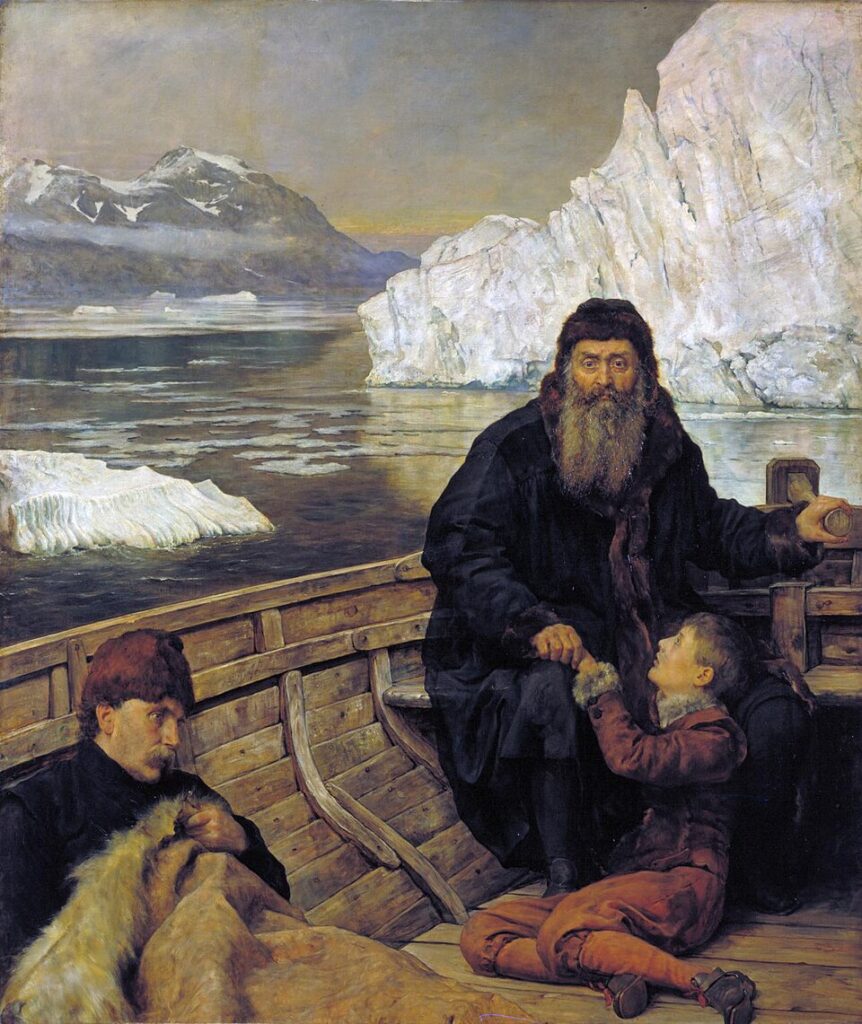
Punishments for breaking the rules of the ship were harsh. For example, common punishments included flogging, which meant being beaten with a rope or whip, and being placed in irons, which meant being chained in the hold of the ship. More serious offenses could result in a sailor being marooned, meaning left alone on a deserted island or coastline with little or no supplies. Mutiny, which was the act of sailors rising up against their captain, was considered the most serious crime at sea and was punishable by death. For instance, Ferdinand Magellan faced a significant mutiny from part of his crew during his voyage, which he dealt with by executing the ringleaders. This shows how captains of the Age of Exploration had to maintain strict control in order to keep their expeditions moving forward. As well, Henry Hudson famous experienced mutiny on his last voyage during the Age of Exploration and was never seen again.
Significance of the Life of a Sailor in the Age of Exploration
The sailors of the Age of Exploration were significant for several reasons. First, without the labor and endurance of ordinary sailors, the great voyages of discovery that reshaped the world would not have been possible. The famous explorers whose names are remembered in history depended entirely on the men who crewed their ships and kept sailing even in the most difficult of conditions. For instance, the voyages of Christopher Columbus, Vasco da Gama, and Ferdinand Magellan that transformed the Age of Exploration were all made possible by the work of hundreds of ordinary sailors.
Life as a sailor was also significant because it was also significant because it reveals the true human cost of the Age of Exploration. Behind every historic voyage was a crew of men who faced extraordinary hardship and danger, and many of whom never returned home. For example, Ferdinand Magellan’s circumnavigation of the globe began with around 270 men aboard five ships. Of those men, only 18 completed the entire journey and returned to Spain in 1522. Finally, the experience of sailors during the Age of Exploration helped drive improvements in navigation technology, ship design, and the understanding of disease in the centuries that followed. The hard-won knowledge of these sailors at sea contributed to the growth of European exploration and the development of global trade networks that have had a lasting impact on the history of the world.