The French Revolution had wide-ranging impacts on France and the rest of the world. Beginning in 1789, the revolution transformed France from an absolute monarchy into a republic and introduced new ideas about liberty, equality, and the rights of ordinary people. These changes did not stay within France’s borders. They spread across Europe and beyond, reshaping governments, societies, and the course of history for centuries to come.
What Was the French Revolution?
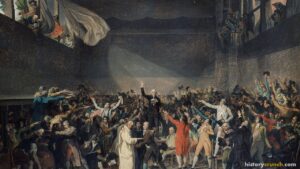
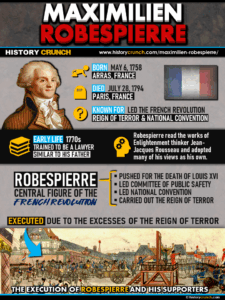
The French Revolution was a major event in the history of Western societies that began in 1789 and lasted until 1799. Before the revolution, France was ruled by an absolute monarchy under King Louis XVI, and French society was divided into three rigid social classes known as the Estates System. The third estate, which made up over 96% of the population, had little political power and carried most of the tax burden. Inspired by the ideas of the Age of Enlightenment and driven by economic hardship and deep inequality, the people of France rose up against the monarchy and transformed their country into a republic. The revolution unfolded through a series of major events, including the Storming of the Bastille, the execution of Louis XVI, and the violent period known as the Reign of Terror. It came to an end in 1799 when Napoleon Bonaparte seized power and appointed himself First Consul of France. The French Revolution had several major impacts, including the end of the absolute monarchy, the rise of republican government, the spread of Enlightenment ideals across Europe, major social changes for the people of France, and the rise of Napoleon Bonaparte.
End of the Absolute Monarchy
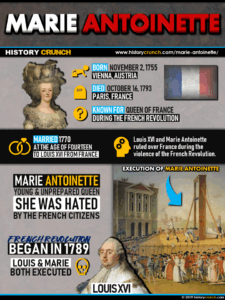
One of the most immediate impacts of the French Revolution was the end of the absolute monarchy in France. Before the revolution, France had been ruled for centuries by kings who held complete power over the country. Louis XVI ruled based on the principles of hereditary rule and the divine right of kings, meaning that his authority came from God and could not be challenged by ordinary citizens. The revolution changed this completely. The revolutionaries stripped Louis XVI of his authority, put him on trial for treason, and executed him by guillotine on January 21st, 1793. With the death of Louis XVI, the era of absolute monarchy in France came to an end. The French republic that took its place was built on the ideas of equality, liberty, and fraternity, which was a complete break from the old system of government that had defined France for generations.
Rise of Republican Government
Closely connected to the fall of the monarchy was the rise of republican government in France. Throughout the revolution, France was governed by a series of new revolutionary governments, including the National Assembly, the Legislative Assembly, the National Convention, and the Directory. Each of these governments reflected the idea that power should come from the people, not from a king. The Declaration of the Rights of Man and of the Citizen, adopted in 1789, was one of the clearest expressions of this new thinking. It set out individual rights and freedoms that all citizens were entitled to, regardless of their social class. This was a dramatic shift from the Estates System that had defined French society before the revolution, in which a person’s rights depended entirely on which estate they belonged to. The idea that citizens had natural rights that no government could take away became one of the most powerful legacies of the French Revolution and influenced democratic governments around the world in the centuries that followed.
Spread of Enlightenment Ideals
The French Revolution also had a major impact on the rest of Europe by spreading the ideals of the Age of Enlightenment far beyond France’s borders. Thinkers like John Locke, Jean-Jacques Rousseau, and Baron de Montesquieu had argued for equality, individual liberty, and governments based on the consent of the people. These ideas helped inspire the revolution in France, and the revolution itself then carried those ideas outward across the continent. As French armies moved through Europe during the wars that followed the revolution, they brought with them new ideas about the rights of citizens and the limits of royal power. Many people across Europe began to question their own monarchs and demand similar rights and freedoms. In this way, the French Revolution helped plant the seeds of future revolutions and reform movements throughout the 19th century, including the Age of Nationalism and the various revolutions that swept Europe in 1848.
Social Changes in France
Within France itself, the revolution brought major social changes for ordinary people. The Estates System, which had divided French society into three rigid classes for centuries, was abolished. The clergy and nobility lost the special privileges they had enjoyed under the old system, including their exemptions from paying taxes. Land that had been owned by the Church and the nobility was redistributed, giving more people access to property for the first time. The idea that all citizens were equal before the law replaced the old system in which a person’s rights and status depended entirely on the class they were born into. While these changes did not immediately create a perfectly equal society, they marked a fundamental shift in how French society was organized and what ordinary people could expect from their government. The revolution made it clear that the people of France would no longer accept a system that gave all the power and wealth to a small group at the top.
Rise of Napoleon Bonaparte
Perhaps the most far-reaching impact of the French Revolution was the rise of Napoleon Bonaparte. Napoleon was a French military general who had built his reputation during the wars that followed the revolution. After years of political instability under the Directory, Napoleon carried out a coup in November of 1799 and appointed himself First Consul of France, bringing the revolution to an end. While Napoleon preserved many of the revolution’s most important achievements, including equality before the law and the abolition of feudalism, he also concentrated enormous power in his own hands, eventually crowning himself Emperor of France in 1804. Napoleon went on to conquer much of Europe, and through his conquests he spread many of the revolutionary ideals of liberty and equality across the continent. His legal reforms, known as the Napoleonic Code, became the basis for legal systems in many countries and remain influential to this day. In this sense, the French Revolution did not end with Napoleon’s rise. It continued through him, reshaping Europe for decades to come.