World War I

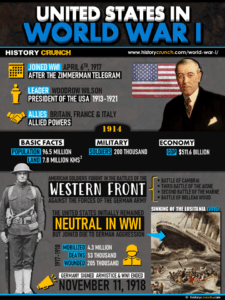
United States in World War I Infographic

United States in World War I: Infographic

This United States in World War I infographic was created by History Crunch to help students and teachers quickly understand America’s role in the First World War. It covers why the United States entered the war after nearly three years of neutrality, the American Expeditionary Force and its major battles including the Meuse-Argonne Offensive, and the significance of American involvement to the Allied victory. Designed for students in grades 5 to 12.
Robert Borden: A Detailed Biography

Robert Borden was the eighth Prime Minister of Canada, serving from 1911 to 1920 and leading the country through World War I. This article details the life and significance of Robert Borden.

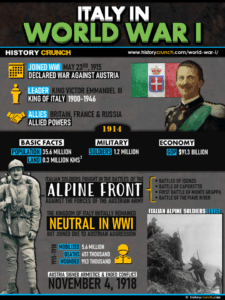
Italy in World War I Infographic

Italy in World War I: Infographic

This Italy in World War I infographic was created by History Crunch to help students and teachers quickly understand Italy’s role in the First World War. It covers Italy’s switch from the Triple Alliance to the Allied Powers, its major battles on the Italian Front including the Battles of Isonzo and the Battle of Caporetto, the home front experience and Italy’s controversial legacy from the conflict. Designed for students in grades 5 to 12.
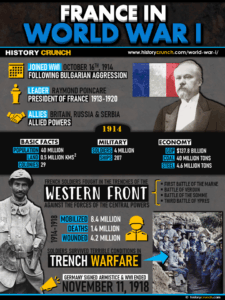
France in World War I Infographic

France in World War I: Infographic

This France in World War I infographic was created by History Crunch to help students and teachers quickly understand France’s role in the First World War. It covers why France entered the war, its army and major battles including Verdun and the Somme, the Nivelle Offensive and mutinies, the French home front and France’s lasting legacy from the conflict. Designed for students in grades 5 to 12.
Weimar Republic: A Detailed Summary

The Weimar Republic connected the end of the old German Empire to the rise of Hitler and Nazi Germany. In fact, was the democratic government of Germany from 1919 to 1933, during the difficult years between World War I and the rise of Nazi Germany. This article details the history and significance of the Weimar Republic.

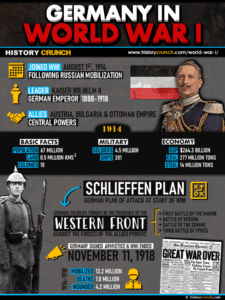
Germany in World War I Infographic

Germany in World War I: Infographic

This Germany in World War I infographic was created by History Crunch to help students and teachers quickly understand Germany’s role in the First World War. It covers why Germany entered the war, the Schlieffen Plan, its army and navy including the U-boat Campaign, major battles on the Western and Eastern Fronts, the home front including the Turnip Winter, and the political collapse that ended the war. Designed for students in grades 5 to 12.
Winston Churchill

Winston Churchill: A Detailed Biography

Winston Churchill remains one of the most significant figures in modern history. He is remembered above all for his leadership during World War II. This biography details the life and significance of Winston Churchill.

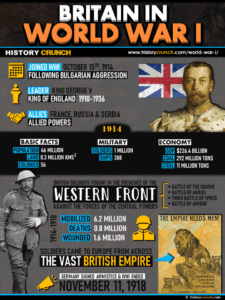
Britain in World War I Infographic

Britain in World War I: Infographic

This Britain in World War I infographic was created by History Crunch to help students and teachers quickly understand Britain’s role in the First World War. It covers why Britain entered the war, its army and navy, major battles on the Western Front, the home front experience and Britain’s lasting legacy from the conflict. Designed for students in grades 5 to 12.

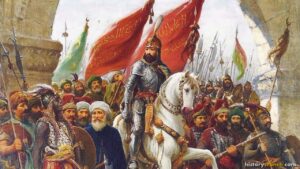
Ottoman Empire

Ottoman Empire: A Detailed Overview

The Ottoman Empire was one of the most powerful and long-lasting empires in world history, spanning from the 13th century to the early 20th century. This article details the history and significance of the Ottoman Empire.

Austria-Hungary in World War I Infographic

Austria-Hungary in World War I: Infographic

This Austria-Hungary in World War I infographic was created by History Crunch to help students and teachers quickly understand the role of Austria-Hungary in the First World War. It covers why Austria-Hungary was the nation that triggered the war, its major battles on the Serbian, Eastern and Italian fronts, the home front experience and the collapse of the Austro-Hungarian Empire in 1918. Designed for students in grades 5 to 12.