Medicine in the Middle Ages was very different from the medicine practiced today. During the medieval period, the understanding of the human body and the causes of disease was limited and was heavily influenced by the teachings of the Catholic Church and the ideas of ancient Greek and Roman physicians. For most people in the Middle Ages, illness was seen as a punishment from God or the result of an imbalance in the body, rather than the result of germs or other scientific causes. In general, medicine in the Middle Ages was a mixture of religious belief, ancient theory and practical herbal remedies that had been passed down through generations of healers and physicians.
What Were the Middle Ages?
The Middle Ages, also known as the Medieval Period, refers to the period of European history that stretched from the 5th century to the 15th century. More specifically, historians generally place the beginning of the Middle Ages at 476 CE, with the fall of the Western Roman Empire, and its end at approximately 1500 CE, with the start of the Renaissance. Due to its length, the Middle Ages is divided into three smaller periods, including: the Early Middle Ages, the High Middle Ages and the Late Middle Ages. Medicine in the Middle Ages developed and changed across all three of these periods, as new ideas from the Islamic world and the rediscovery of ancient texts helped to gradually transform medical knowledge throughout the medieval period.
Theory of the Four Humors
The most important medical theory in the Middle Ages was the theory of the ‘four humors’. This theory had originally been developed by the ancient Greek physician Hippocrates and was later expanded by the Roman physician Galen. According to the theory of the four humors, the human body was made up of four fluids, known as humors, including: blood, phlegm, yellow bile and black bile. Good health was believed to depend on keeping a proper balance between these four humors, while illness was thought to be the result of an imbalance in one or more of them.
For instance, a person who had too much blood was believed to be prone to fever and inflammation, while a person with too much black bile was thought to be prone to depression and melancholy. Treatment for illness was often based on the idea of restoring the balance of the humors through methods such as: bloodletting, purging, changes to diet and the use of herbal remedies. As such, the theory of the four humors was the foundation of medical practice in the Middle Ages and shaped the way physicians understood and treated disease throughout the medieval period.
Role of the Catholic Church in Medicine
The Catholic Church played a central role in medicine in the Middle Ages. Monasteries and hospitals run by religious orders were the most important providers of medical care during the medieval period and offered care for the sick and the poor across Europe. For instance, many monasteries maintained herb gardens and libraries of medical texts and trained monks and nuns in the basics of medical care. As well, the Church established hospitals in many towns and cities across Europe that provided basic care for the sick, the injured and the poor.
With that said, the Church’s teachings also placed limits on the development of medical knowledge during the Middle Ages. For instance, the Church taught that illness was often a punishment from God for sin and that prayer and religious devotion were the most important means of healing. As well, the Church discouraged the dissection of human bodies, which was seen as disrespectful to God’s creation. This meant that medieval physicians had very limited knowledge of human anatomy and were unable to develop an accurate understanding of how the body worked. As such, the influence of the Catholic Church on medicine in the Middle Ages was both positive and negative.
Physicians and Healers in the Middle Ages
There were several different types of medical practitioners in the Middle Ages. Formally trained physicians were the most highly educated and had usually studied at a university, where they received instruction in the theory of the four humors and the works of ancient physicians. However, formally trained physicians were rare and expensive, and their services were generally only available to the wealthy.
For most people in the Middle Ages, medical care was provided by other types of practitioners. Barber-surgeons were one of the most common types of medical practitioner in medieval Europe. As their name suggests, barber-surgeons combined the roles of barber and surgeon, performing both haircuts and a range of medical procedures including bloodletting, tooth extraction and the treatment of wounds. Apothecaries were practitioners who prepared and sold herbal remedies and medicines and played an important role in providing basic medical care for ordinary people. Finally, folk healers, including wise women and local herbalists, provided informal medical care based on traditional knowledge of plants and remedies that had been passed down through generations. As such, medicine in the Middle Ages was practiced by a wide range of different types of healers, each with their own methods and areas of expertise.
Treatments and Remedies in the Middle Ages
The treatments used in medicine in the Middle Ages were based on a combination of the theory of the four humors, religious belief and practical experience with herbal remedies. One of the most common medical treatments was bloodletting, which was the practice of removing blood from a patient’s body in order to restore the balance of the humors. Bloodletting was carried out using a range of methods, including: cutting a vein with a lancet, applying leeches to the skin or using heated cups to draw blood to the surface. While bloodletting was widely practiced and recommended by most medieval physicians, it was often harmful to patients and could weaken or even kill those who were already seriously ill.
Herbal remedies were another important part of medicine in the Middle Ages. Medieval healers had a broad knowledge of the medicinal properties of plants and used a wide range of herbs and plant extracts to treat different conditions. For instance, willow bark was used to treat fever and pain, garlic was used as an antiseptic and lavender was used to promote relaxation and sleep. Many of these herbal remedies had a genuine medical basis, as later scientific research has confirmed the medicinal properties of a number of plants used by medieval healers.
Prayer and religious rituals were also an important part of medicine in the Middle Ages. For instance, many people in the medieval period believed that illness could be cured through prayer, pilgrimage to holy sites or the help of saints. People suffering from particular illnesses would often pray to specific saints who were believed to have the power to cure those conditions. As such, religious belief and medical practice were deeply connected in the Middle Ages, and the boundary between what we would today consider medicine and religion was much less clear than it is in the modern world.
Islamic Influence on Medieval Medicine
One of the most important developments in medicine in the Middle Ages was the influence of Islamic scholarship on European medical knowledge. During the Early and High Middle Ages, the Islamic world was far ahead of Christian Europe in terms of medical knowledge and practice. Islamic physicians such as Avicenna, also known as Ibn Sina, and Al-Razi, also known as Rhazes, made major advances in the understanding of disease, the human body and the use of medicines and were among the most important medical thinkers of the medieval period.
The works of Islamic physicians reached Christian Europe primarily through Spain, where Muslim, Jewish and Christian scholars worked together to translate Arabic medical texts into Latin. For instance, Avicenna’s major medical work, known as the Canon of Medicine, was translated into Latin in the 12th century and became one of the most important medical textbooks in European universities for several centuries. As such, the influence of Islamic medicine on the development of medical knowledge in medieval Europe was enormous and helped lay important groundwork for the medical advances of the Renaissance and beyond.
Medicine and the Black Death
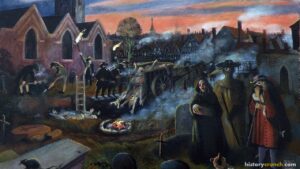
The most serious test of medicine in the Middle Ages was the Black Death, which was the most famous pandemic in all of human history and devastated Europe in the 14th century. The Black Death was caused by the bacterium Yersinia pestis and spread primarily through the bites of infected fleas carried by rats. However, medieval physicians had no understanding of bacteria or the role of insects in spreading disease and were completely unable to explain or stop the spread of the plague.
Medieval physicians offered a range of explanations for the Black Death, including the movement of the planets, the corruption of the air by rotting matter and the wrath of God. The treatments they prescribed were equally ineffective, as bloodletting, herbal remedies and prayer all proved powerless against the disease. The failure of medieval medicine to deal with the Black Death had a significant impact on the credibility of physicians and the Catholic Church, as many people questioned why God had allowed such a devastating plague to occur. As such, the Black Death exposed the severe limitations of medicine in the Middle Ages and helped push people toward the search for new and more effective approaches to understanding and treating disease that would eventually emerge during the Renaissance.
Significance of Medicine in the Middle Ages
In conclusion, medicine in the Middle Ages was a mixture of ancient theory, religious belief and practical experience that reflected the values and limitations of medieval European society. While medieval medicine was often ineffective and sometimes harmful, it also preserved important medical knowledge from the ancient world and laid important groundwork for the medical advances of the Renaissance and beyond. As such, understanding medicine in the Middle Ages is important for gaining a complete picture of daily life in the medieval period and for understanding how the modern science of medicine developed out of the ideas and practices of the medieval world.