There were several causes of the Age of Enlightenment. For instance, historians consider the main causes of the Age of Enlightenment to be: the Scientific Revolution, Humanism and the Renaissance, the Protestant Reformation, the printing press, advances in trade and travel and the growth of anger with traditional European systems of governance. These factors combined to set the stage for the events and advancements of the Enlightenment.
WHAT WAS THE AGE OF ENLIGHTENMENT?
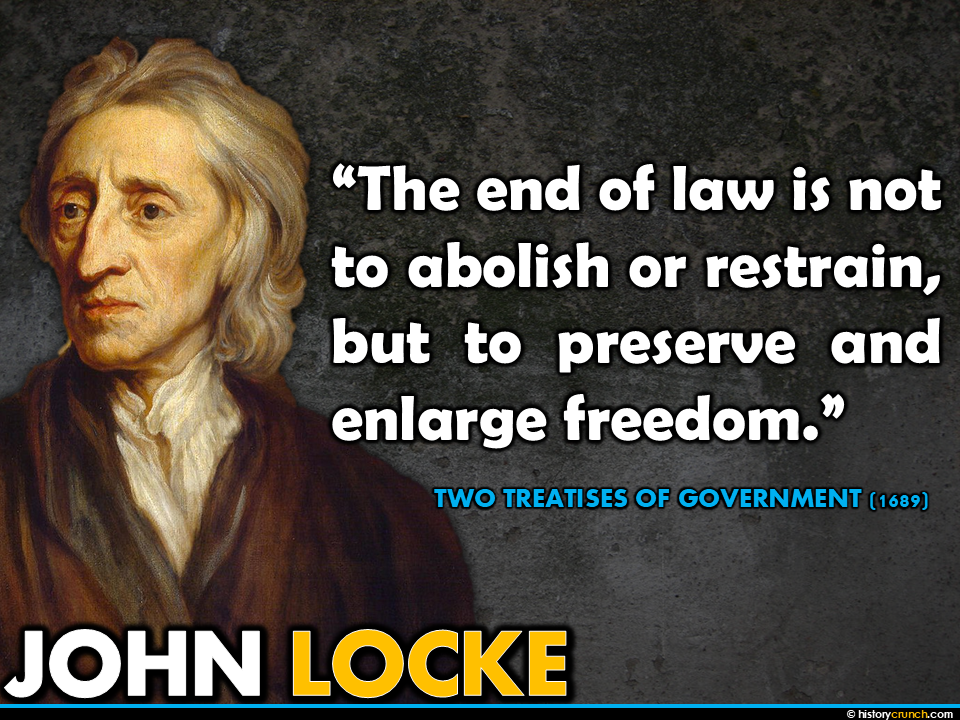
The Age of Enlightenment is one of the most significant events in the history of Western civilization. The Age of Enlightenment, also known as just the ‘Enlightenment’ or the ‘Age of Reason’, occurred during the 18th century and is known as a time period of great change and new ideas. Specifically, the Enlightenment involved an intellectual movement, in which famous thinkers and philosophers challenged some of the basic foundations of society, including: role of the government, basic human nature, sources of authority and ideas centered on liberty. Some of the most prominent of these thinkers, included: Thomas Hobbes, John Locke, Jean-Jacques Rousseau and Voltaire.
Ultimately, the Enlightenment transformed the way people thought about government, religion, science, and human rights. But what caused this dramatic shift in ideas? The Enlightenment did not appear suddenly—it was the result of several important historical developments that encouraged people to focus on reason, evidence, and critical thinking instead of tradition.

CAUSES OF THE ENLIGHTENMENT – SCIENTIFIC REVOLUTION
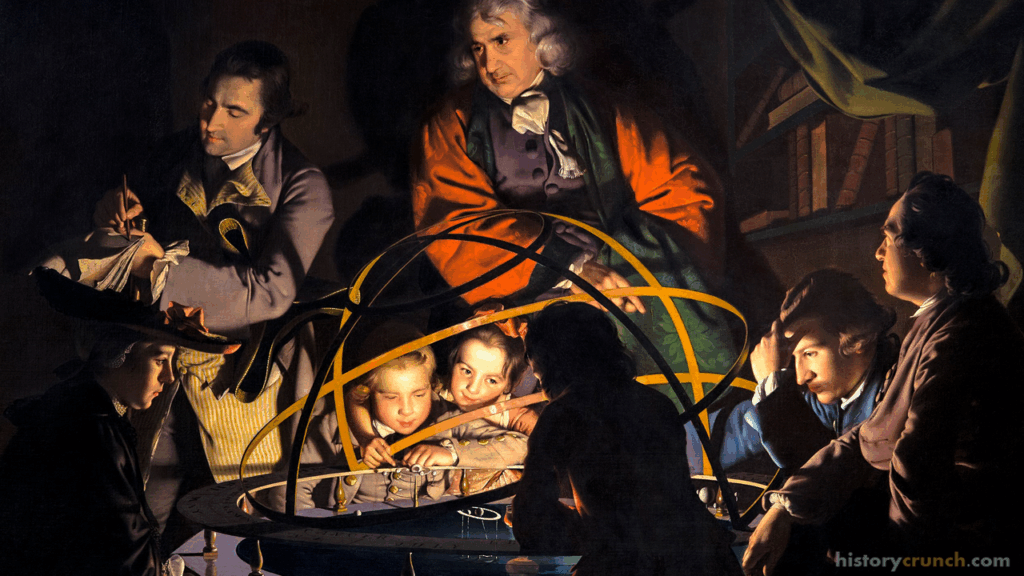
The first main cause of the Age of Enlightenment was the development of the Scientific Revolution. In fact, the Enlightenment built on the earlier work of the Scientific Revolution which occurred in the centuries before the Enlightenment (16th and 17th centuries). The Scientific Revolution involved a movement in society towards modern science based on using logic and reason to come to informed conclusions.
Famous scientific thinkers such as Nicolaus Copernicus, Galileo Galilei, Johannes Kepler, and Isaac Newton challenged traditional beliefs about the universe. For instance, they showed that nature followed predictable laws that could be discovered through observation and experimentation, which were central aspects of the scientific method. Enlightenment thinkers would then apply these same values to society and authority and begin to question all aspects of societal structure. As such, this impacted people’s views on government, laws and basic human nature. This was central to the overall Age of Enlightenment, which brought forward new ideas on society and authority.
CAUSES OF THE ENLIGHTENMENT – HUMANISM AND THE RENAISSANCE
The next main cause of the Age of Enlightenment was the events of the Renaissance and the development of Humanism. The Renaissance is an important event in European history that stretched from the 14th century to the 17th century. It was preceded by the Middle Ages in Europe and eventually led to the major events of the Age of Enlightenment. In historical terms, the Renaissance is important because it led to a major shift in European thought and worldview. The most significant changes that emerged as a result of the Renaissance can be seen in European architecture, art, literature, mathematics, music, philosophy, politics, religion and science. Intellectual thought in these fields flourished during the timeframe of the Renaissance and led to many people questioning long held beliefs about each. This created an environment of discovery and curiosity in which new ideas were constantly being introduced and tested. One such new idea or worldview that developed during the time of the Renaissance was called humanism.
In short, Renaissance Humanism was the study of ancient Greek and Roman texts with the goal of promoting new norms and values in society. These norms and views varied from those at the time because they focused less heavily on a religious worldview. Instead, Renaissance humanists used ancient texts to promote a worldview based on logic and reason. Famous writers such as Petrarch and Erasmus, stressed the importance of education, critical thinking, and questioning old traditions. These ideas gave Enlightenment philosophers the inspiration to challenge authority and explore new ways of understanding society. As such, the Renaissance and the growth of Humanism, set the framework for intellectual thought, which influenced Enlightenment writers, such as: John Locke, Jean-Jacques Rousseau and Voltaire.
CAUSES OF THE ENLIGHTENMENT – PROTESTANT REFORMATION
Another important cause of the Age of Enlightenment was the religious conflict and turmoil that occurred throughout the centuries before the start of the Enlightenment. More specifically, historians consider the Protestant Reformation to be significant to the eventual development of the Age of Enlightenment in Europe.
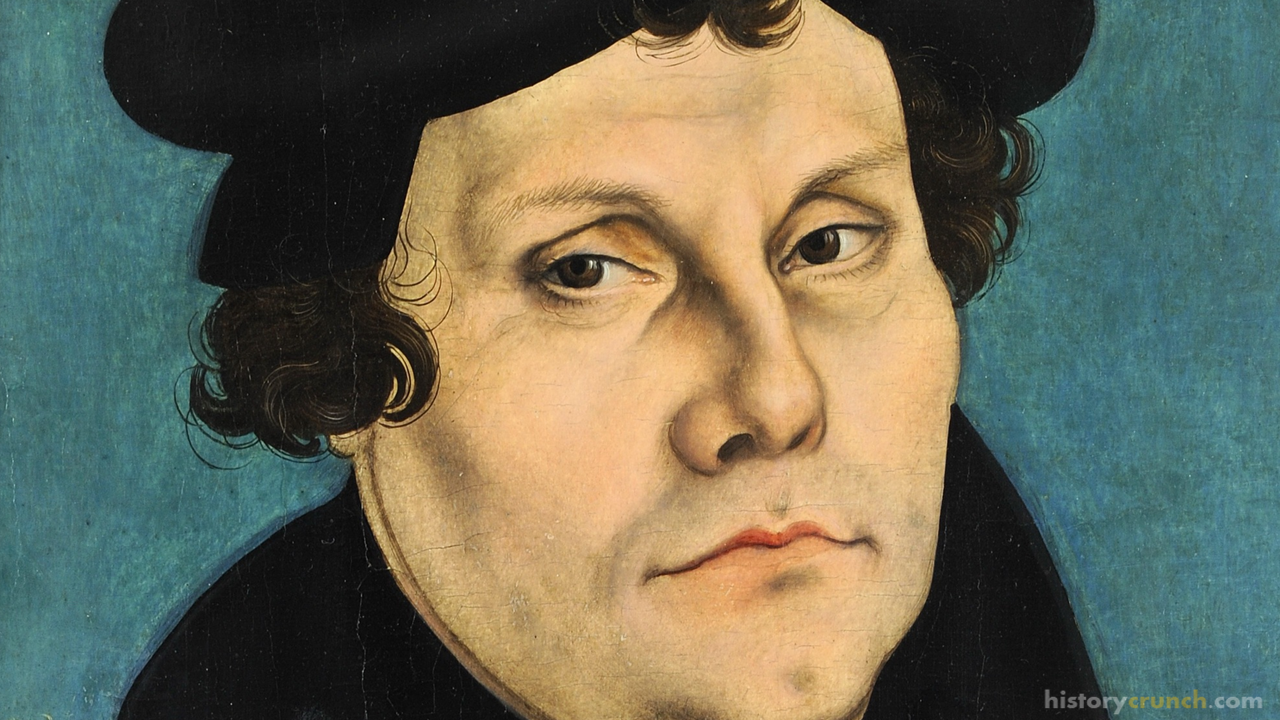
The Protestant Reformation was a major event in European history and had long-lasting effects on the history of Christianity as a religion. It began at the start of the 16th century in Europe in the midst of the Renaissance. In fact, historians consider it have started with the publication of Martin Luther’s ‘Ninety-five Theses’ in 1517. Martin Luther (who lived from 1483 to 1546) was a German professor and monk. In his work ‘Ninety-five Theses’, Luther challenged several different teachings and practices of the Catholic Church. For instance, he argued against the notion that salvation was gained through good deeds and instead suggested that it could be attained simply through belief in Jesus Christ. As well, he argued that the scriptures themselves were the only true form of teachings and any other directives from the Catholic Church were not necessarily in line with Christianity. Furthermore, he translated the Bible into his native language of German which allowed many more people to access it and understand it for themselves. These ideas resonated with many Europeans as their worldview had been altered due to the development of Humanism and the overall Renaissance. Ultimately, his ideas clashed with those of the Catholic Church and then Pope Leo X. In fact, he was excommunicated from the Church and was forced into hiding. Regardless, his actions inspired others to further the cause of reforming the Church, including: John Calvin and Huldrych Zwingli.
In short, the Protestant Reformation caused deep religious divisions in Europe. Wars between Catholics and Protestants devastated entire regions, leaving many people tired of religious intolerance and violence. By the 1600s, some thinkers began calling for religious tolerance and the separation of church and state. The Enlightenment built on this desire for peace by promoting freedom of religion and freedom of thought, which were central to the ideas of many prominent Enlightenment thinkers. Therefore, historians consider the Protestant Reformation to be an important cause of the Enlightenment.
CAUSES OF THE ENLIGHTENMENT – PRINTING PRESS
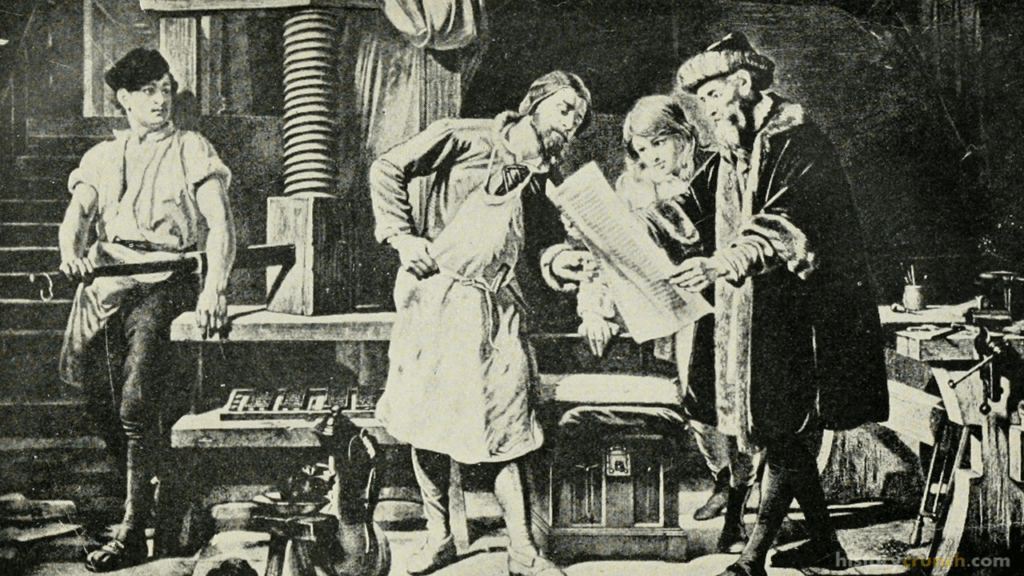
The next major cause of the Age of Enlightenment was the spread of knowledge, which was especially increased due to the invention of the printing press by Johannes Gutenberg. He was a German blacksmith, goldsmith and printer who is best remembered today for his development of the first printing press in the mid-1400s. His invention of the printing press is considered to be one of the most transformative inventions in history and had a profound impact on historical movements such as the Renaissance and Age of Enlightenment.
For instance, Tte invention of the printing press in the 1400s made books and pamphlets cheaper and easier to produce. By the 1700s, literacy rates were rising, and newspapers, journals, and books spread Enlightenment ideas widely. This allowed new ideas about science, government, and religion to reach not only scholars, but also merchants, artisans, and ordinary citizens across Europe and eventually the world. The spread of knowledge gave the Enlightenment its power to influence society in new ways. As such, historians consider the printing press and the spread of knowledge to be a central factor in the early development of the Age of Enlightenment.
CAUSES OF THE ENLIGHTENMENT – TRADE AND TRAVEL
Trade and travel were both important to the cause or start of the Age of Enlightenment. In fact, the Age of Exploration played an important role in the development of Enlightenment ideals by prominent thinkers of the time.
The Age of Exploration, or Age of Discovery, is one of the most important events in the history of the western world. It began in the early 15th century and continued until the end of the 17th century, and involved European explorers using their navigational skills to travel and explore the world. As an event it would lead to transformative changes in the world and bring about an era of globalization, meaning the world became more interconnected than it had ever been before.
European exploration of the Americas, Africa, and Asia in the 1500s and 1600s brought contact with new cultures and ideas. Exposure to different ways of life encouraged Europeans to question their own traditions. For instance, Jean-Jacques Rousseau was highly interested in studying the differences between the societies of the indigenous peoples of the New World and those in Europe. Trade also created wealth and helped new social groups, such as the middle class, gain power and education. These groups supported Enlightenment ideas because they wanted more opportunities and rights. As such, trade and travel were important in the development and success of the Enlightenment.

CAUSES OF THE ENLIGHTENMENT – DISCONTENT WITH TRADITIONAL SYSTEMS
The final main cause of the Age of Enlightenment was the growth of discontent (anger/frustration) by the citizenry of Europe with the traditional systems of governance and economics. More specifically, during the 17th century many European countries were ruled by absolute monarchs such as Louis XIV of France, who held almost unlimited power. While these rulers strengthened their nations, their control also showed the dangers of unchecked authority.
Enlightenment thinkers such as John Locke, Baron de Montesquieu, and Voltaire argued for limited government, natural rights, and separation of powers. These ideas developed as a reaction against the perceived excesses of the absolute monarchs of the time. As such, historians view the growing discontent as an important cause of the Enlightenment, since it set the stage for prominent thinkers to argue for different systems of government.