The Eastern Front of World War I was the line of fighting that occurred along the eastern border of Germany with Russia. World War I was a global conflict that was fought on several fronts, including the Western Front, Eastern Front and Italian (Alpine) Front. The Eastern Front developed following the failure of the German plan of attack (Schlieffen Plan) at the beginning of World War I, which forced Germany to fight a two-front war against the Allied Powers. The Eastern Front was the major scene of fighting between the Central Powers of Germany and Austria-Hungary against the Allied Power of Russia.
FORMATION OF THE EASTERN FRONT OF WORLD WAR I
The Eastern Front was fought from the Baltic Sea in the north to the Black Sea in the south and took over large portions of Eastern Europe. On one side was the Central Powers of Germany and Austro-Hungary and on the other side was the Russian Empire. Russia was part of the Triple Entente during the course of World War I, meaning it was allied with both France and Britain. Germany began World War I by trying to carry out its Schlieffen Plan, which it hoped to use to avoid a two-front war. The plan called for Germany to invade France through Belgium and to defeat France before Russia could mobilize on the Eastern Front. The Schlieffen Plan ultimately failed due to French resistance on the Western Front and Russia was able to mobilize for war much quicker than Germany anticipated. As such, the Eastern Front (and the Western Front) were both formed out of the failure of the Schlieffen Plan.
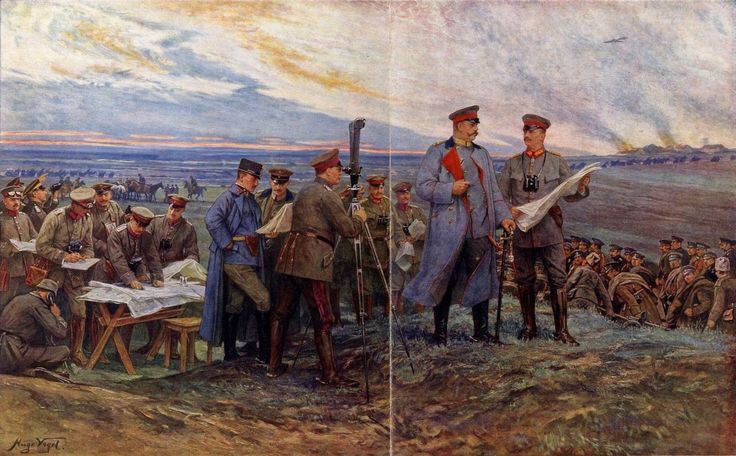
The Eastern Front also formed following the Russian advance on East Prussia, when the Russian armies faced off against the German Army in the Battle of Tannenberg. The battle occurred early in 1914 and set the stage for the line of fighting between Germany and Russia, which became known as the Eastern Front. Another important aspect of the Eastern Front was the southern portion, which was primarily fought between the Russian Army and the Austro-Hungarian Army.

BATTLES OF THE EASTERN FRONT OF WORLD WAR I
The Eastern Front was the site of some of the most significant battles of World War I. In fact, the Eastern Front involved fighting from 1914 until 1918. For example, the most significant battles of the Eastern Front are included in the list below. While there were many more battles than this, these were the most important. In these battles, the Allied Powers (Russia) faced off against the Central Powers (Germany, Austria-Hungary, Bulgaria and the Ottoman Empire). Click on the links below to learn more information about each battle.
TRENCHES OF THE EASTERN FRONT OF WORLD WAR I
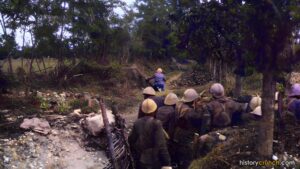
A common feature of warfare in World War I was the construction of trenches. Trenches were long ditches that the respective armies dug into the ground in an attempt to gain defensive protection from enemy fire. Throughout World War I, the trench system was used on all fronts of the war, including the Eastern Front. With that said, the Eastern Front differed greatly from the more famous Western Front in terms of the extent of the trench systems and the movement of the front.

The Western Front was dominated by trench warfare and developed into a stalemate between the different sides that saw little or no movement of the front for the duration of most of World War I. On the other hand, the trench system on the Eastern Front never developed to the same degree. While the Eastern Front had trenches, the battles on were much more dynamic in nature, which meant that the front-line was regularly moving over great distances. This essentially prevented the armies from developing extensive trenches.
As well, while the Western Front was a stalemate for much of the war, the Eastern Front saw a lot of back and forth movement. This was due to several factors, but was mainly due to the differing powers of the Russian Army and the German or Austrian Armies. For instance, while Russia was a vast country and had a large population, it struggled to properly equip their soldiers in order to fight. This was the result of Russia’s poor industrial and manufacturing sector. As such, in the years before 1914, Russia lagged behind most other European nations in coal and steel production. This lack of industrialization caused Russia to send many of its soldiers into battle without the weapons they required to fight. For example, there were reports that some Russian forces entered battle with only one rifle for every three soldiers. Russian soldiers were instructed to charge the front lines in rows such that when the first soldier in the row died, the others behind could pick up the rifle and carry on with the attack. This lack of proper equipment caused the Russian forces to suffer huge numbers of casualties and to negatively impact the morale of Russian soldiers. However, it also caused the German and Austrian armies to capture large sections of Russia, which moved the Eastern Front over large areas of land.

SIGNIFICANCE OF THE EASTERN FRONT OF WORLD WAR I
The Eastern Front was incredibly significant in the overall events of World War I. For instance, the Eastern Front was active in fighting and involved some of the most important battles of the war. The fighting along the Eastern Front occurred from August 1st, 1914 until May 7th, 1918. During this time, millions of soldiers participated for both the Allied Powers and the Central Powers in the battles, which led to many casualties of the war. For example, historians estimate that the Allied Powers suffered approximately 9.9 million casualties and the Central Powers suffering 5.9 million casualties. Russia suffered the most losses on the Eastern Front due to its struggle with industrialization and poor overall equipment for its soldiers. There were also numerous civilian losses on both sides due to the realities of war.
The Eastern Front was also significant due to the political changes that occurred. For instance, Russia underwent the events of the Russian Revolution during the time of the Eastern Front and World War I. At the time, Russia was led by a Tsar, which was the title for Russian absolute monarchs before 1917. Tsar Nicholas II ruled over Russia before and during the first parts of World War I. The mounting Russian casualties and lack of supplies led to an increased amount of anger directed at the Tsar and his handling of the Russian war effort. At the same time, Russia was a society that was sharply divided and the poorest Russians struggled to survive day-to-day. Poverty was widespread, especially among Russian peasants, who worked for the landowning nobility. This all combined to set the stage for a revolution against the Tsar and his rule over Russia.
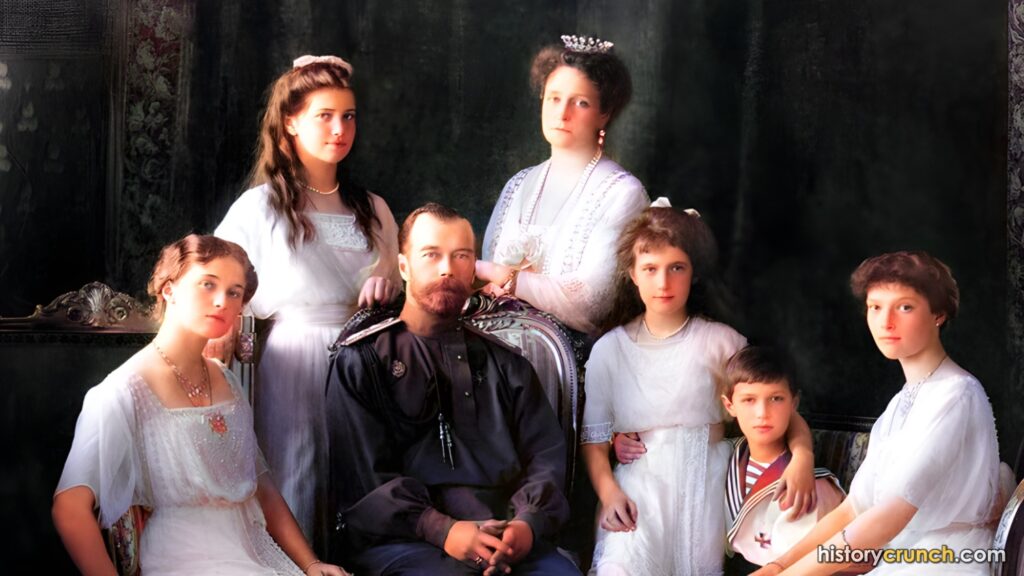
In 1917, Vladimir Lenin led a series of revolts against Tsar Nicholas II. Lenin was the leader of the Bolsheviks, who were a communist organization that sought to gain power over Russia and to pull Russia from the fighting in World War I. Soon, Tsar Nicholas II and his family were imprisoned and Lenin and the Bolsheviks assumed power over Russia. Lenin had argued against continuing Russia’s involvement in World War I and soon after obtaining power he negotiated a peace treaty with Germany. The Treaty of Brest-Litovsk, which was signed on March 3rd, 1918, saw Russia obtain peace with Germany, but in exchange Russia had to give up a large portion of its land to Germany.
Russia’s withdrawal from the fighting in World War I was a tough blow for the Allied Powers, because it now allowed Germany to focus all of its forces on the Western Front. However, the French and British would soon receive much needed support when the United States officially joined World War I on the side of the Allied Powers.