Middle Ages

Later Crusades Map

Later Crusades Map

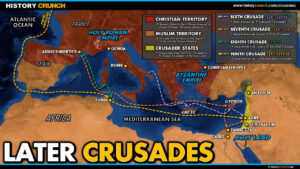
This Later Crusades map was created by History Crunch to help students and teachers understand the geographic routes of the Sixth, Seventh, Eighth and Ninth Crusades between 1228 and 1272 CE. It shows the key destinations of each campaign including Jerusalem, Egypt, Tunis and the port city of Acre, and illustrates how the crusading movement gradually weakened over time. Designed for students in grades 5 to 12.

Fifth Crusade Map

Fifth Crusade Map

This Fifth Crusade map was created by History Crunch to help students and teachers understand the geographic route of the Fifth Crusade between 1217 and 1221 CE. It shows the path taken by European crusaders from Europe across the Mediterranean to Egypt, including the key locations of Damietta and the Nile Delta region. Designed for students in grades 5 to 12.
Fourth Crusade Map

Fourth Crusade Map

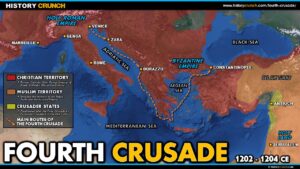
This Fourth Crusade map was created by History Crunch to help students and teachers understand the geographic route of the Fourth Crusade between 1202 and 1204 CE. Unlike the previous crusades, the Fourth Crusade never reached the Holy Land and instead ended with the shocking sack of Constantinople, the capital of the Byzantine Empire. Designed for students in grades 5 to 12.
Third Crusade Map

Third Crusade Map

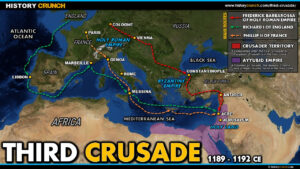
This Third Crusade map was created by History Crunch to help students and teachers understand the geographic route of the Third Crusade from Europe to the Holy Land between 1189 and 1192 CE. It shows the paths taken by the armies of Richard I of England, Philip II of France and Frederick Barbarossa of Germany as they traveled toward the Middle East. Designed for students in grades 5 to 12.
Second Crusade Map

Second Crusade Map

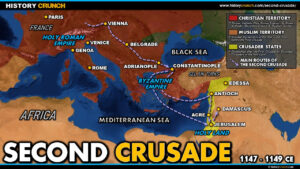
This Second Crusade map was created by History Crunch to help students and teachers understand the geographic route of the Second Crusade from Europe to the Holy Land between 1147 and 1149 CE. It shows the paths taken by the French and German armies as they traveled toward the Middle East and the key locations involved in this ultimately unsuccessful campaign. Designed for students in grades 5 to 12.

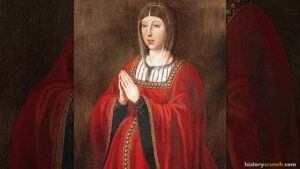
Isabella I of Castile

Isabella I of Castile: A Detailed Summary

Isabella of Castile, known as Isabella the Catholic, was one of the most important rulers of the Middle Ages who completed the Reconquista, established the Spanish Inquisition and funded the voyages of Christopher Columbus. This article details the life and significance of Isabella of Castile.

First Crusade Map

First Crusade Map

This First Crusade map was created by History Crunch to help students and teachers understand the geographic route of the First Crusade from Europe to the Holy Land between 1096 and 1099 CE. It shows the path taken by European crusaders from their homelands through Constantinople and into the Middle East, including the key locations captured along the way. Designed for students in grades 5 to 12.
Hereditary Rule: A Detailed Summary

Hereditary rule was a system of government in which political power was passed down through a royal family from one generation to the next. This article details the history and significance of hereditary rule.

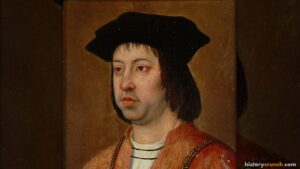
Ferdinand II of Aragon

Ferdinand II of Aragon: A Detailed Biography

Ferdinand of Aragon, known as Ferdinand the Catholic, was one of the most important rulers of medieval Spain who completed the Reconquista, established the Spanish Inquisition and funded the voyages of Christopher Columbus. This article details the life and significance of Ferdinand of Aragon.

Causes of the Black Death

Causes of the Black Death: A Detailed Summary

The main causes of the Black Death centered on poor hygiene, overcrowded cities, and limited medical knowledge at the time. The plague traveled along major trade routes, especially the Silk Road and merchant ships, allowing it to spread rapidly across Asia, the Middle East, and Europe. This article details the main causes of the Black Death.