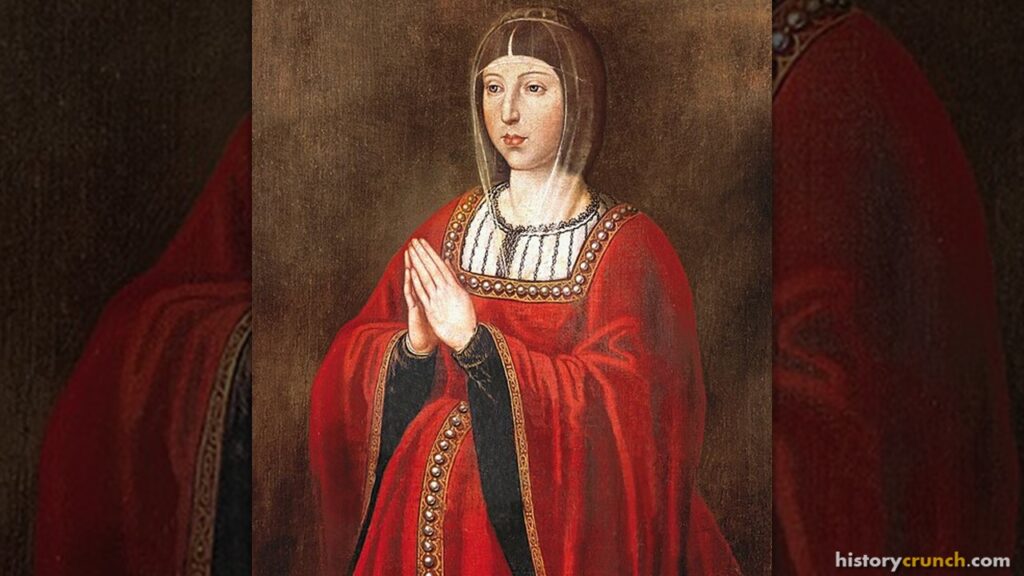
Isabella I of Castile, also known as Isabella the Catholic, was one of the most important rulers in the history of medieval Spain and one of the most significant female rulers in the history of the Middle Ages. She ruled Castile in her own right from 1474 CE and together with her husband Ferdinand of Aragon completed the Reconquista, established the Spanish Inquisition and funded the first voyage of Christopher Columbus in 1492 CE.
Isabella I of Castile – Early Life
Isabella I of Castile was born on April 22nd, 1451 CE in the town of Madrigal de las Altas Torres in the Kingdom of Castile. Her father was King John II of Castile and her mother was Isabella of Portugal. Isabella was born into a royal family but was not originally expected to inherit the throne. Her much older half-brother Henry was already heir to the kingdom and became King Henry IV of Castile when Isabella’s father died in 1454 CE. Isabella was just three years old at the time.
Isabella and her younger brother Alfonso were taken to live at the court of Henry IV, where the king could keep a close eye on them. Henry IV was a weak and unpopular ruler whose court was marked by constant conflict and political intrigue. Isabella grew up in this difficult environment and developed from an early age into a strong-willed, deeply religious and politically aware young woman. For instance, she received a careful education that included religious studies, music and the domestic arts expected of a royal woman at the time. As such, her difficult childhood at the court of Henry IV shaped her character and prepared her for the challenges she would face as queen.
Isabella I of Castile – Path to the Throne
Isabella’s path to the throne of Castile was complicated and contested. When her brother Alfonso died in 1468 CE, Isabella became the leading alternative to Henry IV as a successor to the throne. Henry IV tried to use this as an opportunity to control Isabella’s future. For instance, he attempted to arrange a marriage for her to King Alfonso V of Portugal, which would have kept her under his influence. Isabella refused this arrangement and instead secretly arranged her own marriage.
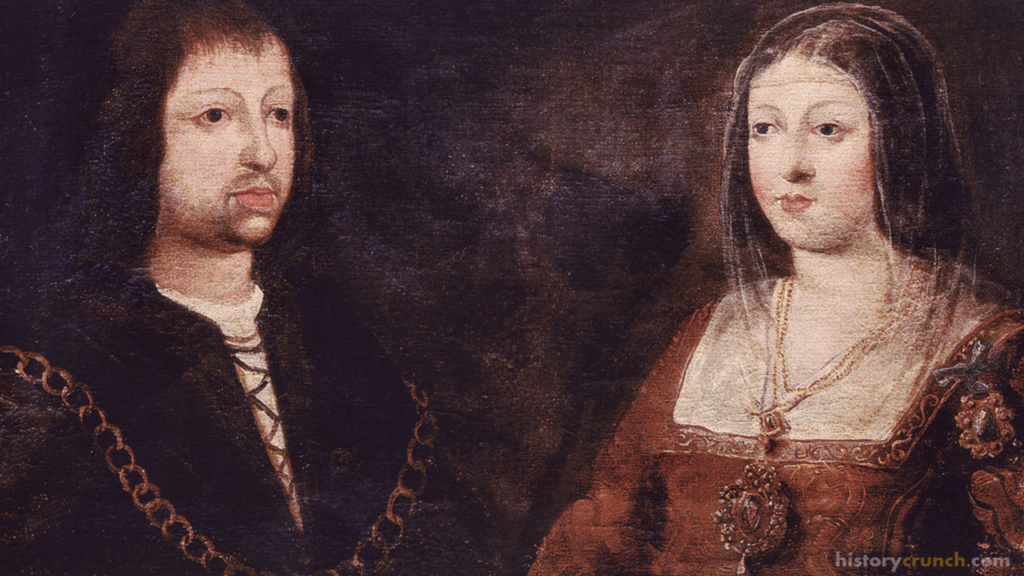
Isabella chose to marry Ferdinand of Aragon, and the two were married on October 19th, 1469 CE in Valladolid. The marriage had been carefully negotiated. For instance, Ferdinand signed a Marriage Concession in which he recognized that Castile belonged to Isabella and that she had direct and sole control of her kingdom. The couple adopted the joint motto “tanto monta, monta tanto,” meaning “they amount to the same, the same they amount to,” reflecting the equal nature of their partnership. With that said, it was always understood that Isabella was the ruler of Castile in her own right, not simply the wife of a king.
When Henry IV died in December of 1474 CE, Isabella immediately declared herself Queen of Castile. This sparked a civil war between her supporters and those who backed Joanna la Beltraneja, the daughter of Henry IV, whose paternity many people disputed. The war lasted until 1479 CE and ended in victory for Isabella. As such, Isabella had to fight hard to secure the throne that was hers by right, and her victory in the civil war established her as a strong and determined ruler.
Isabella I of Castile – Queen
Isabella proved to be one of the most capable and effective rulers of the Middle Ages. From the beginning of her reign she worked to restore order and strengthen royal authority in Castile. For instance, she reorganized the government of the kingdom, reduced the enormous debt that Henry IV had left behind and cracked down sharply on crime and lawlessness. She established a powerful law enforcement organization called the Santa Hermandad to maintain order across her kingdom. As well, she took back control of lands and revenues that had been taken from the crown by the nobility during the weak reign of Henry IV.
Isabella also took a close interest in the Catholic Church within her kingdom. She worked to reform the Spanish churches, insisting on high standards from bishops and priests and seeking out talented and capable men for important church positions. For instance, she appointed the reforming churchman Francisco Jimenez de Cisneros as Archbishop of Toledo, one of the most important positions in the Spanish Church, and worked closely with him to improve the quality and discipline of the clergy. As such, Isabella’s reforms of both the government and the Church helped transform Castile into a more organized and powerful kingdom during her reign.
Isabella I of Castile – Reconquista
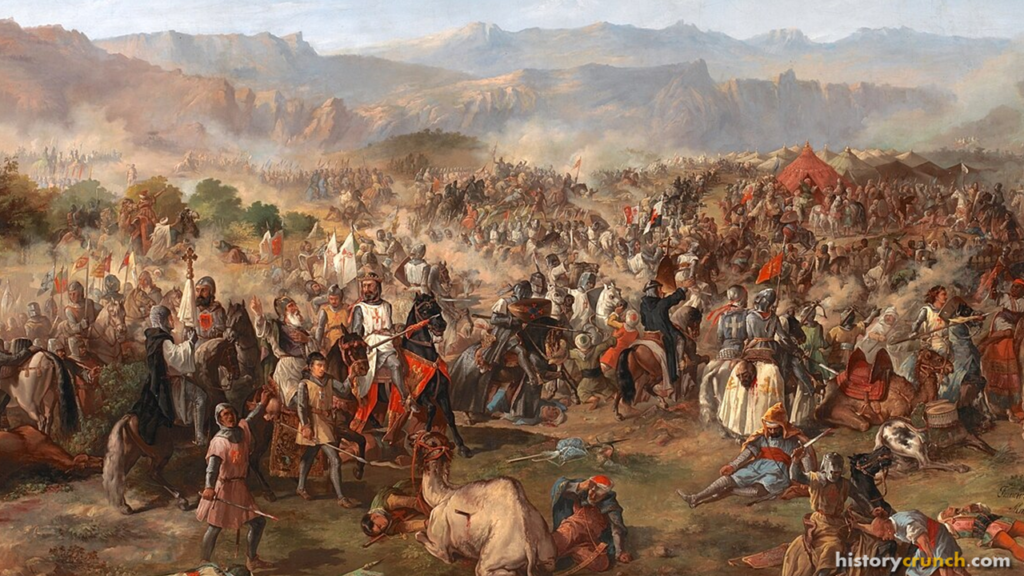
One of the most significant achievements of Isabella’s reign was the completion of the Reconquista. The Reconquista was a centuries-long series of wars fought between the Christian kingdoms of the north of the Iberian Peninsula and the Muslim rulers who controlled much of the region. By the time Isabella came to the throne, the Muslim presence on the Iberian Peninsula had been reduced to the small southern kingdom of Granada. Isabella was determined to bring the Reconquista to its conclusion.
Together with Ferdinand, Isabella launched a military campaign against Granada in 1482 CE. Isabella played an active and personal role in the campaign. For instance, she visited the army in the field on several occasions to inspire the troops and organized the supply and logistics of the military campaign with great skill. On January 2nd, 1492 CE, the city of Granada surrendered to Ferdinand and Isabella, bringing the Reconquista to an end after nearly eight centuries of conflict. As such, the fall of Granada was one of the most significant achievements of Isabella’s reign and one of the most important events of the late Middle Ages.
Isabella I of Castile – Spanish Inquisition
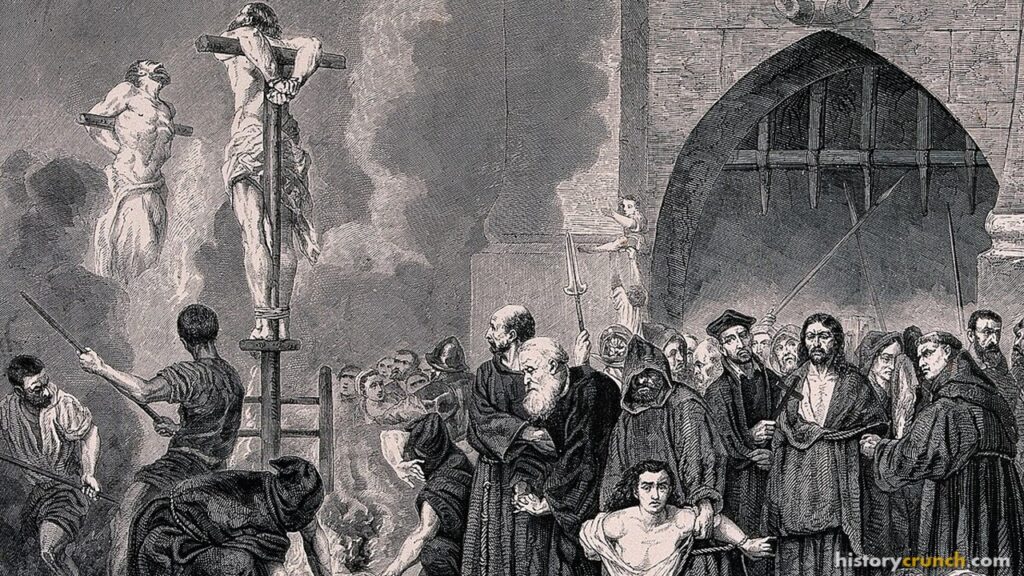
Isabella was deeply committed to the Catholic faith and to the idea of a religiously unified Spain. In 1478 CE, she and Ferdinand established the Spanish Inquisition with the approval of Pope Sixtus IV. The Spanish Inquisition was a religious institution designed to enforce Catholic orthodoxy across Spain. It was primarily directed against Jewish and Muslim converts to Christianity who were suspected of secretly continuing to practice their old faiths. The first Grand Inquisitor was Tomas de Torquemada, who became notorious for the harshness of his methods.
The Inquisition had a profound and lasting impact on Spain. In March of 1492 CE, Isabella and Ferdinand issued the Alhambra Decree, which ordered all Jewish people in Spain to either convert to Christianity or leave the country. This event is known as the Expulsion of the Jews and was one of the most significant forced migrations of the Middle Ages. Historians estimate that between 100,000 and 200,000 Jewish people left Spain as a result of the decree. As well, in 1502 CE, Muslims in Castile were ordered to either convert to Christianity or leave. As such, the religious policies of Isabella’s reign had a profound and lasting impact on the cultural and religious history of Spain.
Isabella I of Castile – Christopher Columbus
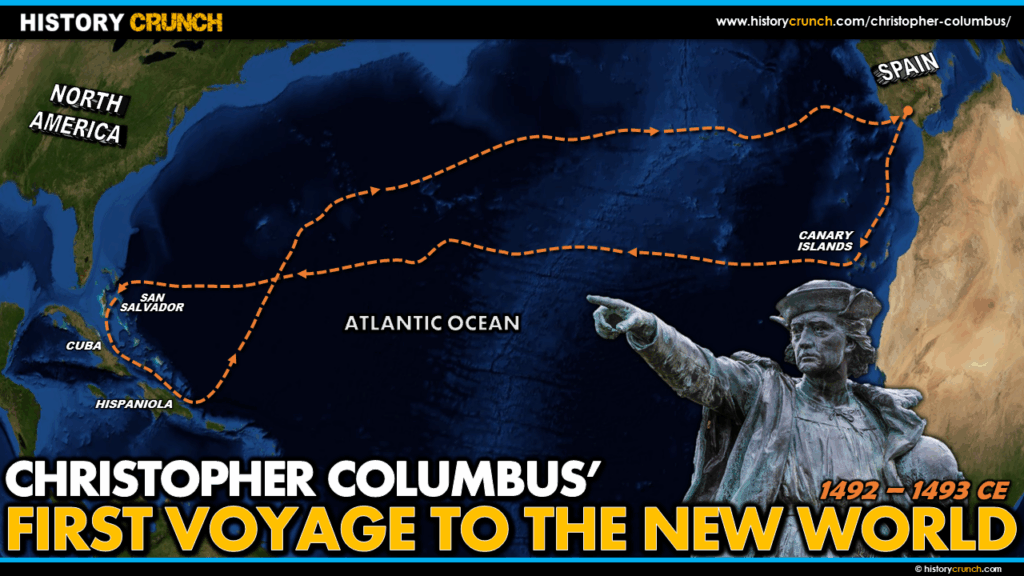
Also in 1492 CE, Isabella made one of the most consequential decisions of her reign. Christopher Columbus had been seeking support for his plan to find a westward sea route to Asia for several years and had been turned down by the Portuguese crown. He approached Isabella and Ferdinand with his proposal. It was Isabella who was most enthusiastic about the plan and who pushed for the decision to support Columbus. For instance, she reportedly offered to sell her own jewels to fund the voyage if necessary. Columbus set sail in August of 1492 CE and reached the Americas in October of the same year. As such, Isabella’s decision to fund Columbus was one of the most important decisions of the Middle Ages and helped launch the Age of Exploration that would transform the world in the centuries that followed. In fact, Spain played an important role in the overall Age of Exploration.
Isabella also showed an unusual concern for the welfare of the indigenous people Columbus encountered. For instance, when Columbus returned with native people as captives, Isabella ordered that they be returned to their home. She later established regulations to protect the rights of the native people of the Americas. As such, Isabella’s response to the discovery of the Americas was more complex than that of many rulers of her time.
Isabella I of Castile – Later Life and Death
The final years of Isabella’s reign were marked by personal tragedy. Her son and heir John died in 1497 CE at the age of nineteen. Her daughter Isabella, Queen of Portugal, died in childbirth in 1498 CE. Her grandson Miguel, who might have united Spain and Portugal under a single monarch, died in 1500 CE. As a result, her daughter Joanna, who suffered from serious mental illness, became heir to the throne of Castile. These losses weighed heavily on Isabella and her health began to decline in her later years.
Isabella I of Castile died on November 26th, 1504 CE in the castle of La Mota at Medina del Campo, Spain. She was fifty-three years old. Following her death, her daughter Joanna became Queen of Castile, though Ferdinand served as regent because of Joanna’s mental illness. Isabella was buried in Granada, the city whose conquest had been one of the greatest achievements of her reign.
Isabella I of Castile is remembered as one of the most significant rulers of the Middle Ages and one of the most important women in the history of the world. She ruled Castile in her own right at a time when female rulers were extremely rare, completed the Reconquista, reformed the government and church of her kingdom, expelled the Jews, established the Spanish Inquisition and funded the voyage that led to the European discovery of the Americas. Pope Alexander VI awarded her and Ferdinand the title of the Catholic Monarchs in 1496 CE. As such, Isabella of Castile was a defining figure of the late Middle Ages whose reign shaped the history of Spain and the wider world in lasting and profound ways.