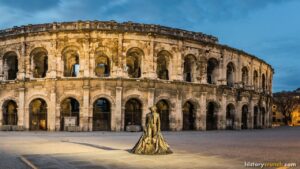
The gods of Ancient Rome were central to Roman religion and daily life. The Romans were a polytheistic people, meaning they believed in and worshiped many gods. Each god represented a different area of life or the natural world, such as war, love, the sea, or farming. Roman religion shaped how people made decisions, fought battles, planted crops, and governed their cities. Temples dedicated to the gods were found throughout Rome and across the entire empire, and religious ceremonies were a regular part of public and private life.
WHAT WAS ANCIENT ROME?
Ancient Rome was one of the most powerful civilizations in world history. It began as a small city-state on the Italian peninsula and grew over many centuries into a vast empire that stretched from Britain in the northwest to Egypt in the southeast. At its height, the Roman Empire controlled much of Europe, North Africa, and parts of the Middle East. Roman civilization is remembered for its contributions to law, government, architecture, language, and culture. Religion was at the heart of Roman society, and the gods of Rome were believed to be closely involved in the success or failure of the city, its armies, and its people.
GODS OF ANCIENT ROME – ROMAN RELIGION AND GREEK INFLUENCE
Roman religion had deep roots in the traditions of the early Italian peoples, including the Etruscans and the Latin tribes who settled the hills of central Italy. As Rome expanded and came into contact with Greek civilization from the third century BCE onward, Roman religion absorbed a great deal of Greek influence. Many Roman gods were identified with their Greek counterparts and took on similar characteristics and myths. For instance, Jupiter became identified with Zeus, Neptune with Poseidon, and Mars with Ares. While the Roman gods shared many stories and symbols with their Greek equivalents, they also had distinct Roman characteristics that reflected Roman values such as duty, order, and military strength.
Roman religion was not a matter of personal faith in the way that many modern religions are. Romans worshiped the gods because they believed that proper religious practice, which they called the pax deorum or “peace of the gods,” was essential to the wellbeing of the state. As long as Romans honored the gods correctly through sacrifices, festivals, and prayers, the gods would protect Rome and help it prosper. Neglecting the gods, on the other hand, could bring disaster.
GODS OF ANCIENT ROME – THE MAJOR GODS
Roman religion included a very large number of gods, but the most important were a group of twelve major deities sometimes called the Dii Consentes, a term meaning the twelve principal gods of Rome. The following were among the most important.
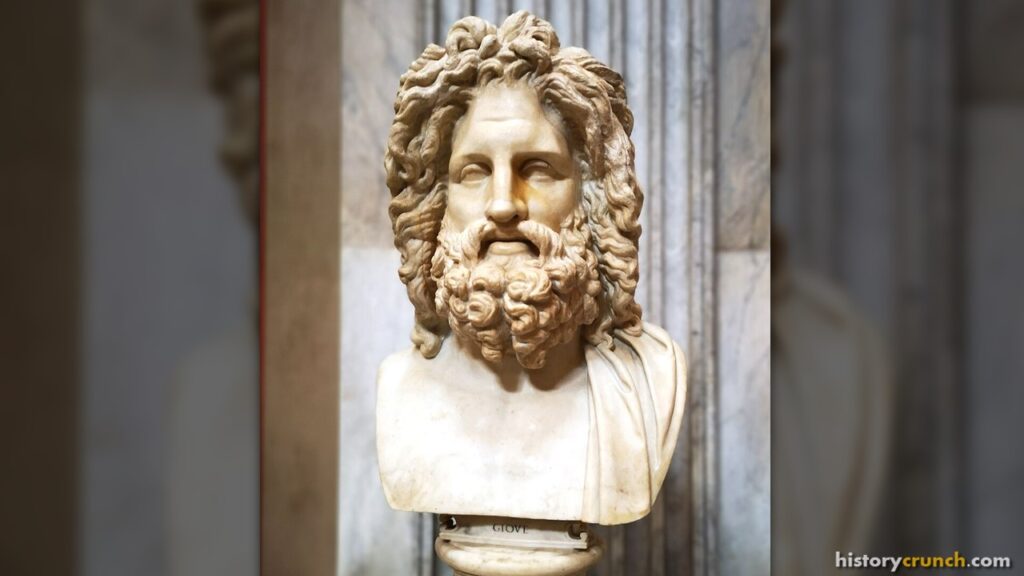
Jupiter was the king of the gods and the most powerful deity in the Roman religion. He was the god of the sky, thunder, lightning, and storms, and was also the god of law, order, and justice. Jupiter was considered the divine protector of Rome itself, and his temple on the Capitoline Hill was one of the most sacred sites in the entire city. His symbol was the thunderbolt, and he is often depicted holding one in paintings and sculptures. Jupiter’s Greek equivalent was Zeus.
Juno was the queen of the gods and the wife of Jupiter. She was the goddess of marriage, childbirth, and the protection of women. Juno was also considered a protector of Rome and was one of the three gods, alongside Jupiter and Minerva, who made up the most sacred group in Roman religion, known as the Capitoline Triad. Her Greek equivalent was Hera.
Neptune was the god of the sea, rivers, and earthquakes. As a maritime power that depended heavily on sea trade and naval warfare, Rome placed great importance on Neptune’s favor. His symbol was the trident, a three-pronged spear. His Greek equivalent was Poseidon.
Mars was the god of war and one of the most important gods in Roman religion. He was considered the divine father of Romulus and Remus, the legendary founders of Rome, which gave him a special connection to Roman identity. Mars was also the patron of Roman soldiers and the protector of agriculture. The month of March is named after him. His Greek equivalent was Ares.
Venus was the goddess of love, beauty, and fertility. She held special importance in Roman religion as the divine mother of Aeneas, the Trojan hero from whom the Romans claimed descent. Julius Caesar and the Julian family claimed Venus as their divine ancestor. Her Greek equivalent was Aphrodite.
Minerva was the goddess of wisdom, crafts, and later war and strategy. She was one of the three gods of the Capitoline Triad alongside Jupiter and Juno. Craftspeople, teachers, doctors, and musicians all honored Minerva. Her Greek equivalent was Athena.
Apollo was one of the few gods whose name was the same in both Greek and Roman religion. He was the god of the sun, music, poetry, healing, and prophecy. The famous oracle at Delphi in Greece was dedicated to Apollo, and the Romans also consulted the Sibylline Books, a collection of prophecies associated with him, in times of crisis. Apollo became one of Emperor Augustus’s favorite gods, and Augustus built a magnificent temple to him on the Palatine Hill.
Diana was the goddess of the hunt, the moon, and nature. She was the twin sister of Apollo and the protector of wild animals. Diana was also associated with childbirth and was considered a protector of women. Her Greek equivalent was Artemis.
Mercury was the messenger of the gods and the patron of merchants, travelers, and thieves. He was known for his speed and wore winged sandals and a winged helmet. Roman traders prayed to Mercury for success in business and safe journeys. His Greek equivalent was Hermes.
Bacchus was the god of wine, celebration, and theater. His festivals were occasions for music, drama, and revelry. His Greek equivalent was Dionysus.
Vulcan was the god of fire, metalworking, and craftsmanship. He was believed to forge the weapons of the gods in a great underground workshop, and was considered the patron of blacksmiths and metalworkers. His Greek equivalent was Hephaestus.
Ceres was the goddess of grain, agriculture, and the harvest. She was one of the most widely worshiped goddesses among ordinary Romans, since farming and the food supply were essential to daily life. The word cereal comes from her name. Her Greek equivalent was Demeter.
GODS OF ANCIENT ROME – OTHER IMPORTANT DEITIES
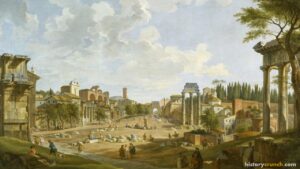
Beyond the twelve major gods, Roman religion included many other important deities. Pluto was the god of the underworld and the dead, known as Hades in Greek religion. Janus was a distinctly Roman god with no Greek equivalent. He was the god of beginnings, doorways, and transitions, and was depicted with two faces looking in opposite directions, one toward the past and one toward the future. The month of January is named after him. Vesta was the goddess of the hearth and home and was one of the most important goddesses in Roman religion. Her sacred fire was kept burning at all times in her temple in the Roman Forum by a group of priestesses known as the Vestal Virgins. Saturn was the god of agriculture and time, whose festival, the Saturnalia, was one of the most popular celebrations in the Roman calendar.
GODS OF ANCIENT ROME – WORSHIP AND TEMPLES
Romans worshiped their gods in a variety of ways. Public worship took place at temples, which were built throughout Rome and across the empire. Priests performed animal sacrifices at the altar outside the temple, offering the animal’s blood and internal organs to the god. Worshipers could enter the temple to make personal offerings of food, wine, incense, or small figurines. Most Romans also maintained small household shrines called lararia, where they made daily offerings to the lares, the protective spirits of the home, and the penates, gods of the household storeroom. These household offerings were a regular part of daily life for most Roman families.
The Roman religious calendar included many festivals throughout the year, each dedicated to one or more gods. The Saturnalia in December, dedicated to Saturn, involved the suspension of normal social rules, with gifts exchanged and enslaved people temporarily treated as equals. The Lupercalia in February was an ancient festival associated with fertility and the founding of Rome. The festivals of Mars in March marked the beginning of the military campaigning season.
SIGNIFICANCE OF THE GODS OF ANCIENT ROME
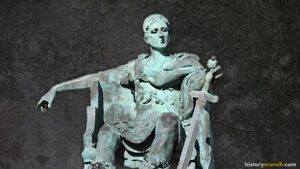
The gods of Ancient Rome were not simply part of a private system of belief. They were woven into every aspect of public and political life. The Senate consulted religious officials before making major decisions. Generals offered sacrifices before battles. The emperor himself was considered a religious figure, and some emperors were declared gods after their death. When Rome eventually adopted Christianity as its official religion under Emperor Constantine in the fourth century CE, centuries of deeply rooted polytheistic tradition gave way to a new faith, though many Roman festivals, symbols, and ideas continued to influence Western culture long afterward.
The legacy of the Roman gods is still visible in the modern world. The names of the planets Mercury, Venus, Mars, Jupiter, Saturn, Neptune, and Uranus all come from Roman gods. The days of the week in many European languages reflect the names of Roman and Germanic deities. And the stories of gods such as Jupiter, Venus, and Mars continue to appear in literature, art, and popular culture to this day.