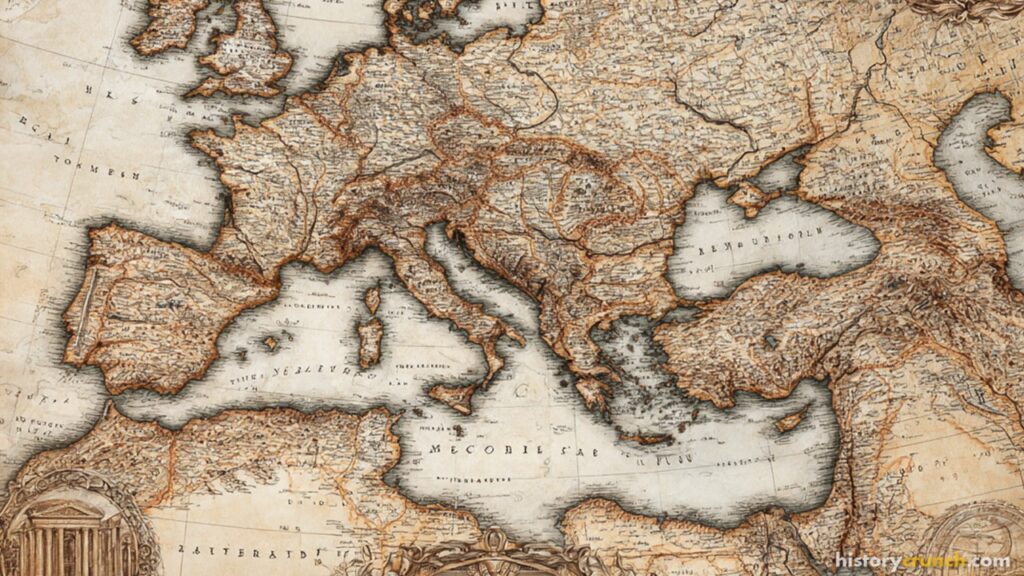
Ancient Rome began as a small city-state on the banks of the Tiber River in central Italy and grew over many centuries into one of the largest and most powerful empires the world has ever seen. At the height of its power, the Roman Empire controlled territory stretching from Britain in the north to Egypt in the south, and from Spain in the west to the borders of modern-day Iraq in the east. Rome shaped the development of law, government, language, architecture, religion, and culture across a vast portion of the ancient world, and its legacy continues to influence the modern world in countless ways. The history of Ancient Rome is traditionally divided into three main periods: the Founding and Kingdom, the Roman Republic, and the Roman Empire.
ANCIENT ROME – FOUNDING AND THE KINGDOM
According to Roman tradition, the city of Rome was founded on April 21st, 753 BCE, by the twin brothers Romulus and Remus. The myth held that the twins were sons of the war god Mars and were raised by a she-wolf after being abandoned as infants. When the brothers disagreed about where to build their new city, Romulus killed Remus and founded Rome on the Palatine Hill, naming the city after himself. He became its first king.
Whether or not the details of this founding legend are literally true, the city of Rome did develop in the area between the seven hills of the Tiber Valley during the 8th and 7th centuries BCE. In its earliest period, Rome was a small kingdom ruled by a series of seven kings. The first kings were Latin and Sabine in origin, but later kings came from the Etruscan civilization to the north, and Etruscan influence played an important role in shaping early Roman culture, art, and architecture.
The last king of Rome, Tarquinius Superbus, was overthrown in 509 BCE following a popular revolt. The Romans replaced the monarchy with a new system of government that would become one of the most influential in history.
ANCIENT ROME – THE ROMAN REPUBLIC
The Roman Republic lasted from 509 BCE to 27 BCE and was one of the most sophisticated systems of government in the ancient world. Rather than being ruled by a single king, Rome was governed by two elected officials called consuls who served one-year terms and shared executive power. The most powerful body in the Republic was the Senate, an assembly of Rome’s most important and experienced political figures who advised the consuls and passed laws. The Republic also had various assemblies in which Roman citizens could vote, though the extent of democratic participation was limited compared to modern democracies.
The Roman Republic developed a complex body of law that formed the foundation of legal systems across much of the world today. The Twelve Tables, written around 450 BCE, were one of the earliest written legal codes in Roman history and established the principle that laws should be written down and publicly available rather than known only to a privileged few. Roman law distinguished between citizens and non-citizens and between different classes of Roman society, including the patricians, who were wealthy aristocratic families, and the plebeians, who were the common people.
The Republic expanded significantly throughout its history. Roman armies conquered the Italian Peninsula, then extended Roman power across the Mediterranean through the Punic Wars against the powerful city-state of Carthage in North Africa. General Scipio Africanus defeated the great Carthaginian general Hannibal Barca at the Battle of Zama in 202 BCE, making Rome the dominant power in the western Mediterranean. Further conquests brought Greece, Spain, much of North Africa, and large parts of the Middle East under Roman control.
The Republic faced serious internal tensions as it grew. The enormous wealth brought in by conquest was not distributed equally, and conflicts between the rich and poor became increasingly severe. A series of military commanders, including Marius, Sulla, Julius Caesar, and Pompey, used their armies to gain political power and plunged Rome into a series of civil wars. Julius Caesar’s assassination on March 15th, 44 BCE, triggered another round of civil conflict that ultimately ended when Caesar’s adopted son Octavian defeated his last rivals and became the sole ruler of Rome.
ANCIENT ROME – THE ROMAN EMPIRE
In 27 BCE, the Roman Senate granted Octavian the title of Augustus, meaning the revered one, and he became the first emperor of Rome. The Roman Empire had begun. Augustus ruled until 14 CE and transformed Rome from a war-torn republic into a stable and prosperous empire. His reign began a period of relative peace and prosperity known as the Pax Romana, or Roman Peace, which lasted approximately 200 years and was one of the most stable periods in the history of the ancient Mediterranean world.
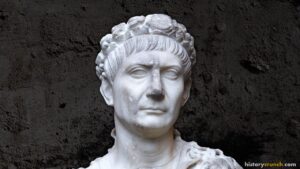
Under the empire, Rome reached its greatest territorial extent. Emperor Trajan, who ruled from 98 CE to 117 CE, expanded the empire to its largest size, conquering Dacia, which is modern-day Romania, and territory in the Middle East. The empire was divided into provinces, each governed by a Roman official, and connected by an impressive network of roads that stretched for approximately 250,000 miles or 400,000 kilometers, allowing soldiers, traders, and officials to move across the empire with remarkable speed.
The emperors who followed Augustus varied widely in their ability and character. Augustus, Trajan, Hadrian, and Marcus Aurelius are generally regarded as among the most capable. Others, such as Caligula and Nero, were remembered for cruelty and erratic behavior. The Praetorian Guard, the emperor’s personal bodyguard unit, sometimes played a powerful role in choosing and deposing emperors, contributing to political instability in some periods.
ANCIENT ROME – GOVERNMENT AND LAW
One of Ancient Rome’s most enduring contributions to the world was its system of government and law. The Roman Republic’s concept of a government with shared power, checks and balances, and elected officials directly influenced the design of many modern democratic systems, including the government of the United States. In fact, the American Senate takes its name and some of its structure directly from the Roman Senate.
Roman law was another enormously important legacy. The Romans developed a sophisticated legal system with courts, judges, advocates, and defined legal procedures. They distinguished between different types of law, including the law that applied to Roman citizens, the law that applied to foreigners, and the law governing contracts, property, and family relations. Many of the legal concepts they developed, including the presumption of innocence, the right to face one’s accuser, and the distinction between civil and criminal law, remain fundamental principles of modern legal systems across the world.
ANCIENT ROME – MILITARY
The Roman military was one of the most effective and influential fighting forces in the history of the ancient world. The basic unit of the Roman army was the legion, a highly organized force of approximately 5,000 infantry soldiers divided into smaller units called cohorts and centuries. Roman legions were trained to an exceptionally high standard, were equipped with standardized weapons and armor, and could build fortified camps at the end of each day’s march. In fact, the professionalism and discipline of the Roman legion was one of the most important factors in Rome’s remarkable record of military success.
The Roman army also excelled at siege warfare, developing sophisticated techniques and equipment for attacking fortified cities and positions. Roman engineering skills, particularly the construction of siege towers, battering rams, and artillery engines, gave Roman forces a significant advantage over many of their opponents. The navy also played an important role, particularly during the Punic Wars, when Rome developed its fleet to challenge Carthaginian naval power in the Mediterranean.
ANCIENT ROME – DAILY LIFE
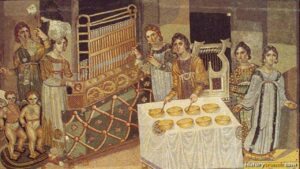
Daily life in Ancient Rome varied enormously depending on a person’s social class, wealth, and whether they lived in the city of Rome itself or in the provinces. The city of Rome at the height of the empire was home to approximately one million people, making it one of the largest cities in the ancient world. The city was filled with impressive public buildings, temples, forums, bathhouses, markets, and entertainment venues.
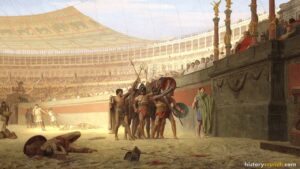
The most important entertainment venue in Rome was the Circus Maximus, the enormous chariot racing stadium that could hold up to 250,000 spectators and was the most popular public gathering place in the entire city. Chariot racing was the most widely attended form of public entertainment in Rome, with passionate supporters backing teams identified by colors. The Colosseum, completed in 80 CE, hosted gladiatorial contests and animal hunts that drew enormous crowds. Public bathhouses served as important social gathering places where Romans of different classes could bathe, exercise, and socialize together.
Roman society was deeply hierarchical. At the top were the senators and wealthy equestrians. Below them was a large middle class of merchants, craftspeople, and skilled workers. At the bottom were the poor and the enormous population of enslaved people, who made up an estimated 25 to 40 percent of the city of Rome’s population. Enslaved people performed work across every area of Roman life, from agricultural labor to skilled crafts to domestic service. Roman women had more legal rights than women in many other ancient societies but were still subject to male authority within the family and had limited formal political participation.
ANCIENT ROME – RELIGION
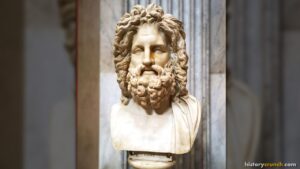
Religion played a central role in Roman life throughout the civilization’s history. The traditional Roman religion was polytheistic, meaning the Romans worshipped many gods and goddesses. The most important Roman gods included Jupiter, the king of the gods and god of the sky; Mars, the god of war; Venus, the goddess of love; Mercury, the messenger god; and many others. Roman religion was closely tied to the state, with the emperor himself often being worshipped as divine or semi-divine.
The most significant religious development in Roman history was the spread of Christianity. Christianity began in the Roman province of Judea in the 1st century CE and spread gradually across the empire despite periods of severe persecution. Emperor Constantine changed the course of history in 313 CE by issuing the Edict of Milan, which granted Christians and others freedom of religious worship. Christianity eventually became the official religion of the Roman Empire under Emperor Theodosius I in 380 CE, transforming both the empire and the subsequent history of the western world.
ANCIENT ROME – ARCHITECTURE AND ENGINEERING
The Romans were among the greatest builders and engineers in the history of the ancient world. Their architectural achievements included massive and sophisticated structures that demonstrated both technical skill and aesthetic ambition. The Colosseum, completed in 80 CE, was a vast amphitheater capable of holding more than 50,000 spectators. The Pantheon, a temple dedicated to the gods of Rome, featured a concrete dome approximately 142 feet or 43 meters in diameter that remained the largest dome in the world for more than 1,300 years.
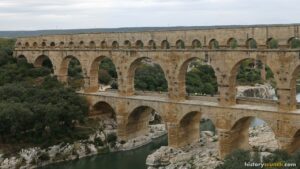
Roman engineers also constructed an impressive network of roads, bridges, and aqueducts across the empire. Roman roads were built to a high standard, with layers of gravel and stone creating durable surfaces that remained usable for centuries. The aqueducts, which carried fresh water from mountain sources into cities across the empire, were remarkable feats of engineering that improved public health and enabled the urban population to grow to a scale that would otherwise have been impossible.
ANCIENT ROME – PEOPLE OF ANCIENT ROME
Ancient Rome produced many significant rulers, generals, and thinkers who shaped the course of history. Among the emperors, Augustus stands out as the founder of the imperial system who stabilized Rome after decades of civil war. Marcus Aurelius was both a capable administrator and a philosopher whose personal writings, known as the Meditations, remain widely read today. Constantine transformed the empire by embracing Christianity and founding a new capital at Constantinople.
Among the military and political figures, Julius Caesar was one of the greatest commanders of the ancient world, conquering Gaul and extending Roman power into Britain before his assassination in 44 BCE. Hannibal Barca of Carthage was Rome’s greatest enemy, crossing the Alps with war elephants and inflicting some of the worst defeats in Roman military history. Spartacus led the most famous slave revolt in Roman history from 73 to 71 BCE, at one point commanding an army of approximately 70,000 freed slaves before being defeated.
ANCIENT ROME – COLLAPSE AND LEGACY
The Roman Empire did not fall suddenly but declined gradually over several centuries as a result of a combination of factors. Internal political instability, including frequent civil wars and the rapid turnover of emperors, weakened the central government. Economic difficulties, including inflation, heavy taxation, and declining trade, created serious financial pressures. The division of the empire into western and eastern halves by Emperor Constantine made the western half more vulnerable to the invasions of Germanic tribes, known as barbarians, that increasingly threatened Rome’s borders.
In 410 CE, the city of Rome was sacked by the Visigoth leader Alaric, the first time the city had fallen to a foreign enemy in 800 years. The last Western Roman emperor, Romulus Augustulus, was deposed by the Germanic leader Odoacer in 476 CE. The Eastern Roman Empire, based in Constantinople, continued for nearly another thousand years as the Byzantine Empire until the fall of Constantinople to the Ottoman Turks in 1453 CE.
The legacy of Ancient Rome in the history of the world is enormous. Its language, Latin, is the ancestor of the modern Romance languages including French, Spanish, Italian, Portuguese, and Romanian, and has contributed thousands of words to the English language. Its legal system influenced the development of law across Europe and the wider world. Its architectural innovations, particularly the arch, the dome, and concrete construction, shaped building traditions for more than a thousand years. Its system of government influenced the design of modern democracies. Its adoption of Christianity shaped the religious history of Western civilization. As such, Ancient Rome stands as one of the most significant and consequential civilizations in the entire history of the world.