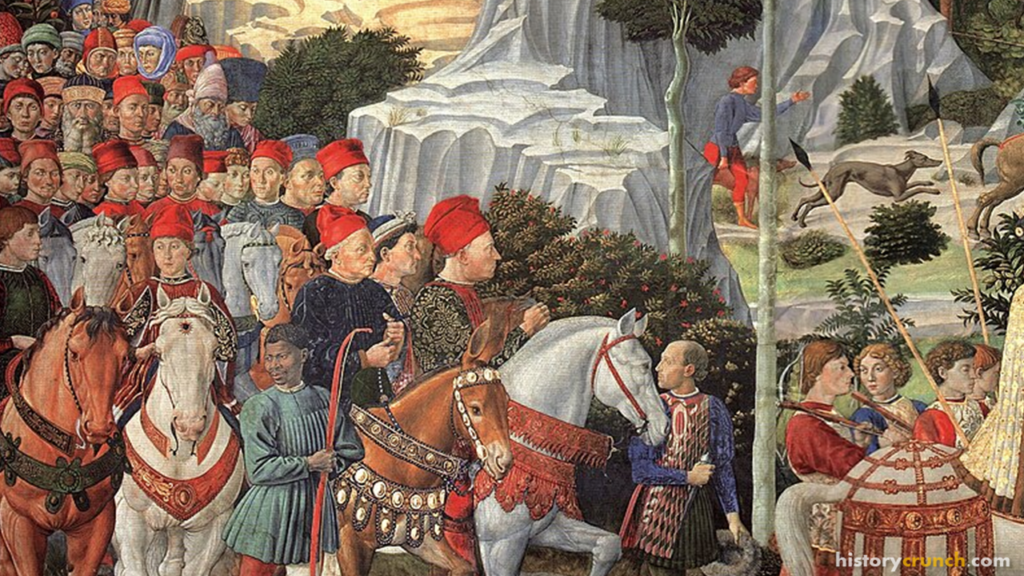
The Medici family in the Renaissance was a powerful banking family in the city-state of Florence. The Medici family held key positions in society that gave them enormous wealth and influence during the Renaissance. This helped fuel the cultural and intellectual revival of the era, sponsoring figures like Michelangelo and Leonardo da Vinci.
WHAT WAS THE RENAISSANCE?
The Renaissance is an important event in European history that stretched from the 14th century to the 17th century. It was preceded by the Middle Ages in Europe and eventually led to other major events such as the Age of Enlightenment. In historical terms the Renaissance is important because it led to a major shift in European thought and worldview. The Renaissance is considered to have begun in the city-states of the Italian peninsula, such as: Genoa, Florence, Milan, Naples, Rome and Venice.
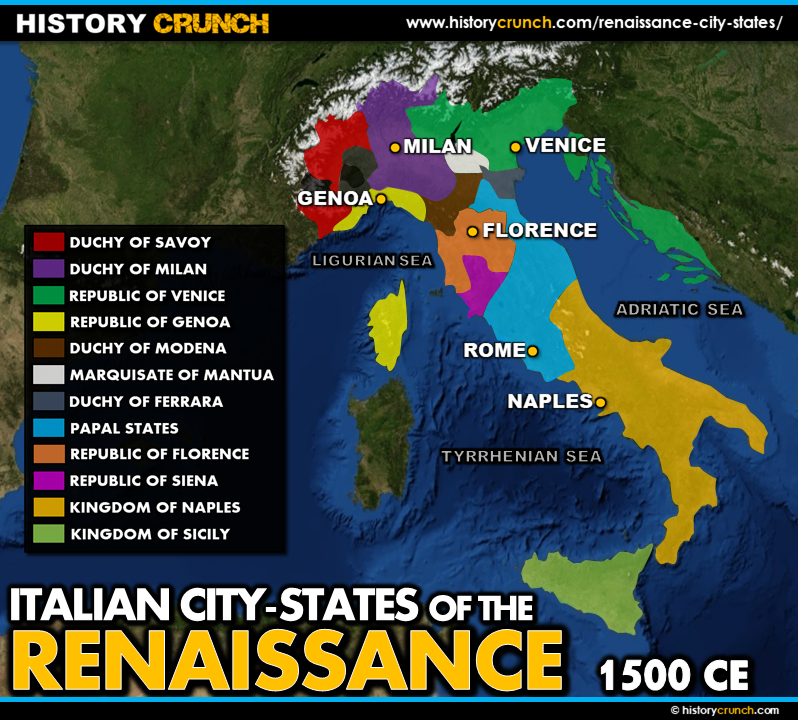
In each of these city-states, the significant changes of the overall Renaissance occurred and unfolded. For example, the most significant changes that emerged as a result of the Renaissance can be seen in European architecture, art, literature, mathematics, music, philosophy, politics, religion and science. Intellectual thought in these fields flourished during the timeframe of the Renaissance and led to many people questioning long held beliefs about each. This created an environment of discovery and curiosity in which new ideas were constantly being introduced and tested. As well, European life before the start of the Renaissance was dominated by feudalism and the Manor System, but these both played small roles for citizens in the powerful Italian city-states. As such, the major Italian city-states listed above were well positioned to undergo the societal shift brought about by the new Renaissance ideas.
MEDICI FAMILY IN THE RENAISSANCE – MEDICI BANK
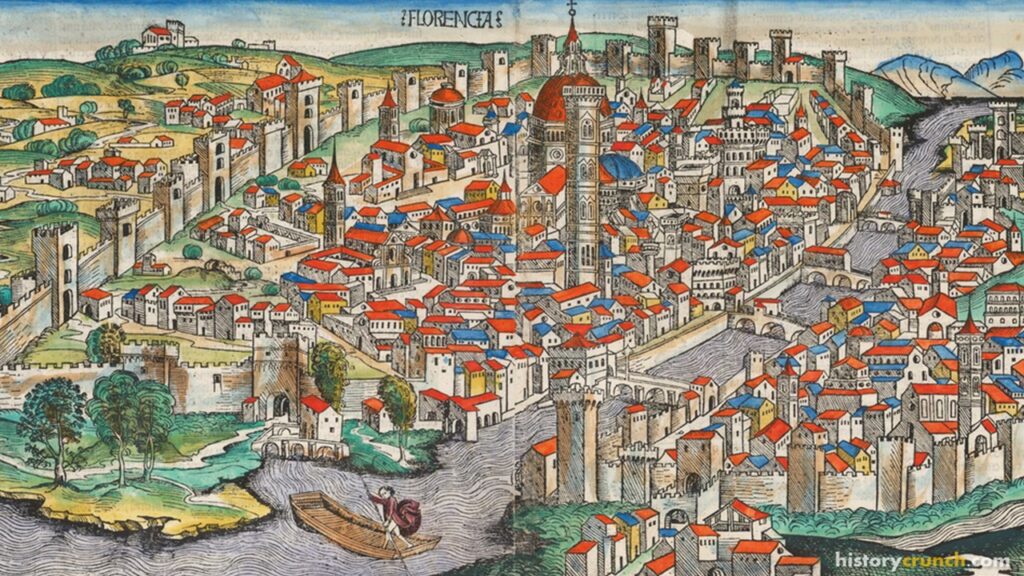
Because the Italian city-states lacked the structure of the feudal system, some people were able to shift upwards in social statues. As such, merchants who prospered in the Italian city-states were able to gain more status and authority. For example, wealthy families became very important in the different city-states as they established their authority over the political and economic systems of the time. One of the most influential and significant of these Renaissance families was the Medici, which became especially important in the Renaissance city-state of Florence.
The Medici were a wealthy family from the Tuscany region and established the famous Medici Bank. The bank, which was first created in 1397, became the largest in Europe during the timeframe of the Renaissance and allowed them to wield political and economic control throughout Europe. For example, the Medici family gained political control over Florence in the 1430s, which ultimately led to the end of the Florence Republic and led to their reign as monarchs over the city-state. With their massive wealth, the Medici became patrons of famous Renaissance artists, including: Leonardo da Vinci and Michelangelo.

MEDICI FAMILY IN THE RENAISSANCE – PATRONS OF THE ARTS
Cosimo de Medici was the first Medici family member to control the Florence city-state. While Florence was still considered to be a republic at the start of the Medici reign, the immense wealth and power of Medici meant that Cosimo de Medici could effectively rule over the city-state from behind the scenes. Famously, Cosimo de Medici supported early Renaissance art and humanism in Florence which helped establish the city-state as the center of Renaissance Europe. For instance, he had Florence construct many buildings to support Renaissance ideals such as libraries, churches and academies. As well, he oversaw the negotiations of the Treaty of Lodi from 1454. This treaty ended the war between Florence and other city-states such as: Venice, Milan, Rome and Naples.
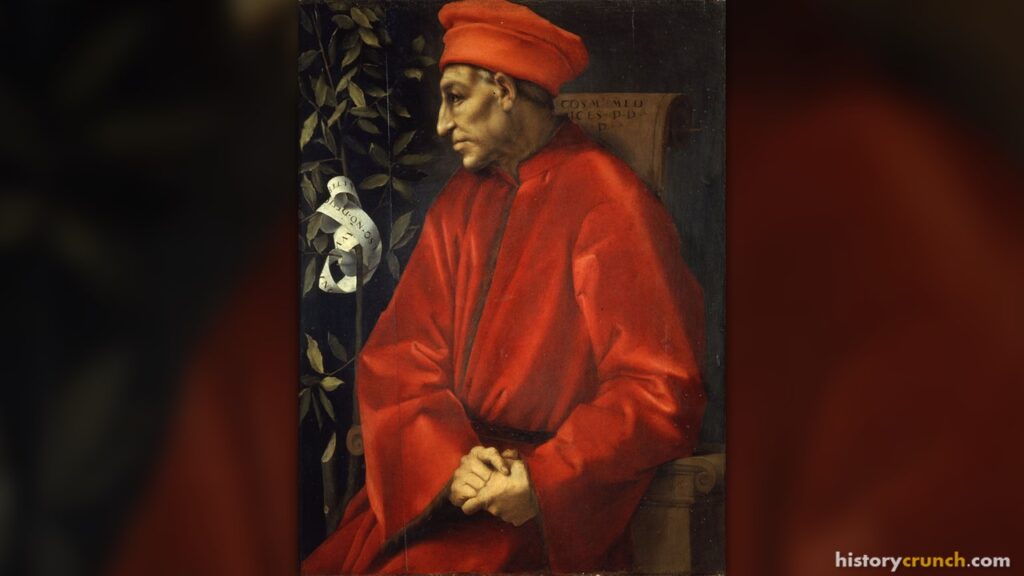
Cosimo de Medici was eventually succeeded by his son Piero di Cosimo de Medici and later his grandson Lorenzo de Medici. Lorenzo de Medici continued the patronage of his grandfather and sponsored several famous Renaissance artists and sculptors. After Lorenzo’s death in 1492, his son Piero took over control of Florence, however it was to be short-lived. In 1494, the French (under the leadership of King Charles VIII) invaded Italy. This caused Piero to be forced into exile and the Medici rule over Florence ended. Furthermore, the Medici Bank closed in 1494. The Florence Republic was restored.
The Medici remained in exile until 1512 when the descendants of Cosimo de Medici returned and ruled until 1537. With that said, there was a substantial anti-Medici movement in Florence throughout this time period which made ruling difficult.
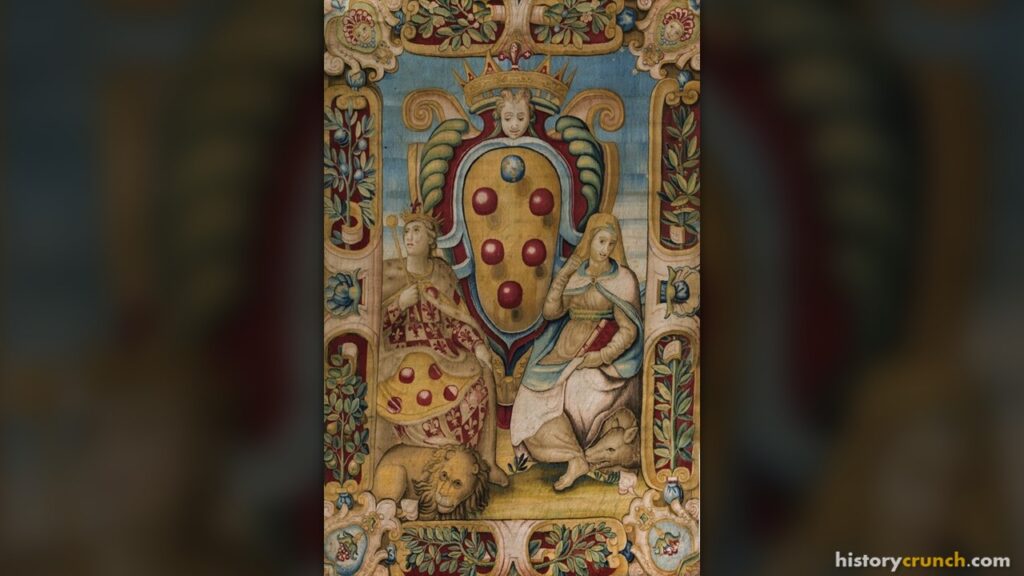
MEDICI FAMILY IN THE RENAISSANCE – SIGNIFICANCE
In all, the Medici family was one of the most influential and significant forces in the entire Renaissance. They are best remembered today for their control over Florence and their patronage of major art projects and artists. Since artists generally only created their works after being commissioned to do so, the patronage and wealth of the Medici created an environment wherein great Renaissance artists could practice and prefect new techniques. For instance, Giovanni di Bicci de’ Medici is considered to be the first patron of the arts in the Medici family. He famously aided Renaissance artist Masaccio, who was a Florentine artist and is considered to be one of the first Renaissance artists who used perspective to present a more life-like nature of human beings and the world. As well, Giovanni di Bicci de’ Medici also commissioned Filippo Brunelleschi for the reconstruction of the Basilica of San Lorenzo, Florence in 1419. As stated above, Leonardo da Vinci and Michelangelo were also patrons of the Medici – specifically for Lorenzo.
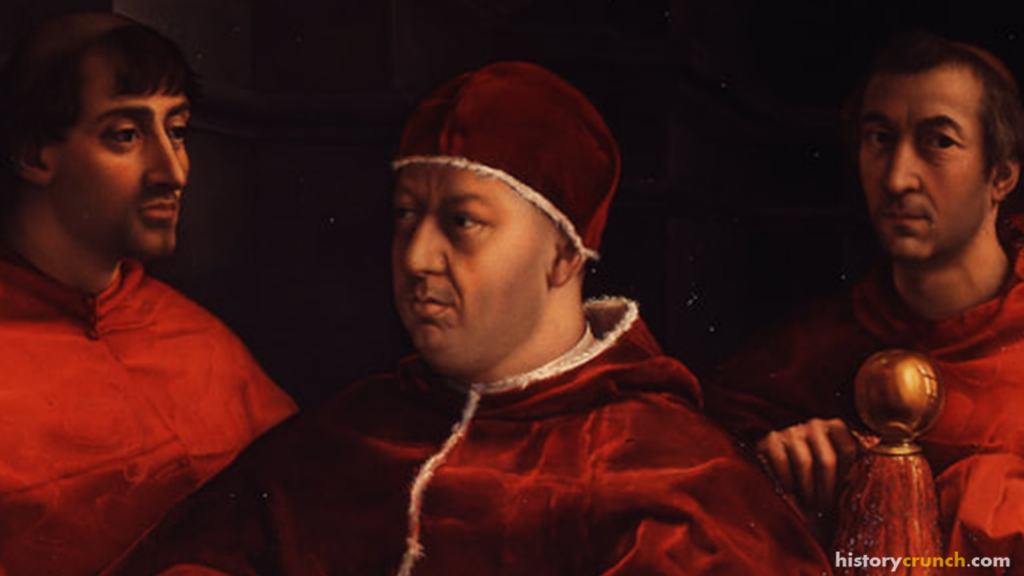
While they were influential for their patronage of the arts, the Medici were also politically and religiously powerful and left a lasting legacy on Europe. For example, several members of the Medici family rose to prominence in Christianity. For instance, Pope Leo X, who was Pope from March of 1513 until his death in 1521 was born Giovanni di Lorenzo de Medici and was the son of Lorenzo de Medici. He famously was Pope of the Catholic Church during the timeframe of the Protestant Reformation. Furthermore, Pope Clement VII, who was born Giulio di Giuliano de Medici, served as Pope from November 1523 until his death on September 25th, 1534. He oversaw the church during a turbulent time, as Christianity was dividing following Martin Luther’s protestant movement.
Finally, through marriages and alliances, many different members of the Medici family joined the ranks of different royal families throughout Europe, including: France and Spain. The influence of the Medici family spread and strengthen in European nobility throughout the 17th and 18th centuries.