The Scientific Revolution was one of the most important events in the history of the western world and played a central role in causing the Age of Enlightenment. Taking place during the 16th and 17th centuries, the Scientific Revolution transformed the way people understood the natural world by replacing traditional beliefs with ideas based on observation, experimentation, and reason. The new ways of thinking that emerged from the Scientific Revolution directly inspired the thinkers of the Age of Enlightenment, who applied the same spirit of inquiry to questions about government, society, and human rights.
What Was the Age of Enlightenment?
The Scientific Revolution took place in the centuries that directly preceded the Age of Enlightenment, and is considered by historians to be one of its most important causes. The Age of Enlightenment, also known as the Age of Reason, was an intellectual movement that took place during the 18th century in which famous thinkers and philosophers challenged the basic foundations of society, including the role of government, sources of authority, and ideas centered on liberty and human rights. Some of the most prominent Enlightenment thinkers included John Locke, Jean-Jacques Rousseau, Baron de Montesquieu, and Voltaire. The Enlightenment ultimately transformed the way people thought about government, religion, science, and human rights, and had a profound impact on major historical events such as the French Revolution and the American Revolution. The Scientific Revolution set the stage for all of this by showing that long-held beliefs about the world could be challenged and overturned through logic and evidence, giving Enlightenment thinkers the tools and confidence to question the political and social structures of their own time.

Scientific Revolution – Background and Causes
Before the Scientific Revolution, most people in Europe understood the natural world through the teachings of the Catholic Church and the writings of ancient Greek thinkers such as Aristotle. These traditional explanations had been accepted for centuries and were rarely questioned. The Church held enormous authority over intellectual life, and challenging its teachings on nature or the universe could be considered heresy. However, beginning in the 14th century, the Renaissance began to shift how educated Europeans thought about knowledge and discovery. Renaissance Humanism encouraged scholars to return to original sources, think critically, and base their conclusions on evidence rather than tradition. This created an environment in which curiosity and questioning were valued, laying the groundwork for the dramatic scientific advances that would follow in the 16th and 17th centuries.

Scientific Revolution – Nicolaus Copernicus and the Heliocentric Model
One of the first and most significant developments of the Scientific Revolution came from the Polish astronomer Nicolaus Copernicus, who lived from 1473 to 1543. At the time, the accepted view of the universe was the geocentric model, which placed the Earth at the center of the universe with the Sun and all other planets revolving around it. This view had the support of the Catholic Church and was based on the ancient teachings of the Greek astronomer Ptolemy. Copernicus challenged this directly when he proposed the heliocentric model, which placed the Sun at the center of the solar system with the Earth and other planets revolving around it. He published his findings in a major work in 1543, the same year he died. The heliocentric model was a revolutionary idea that directly contradicted Church teaching and showed that careful observation and mathematical reasoning could overturn beliefs that had been accepted for over a thousand years. Copernicus is widely regarded as the figure who set the Scientific Revolution in motion.

Scientific Revolution – Galileo Galilei
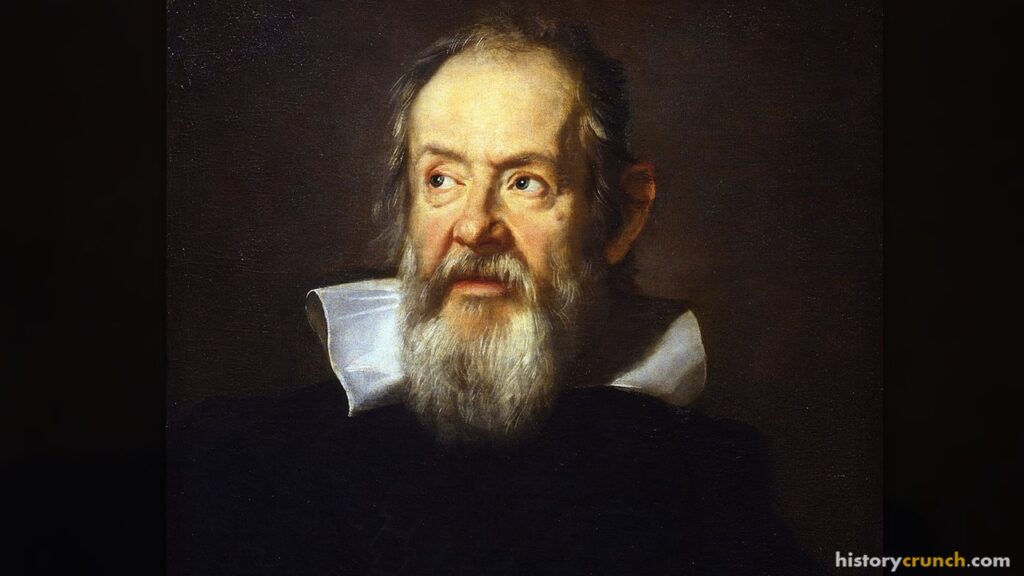
The Italian scientist and astronomer Galileo Galilei, who lived from 1564 to 1642, was one of the most important figures of the Scientific Revolution. Galileo used an improved telescope to make detailed observations of the night sky and found evidence that strongly supported the heliocentric model of Copernicus. He observed that the planet Jupiter had its own moons orbiting around it, which proved that not everything in the universe revolved around the Earth. His findings brought him into direct conflict with the Catholic Church, which condemned his views as heresy and placed him under house arrest for the final years of his life. Despite this, Galileo’s work had an enormous impact on the development of modern science. He is often credited as one of the founders of the scientific method, which involves forming a hypothesis, testing it through observation and experiment, and drawing conclusions based on evidence. His willingness to challenge authority in favor of evidence directly inspired the spirit of the Enlightenment that followed.
Scientific Revolution – Isaac Newton
Perhaps the most influential figure of the entire Scientific Revolution was the English scientist Isaac Newton, who lived from 1643 to 1727. Newton built on the work of Copernicus, Galileo, and others to develop a comprehensive understanding of the laws that governed the physical world. His most famous achievement was the development of the law of universal gravitation, which explained that all objects in the universe attract one another with a force that could be described mathematically. Newton published his findings in a landmark work in 1687 known as the Principia Mathematica, which laid out the mathematical laws of motion and gravity and showed that the universe operated according to predictable, knowable rules. Newton’s work had a profound effect on the thinkers of the Age of Enlightenment. If the physical world operated according to rational laws that could be discovered through reason and observation, then perhaps human society and government could be understood and improved in the same way. This idea became one of the central driving forces of the Enlightenment.

Scientific Revolution – Impact on the Age of Enlightenment
The Scientific Revolution had a direct and powerful impact on the development of the Age of Enlightenment. The scientists of the Scientific Revolution had shown that traditional beliefs, even those backed by the authority of the Church, could be overturned through careful observation and logical reasoning. This gave Enlightenment thinkers both the inspiration and the permission to apply the same critical thinking to questions about government, religion, and society. Just as Copernicus and Newton had used reason to uncover the laws of nature, thinkers like John Locke and Jean-Jacques Rousseau used reason to argue for natural rights, limited government, and the idea that ordinary people had the right to challenge unjust authority. The scientific method itself became a model for how knowledge should be pursued, based on evidence and reason rather than tradition and faith. In this way, the Scientific Revolution was the essential foundation upon which the entire Age of Enlightenment was built.
Significance of the Scientific Revolution
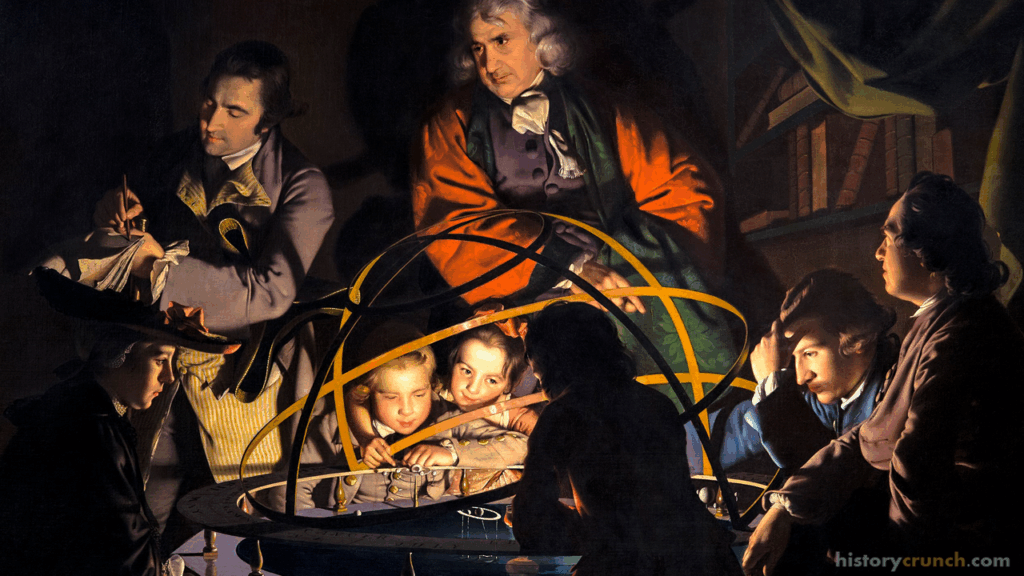
The Scientific Revolution was one of the most significant turning points in the history of the western world. It transformed humanity’s understanding of the natural world, established the foundations of modern science, and directly contributed to the Age of Enlightenment and the democratic revolutions that followed. The discoveries of Copernicus, Galileo, Newton, and others showed that the universe operated according to rational laws that could be understood through human reason and inquiry. This shift in thinking had consequences that extended far beyond science. It challenged the authority of the Church, encouraged people to question traditional beliefs, and laid the groundwork for a new way of understanding not only nature but also society, government, and human rights. The ideas that emerged from the Scientific Revolution continue to shape the modern world in profound ways.