Economics in the Middle Ages was dominated by agriculture, land ownership, and the obligations of the feudal system. The vast majority of people in medieval Europe were peasants and serfs who farmed the land and produced the food and goods on which the entire society depended. For much of the period, economic life was local and largely self-sufficient, with most communities producing what they needed from the resources immediately available to them. However, as the Middle Ages progressed, important developments including agricultural innovations, the growth of towns, the expansion of trade, and the rise of guilds gradually transformed the medieval economy and helped lay the foundations of the more complex commercial society that would emerge during the Renaissance.
WHAT WERE THE MIDDLE AGES?
The Middle Ages was a period of European history that lasted from approximately 500 CE to 1500 CE. It began with the fall of the Western Roman Empire and ended with the beginning of the Renaissance. During this time, European society was organized around the feudal system, in which land was the most important source of wealth and power. The monarch owned all the land in the kingdom and granted portions of it to nobles in exchange for military service and loyalty. The nobles in turn granted smaller portions to knights and peasants. This system of land ownership and obligation formed the foundation of the medieval economy and shaped how goods were produced, traded, and distributed throughout the period.
ECONOMICS IN THE MIDDLE AGES – AGRICULTURE
Agriculture was the most important economic activity in medieval Europe throughout the entire period. The vast majority of the population, often estimated at more than 90 percent, lived and worked in the countryside, farming the land to produce food for themselves and the classes above them in the feudal hierarchy. In fact, for most of the Early and High Middle Ages, agriculture was the basis of virtually all economic activity, and the condition of the harvest determined whether communities thrived or faced hunger and hardship.
The basic unit of agricultural organization in the Middle Ages was the manor, which was the estate of a noble lord. The manor was largely self-sufficient, producing most of what its inhabitants needed from the land within its boundaries. Peasants and serfs worked the manor’s fields, kept livestock, operated mills, and provided the labor that made the entire system function. In exchange, they received the lord’s protection and the right to farm small plots of land for their own use.
In the Early Middle Ages, agricultural productivity was limited by the technology and methods available. Most farming used a two-field system, in which half of a manor’s farmland was planted with crops while the other half was left fallow, or unplanted, to recover its fertility. This approach limited how much food could be produced in any given year. The situation improved significantly from around the 10th and 11th centuries onward, when two important agricultural innovations came into widespread use. The heavy plow, which could turn the dense clay soils of northern Europe far more effectively than earlier plows, allowed much more land to be farmed productively. The three-field crop rotation system, in which farmland was divided into three sections with one planted with a winter crop, one with a spring crop, and one left fallow in rotation, increased the total amount of land under cultivation at any one time and improved soil fertility. As a result, agricultural productivity increased significantly during the High Middle Ages, helping to support a growing population and producing the food surpluses that made the growth of towns and trade possible.
ECONOMICS IN THE MIDDLE AGES – THE MANORIAL SYSTEM
The manorial system was the economic foundation of feudal society in the Middle Ages. Under this system, the manor was both a social community and an economic unit that organized the production of goods and the distribution of obligations among those who lived on it. The lord of the manor occupied the most important position, receiving labor, goods, and money from the peasants and serfs in exchange for land and protection.
Serfs were the most economically disadvantaged members of the manorial community. They were legally bound to the land they worked and could not leave without their lord’s permission. They were required to work a set number of days each week on the lord’s own fields, known as demesne land, without payment. This unpaid labor was known as the corvee or robot, and it represented one of the most burdensome obligations of serfdom. Beyond this, serfs were also required to pay various fees and dues to their lord, including payments for the use of the lord’s mill to grind their grain, the lord’s oven to bake their bread, and the lord’s press to make their wine. These obligations left peasants with little time or resources to improve their own condition.
The Catholic Church also played an important economic role within the manorial system. The tithe, a tax of one tenth of all income or produce, was collected from every Christian and represented one of the most significant economic obligations of medieval life. The Church used these revenues to fund the construction of cathedrals and churches, to support monasteries and convents, and to provide charitable services to the poor and sick.
ECONOMICS IN THE MIDDLE AGES – TRADE AND TOWNS
While agriculture dominated the medieval economy, trade played an increasingly important role as the Middle Ages progressed. In the Early Middle Ages, long-distance trade had declined sharply from the levels seen in the Roman Empire, as political instability, poor roads, and the collapse of a unified currency made commerce difficult and dangerous. Most communities traded only at local markets in the nearest town, exchanging surplus agricultural goods for the tools and supplies they could not produce themselves.
This began to change during the High Middle Ages, particularly from the 11th century onward. The agricultural improvements that increased food production also freed some workers from farming, allowing more people to specialize in crafts and trade. The Crusades, launched in 1095 CE, had an important economic effect by opening up new trade routes to the Middle East and beyond and stimulating European demand for goods from Asia and the Islamic world, including spices, silks, dyes, and luxury textiles. Italian city-states, particularly Venice, Genoa, and Florence, became the dominant centers of this Mediterranean trade, growing enormously wealthy through commerce and developing sophisticated new business practices including banking, credit, and insurance.
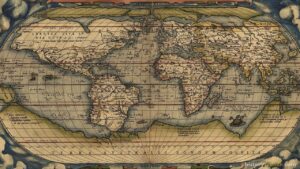
Trade fairs became important economic events in the High Middle Ages, attracting merchants from across Europe to buy, sell, and exchange goods. The fairs of Champagne in northeastern France were among the most famous, drawing merchants from Italy, Flanders, England, and Germany to trade directly with one another. As stated above, the Silk Road, the ancient network of trade routes connecting Europe with Central Asia, India, and China, remained an important source of luxury goods throughout the Middle Ages, channeling valuable commodities including silk, spices, and precious stones from the east to European markets.
The growth of trade was closely connected to the growth of towns and cities. As trade expanded, towns grew up at important crossroads, river crossings, and ports where merchants could buy and sell goods. These towns were fundamentally different from the rural manorial communities that formed the backbone of the medieval economy. They were inhabited by merchants, craftspeople, and skilled workers rather than peasants and serfs, and they operated under different legal and economic rules. Many towns negotiated charters from their lords that gave them the right to hold markets, collect their own taxes, and govern themselves through elected town councils. For instance, by 1300 CE there were approximately 15 cities in Europe with populations of more than 50,000 people, a significant increase from the very small towns of the Early Middle Ages.
ECONOMICS IN THE MIDDLE AGES – GUILDS
One of the most important economic institutions of the medieval town was the guild. Guilds were organizations of craftspeople or merchants who worked in the same trade and banded together to protect their shared economic interests and maintain the quality of their products. There were guilds for virtually every skilled trade in a medieval town, including weavers, bakers, blacksmiths, goldsmiths, butchers, shoemakers, and many others.
Guilds controlled who could practice a particular trade within a town, setting strict rules about training, quality standards, and pricing. A young person who wanted to become a skilled craftsperson would first spend several years as an apprentice, learning the trade under the supervision of a master craftsperson. After completing their apprenticeship, they would become a journeyman, working for wages for a master while perfecting their skills. Once a journeyman had demonstrated sufficient skill, they could apply to become a master themselves, which typically required producing a masterpiece, a piece of work that demonstrated their abilities to the satisfaction of the guild’s senior members.
Guilds served important economic and social functions in medieval towns. They set standards that protected consumers from poor quality goods and dishonest traders. They provided a social safety net for their members, supporting sick or injured members and the widows and children of those who died. In fact, they also played a significant role in the cultural and religious life of medieval towns, sponsoring religious processions, maintaining chapels, and organizing charitable activities.
ECONOMICS IN THE MIDDLE AGES – THE IMPACT OF THE BLACK DEATH
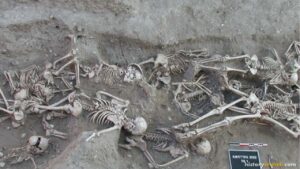
The most dramatic economic disruption of the entire medieval period was the Black Death, the catastrophic outbreak of bubonic plague that swept across Europe between 1347 and 1351 CE. The plague killed approximately one third of Europe’s population within a few years, with some regions losing even higher proportions. The economic consequences were profound and far-reaching.
The most immediate economic effect of the Black Death was a severe shortage of labor. With so many agricultural workers dead, the lords who survived found that they had more land than they could farm with the remaining workforce. Surviving peasants and serfs found themselves in a completely different bargaining position than before the plague. In fact, because their labor was now scarce, they could demand higher wages, better working conditions, and in many cases the commutation of their feudal obligations into money payments rather than labor service. Many serfs simply walked away from their lords’ estates and moved to towns or to other manors that offered better terms, and lords had little power to stop them.
This shift weakened the manorial system significantly and accelerated the decline of serfdom in Western Europe. The economic disruption of the Black Death contributed directly to social unrest, including peasant uprisings such as the Peasants’ Revolt in England in 1381 CE, in which agricultural laborers demanded better conditions and an end to serfdom. As stated above, the long-term economic effects of the Black Death were in some respects positive for those who survived, as the scarcity of labor drove wages up and gave peasants greater economic freedom than they had enjoyed under the rigid feudal system.
ECONOMICS IN THE MIDDLE AGES – SIGNIFICANCE
The significance of economics in the Middle Ages in the history of Europe is considerable. The agricultural, commercial, and institutional developments of the medieval period laid the foundations of the modern European economy. The improvements in agricultural technology that increased food production during the High Middle Ages helped support a growing population and freed workers to specialize in trade and crafts. The growth of towns and trade created a new merchant class whose wealth and influence did not depend on land ownership and feudal obligation, gradually undermining the economic basis of the feudal system.
The guilds that organized medieval craft production established traditions of quality control, professional training, and worker organization that influenced the development of later economic institutions. The banking and financial practices developed by Italian merchants in the High Middle Ages, including credit, insurance, and double-entry bookkeeping, became the foundations of modern finance. As such, economics in the Middle Ages stands as one of the most important and consequential subjects in the history of the period, shaping both the society of the time and the economic world that would develop from it in the centuries that followed.