The American Revolution was one of the most important events in modern world history. The conflict that began in 1775 as a colonial rebellion against British taxation ended in 1783 with the creation of an entirely new kind of nation, one founded on written principles of individual rights, representative government, and the consent of the governed. Its effects rippled far beyond the borders of the new United States, inspiring revolutions and reform movements across the Atlantic world for generations to come.
What Was the American Revolution?
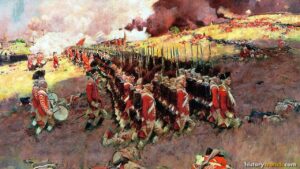
The American Revolution was the political and military struggle through which the Thirteen Colonies broke free from British rule and established the United States of America. Tensions had been building for more than a decade before the first shots were fired at Lexington and Concord in April of 1775, driven primarily by disputes over taxation, trade restrictions, and the colonists’ belief that they were being governed without fair representation in the British Parliament. The colonies declared their independence on July 4th, 1776, and fought a war against Britain that lasted until 1783, when the Treaty of Paris formally recognized the United States as a sovereign nation. The significance of the Revolution goes far beyond that military victory, touching nearly every area of political, social, and intellectual life in America and around the world.
A New Kind of Government
Perhaps the most immediate and lasting significance of the American Revolution was the form of government it created. The United States became the first modern nation to establish a federal republic with a written constitution built on the principles of natural rights, the consent of the governed, and equality under the law. These were not entirely new ideas. Thinkers such as John Locke and Montesquieu had written about natural rights and the separation of governmental power for decades. What was new was that Americans actually put those ideas into practice in a working national government.
The Constitution of the United States, ratified in 1788, established a system built on the separation of powers between three branches of government, checks and balances to prevent any one branch from becoming too powerful, and a federalist structure that divided authority between the national government and the states. No country had ever attempted anything quite like it on this scale before. In 1791, the Bill of Rights was added to the Constitution, guaranteeing specific individual freedoms including freedom of speech, freedom of religion, freedom of the press, and the right to a fair trial. These protections became a model for democratic constitutions around the world in the centuries that followed.
The Declaration of Independence and Its Ideas
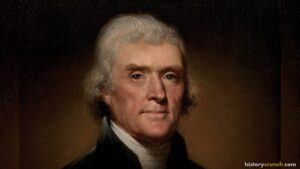
The Declaration of Independence, adopted on July 4th, 1776, and written primarily by Thomas Jefferson, was more than a statement of colonial grievances. It was a powerful philosophical document that proclaimed a set of ideas about human rights and the purpose of government. Its most famous lines declared that all men are created equal and that they are endowed with certain rights that no government can take away, including life, liberty, and the pursuit of happiness.
These ideas had an enormous influence far beyond their original context. The Declaration inspired political reformers and revolutionaries across Europe and Latin America who were fighting for their own freedoms in the decades that followed. In 1789, the Marquis de Lafayette, who had fought in the American Revolutionary War, helped draft the Declaration of the Rights of Man and of the Citizen in France with the assistance of Thomas Jefferson. That document drew directly on the language and principles of the American Declaration of Independence.
The Impact on Slavery and Equality
The Revolution raised profound and deeply uncomfortable questions about equality that American society could not fully resolve. The Declaration’s claim that all men are created equal stood in direct contradiction to the existence of slavery in the new nation. Many people at the time recognized this contradiction. Some states, particularly in the north, began to act on it. Pennsylvania passed a gradual emancipation law in 1780, and Massachusetts and Vermont moved to abolish slavery entirely in the early 1780s. By 1804, all northern states had either abolished slavery outright or passed gradual emancipation legislation.
In the southern states, however, slavery not only survived but expanded significantly in the decades after the Revolution. The political compromises built into the Constitution, including the three-fifths clause and the protection of the slave trade until 1808, reflected the Revolution’s failure to resolve the conflict between its stated ideals and the economic interests of slaveholders. This contradiction would drive American politics for decades and eventually contribute to the outbreak of the Civil War in 1861.
The Revolution also created new, if limited, openings for women. Women had contributed significantly to the war effort, managing farms and businesses, producing supplies, and in some cases serving directly alongside soldiers. Revolutionary ideas about rights and citizenship prompted some women to demand a larger role in public life. Abigail Adams famously urged her husband John Adams to “remember the ladies” when writing new laws. In practice, women gained very little formal political power as a direct result of the Revolution. Nevertheless, the era introduced the idea that women had a civic role to play in the new republic, a concept that later reformers would build on in the long campaign for women’s rights.
Impact on Native Americans
For Native American peoples, the American Revolution had largely negative consequences. The British had issued the Proclamation of 1763, which prohibited colonial settlement west of the Appalachian Mountains in an effort to limit conflict with Native nations. American independence removed that barrier entirely. With the new United States government committed to westward expansion and with no colonial power to restrain settler movement, Native nations east of the Mississippi River faced accelerating pressure on their lands almost immediately after the war ended. The Revolution effectively opened the door to the era of westward expansion that would displace and devastate Indigenous communities across the continent over the following century.
Inspiring Revolutions Around the World
The American Revolution’s most far-reaching significance may have been the example it set for the rest of the world. The successful rebellion of a colonial population against one of the most powerful empires on earth demonstrated that revolution was possible and that governments could be built from scratch on new principles. This example inspired reform and revolutionary movements across the Atlantic world in the decades that followed.
The French Revolution, which began in 1789, was influenced by American ideas in a number of important ways. French intellectuals and aristocrats had followed the American Revolution closely, and the ideals of liberty and republican government that it promoted spread quickly through French society. Furthermore, France had spent enormous sums of money supporting the American war effort, and the resulting financial crisis helped destabilize the French monarchy, contributing directly to the conditions that sparked the French Revolution. The Haitian Revolution of 1791 to 1804, in which enslaved people overthrew French colonial rule and established the first Black republic in the western hemisphere, was also shaped in part by the ideals of freedom and equality that the American Revolution had put into circulation around the world.
In Latin America, the independence movements of the early 19th century drew directly on the example of the United States. The American Declaration of Independence and Constitution influenced the thinking of revolutionary leaders such as Simon Bolivar, and the Mexican Constitution borrowed significantly from the structure of the United States Constitution. The idea that colonial peoples had the right to govern themselves, which the American Revolution had demonstrated in practice, became a driving force in independence movements around the world.
The Birth of a World Power
In the shorter term, the Revolution transformed Britain’s position in North America and significantly altered the balance of power among European nations. Britain lost its most valuable and populous American colonies, a blow that reshaped its imperial ambitions and forced it to look elsewhere for expansion. The United States, by contrast, began its existence as an independent nation with vast territory, abundant natural resources, and a political system that encouraged economic enterprise. Within a generation, it had become one of the fastest-growing economies in the world.
The alliance with France that helped win the Revolution proved costly for the French monarchy, as noted above, but it also established a pattern of American engagement with European politics that would only grow over the following centuries. The new nation’s commitment to neutrality in European conflicts, articulated in Washington’s Farewell Address of 1796, shaped American foreign policy for more than a hundred years.
Religious Freedom
One often overlooked significance of the American Revolution was its impact on religious life. Before the Revolution, several colonies had official state-supported churches, and religious minorities faced legal restrictions in many places. The Revolution’s commitment to individual rights, combined with the great variety of religious practice among the colonists, pushed the new nation toward religious freedom as a foundational principle. The First Amendment to the Constitution guaranteed freedom of religion at the federal level, and over the following decades the remaining state-supported churches were gradually disestablished. Massachusetts was the last state to end tax support for an official church, doing so in 1833. This separation of church and state was a significant departure from the practice of almost every other government in the world at the time.
Significance of the American Revolution
The American Revolution was not simply a war for independence. It was a political, social, and intellectual transformation that changed the way people thought about government, rights, and the relationship between citizens and the state. The nation it created was far from perfect. Slavery continued, women were denied political rights, and Native peoples suffered terribly under the expansion the Revolution enabled. Yet the ideals the Revolution proclaimed, even when they were not lived up to, gave future generations a set of principles to hold the nation accountable to. Abraham Lincoln invoked them at Gettysburg. Civil rights leaders invoked them during the 20th century. People around the world have continued to invoke them ever since.
The American Revolution remains one of the most studied and debated events in history precisely because its effects were so vast and so contradictory. It established a model of democratic government that spread around the world, while also enshrining compromises that delayed justice for millions of people. Understanding both sides of that story is essential to understanding the history of the modern world.