When the American Revolution began, the colonists were not united. They were deeply divided over whether to break from Britain or remain loyal to the Crown. Those who supported independence were called Patriots, while those who wished to stay part of Britain were called Loyalists, also known as Tories. A large number of colonists tried to avoid choosing either side altogether. This division turned the Revolutionary War into something more than a conflict between colonies and Britain. In many communities, it became a civil war between neighbors, friends, and even family members.
What Was the American Revolution?
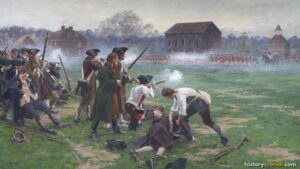
The American Revolution was the political and military struggle through which the Thirteen Colonies broke free from British rule and established the United States of America. Open fighting began in April of 1775 at Lexington and Concord, and the colonies declared independence on July 4th, 1776. The conflict was not simply a war between the colonies and the British army. It was also a struggle within colonial society itself, as Patriots, Loyalists, and those who wanted no part of the conflict all made choices that put them at odds with their own communities. Understanding who the Patriots and Loyalists were, and why they made the choices they did, is essential to understanding how the Revolution actually unfolded.
Who Were the Patriots?
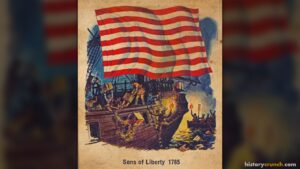
Patriots were colonists who supported independence from Britain and were willing to fight for it. They believed that Parliament had no right to tax them without representation, that British policies threatened their rights as English subjects, and that the only solution was to break from British rule entirely and build a new nation on the principles of self-government and individual liberty. Their political thinking was deeply influenced by Enlightenment ideas about natural rights, representative government, and the consent of the governed. The phrase “no taxation without representation” was their central rallying cry.
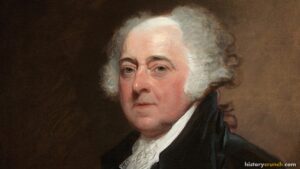
Patriots were sometimes also called Whigs, Revolutionaries, or Rebels. They came from all walks of colonial life, though historians have found that the Patriot cause tended to draw strongest support from the middling classes, including farmers, tradespeople, lawyers, and merchants, particularly in New England and the Middle Colonies. Famous Patriots included George Washington, Thomas Jefferson, John Adams, Samuel Adams, Patrick Henry, Benjamin Franklin, and Paul Revere, many of whom became known as the Founding Fathers of the United States.
Who Were the Loyalists?
Loyalists were colonists who believed the thirteen colonies should remain part of the British Empire. They are sometimes called Tories or the King’s Men. Their reasons for loyalty varied widely. Some genuinely believed that British rule was the most stable and beneficial form of government available, and that Parliament had the right to govern the empire as it saw fit. Others had deep personal and economic ties to Britain. Government officials, merchants who depended on British trade, Anglican clergy, and those who had received land grants or royal appointments from the Crown often had strong practical reasons to support the status quo.
Many Loyalists were genuinely alarmed by what they saw as the radical and dangerous nature of the Patriot movement. They feared that breaking from Britain would lead to chaos, mob rule, and the breakdown of law and order. Historian Leonard Woods Larabee described Loyalists as generally older, better established, and more resistant to rapid change than the typical Patriot. Many also felt that rebellion against the legitimate government was morally wrong, regardless of whether they agreed with British policies.
Loyalists were concentrated most heavily in New York City, which was sometimes called the Tory capital of America, as well as in parts of the southern backcountry and areas with large numbers of recent immigrants from Britain. Well-known Loyalists included Thomas Hutchinson, the royal governor of Massachusetts, and William Franklin, the governor of New Jersey and the son of Benjamin Franklin. The Franklin case was one of the most dramatic examples of how the Revolution divided families. Father and son never reconciled after the war.
Who Were the Neutrals?
A large portion of the colonial population tried to stay out of the conflict entirely. Historians estimate that roughly half of white colonists of European ancestry attempted to avoid taking sides. Their reasons were varied. Some were pacifists, particularly Quakers, who opposed violence on religious grounds. Some were recent immigrants who had no strong attachment to either the British Crown or the revolutionary cause. Others lived in areas where one side was so dominant that openly supporting the other was dangerous, and staying neutral seemed the only practical choice.
As the war progressed, neutrality became increasingly difficult to maintain. Both Patriots and Loyalists pressured those around them to declare their allegiance. Patriot committees of safety required oaths of loyalty, and those who refused could face harassment, loss of property, or worse. By the later years of the war, most people who had tried to stay neutral found themselves forced to choose.
African Americans and the Revolution
African Americans occupied a particularly complicated position in the Patriot-Loyalist divide. For enslaved people, the question of which side to support was not primarily about taxation or representation. It was about freedom. In November of 1775, Lord Dunmore, the royal governor of Virginia, issued what became known as Dunmore’s Proclamation, offering freedom to enslaved men who escaped their Patriot owners and took up arms for the British. Thousands responded, with historians estimating that between 80,000 and 100,000 enslaved people fled to British lines during the war. Those who fought for Britain were known as Black Loyalists.
Some free African Americans and a smaller number of enslaved people did support the Patriot cause, serving in the Continental Army in the hope that the Revolution’s language of liberty and equality would eventually extend to them. The contradiction between fighting for freedom while holding people in slavery was not lost on many observers at the time, and it became one of the central unresolved tensions of the new nation.
Conflict Between Patriots and Loyalists
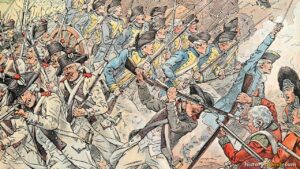
The division between Patriots and Loyalists produced some of the most bitter and violent episodes of the entire Revolutionary period. In many areas, the conflict between the two groups was as intense as the fighting between the Continental Army and British regulars. In the backcountry of South Carolina, the Mohawk Valley of New York, and other regions, neighbors attacked one another’s homes, farms, and families in a cycle of raids and reprisals that was, in every practical sense, a civil war.
Patriots used a range of tactics to suppress Loyalist activity, from public shaming and social pressure to tarring and feathering, the seizure of property, and imprisonment. Loyalists who lived in Patriot-controlled areas faced constant danger. Many had their businesses and homes destroyed. In return, Loyalist militias and rangers carried out their own attacks on Patriot communities, and Loyalist units fought alongside regular British forces throughout the war.
What Happened to Loyalists After the War
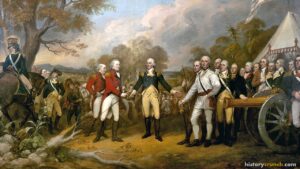
When Britain lost the war and the Treaty of Paris was signed in 1783, the situation of Loyalists in the new United States became extremely difficult. The treaty called on the American states to treat Loyalists fairly and return their confiscated property, but most states ignored these provisions. Loyalists who had actively supported the British faced hostility, violence, and legal persecution.
An estimated 60,000 to 80,000 Loyalists left the United States during or immediately after the war, fleeing to Britain, Canada, or other parts of the British Empire. Many went to Nova Scotia or New Brunswick in Canada, where they established new communities. Those who stayed in the United States generally kept a low profile in the immediate postwar years, and most states had rescinded their harshest anti-Loyalist laws by the late 1780s.
Significance of Patriots and Loyalists
The division between Patriots and Loyalists shaped the American Revolution in ways that go beyond the battlefield. The need to win over or suppress Loyalists at home was just as important a challenge as defeating the British army in the field. The departure of tens of thousands of educated, experienced Loyalists after the war also had lasting effects on American society, removing a significant conservative voice from the new nation’s political culture.
At the same time, the Patriot movement demonstrated that a diverse colonial population could find enough common ground to unite behind a shared political cause. The ideals the Patriots fought for, including self-government, individual rights, and government by consent, became the foundation of the United States. The story of Patriots and Loyalists is ultimately a reminder that revolutions are never simple, and that the choice of which side to support in a moment of historical conflict is rarely as obvious as it appears in hindsight.