Naples in the Renaissance was one of the largest and most significant city-states during the Renaissance. The city-state blended medieval traditions with newly developed humanist ideas. Ruled by various dynasties, including the Spanish and French, it became a cultural crossroads and a center for literature, philosophy, and music. Despite political instability, Naples fostered artistic growth and contributed to the broader Renaissance movement on the Italian Peninsula.
WHAT WAS THE RENAISSANCE?
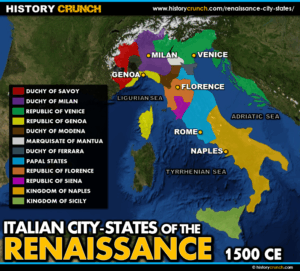
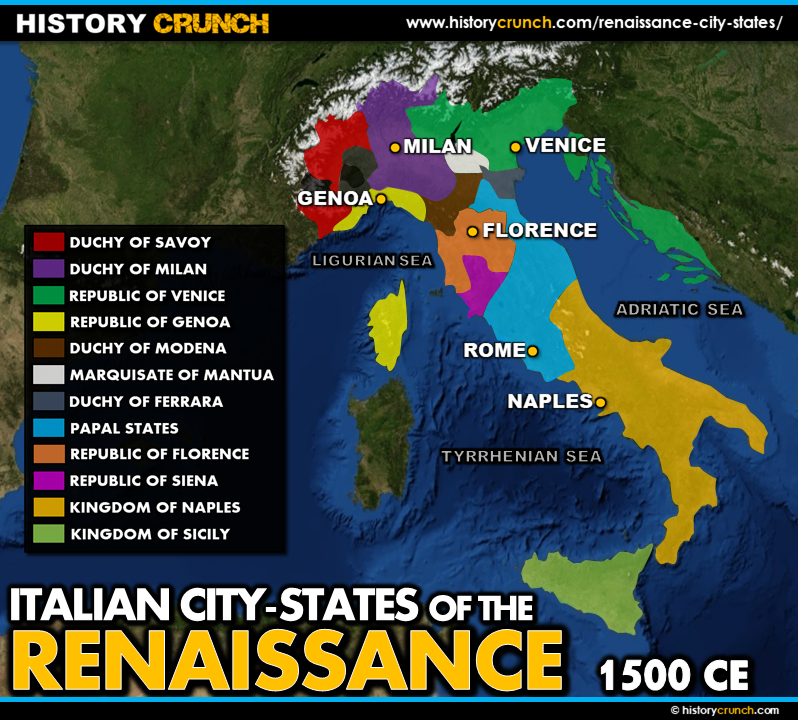
The Renaissance is an important event in European history that stretched from the 14th century to the 17th century. It was preceded by the Middle Ages in Europe and eventually led to other major events such as the Age of Enlightenment. In historical terms the Renaissance is important because it led to a major shift in European thought and worldview. The Renaissance is considered to have begun in the city-states of the Italian peninsula, such as: Genoa, Florence, Milan, Naples, Rome and Venice.
In each of these city-states, the significant changes of the overall Renaissance occurred and unfolded. For example, the most significant changes that emerged as a result of the Renaissance can be seen in European architecture, art, literature, mathematics, music, philosophy, politics, religion and science. Intellectual thought in these fields flourished during the timeframe of the Renaissance and led to many people questioning long held beliefs about each. This created an environment of discovery and curiosity in which new ideas were constantly being introduced and tested. As well, European life before the start of the Renaissance was dominated by feudalism and the Manor System, but these both played small roles for citizens in the powerful Italian city-states. As such, the major Italian city-states listed above were well positioned to undergo the societal shift brought about by the new Renaissance ideas.
NAPLES BEFORE THE RENAISSANCE
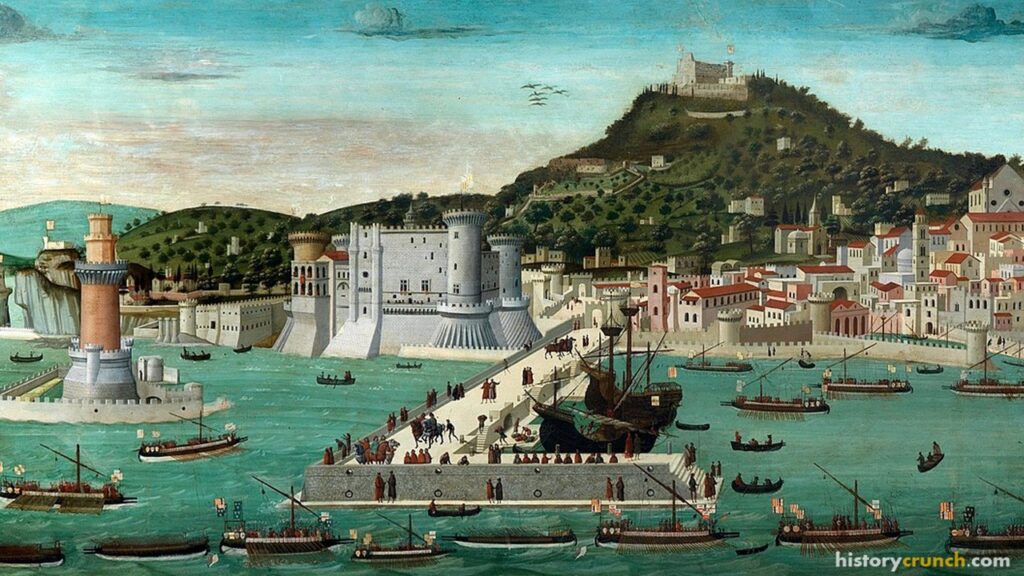
Naples is one of the most significant city-states from the Renaissance in Italy and developed in the southwestern section of the Italian peninsula. The city of Naples is located on the coast of the peninsula beside the Gulf of Naples, which is part of the Tyrrhenian Sea. Also of note is that Naples is situated between two famous volcanic regions – Mount Vesuvius and the Campi Flegrei. Historians believe that people had been living in the region since the Stone Age but it became a much more significant area in the timeframe of the Middle Ages and the Renaissance.
In terms of its ancient history, the city of Naples was originally settled by the Greeks in the second millennium. Throughout the centuries that followed the region around Naples developed as a coastal town that quickly grew in importance and population. In fact, it maintained its Greek roots in the form of culture and language throughout the later Roman Empire. With that said, the Romans expanded upon the city of Naples with large temples and public bathhouses. Following the collapse of the Roman Empire in the 5th century, Naples was captured by the Ostrogoths, which were a Germanic society from northern Europe. In the decades that followed the city was conquered several times as the Ostrogoths and the Byzantine Empire fought to control it. Finally, in 661 CE, Naples was established into a Duchy (a territory of a Duke) and became the Duchy of Naples and was under papal influence. By the early 12th century, many different powerful city-states were emerging on the Italian peninsula and Naples was no different.
Throughout the High and Late Middle Ages, Naples expanded its authority over neighboring towns and cities and became a center of wealth and trade for the region. This helped set the stage for Naples’ importance as a major city-state during the Italian Renaissance. As well, a university was established in the city in 1224 and allowed Naples to become an intellectual center in southern Italy that would go unmatched for many centuries afterwards.
NAPLES IN THE RENAISSANCE – SUMMARY
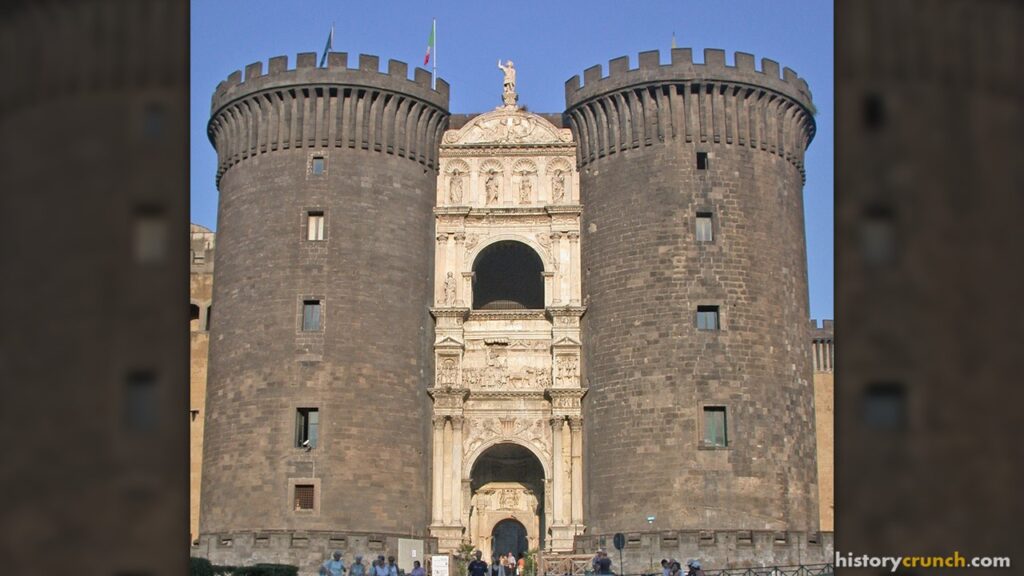
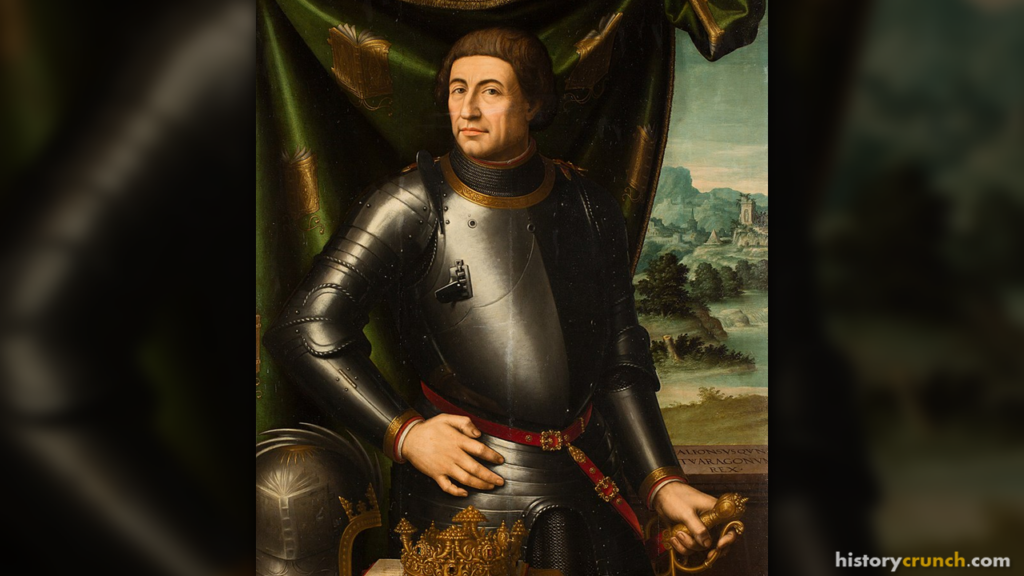
A major event in Naples’ history was in 1442 when Alfonso I conquered the city-state. Alfonso I was the King of Aragon (known as Alfonso V of Aragon) on the Iberian Peninsula (modern-day Spain) and is credited with overseeing Naples’ transformation into a major center of the Italian Renaissance. For instance, he was similar to other Renaissance leaders at the time in that he was a major patron of the arts. He enjoyed classical literature and often invited scholars to his court to participate in open debates. As well, he promoted and commissioned oil paintings, which made the city-state a center for Renaissance art. For example with artists such as Laurana, da Messina, Sannazzaro and Poliziano arrived in the city during the Renaissance. Famously he helped found the Academy of Naples, and had a magnificent arch created at the main gate of Castel Nuovo, a medieval castle in the center of Naples. The architecture of the arch was based on Roman style and building techniques. He also helped establish museums and libraries throughout the city which furthered the Renaissance ideals of the time. At his height of power, Alfonso controlled large portions of land, including all of southern Italy. This helped expand the influence of Naples throughout the region.
After a brief conquest by France, Naples was recaptured by the Spanish and remained part of the Spanish Empire in the century that followed. Its role in the Renaissance had seen the city grow at an incredible rate, and by the 17th century it was the second largest city in all of Europe, only behind Paris, France. For example, it had a population of approximately 250,000 at the time.